Thursday, June 18

Tag: China

US Announces New Tariffs Over Forced Labour Concerns
Economy & Tax Policy

US Announces New Tariffs Over Forced Labour Concerns

The United States has proposed new tariffs ranging from 10% to 12.5% on imports from 60 major trading partners, citing concerns that those countries are not doing enough to prevent goods made with forced labour from entering their supply chains. The new forced labour tariffs would affect nearly all goods imported into the U.S. and could significantly impact global trade relations if implemented. According to a report by BBC News, the Trump administration's Trade Department concluded that dozens of countries have failed to adequately prohibit or enforce restrictions on imports linked to forced labour, prompting the proposed tariff measures. What Happened The Trump administration announced plans to impose tariffs of 10% to 12.5% on imports from 60 countries and trading blocs, includ...
Taiwan’s Top Diplomat Says Trump Administration Remains Supportive Despite China Concerns
Foreign Policy

Taiwan’s Top Diplomat Says Trump Administration Remains Supportive Despite China Concerns

Taiwan's top representative in Washington has expressed confidence in the Trump administration's commitment to Taiwan, even as concerns grow over President Donald Trump's discussions with China regarding a proposed $14 billion arms package. The comments come amid heightened tensions across the Taiwan Strait and renewed scrutiny of U.S.-Taiwan relations. According to a report by POLITICO, Taiwan’s chief diplomat in the United States, Alexander Tah-ray Yui, said he remains confident that Washington continues to strongly support Taiwan despite Beijing’s ongoing pressure campaign. What Happened Yui, who has served as Taiwan’s top diplomat in Washington for more than two years, addressed concerns surrounding the Trump administration's handling of a pending $14 billion arms sale to Taiw...
Trump Taiwan Comments Spark Debate Over Independence and China Relations
Foreign Policy

Trump Taiwan Comments Spark Debate Over Independence and China Relations

President Donald Trump sparked controversy after warning Taiwan against pursuing formal independence following a high-profile meeting with Chinese President Xi Jinping in Beijing. Trump’s remarks have reignited global debate over Taiwan’s political status, US-China relations, and the risk of military conflict in the Indo-Pacific region. According to a report by BBC News, Trump said he did not want Taiwan “to go independent” and stressed concerns about the United States becoming involved in a future war with China over the island. What Trump Said About Taiwan Speaking in a Fox News interview after his summit with Xi, Trump warned against moves toward Taiwanese independence. “I’m not looking to have somebody go independent,” Trump said. “We’re supposed to travel 9,500 miles to fi...
Trump AI Executive Order Delayed After Pressure From Big Tech Leaders
Domestic Policy

Trump AI Executive Order Delayed After Pressure From Big Tech Leaders

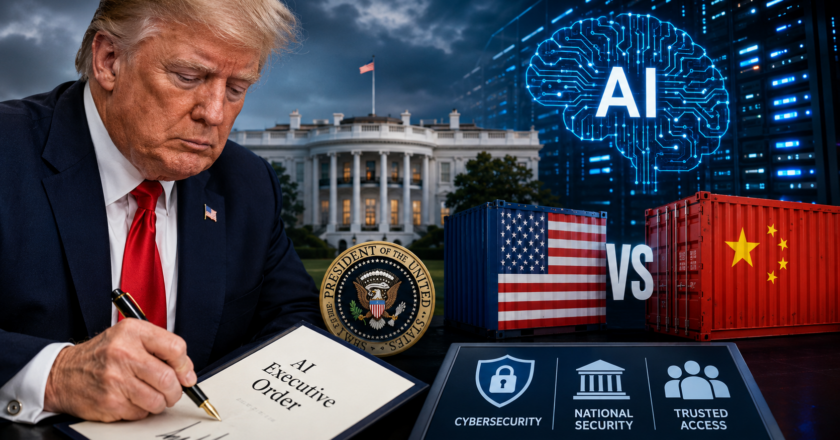
President Donald Trump abruptly postponed a planned executive order that would have introduced government safety reviews for advanced artificial intelligence models, following pressure from major Silicon Valley leaders including Elon Musk and Mark Zuckerberg. The decision marks another major victory for the tech industry’s anti-regulation campaign as concerns over AI security risks continue to grow globally. According to a report by The Guardian, the executive order would have created a voluntary government review system for new frontier AI models before public release. However, Trump reversed course just hours before signing the directive, citing concerns about maintaining America’s lead over China in the global AI race. What Happened to Trump’s AI Executive Order? The proposed e...
White House Touts Soybean and Rare Earth Deals After Trump-Xi Summit
Economic Impact News

White House Touts Soybean and Rare Earth Deals After Trump-Xi Summit

The White House announced new trade agreements involving soybeans, rare earth minerals, and aircraft purchases following President Donald Trump’s summit with Chinese President Xi Jinping in Beijing, while China highlighted tariff reductions and broader economic cooperation. According to a report by CNBC, China agreed to purchase at least $17 billion worth of U.S. agricultural products annually through 2028 as part of the latest understandings reached during the Trump-Xi meetings. Trump-Xi Summit Produces New Trade Commitments President Trump concluded two days of meetings with Xi Jinping in Beijing last week as both sides attempted to stabilize relations after years of trade disputes and geopolitical tensions. The White House described the summit as a step toward improving econ...
Taiwan Defends US Arms Purchases After Trump Raises Doubts on Support
Foreign Policy

Taiwan Defends US Arms Purchases After Trump Raises Doubts on Support

Taiwan President Lai Ching-te defended continued U.S. arms purchases as critical to regional stability after President Donald Trump suggested future weapons sales to Taiwan could depend on negotiations with China following his recent Beijing visit. According to a report by Associated Press, Trump described potential future arms sales to Taiwan as a “very good negotiating chip” during a Fox News interview aired after his summit with Chinese President Xi Jinping. Taiwan Responds to Trump’s Comments Taiwan’s government moved quickly to reassure the public after Trump questioned whether he would approve a delayed $14 billion arms package for the self-governing island. President Lai emphasized that U.S.-Taiwan security cooperation remains essential for peace across the Taiwan Strait...
Trump and South Korea’s Lee Discuss Beijing Summit and Regional Security
Foreign Policy

Trump and South Korea’s Lee Discuss Beijing Summit and Regional Security

President Donald Trump and South Korean President Lee Jae Myung held a phone call following Trump’s recent summit with Chinese President Xi Jinping in Beijing, discussing trade cooperation, North Korea, and regional security challenges amid shifting geopolitical tensions in Asia. According to a report by The Japan Times, Trump briefed Lee on the outcome of his May 14–15 meetings with Xi as both leaders emphasized the importance of close coordination between Washington and Seoul. Trump Briefs South Korea After Beijing Summit The conversation between Trump and Lee reportedly lasted around 30 minutes and took place Sunday evening, according to South Korea’s presidential office. Lee later stated that both governments agreed cooperation was increasingly important due to rapidly chan...
Elon Musk and Jensen Huang Join Trump China Trip Amid US-China Tensions
Foreign Policy

Elon Musk and Jensen Huang Join Trump China Trip Amid US-China Tensions

President Donald Trump has brought some of America’s most influential business and technology leaders to China this week, including Elon Musk, Nvidia CEO Jensen Huang, and Apple chief Tim Cook, as the administration seeks to strengthen economic negotiations with Beijing during a period of growing geopolitical tension. According to a report by BBC News, more than a dozen top executives are accompanying Trump during his official visit to China, where he is expected to meet with Chinese President Xi Jinping. Major CEOs Join Trump Delegation to China The Trump China trip includes executives from some of the world’s largest corporations spanning technology, finance, manufacturing, and consumer industries. Among the high-profile business leaders joining the delegation are: Elon M...
Trump to Visit China for High-Stakes Meeting With Xi Jinping Amid Trade Tensions
Foreign Policy

Trump to Visit China for High-Stakes Meeting With Xi Jinping Amid Trade Tensions

President Donald Trump will travel to China this week for a major summit with Chinese President Xi Jinping as both countries attempt to stabilize economic relations after years of escalating tariffs and geopolitical tensions. The meeting is expected to test the fragile trade truce between the world’s two largest economies while also addressing growing concerns over global energy markets and the Iran conflict. What Happened According to a report by BBC News, Beijing confirmed that President Trump will visit China from May 13 to May 15 for his first official trip to the country since returning to the White House. The summit comes at a critical moment following years of trade disputes, tariff battles, and broader strategic competition between Washington and Beijing. Executives fro...
Lawmakers Push Trump to Approve Delayed Taiwan Arms Sale Ahead of Xi Meeting
Foreign Policy

Lawmakers Push Trump to Approve Delayed Taiwan Arms Sale Ahead of Xi Meeting

A bipartisan group of U.S. senators is urging President Donald Trump to move forward with a delayed $14 billion arms package for Taiwan ahead of his upcoming meeting with Chinese President Xi Jinping. The lawmakers warned the administration not to weaken U.S. support for Taiwan during broader negotiations with China. What Happened According to a report by The New York Times, eight senators from both parties sent a letter to President Trump pressing him to formally notify Congress about the Taiwan weapons package, which has reportedly been delayed for months. The lawmakers argued that Taiwan’s recent approval of a $25 billion defense spending plan removes any remaining justification for postponing the sale. The package includes defensive weapons systems, anti-drone technology, a...
China Economy Hit by Iran War Despite Surviving Trump Tariffs
Economic Impact News

China Economy Hit by Iran War Despite Surviving Trump Tariffs

China’s export-driven economy is facing new pressure from the ongoing Iran conflict, even after successfully weathering years of tariffs imposed during Donald Trump’s presidency. The latest developments highlight how global geopolitical tensions are now impacting factory orders, costs, and employment in China. According to a report by BBC , the Iran war is creating fresh economic strain on China, particularly in manufacturing and exports. What Happened China had previously managed to adapt to tariffs introduced under Donald Trump, maintaining resilience in its export sector. However, the ongoing conflict involving Iran is now disrupting that stability. The war has led to rising shipping costs, reduced demand, and uncertainty in global trade routes—factors that are directly ...