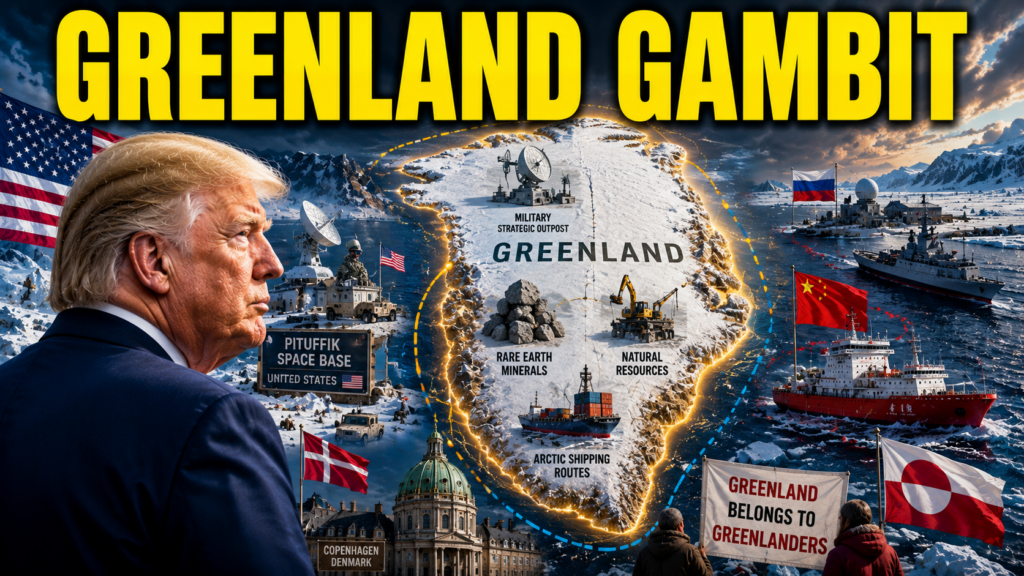
President Donald Trump’s effort to acquire Greenland remains active behind the scenes despite receiving less public attention in recent months. New reporting suggests that what began as an unconventional proposal during Trump’s first term has evolved into a broader campaign involving diplomacy, influence operations, and strategic discussions about the Arctic’s growing geopolitical importance.
What Happened
According to a report by NPR, journalist Ben Taub detailed how Trump’s interest in Greenland has continued beyond the headlines, with supporters and administration allies reportedly exploring ways to keep the proposal alive.
The report traces the origins of Trump’s Greenland initiative back to 2018, when longtime associate Ronald Lauder reportedly suggested that the United States consider acquiring the territory from Denmark.
Although the proposal was initially dismissed by many observers, it has remained a recurring topic inside Trump’s political orbit and among some national security advocates who view Greenland as strategically important.
Why Greenland Matters
Arctic Security and Military Importance
Greenland occupies a critical position in the Arctic, a region that has become increasingly significant as climate change opens new shipping routes and intensifies competition among global powers.
The United States already maintains military access in Greenland through longstanding agreements with Denmark, including operations at Pituffik Space Base.
Supporters of greater U.S. involvement argue that Greenland’s location could become increasingly important as Russia and China expand their Arctic activities.
Natural Resources and Economic Potential
Another factor frequently cited by supporters of the initiative is Greenland’s untapped natural resources.
The territory is believed to contain rare earth minerals and other strategic resources. However, experts interviewed in the report noted that many mining projects face significant logistical and economic obstacles because of Greenland’s harsh environment and limited infrastructure.
Critics argue that acquiring Greenland is unnecessary to pursue investment opportunities since Greenland already welcomes foreign business partnerships.
Influence Campaigns and Political Outreach
Efforts to Build Support
The report describes multiple efforts by Trump allies and conservative activists to promote the idea of closer U.S.-Greenland ties.
These efforts reportedly included visits by political figures, media personalities, and pro-Trump advocates who sought to gauge local opinion and encourage discussion about potential cooperation with the United States.
However, interviews conducted in Greenland suggest many residents remain skeptical of annexation proposals and prefer maintaining self-government while continuing their relationship with Denmark.
Growing Diplomatic Friction
The Greenland issue has also created tension between Washington and Copenhagen.
Danish officials have repeatedly emphasized that Greenland is not for sale and that any decision regarding the territory’s future belongs to Greenlanders themselves.
The controversy reportedly strained trust between some European allies and the United States, particularly after reports emerged of behind-the-scenes efforts to influence political discussions surrounding Greenland’s future.
Foreign Policy and Strategic Implications
Trump’s Greenland initiative has become part of a broader debate over U.S. influence in strategically important regions.
Supporters argue that strengthening America’s presence in the Arctic is necessary to counter geopolitical competitors and secure critical infrastructure.
Critics contend that aggressive rhetoric surrounding Greenland risks damaging relationships with NATO allies and undermining longstanding diplomatic partnerships.
Readers interested in broader international policy developments can also explore Trump’s discussions involving Iran, Ukraine, and geopolitical strategy and coverage of the Trump G7 summit and international security discussions.
How Greenland Has Responded
Public Concerns and Political Resistance
The report notes that Trump’s repeated comments about Greenland have generated significant anxiety among some residents.
Local surveys cited in the reporting suggest that concerns over annexation rhetoric have affected public sentiment and increased uncertainty about the territory’s future.
Many Greenlandic leaders have emphasized self-determination, arguing that any decisions about independence or international partnerships should be made by Greenlanders rather than external governments.
Strengthened Ties With Denmark and Europe
Ironically, some observers believe the acquisition campaign has strengthened cooperation between Greenland, Denmark, and European allies.
Faced with growing international attention, Greenlandic officials have sought closer coordination with Denmark and other partners while reaffirming their commitment to democratic decision-making.
What Happens Next
Although public discussion of acquiring Greenland has become less frequent, the report suggests the issue remains alive among some Trump allies and policy advocates.
Future developments may depend on broader geopolitical conditions, Arctic security concerns, and Greenland’s own political evolution.
As competition in the Arctic continues to grow, Greenland is likely to remain a strategic focus for major powers regardless of whether ownership debates continue.
Conclusion
Trump’s push to acquire Greenland remains one of the most unusual foreign policy initiatives associated with his presidency. While supporters view the territory as a valuable strategic asset, critics argue that the effort has strained relations with key allies and generated unnecessary tensions. As Arctic competition intensifies and Greenland’s global importance grows, debates over its future role in international politics are unlikely to disappear anytime soon.
Supporters cite Greenland’s strategic Arctic location, military importance, and potential natural resources as key reasons.
Any change in Greenland’s status would require decisions involving Greenland’s government and its relationship with Denmark.