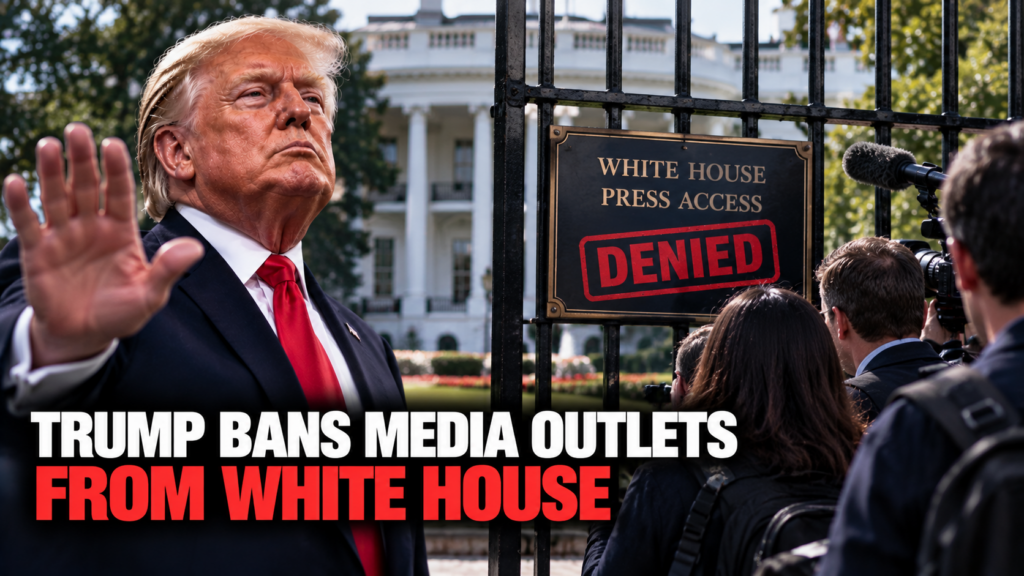
President Donald Trump announced on September 18, 2026, that CNN, MS NOW and Politico would be banned from the White House, accusing the outlets of repeatedly reporting what he called “fiction,” “lies” and “fake news” about his administration. The Trump White House ban has raised immediate First Amendment concerns and is expected to face legal challenges.
According to a report by BBC, Trump did not provide specific examples of reporting that prompted the announcement and initially did not explain how the ban would be enforced.
What Happened
Trump announced the Trump White House ban in a post on Truth Social on Friday, saying CNN, MS NOW and Politico would be excluded from the White House “immediately.”
He accused the three outlets of repeatedly publishing or broadcasting what he described as false information about the president, his administration and the United States.
Trump did not identify specific articles, broadcasts or reports that he believed justified the action.
Reuters reported that Trump described the decision as the result of what he called “cumulative stories over the last few years” rather than a single incident. He also suggested that additional news organizations could face similar restrictions.
CNN, MS NOW and Politico Respond
CNN quickly criticized the proposed ban, saying it would interfere with the network’s constitutional right to report from the White House.
The network said it stood behind its White House team and its reporting, while describing the proposed restrictions as an attack on press freedoms.
Politico also said it would continue reporting on the Trump administration and future administrations and said it would defend its First Amendment rights.
MS NOW, formerly known as MSNBC, initially declined to comment on Trump’s announcement.
At the time of Trump’s initial announcement, journalists from CNN and Politico were still working on White House grounds. The situation changed the following day, when journalists from all three organizations were denied access.
AP reported that CNN reporter Betsy Klein, MS NOW correspondent Akayla Gardner and Politico reporter Cheyenne Haslett were turned away after their press credentials were deactivated or confiscated.
First Amendment Questions
The Trump White House ban has raised questions about the government’s ability to restrict journalists’ access based on their reporting.
Press freedom organizations argued that excluding news organizations because of unfavorable coverage could raise constitutional concerns involving viewpoint discrimination.
The Knight First Amendment Institute at Columbia University said the White House press pool could qualify as a public forum under the First Amendment, meaning journalists could not be excluded simply because of their viewpoints.
The Reporters Committee for Freedom of the Press also said it expected the restrictions to face significant legal challenges.
The exact constitutional analysis could depend on the type of access being restricted and how the administration implements the ban.
Trump’s Long-Running Dispute With the Press
The Trump White House ban follows a series of disputes between the president and news organizations during his second term.
In February 2025, the administration restricted Associated Press journalists from certain limited-access spaces, including the Oval Office and Air Force One, after the AP continued using “Gulf of Mexico” rather than Trump’s preferred “Gulf of America.”
The Associated Press challenged the restrictions in court, and the dispute remains ongoing.
Trump has also repeatedly criticized journalists during presidential events and has accused major news organizations of unfair or inaccurate reporting.
During Trump’s first term, the White House revoked the press credentials of CNN correspondent Jim Acosta. CNN challenged the decision in court, and Acosta’s credentials were later restored.
Changes to White House Media Access
The dispute also comes amid broader changes to how the Trump administration manages White House press access.
During Trump’s second term, the administration has sought to increase access for conservative bloggers, influencers and other newer media organizations.
The White House also took greater control over the presidential press pool, a system that allows a limited number of journalists to cover presidential events in locations where the entire press corps cannot attend.
CNN has traditionally been part of the television pool that records and distributes footage from presidential events to other media organizations.
The potential exclusion of CNN therefore has implications beyond the network’s individual White House coverage because of its role in the broader press pool system.
Potential Legal Challenges
Trump acknowledged that his decision could face legal challenges.
The president said there was “no reason” for the announcement to have been made on Friday afternoon and described the ban as a response to accumulated coverage he disliked.
He also indicated that additional news organizations could potentially be targeted.
The affected outlets and press-freedom organizations have indicated that legal action could follow.
By September 21, CNN, MS NOW and Politico had jointly sued the Trump administration after being denied access to the White House. AP reported that the lawsuit argues the administration violated the organizations’ First Amendment rights by restricting access based on their reporting.
What Happens Next
The immediate legal question is whether the Trump administration can maintain restrictions that prevent CNN, MS NOW and Politico journalists from accessing the White House.
The courts may also have to determine how constitutional protections apply to different forms of presidential press access, including White House grounds, press briefings and limited-access press pools.
The dispute could have broader implications if the administration continues to restrict other news organizations.
For now, the Trump White House ban represents another significant confrontation between the administration and major news organizations, with the courts now positioned to address the limits of presidential control over press access and the First Amendment rights of journalists.
Related Reading
Supreme Court Rejects Trump Mail Ballot Restrictions Ahead of Midterms
Appeals Court Reviews DOJ Bid to Revive Comey, James Cases
FAQs
Trump said the outlets repeatedly reported what he called “fake news,” “fiction” and “lies” about his administration, but did not identify specific reports.
The restrictions are being challenged on First Amendment grounds, with the courts expected to consider whether the administration unlawfully restricted press access.