The political landscape of 2026 reveals a complex relationship between the MAGA movement and the wider America First policy framework that extends far beyond a single faction. While MAGA influence remains a powerful force within conservative politics, the broader America First agenda encompasses a diverse coalition of voters, policymakers, and interest groups with varying priorities and interpretations of nationalist governance. Understanding this distinction has become essential for anyone following presidential politics, as it shapes everything from foreign policy decisions to domestic economic strategies. The tension and overlap between these two concepts define much of contemporary American governance.
Defining the Core Concepts
The MAGA influence vs broader America First agenda distinction begins with understanding what each term represents in practice. MAGA, initially a campaign slogan, has evolved into a specific political identity tied to particular candidates, cultural positions, and governance approaches. This movement emphasizes disruption of established political norms, skepticism toward traditional institutions, and a populist communication style that prioritizes direct engagement with supporters. For a side-by-side breakdown, our guide to MAGA policy priorities versus mainstream GOP priorities shows where the two agendas diverge.
The broader America First agenda, by contrast, represents a policy philosophy rather than a political identity. This framework prioritizes American interests in international relations, trade policy, and security arrangements. The Brookings analysis of America First economic governance demonstrates how these principles can be implemented through various policy mechanisms, some of which existed long before recent political movements emerged.
Key Distinguishing Factors
Several elements separate MAGA influence from the wider nationalist policy framework:
- Leadership loyalty versus ideological consistency
- Cultural grievance versus economic nationalism
- Confrontational style versus pragmatic implementation
- Movement identity versus policy goals
- Electoral base mobilization versus governing coalition building
These differences create real tension within conservative politics. A voter might support protectionist trade policies and stricter immigration enforcement (America First) without embracing the confrontational political style or specific personalities associated with MAGA.
Coalition Dynamics and Voter Segmentation
The composition of the America First coalition reveals significant heterogeneity that challenges simplistic narratives. Research from the Harvard Ash Center examining Trump’s coalition identifies multiple distinct voter segments, each with different motivations and policy priorities. This segmentation matters because it shows how MAGA influence vs broader America First agenda tensions play out across the electorate.
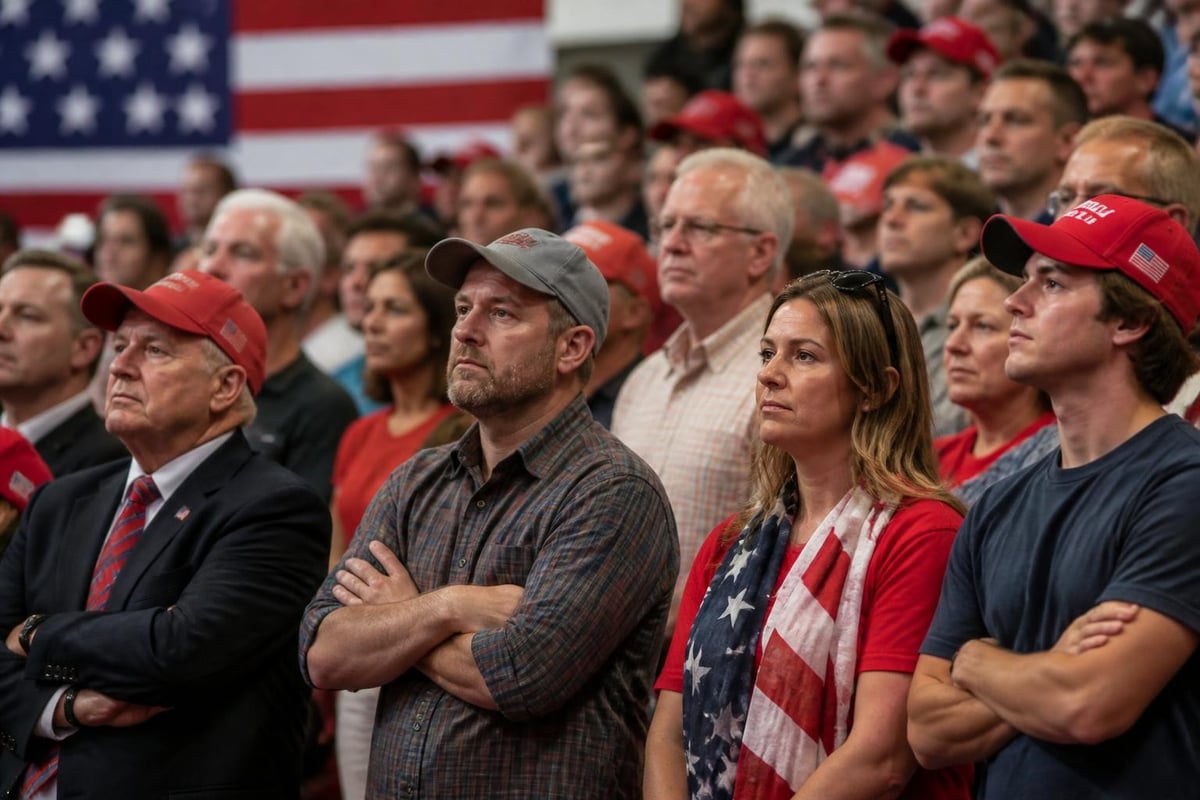
Traditional Republicans who prioritize fiscal conservatism and strong defense may support America First foreign policy while remaining uncomfortable with populist rhetoric. Working-class voters in manufacturing regions might embrace protectionist economics without fully adopting MAGA cultural positions. This diversity creates both opportunities and challenges for governing.
Electoral Implications
The 2026 Pew Research political typology provides crucial data on how these coalitions function. Among right-leaning voters, approximately 30-35% identify strongly with MAGA as a political identity, while nearly 60% support various America First policy positions without that same personal identification with the movement brand.
| Voter Segment | MAGA Identity | America First Policy Support | Primary Motivation |
|---|---|---|---|
| Core MAGA | Strong | Very High | Leadership loyalty, cultural issues |
| Economic Nationalists | Moderate | High | Trade, manufacturing, jobs |
| Traditional Conservatives | Weak | Moderate-High | Security, sovereignty, fiscal policy |
| Foreign Policy Hawks | Variable | High | Military strength, alliance skepticism |
This table illustrates why simplifying the maga influence vs broader america first agenda relationship obscures important political dynamics. A presidential administration must navigate these different constituencies, each with distinct expectations and priorities.
Foreign Policy and National Security
National security policy represents perhaps the clearest arena where MAGA influence vs broader America First agenda distinctions manifest. The 2025 National Security Strategy articulates an America First framework focused on strategic competition, burden-sharing with allies, and prioritizing direct threats to American interests.
However, implementing these principles requires choices that sometimes divide the coalition. Should the United States maintain commitments to NATO allies while demanding increased defense spending? How aggressively should America confront China economically versus militarily? These questions reveal different emphases within the broader nationalist framework.
The CSIS analysis of the National Security Strategy highlights tensions between rhetorical commitments and operational requirements. Strong MAGA influence might prioritize immediate withdrawal from international commitments, while broader America First thinking recognizes that strategic alliances can serve American interests when properly structured.
Multilateralism and Global Order
The relationship with international institutions exemplifies these tensions. The Carnegie Endowment research on the post-American world examines how nationalist shifts affect global governance structures. Pure MAGA influence might advocate complete disengagement from multilateral organizations, viewing them as constraints on American sovereignty.
The broader America First approach, however, recognizes that selective engagement with international institutions can advance American interests. This creates space for reforming organizations like the World Trade Organization or United Nations rather than simply abandoning them. The distinction matters significantly for presidential foreign policy implementation and long-term strategic planning.
Economic Policy and Trade
Economic nationalism represents core territory for the maga influence vs broader america first agenda conversation. Both perspectives prioritize American workers and domestic manufacturing, but their policy prescriptions and implementation strategies often diverge significantly.

MAGA influence typically emphasizes aggressive tariff deployment, public confrontation with trading partners, and rapid policy changes designed to signal toughness. These approaches appeal to the base through visible action and confrontational symbolism. The broader America First economic agenda shares protectionist goals but may favor longer-term industrial policy, targeted incentives for reshoring, and strategic rather than comprehensive tariffs.
Implementation Strategies
Consider these contrasting approaches to achieving similar goals:
- Tariff policy: Comprehensive tariffs on all imports from specific countries versus targeted tariffs on strategic sectors
- Manufacturing revival: Executive actions and public pressure versus tax incentives and infrastructure investment
- Trade negotiations: Public confrontation and threat-based diplomacy versus private negotiations with credible enforcement
- Supply chain security: Immediate decoupling from rival nations versus gradual diversification with allied partners
Both approaches claim the America First mantle, but their governing implications differ substantially. Presidential administrations must balance these competing strategies while maintaining coalition support. The Council on Foreign Relations report on the Trump coalition documents how economic priorities vary across different segments of America First supporters.
Institutional Relationships and Governance
The relationship with governmental institutions and traditional power structures reveals perhaps the sharpest contrast in maga influence vs broader america first agenda dynamics. MAGA influence often frames federal agencies, career bureaucrats, and established institutions as obstacles to reform that require confrontation or dismantling.
The broader America First approach may share skepticism about institutional bias while recognizing that governing effectively requires working through existing structures. This creates practical tensions when presidential administrations attempt to implement policy changes. Should the administration prioritize rapid disruption or sustainable reform?
Administrative State and Policy Implementation
These competing approaches affect everything from regulatory policy to personnel decisions:
- Regulatory reform: Immediate rollback versus systematic review and replacement
- Agency leadership: Outsider disruptors versus experienced reformers
- Career staff: Wholesale replacement versus selective accountability
- Legislative strategy: Executive action emphasis versus congressional coalition building
- Judicial appointments: ideological purity versus confirmability and qualifications
The effectiveness of presidential governance often depends on navigating these tensions successfully. Pure MAGA influence might prioritize symbolic disruption, while broader America First thinking focuses on durable policy change that survives beyond a single administration.
Media Strategy and Public Communication
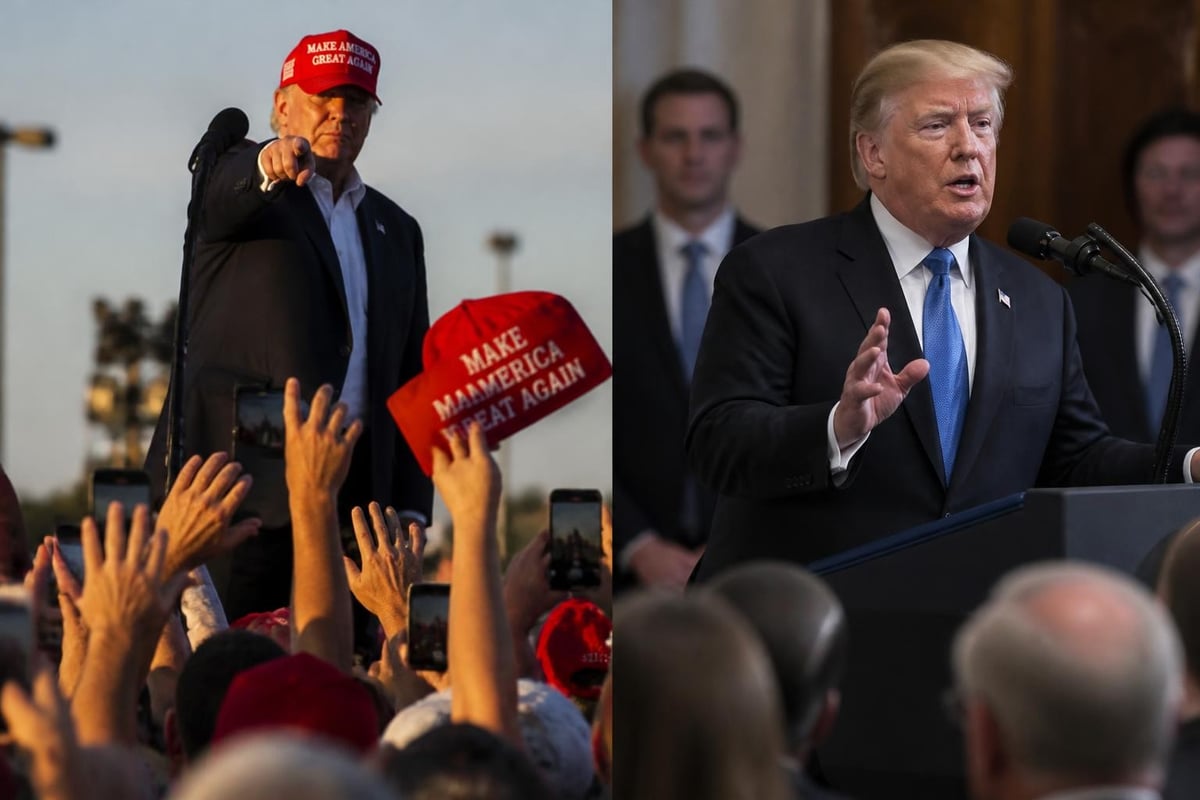
Communication strategy represents another domain where MAGA influence vs broader America First agenda distinctions become apparent. MAGA's signature style emphasizes direct communication through social media, confrontation with traditional media outlets, and prioritizing base enthusiasm over broader persuasion.
The broader America First policy framework could theoretically be advanced through various communication approaches. Some supporters prefer presidential communication that maintains traditional dignity while advocating nationalist policies. Others embrace the disruptive communication style as essential to the movement's success.
| Communication Approach | MAGA Emphasis | Broader America First |
|---|---|---|
| Primary channels | Social media, rallies | Mixed traditional and new media |
| Target audience | Committed base | Persuadable center-right voters |
| Tone | Confrontational, personal | Varies (confrontational to measured) |
| Media relationships | Adversarial | Selectively adversarial |
| Messaging discipline | Leader-driven spontaneity | Coordinated policy messaging |
This communication divide affects how policies are presented and defended. Presidential statements that energize MAGA supporters might alienate voters who support America First policies but prefer different stylistic approaches. Managing this balance remains an ongoing challenge for any administration navigating these waters.
Legislative Priorities and Coalition Building
The legislative arena tests whether maga influence vs broader america first agenda tensions can be resolved productively. Passing major legislation requires coalition building that extends beyond the MAGA core to include skeptical moderates and single-issue voters.
The More in Common analysis of the Trump coalition demonstrates how policy priorities vary across coalition segments. Infrastructure investment, for example, enjoys broad support across America First voters but requires bipartisan cooperation that pure MAGA influence might reject as compromise with political enemies.
Priority Setting and Trade-offs
Presidential administrations face constant choices about which policies to prioritize:
- Immigration enforcement versus legal immigration reform
- Tax cuts versus targeted industrial policy spending
- Deregulation versus strategic regulation of technology companies
- Defense spending versus non-intervention foreign policy
- Cultural issues versus economic nationalism
Different coalition segments prioritize these issues differently. MAGA influence might emphasize cultural battles and immigration enforcement, while economic nationalists focus on trade and manufacturing. Successful governance requires sequencing and balancing these competing priorities without fracturing the coalition.
State and Local Dynamics
The maga influence vs broader america first agenda relationship plays out differently across state and local contexts. Some governors and state legislators embrace full MAGA identification, while others advance America First policies with different branding and stylistic approaches.
This variation matters for presidential politics because state-level officials serve as surrogates, implement federal policies, and shape electoral outcomes. A governor who supports protectionist economics and strict border enforcement while maintaining conventional political style demonstrates that America First policies can exist independently of MAGA identity.
The diversity of approaches at state level also provides experimentation opportunities. Different implementation strategies for similar policy goals can be tested and evaluated, informing future presidential decision-making. This federalist dimension adds complexity to understanding how nationalist policies function in practice.
Future Trajectory and Evolution
As American politics evolves beyond 2026, the relationship between MAGA influence and the broader America First agenda will likely continue shifting. Several scenarios merit consideration for anyone tracking presidential politics and governance.
Scenario one involves MAGA and America First becoming increasingly synonymous, with the movement fully capturing the nationalist policy framework. Scenario two sees gradual separation, with America First policies persisting as MAGA's personality-driven elements fade. Scenario three features ongoing tension and negotiation between these forces within conservative politics.
Each scenario carries different implications for presidential elections, legislative strategy, and policy implementation. The non-partisan coverage at U.S. Presidential Report provides essential context for understanding these evolving dynamics without partisan spin.
Generational and Demographic Factors
The coalition's future depends partly on generational replacement and demographic change. Younger conservatives may embrace America First economics while rejecting aspects of MAGA cultural politics. Demographic shifts in key states affect which coalition strategy proves most electorally effective.
These long-term trends will shape how presidential candidates position themselves and which policy priorities they emphasize. Understanding the maga influence vs broader america first agenda distinction helps predict and interpret these strategic choices.
International Perspectives and Comparisons
The American experience with nationalist politics exists within a global context of similar movements. European nationalist parties, for instance, demonstrate various relationships between populist leadership styles and nationalist policy frameworks. Some feature charismatic leaders whose personalities define the movement; others develop more institutionalized nationalist parties with rotating leadership.
These international comparisons illuminate possible trajectories for American politics. Will America First politics develop institutional structures independent of individual leaders, or does the movement remain personality-dependent? The answer significantly affects long-term durability and policy consistency.
Other democracies also demonstrate that nationalist economic and foreign policies can be pursued through different political styles and coalition strategies. This suggests that the maga influence vs broader america first agenda tension might eventually resolve through institutional evolution rather than one perspective completely dominating.
The distinction between MAGA influence and the broader America First agenda represents more than semantic splitting-it defines real tensions within conservative politics that shape presidential governance and policy implementation. As American politics continues evolving, tracking these dynamics becomes essential for understanding how nationalist policies develop and which coalition strategies prove sustainable. For comprehensive, non-partisan coverage of how presidents navigate these complex political currents, U.S. Presidential Report delivers the analysis and context you need to stay informed about American governance.