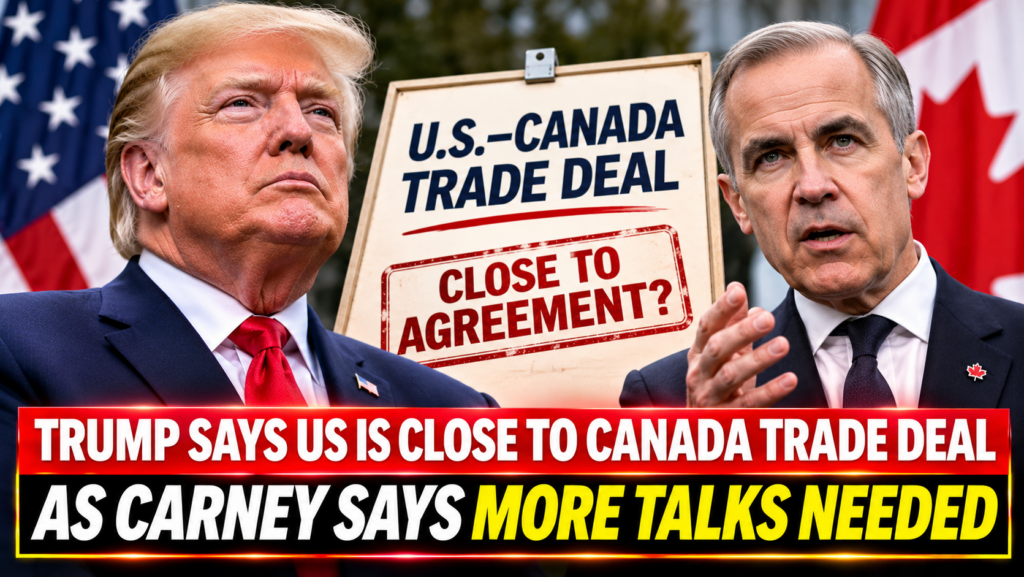
President Donald Trump says the United States is close to reaching a trade deal with Canada, but Canadian Prime Minister Mark Carney has cautioned that negotiations remain unfinished. The latest developments suggest progress in efforts to ease months of trade tensions, although key terms have yet to be finalized.
According to a report by Reuters, Trump described the prospective agreement as a great deal during a November 3 interview with Fox News. Carney, meanwhile, said Washington had withdrawn some earlier demands but emphasized that both countries still had work to do.
Trump Signals Progress in US-Canada Trade Negotiations
Trump expressed confidence that an agreement could be reached soon, praising Canada and suggesting that the negotiations were moving toward a positive outcome.
“Canada is very good, we’re going to make a deal with Canada very soon. We’re going to make a great deal,” Trump said during the interview.
The comments followed a conversation between Trump and Carney on November 1 about the future of trade between the two countries. Both leaders indicated that their teams would continue working toward an agreement in the coming weeks.
Trump also suggested that a deal could benefit American farmers by addressing tariffs on agricultural products exported to Canada.
However, neither government had announced a finalized agreement as of November 3. The president’s optimism therefore reflects the current state of negotiations rather than a completed trade settlement.
Carney Says Washington Has Dropped Earlier Demands
Carney acknowledged progress in the negotiations but offered a more cautious assessment of the possibility of an immediate agreement.
Speaking at a televised news conference following a summit in Antigua, the Canadian prime minister said the United States had reduced some of its earlier demands.
One significant change involved a previous US proposal that would have given Washington final approval over trade agreements Canada might negotiate with other countries.
Carney indicated that the United States had withdrawn this demand, describing the latest negotiations as involving fewer American demands and better offers.
“We’ve made progress, but we haven’t finished,” Carney said. He added that the two sides were not yet at the point of reaching an agreement.
His comments suggest that Canada sees the latest discussions as a more constructive negotiating process, but Ottawa is not prepared to declare the trade dispute resolved.
Tariffs Continue to Put Pressure on Both Economies
The negotiations are taking place after months of escalating trade tensions between the United States and Canada. Both countries have imposed billions of dollars in tariffs on each other’s products, creating uncertainty for businesses and industries that depend on cross-border trade.
The dispute has affected important sectors, including automobiles, steel, aluminum, and agriculture. American businesses that rely on Canadian suppliers and Canadian exporters serving the US market face additional costs and uncertainty while the tariff measures remain in place.
The Associated Press reported that Canada had previously withdrawn from negotiations in August after rejecting US demands it considered unacceptable. The breakdown was followed by additional American tariffs of up to 50% on approximately $20 billion worth of Canadian goods and retaliatory measures from Ottawa.
The latest discussions could create an opportunity to reduce some of these trade barriers. However, the precise tariff arrangements and concessions under consideration have not been fully disclosed.
Trade Dispute Becomes a Political Issue Ahead of Midterm Elections
The US-Canada trade dispute has also become a political issue in northern American states, particularly Michigan and Maine, where cross-border economic relationships are important.
Tariffs can affect manufacturers, agricultural producers, retailers, and consumers through higher input costs and disruptions to supply chains. These concerns have made trade policy relevant to voters and businesses ahead of the November 3 midterm elections.
For the Trump administration, reaching an agreement could provide an opportunity to demonstrate progress on its trade agenda while addressing concerns from industries affected by the tariffs.
For Carney, the challenge is to secure better trading conditions without accepting provisions that could undermine Canada’s economic interests or decision-making authority.
The negotiations therefore involve more than reducing tariffs. They also reflect disagreements over the balance of economic power between the two neighboring countries.
What Happens Next in the US-Canada Trade Deal?
Both governments are expected to continue negotiations in the coming weeks. Carney said their teams would work toward an outcome following his conversation with Trump, while the US president has publicly expressed confidence that an agreement is close.
Important questions remain, including which tariffs could be removed, what concessions each country might make, and how the agreement would address agricultural and industrial trade.
Until both governments confirm the terms, businesses operating across the US-Canada border will continue facing uncertainty over trade costs and market access.
The outcome could have wider implications for North American economic relations. A successful agreement would help ease tensions between two closely connected trading partners, while a prolonged dispute could encourage Canadian businesses and policymakers to accelerate efforts to diversify their international trade relationships.
Related Reading
- Trump Signs Executive Order Aimed at Lowering Mortgage Costs
- Trump Administration Moves to Expand Psychedelic Treatments for Veterans
Trump says an agreement is close, but Canadian Prime Minister Mark Carney has emphasized that negotiations are not yet complete.
The negotiations involve tariffs, market access, and earlier US demands, including a proposal for Washington to have final approval over Canada’s future trade agreements with other countries.