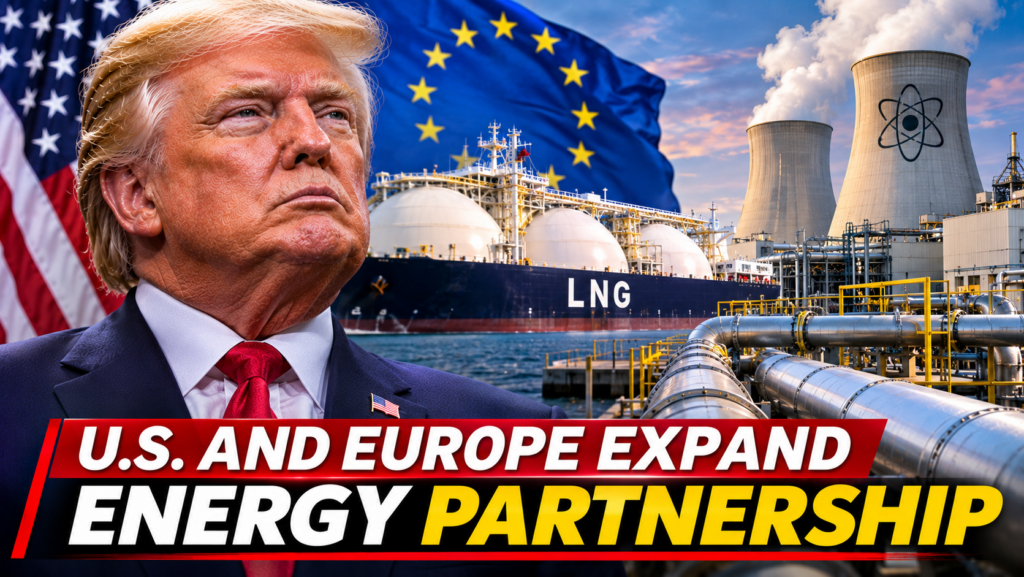
The Trump administration is expanding energy cooperation between the United States and Europe through new agreements covering liquefied natural gas (LNG), nuclear technology, and energy infrastructure investment.
The initiatives were announced following the seventh Partnership for Transatlantic Energy Cooperation (P-TEC) Ministerial and Business Forum, held November 17–19, 2026, in Warsaw, Poland.
The agreements aim to expand American energy exports, diversify European energy supplies, and strengthen economic and national security across the Atlantic.
What Happened?
U.S. Energy Secretary Chris Wright convened the seventh P-TEC meeting alongside European energy officials and industry leaders.
According to a fact sheet by the U.S. Department of Energy, the 2026 gathering attracted 1,107 participants, approximately 30% more than the previous year’s 850 attendees.
The forum resulted in several agreements involving American energy companies and European partners.
These initiatives focus on expanding LNG trade, developing nuclear technology, and improving cross-border energy infrastructure.
Key Energy Agreements Announced
1. Expanding American LNG Exports Across Europe
The United States is strengthening Poland’s position as a gateway for American LNG exports into Central and Eastern Europe.
Several agreements were announced to improve access to natural gas supplies.
- Venture Global–ORLEN: The first U.S. LNG cargo under the companies’ long-term contract arrived in Poland during the forum.
- ORLEN–SPP (Slovakia): The companies signed an MOU to explore natural gas deliveries from Poland to Slovakia.
- ORLEN–MVM ONEnergy (Hungary): Another MOU will explore natural gas deliveries through Poland to Hungary.
- Visegrád Four: Gas transmission operators from Poland, the Czech Republic, Slovakia, and Hungary signed an agreement to strengthen cross-border pipeline connectivity.
These partnerships are intended to diversify regional energy supplies and expand opportunities for American natural gas exporters.
2. New Investments in European Energy Infrastructure
American companies are also exploring investment opportunities in Central and Eastern Europe.
Two major partnerships were announced during the forum.
Sentinel Midstream–4iG
U.S.-based Sentinel Midstream and Hungary’s 4iG signed an agreement to explore investments in Adriatic LNG storage, transportation, and energy infrastructure.
The initiative could create additional routes for American energy exports into European markets.
ORLEN–Carlyle
Poland’s ORLEN and U.S.-based investment firm Carlyle signed an agreement to explore energy investments, joint ventures, and industrial modernisation.
The partnership aims to bring American capital and expertise into Central and Eastern European energy projects.
3. Advancing American Nuclear Technology
The Trump administration is also expanding cooperation in civil nuclear energy, particularly in Poland.
Several agreements involving American nuclear companies were announced.
Westinghouse–PEJ
Westinghouse and Poland’s PEJ signed a Statement of Intent to advance the potential procurement of long-lead equipment valued at approximately $2.24 billion for Poland’s first AP1000 nuclear power plant.
GE Vernova Hitachi–Synthos Green Energy
A new agreement will advance engineering work for BWRX-300 small modular reactors.
The technology could support electricity generation and district heating networks serving approximately 16 million Polish residents.
Bechtel–University of South Carolina–Gdańsk University of Technology
The partnership will strengthen nuclear engineering education and workforce development.
The initiative aims to develop the skilled workforce needed to support Poland’s expanding nuclear energy sector.
U.S. Energy Exports to Europe Continue to Grow
The agreements come as American energy exports to Europe continue to increase.
According to the Department of Energy, U.S. energy exports to the European Union increased nearly 38% during the first nine months of 2026, reaching approximately $82 billion.
This figure includes nearly $21 billion in LNG exports.
The department also reported that since ending the previous administration’s pause on new LNG export approvals to non-free trade agreement countries, it has approved more than double the level of U.S. LNG exports that occurred in January 2025.
These developments highlight the growing role of American energy suppliers in European markets.
Why Transatlantic Energy Security Matters
The partnerships reflect a broader effort to diversify Europe’s energy supplies and reduce dependence on unreliable suppliers.
Poland is becoming an increasingly important entry point for American LNG into Central and Eastern Europe.
Its geographic position and expanding energy infrastructure could help connect American natural gas supplies with neighbouring markets, including Slovakia and Hungary.
The cooperation also extends beyond natural gas.
Nuclear technology, infrastructure investment, and cross-border pipeline connectivity are becoming important parts of the region’s long-term energy strategy.
For the United States, these partnerships create opportunities for domestic energy producers, technology companies, and infrastructure investors.
What Happens Next?
The announced agreements will move into different stages of commercial development and implementation.
Some initiatives involve signed MOUs to explore future supply arrangements, while others cover investment opportunities, engineering work, or potential equipment procurement.
Their final outcomes will depend on commercial negotiations, project development, and the relevant national approval processes.
The seventh P-TEC meeting also concluded with a joint chair statement from U.S. Energy Secretary Chris Wright and Polish Energy Minister Miłosz Motyka.
The statement reaffirmed the importance of energy cooperation, diversified supplies, nuclear technology, and infrastructure investment.
As the United States expands its energy partnerships across Europe, the success of these initiatives could influence regional energy markets and strengthen American commercial influence in the transatlantic energy sector.
Related Reading
- Trump’s Executive Order Could Allow California Offshore Oil Platforms to Remain on the Seabed
- Trump Says U.S. Does Not Need Iran Deal, Redirects JD Vance to Domestic Corruption
FAQs
The United States is expanding LNG exports, supporting nuclear technology projects, and developing energy infrastructure partnerships with European countries.
The agreements include LNG supply partnerships, cross-border pipeline cooperation, energy infrastructure investments, and nuclear technology initiatives involving companies from the United States and Europe.