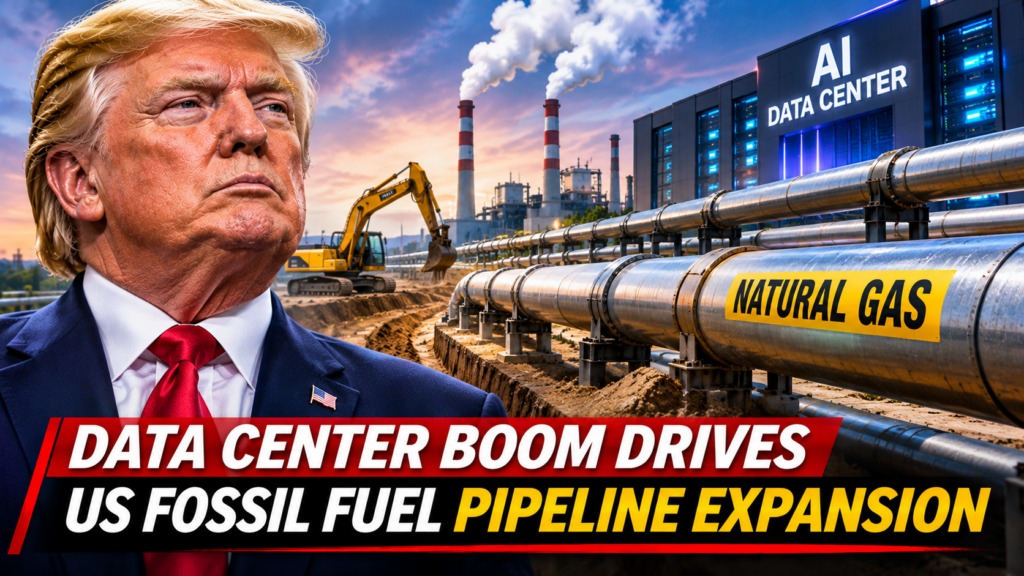
The rapid growth of artificial intelligence and data centers in the United States is driving a major expansion of proposed fossil fuel pipeline projects. A review of federal records by the Environmental Integrity Project (EIP) identified nearly 200 proposed or ongoing projects covering approximately 17,000 miles, raising concerns about environmental damage, pipeline safety and federal oversight.
The expansion comes as the Trump administration rolls back environmental protections and changes pipeline safety enforcement. According to a report by The Guardian, completing all the proposed projects could increase the amount of natural gas transported across the country by approximately 40%.
Nearly 200 Pipeline Projects Proposed Across the US
The proposed and ongoing projects span 42 states, with Texas, Louisiana, Pennsylvania and Illinois among the states facing the largest developments. Texas has approximately 42 projects, followed by Louisiana with 27, while Pennsylvania and Illinois each have nine.
Growing electricity demand from data centers is a major driver. These facilities require continuous power to operate AI systems, cloud computing services and other digital infrastructure. At least 98 gas-fired power plants have been proposed to serve data centers, increasing demand for natural gas transportation.
Natural gas exports are also contributing to the expansion, with energy market disruptions linked to the wars in Ukraine and Iran adding to demand.
Alexandra Shaykevich, research manager at the Environmental Integrity Project, described the development as the largest pipeline boom in a couple of decades. She raised concerns about the scale of construction taking place alongside federal deregulation efforts.
Trump Administration Accelerates Energy Infrastructure Projects
The EIP review found that more than 25% of the pipeline projects had requested expedited environmental reviews. These processes can shorten approval timelines and reduce opportunities for environmental assessments and public participation.
The administration has also used the Defense Production Act to advance energy infrastructure projects despite objections from state authorities.
In March 2026, the administration used the law to restart the Santa Ynez oil pipeline project in Santa Barbara, California. The pipeline had been shut down in 2015 following an oil spill that damaged approximately 150 miles of coastline.
Federal authorities have also used the Defense Production Act to advance the controversial 125-mile Constitution pipeline, which would run from Pennsylvania to upstate New York despite opposition from New York state.
Environmental advocates argue that these decisions could weaken protections under laws such as the Clean Water Act and Endangered Species Act, increasing pressure on sensitive ecosystems and communities.
Pipeline Safety Enforcement Raises Additional Concerns
The report also highlights changes to federal pipeline safety enforcement. In January 2026, the Trump administration issued a memorandum stating that the government would refrain from taking enforcement action against companies violating regulations administered by the Pipeline and Hazardous Materials Safety Administration (PHMSA).
Federal enforcement activity had already declined. By 2025, the average number of enforcement actions initiated had fallen by half, with 117 actions recorded.
The administration has also reportedly allowed companies to increase pipeline operating pressures in densely populated areas and conduct fewer pressure tests. These changes have raised concerns about the potential consequences of leaks, equipment failures and explosions.
According to figures cited in The Guardian’s report, the United States experiences approximately 1.7 pipeline accidents, spills, fires or explosions every day.
Previous incidents demonstrate the potential risks. In March 2023, a pipeline explosion at a chocolate factory in West Reading, Pennsylvania, killed seven workers and injured 10 others. In October 2026, another pipeline explosion in New Mexico killed two workers.
Pipeline Projects Could Affect More Than 19,000 Acres of Wetlands
Environmental damage is another concern surrounding the proposed expansion. The EIP review found that at least 81 pipeline projects could affect more than 19,000 acres of federally protected wetlands.
Wetlands provide important habitats, filter water and help protect communities against flooding. Environmental groups warn that reducing federal protections could make it more difficult to prevent infrastructure projects from damaging these ecosystems.
The Trump administration is also seeking to remove approximately 94% of federal wetland protections, according to the report.
Southwest Louisiana is among the areas facing significant pressure because of its concentration of pipelines and natural gas export terminals. Existing infrastructure has already affected wetlands and fishing grounds, raising concerns about the consequences of additional construction for local communities.
What Happens Next?
The nearly 200 proposed and ongoing pipeline projects represent a major expansion of US natural gas infrastructure. If completed, they could increase daily transportation capacity by approximately 40%, supporting growing demand from data centers, gas-fired power plants and export markets.
However, the projects face regulatory, environmental and community challenges. State opposition, wetland protection concerns and questions about federal pipeline safety enforcement could influence their progress.
The expansion highlights a broader debate over how the United States will meet the electricity demands of artificial intelligence while managing the environmental and public safety consequences of greater fossil fuel infrastructure. As data center development continues, the relationship between energy policy, technological growth and environmental protection will remain an important national issue.
Related Reading
- Trump Moves to Remove South Africa and Rwanda From AGOA Trade Program
- Trump Says US Will End $4 Billion in Annual Aid to Israel
Data centers require large amounts of reliable electricity to operate AI systems and digital infrastructure. Proposed gas-fired power plants and natural gas exports are increasing demand for additional pipeline capacity.
The Environmental Integrity Project identified at least 81 proposed or ongoing pipeline projects that could damage more than 19,000 acres of federally protected wetlands.