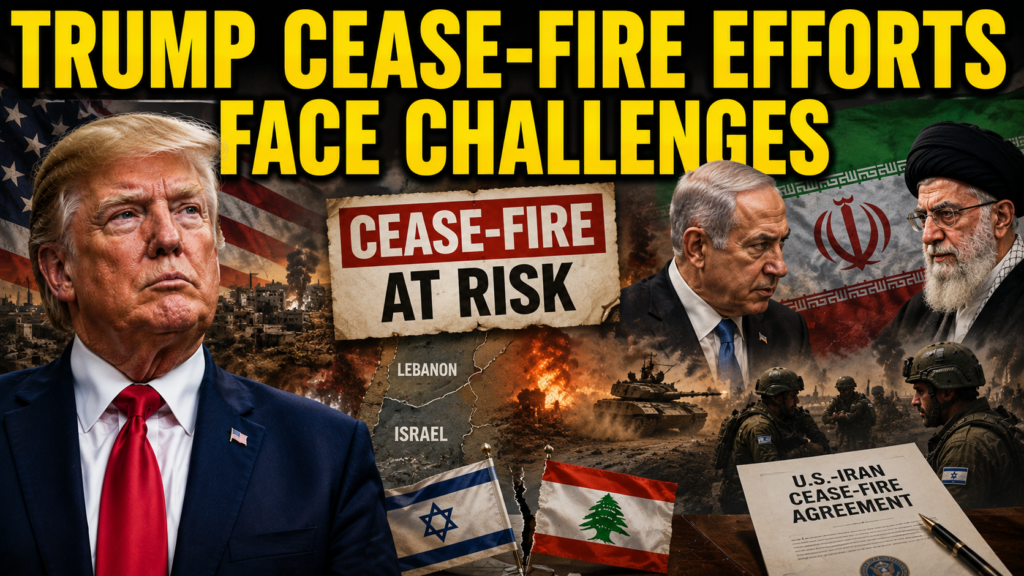
President Donald Trump’s cease-fire efforts in the Middle East are facing new uncertainty after U.S. intelligence assessments reportedly concluded that Israel is likely to continue military operations against Hezbollah in Lebanon despite a recent U.S.-Iran agreement calling for an end to hostilities. The development highlights the fragile nature of regional diplomacy and growing tensions surrounding the implementation of the cease-fire framework.
What Happened
According to a report by The New York Times, U.S. intelligence officials believe Israeli Prime Minister Benjamin Netanyahu is likely to continue military actions against Hezbollah despite provisions in the newly negotiated U.S.-Iran cease-fire arrangement that call for a halt to fighting in Lebanon.
The intelligence assessment reportedly reflects concerns that Israel views Hezbollah as an ongoing national security threat and may continue conducting military operations regardless of diplomatic efforts tied to broader U.S.-Iran negotiations.
The cease-fire agreement was designed to reduce tensions across the region while creating conditions for further discussions regarding Iran’s nuclear program and a longer-term peace framework.
Key Details Behind the Intelligence Assessment
Israel’s Security Concerns Remain Central
U.S. officials reportedly believe Israel remains committed to responding to Hezbollah attacks in northern Israel and maintaining pressure on the Iran-backed organization.
Israeli leaders have repeatedly argued that Hezbollah poses a direct threat to national security and that military operations are necessary to deter future attacks.
While Israeli Ambassador Yechiel Leiter stated that Israel had agreed to an immediate cease-fire and halted offensive operations, intelligence officials reportedly remain skeptical about whether those commitments will hold over the long term.
Recent Violence Raised New Questions
The report follows a series of clashes between Israeli forces and Hezbollah fighters.
Israeli airstrikes in Lebanon reportedly occurred after a Hezbollah drone attack killed Israeli soldiers in southern Lebanon. The escalation contributed to renewed concerns about regional stability and reportedly delayed planned talks between U.S. and Iranian officials in Switzerland.
These developments have complicated efforts to advance the broader cease-fire initiative supported by the Trump administration.
Political and Diplomatic Impact
Strained U.S.-Israel Relations
The intelligence assessment also highlights growing tensions between President Trump and Prime Minister Netanyahu.
According to the report, the cease-fire agreement has generated criticism within Israel, particularly because it does not directly address Iran’s missile program and includes provisions affecting U.S. military presence in the region.
Israeli political figures and commentators have expressed concerns that the agreement places restrictions on Israel’s ability to respond to security threats in Lebanon.
Readers seeking additional context on the administration’s recent diplomatic efforts can review Trump’s discussions involving Iran, Ukraine, and international security issues as well as coverage of the Trump G7 summit discussions on Iran, AI, and Ukraine.
Vice President JD Vance Criticizes Israeli Officials
The report also noted public criticism from Vice President JD Vance, who defended the Trump administration’s diplomatic efforts.
During a news conference, Vance reportedly criticized members of Netanyahu’s government who had attacked the cease-fire agreement and questioned U.S. policy decisions.
His remarks underscored the administration’s position that the agreement represents an important opportunity to reduce regional tensions and advance diplomatic negotiations.
Reactions and Opposition
The cease-fire agreement remains controversial among multiple stakeholders.
Israeli officials continue to argue that military operations in Lebanon are defensive responses to Hezbollah attacks, while U.S. intelligence analysts reportedly remain concerned that ongoing strikes could undermine diplomatic progress.
Within Israel, public criticism of the agreement reflects broader concerns about national security and the long-term effectiveness of negotiations involving Iran.
At the same time, U.S. officials remain focused on preserving the framework needed for future diplomatic discussions.
What Happens Next
The future of the cease-fire effort may depend largely on developments in Lebanon and the willingness of all parties to adhere to negotiated commitments.
Any significant escalation between Israel and Hezbollah could further complicate U.S.-Iran talks and reduce prospects for a broader regional agreement.
American intelligence agencies are expected to continue monitoring military activity while diplomats work to sustain momentum behind the cease-fire framework.
Conclusion
Trump’s cease-fire efforts represent one of the administration’s most significant foreign policy initiatives in the Middle East. However, intelligence assessments suggesting that Israel may continue operations against Hezbollah underscore the challenges of translating diplomatic agreements into lasting stability. As tensions persist in Lebanon and negotiations with Iran continue, the success of the cease-fire will likely depend on whether regional actors can balance security concerns with diplomatic commitments.
U.S. intelligence reportedly believes Israel may continue military operations against Hezbollah despite cease-fire commitments.
The agreement is intended to reduce regional tensions and support broader discussions involving Iran’s nuclear program and security issues.