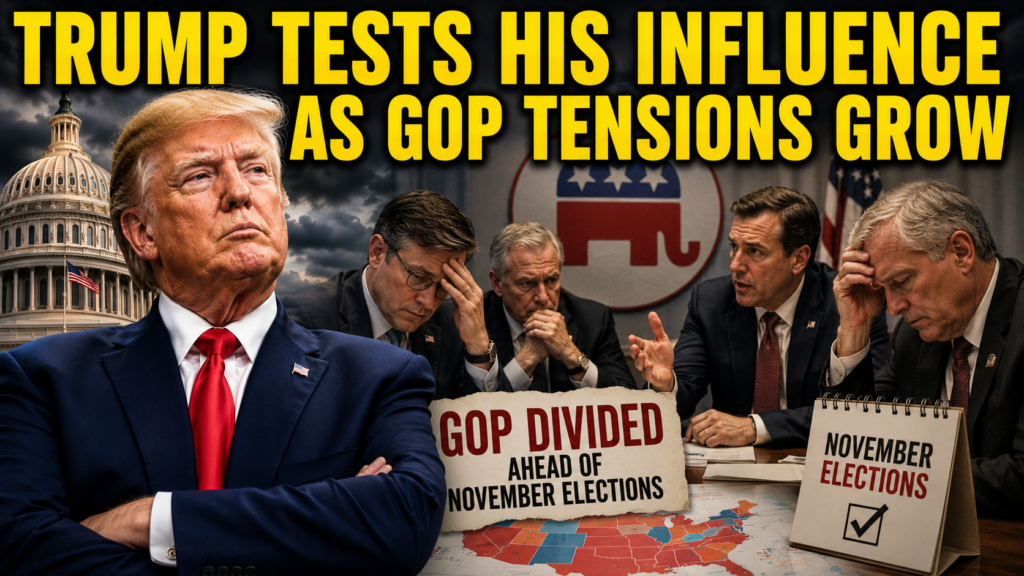
President Donald Trump is facing renewed scrutiny over his leadership style as reports indicate growing frustration among Republican lawmakers and political allies. The latest developments suggest that Trump’s influence within the GOP remains significant, but a series of recent decisions have sparked concerns about party unity heading into the November elections.
What Happened
According to a report by The Wall Street Journal, Trump has increasingly relied on his own instincts when making political and policy decisions during his second term.
The report states that the president has dismissed strategic advice from some allies, lawmakers, and longtime associates, often responding with a blunt reminder of his authority: “I’m the president and you’re not.”
The approach has reportedly frustrated some Republican officials who worry that controversial decisions could create challenges for GOP candidates ahead of upcoming elections.
Key Details Behind the Growing GOP Frustrations
Trump Relies More on Personal Judgment
Seventeen months into his second term, Trump appears increasingly confident in making decisions without extensive consultation from party leaders or advisers.
Supporters argue that this leadership style reflects the independence that helped propel him back to the White House. Critics within Republican circles, however, fear that bypassing traditional political advice could expose the party to unnecessary risks.
The reported tensions underscore a broader debate within the GOP over the balance between loyalty to Trump and electoral strategy.
Concerns About November Elections
Some Republican lawmakers and strategists are reportedly worried that controversial policy choices and public disputes could affect voter sentiment ahead of key races.
These concerns come as political analysts continue monitoring shifts in voter attitudes and approval ratings.
Readers interested in broader electoral trends can also review Trump midterm election poll analysis for additional context on how voters are responding to recent developments.
Political Impact on the Republican Party
Testing Trump’s Grip on the GOP
For years, Trump has maintained a dominant position within the Republican Party, shaping endorsements, policy priorities, and campaign messaging.
The latest tensions raise questions about whether some GOP leaders are becoming more willing to challenge presidential decisions behind closed doors.
Despite these concerns, Trump continues to command strong support from much of the Republican voter base, giving him significant influence over party direction.
Internal Debate Over Strategy
The disagreement is not necessarily about Trump’s popularity among Republican voters but rather about how certain decisions could affect competitive races.
Some party officials believe maintaining focus on economic and national security issues would strengthen Republican prospects, while others remain committed to following Trump’s preferred political approach.
Recent discussions surrounding Trump approval ratings and Washington policy initiatives have also highlighted growing debate about the administration’s political strategy.
Reactions Within Republican Circles
While public criticism from elected Republicans remains limited, reports indicate that private concerns have become more common.
Several party insiders reportedly worry that political opponents could use internal divisions as a campaign issue during the election season.
At the same time, Trump’s supporters argue that his willingness to reject conventional political advice is one of the reasons many voters continue to back him.
The divide illustrates the ongoing tension between traditional Republican political strategy and Trump’s more personalized leadership style.
What Happens Next
As the November elections approach, Republican leaders will be closely watching polling data, voter turnout trends, and reactions to the administration’s policy agenda.
The coming months could determine whether Trump’s direct approach strengthens his influence within the party or intensifies concerns among GOP officials seeking to protect vulnerable seats.
Much will depend on economic conditions, public approval ratings, and the administration’s ability to maintain support among key voting blocs.
Conclusion
The latest reports suggest that Trump is continuing to assert his authority within the Republican Party while relying heavily on his own political instincts. Although his influence over the GOP remains substantial, growing concerns among some Republican lawmakers reveal underlying tensions about strategy and electoral risks. As election season intensifies, the relationship between Trump and party leaders could play an important role in shaping Republican fortunes at the ballot box.
Reports indicate some GOP lawmakers are concerned about decisions they believe could affect Republican electoral prospects.
Trump remains highly influential within the GOP, though recent reports suggest growing internal debates over strategy and leadership.