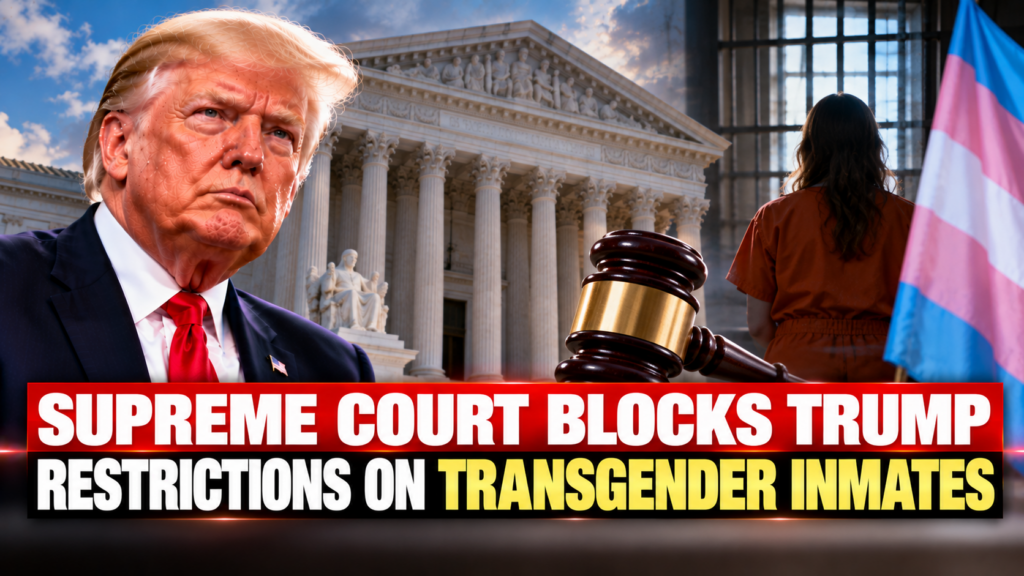
The U.S. Supreme Court on October 21, 2026, rejected the Trump administration’s emergency request to enforce restrictions on gender-affirming medical care for transgender inmates in federal prisons. The decision leaves a lower-court order blocking the policy in place while a legal challenge continues.
According to a report by Reuters, the Supreme Court declined to lift the order that prevents the Federal Bureau of Prisons from implementing the restrictions. Justices Clarence Thomas and Samuel Alito dissented, indicating that they would have allowed the administration to proceed.
What Happened?
The Supreme Court’s decision concerns a Trump administration policy issued in February 2026 that would restrict gender-affirming medical treatments and certain accommodations for transgender people held in federal prisons.
The Justice Department asked the Supreme Court to intervene after lower courts blocked the policy. The administration sought permission to enforce the restrictions while litigation over their legality continued.
The Supreme Court denied the emergency request without providing an explanation, as is common with decisions on emergency applications.
The ruling does not resolve the underlying lawsuit. Instead, it maintains the existing court order requiring the federal prison system to continue following the restrictions imposed by the lower court.
Key Details of the Supreme Court Ruling
What the Trump Administration’s Policy Would Change
The Federal Bureau of Prisons policy would prohibit gender-affirming medical and surgical treatments for transgender inmates, including hormone therapy and surgeries.
It would also end certain social accommodations, including clothing and personal-care items that could be used to alter an inmate’s appearance to align with their gender identity.
The policy would continue to allow psychiatric services for inmates diagnosed with gender dysphoria.
The administration argued that the changes were justified by medical, security, and prison-management considerations. Opponents challenged the policy, arguing that withdrawing medically necessary treatment could cause significant physical and psychological harm.
Why Lower Courts Blocked the Restrictions
Three transgender inmates held in federal correctional facilities in New Jersey, Florida, and Minnesota challenged the policy through a class-action lawsuit.
U.S. District Judge Royce Lamberth blocked its implementation, concluding that the policy was likely arbitrary and capricious under the Administrative Procedure Act, which governs how federal agencies develop and implement policies.
Lamberth found that the Bureau of Prisons had disregarded its own evidence and experience when developing the restrictions. He also concluded that the policy appeared to have been designed to implement President Donald Trump’s executive order rather than independently justified through the agency’s established decision-making process.
The U.S. Court of Appeals for the District of Columbia Circuit subsequently declined to lift the lower-court order on September 18, 2026.
The administration then turned to the Supreme Court in an effort to enforce the policy during the ongoing litigation.
Supreme Court Justices Thomas and Alito Dissent
The Supreme Court’s brief order did not explain the majority’s reasoning.
However, Justices Clarence Thomas and Samuel Alito publicly dissented, stating that they would have allowed the administration to implement the restrictions while the legal challenge continued.
The decision stands out because the court has previously allowed other Trump administration policies affecting transgender people to take effect while litigation proceeded.
Those earlier decisions included restrictions involving military service and passport gender markers, as well as state laws restricting gender-affirming medical care for transgender minors.
Political and Legal Impact
The Supreme Court ruling represents a temporary setback for the Trump administration’s effort to restrict gender-affirming care in federal prisons.
By leaving the lower-court order in place, the court prevents the administration from immediately implementing its policy while the legal challenge continues.
The decision also highlights the role of federal courts in reviewing executive branch policies and determining whether agencies have followed the legal requirements governing their decisions.
For transgender inmates, the ruling means the challenged restrictions cannot currently be enforced under the blocked policy. However, the outcome of the underlying lawsuit remains unresolved.
The case also illustrates the continuing legal disputes surrounding the administration’s broader approach to transgender rights, particularly where federal health care policies intersect with constitutional protections and administrative law.
What Happens Next?
The lawsuit will continue through the federal court system, where judges will examine whether the Bureau of Prisons lawfully adopted the restrictions.
The administration may continue defending the policy as the case progresses, while the plaintiffs seek to maintain access to medical treatment and related accommodations.
The Supreme Court’s October 21 decision addresses only the administration’s request for emergency relief. It does not establish a final ruling on the legality of the restrictions.
The eventual outcome could determine whether the federal prison system can implement the policy or must continue providing the treatments and accommodations covered by the lower-court order.
For now, the decision preserves the existing legal protections for the plaintiffs and other inmates covered by the court’s order while the broader dispute remains pending.
Related Reading
- Trump Nominates Two Federal Judges as 2026 Midterm Elections Approach
- Court Backs EPA Decision Giving Oklahoma Environmental Authority Over Tribal Lands
The court rejected the Trump administration’s emergency request to enforce restrictions on gender-affirming care in federal prisons, leaving a lower-court block in place.
No. The decision is temporary while litigation continues. The court did not issue a final ruling on the policy’s legality.