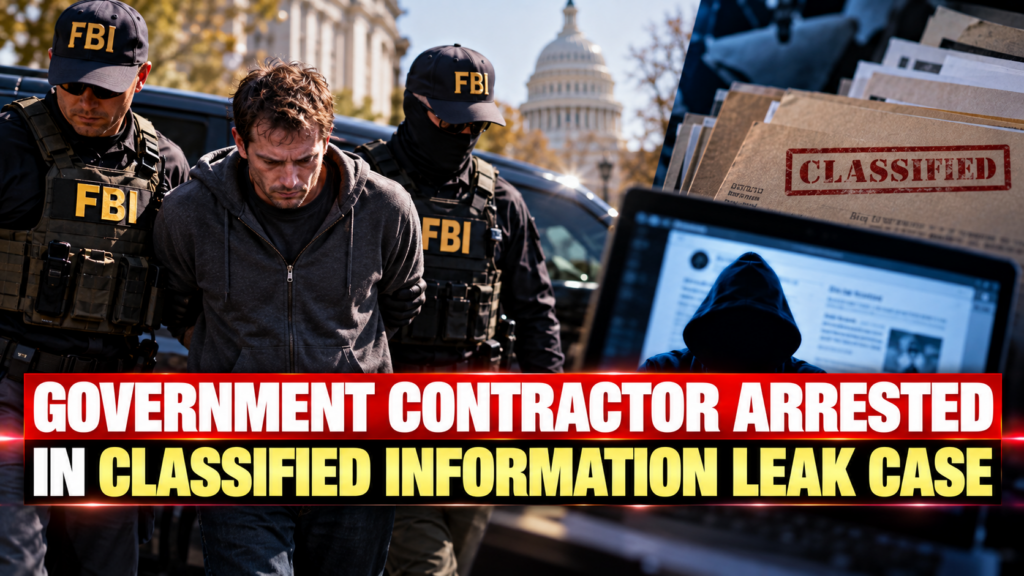
The FBI arrested U.S. government contractor Ian A. Brinksman, 42, on October 23, 2026. Authorities accuse him of leaking classified national defense information to a person who planned to publish it online. The case raises concerns about how the government protects sensitive information.
According to a report by Homeland Security Today, Brinksman faces a charge of illegally sharing national defense information. Investigators allege that he gave classified material to someone with whom he had a personal relationship. That person reportedly planned to publish the information online.
The case highlights the risks federal agencies face when private contractors handle sensitive government information.
What Happened in the Classified Information Leak Case?
The U.S. Department of Justice announced Brinksman’s arrest on October 23, 2026. According to the complaint, he first worked for a U.S. government agency in the Eastern District of Virginia. In 2022, he joined a private contractor that provided services to the same agency.
Brinksman held a Top Secret security clearance. He also had access to Sensitive Compartmented Information, which includes highly protected intelligence.
Prosecutors allege that he accessed classified reports beyond his job duties. They also claim he shared the information with a person who ran a publication on Substack.
The FBI searched Brinksman’s home in Washington, D.C., before arresting him. The FBI’s Chicago Field Office is leading the investigation, with support from its Washington Field Office.
What Prosecutors Allege About the Information Leak
Classified Reports and Online Publications
The criminal complaint refers to the recipient as “Individual 1.” According to investigators, Brinksman had an ongoing personal relationship with this person.
Individual 1 ran a Substack publication. Investigators say some articles contained details that closely matched classified intelligence reports.
In September 2026, Individual 1 reportedly published a fundraising article that referred to reporting based on classified government assessments. The person also allegedly posted on social media about accepting leaked information.
Assistant Attorney General for National Security John A. Eisenberg said Brinksman allegedly obtained information beyond his job duties. He then shared it with a romantic partner who intended to publish it.
The Justice Department has not publicly named Individual 1 in its announcement. It has also not fully described the classified documents involved.
Evidence Cited by Investigators
Investigators say several records connect Brinksman’s access to classified systems with information later published online.
The evidence described in related reporting includes phone records, database access logs, building entry records, and emails. Investigators also compared published articles with intelligence reports that Brinksman allegedly accessed.
These records may help prosecutors show whether Brinksman accessed and shared information without authorization. However, the allegations have not been proven in court.
Why the Case Matters for U.S. National Security
Risks Involving Government Contractors
Government contractors often support intelligence and defense operations. Some receive access to highly sensitive information as part of their work.
Agencies must therefore monitor who accesses classified systems and how people use that information. The Brinksman case highlights the risks that arise when someone with a high-level security clearance allegedly accesses information beyond their assigned duties.
Unauthorized leaks can expose intelligence assessments, sources, or details about government operations. However, authorities have not fully explained what harm the alleged disclosure caused in this case.
Enforcing Classified Information Laws
Attorney General Todd Blanche and FBI Director Kash Patel stressed the government’s commitment to prosecuting people accused of illegally sharing classified information.
CIA Director John Ratcliffe also confirmed that Brinksman had worked as a contractor for the CIA. The agency referred the case to the FBI.
The Justice Department’s National Security Division will handle the prosecution. The case shows how seriously federal authorities treat the protection of classified information and the duties that come with a security clearance.
What Happens Next?
Brinksman faces a criminal complaint accusing him of illegally sharing national defense information. A criminal complaint sets out the government’s allegations. It does not establish guilt.
If the case goes to trial, prosecutors must prove the charge beyond a reasonable doubt. Further court proceedings may reveal more about the information involved and the evidence against Brinksman.
The case also raises questions about how federal agencies protect classified information when private contractors handle it. Its outcome could offer a clearer picture of how the government holds people accountable for allegedly sharing sensitive national defense information without permission.
Related Reading
- Trump Administration Bans DeepSeek From Federal Government IT Systems
- Trump and Vance Launch $25 Million Fraud Whistleblower Program
Ian A. Brinksman, 42, of Washington, D.C., was arrested on October 23, 2026, and charged by criminal complaint with unlawfully transmitting national defense information.
Prosecutors allege that Brinksman accessed classified intelligence beyond his official duties and transmitted information to a person who reportedly intended to publish it online.