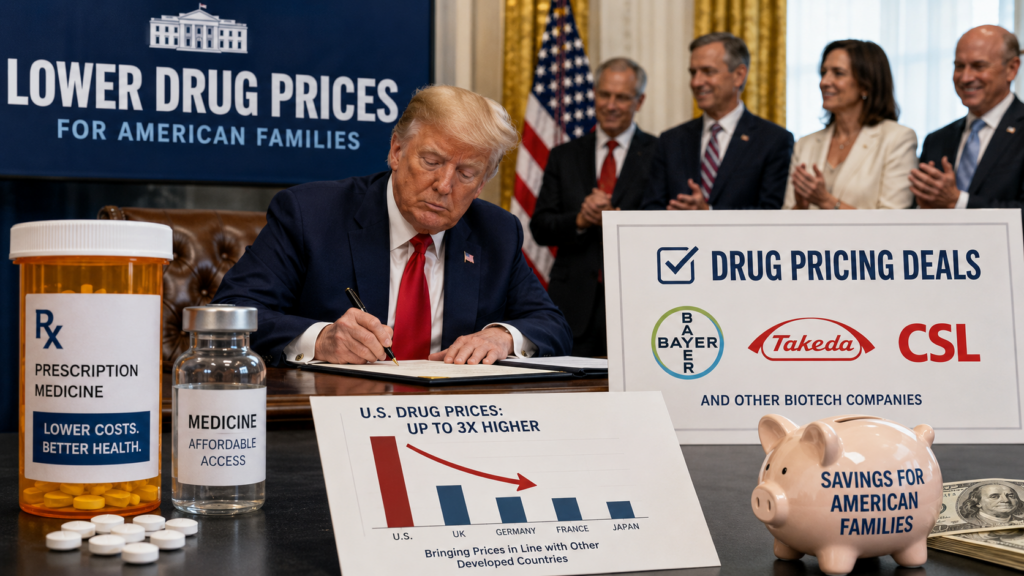
The Trump administration is preparing a new round of drug pricing deals with pharmaceutical companies as President Donald Trump pushes to reduce prescription costs for Americans and align U.S. prices more closely with those in other developed countries.
According to a report by Reuters, Bayer, Takeda, CSL and several mid-sized biotechnology companies are expected to participate in the latest agreements. The White House scheduled a healthcare affordability event for Monday, August 31, where the new initiatives were expected to be discussed.
What Happened
President Donald Trump is expanding his administration’s effort to reduce prescription drug prices through voluntary agreements with pharmaceutical manufacturers.
The latest drug pricing deals are expected to build on agreements reached with 17 of the world’s largest drugmakers since last year. Those companies include Pfizer, Eli Lilly and Amgen.
Under the administration’s approach, participating companies agree to offer certain medicines at prices comparable to those paid in other developed countries. The policy is commonly referred to as “most-favored-nation” pricing.
The White House has presented the initiative as part of a broader effort to make healthcare more affordable for American consumers.
Key Details of the New Drug Pricing Agreements
Bayer, Takeda and CSL Expected to Participate
Germany-based Bayer, Japan’s Takeda and Australia’s CSL are among the companies expected to announce agreements, alongside several mid-sized biotechnology firms.
The Financial Times reported the expected participation, citing two people familiar with the matter. Bayer and Takeda declined to comment to Reuters, while CSL had not immediately responded to a request for comment. The U.S. Department of Health and Human Services also had not immediately responded.
Most-Favored-Nation Pricing
The administration’s strategy seeks to bring some U.S. prescription prices closer to prices paid in other developed nations.
American patients currently pay significantly more for prescription medicines than consumers in many other developed countries, with U.S. prices often approaching three times those levels.
The earlier agreements also included commitments to reduce prices for certain federal health programs and sell some medicines directly to consumers through a Trump-branded website. In exchange, participating pharmaceutical companies received tariff relief.
The administration’s broader healthcare affordability agenda also includes other efforts aimed at lowering medical costs, while its rural health initiatives reflect a wider focus on access to healthcare services in underserved communities.
Why Smaller Drugmakers Have Been Slow to Join
The expansion comes after smaller and mid-sized pharmaceutical companies were slower to participate in the administration’s pricing program.
A Reuters report in June found that Japan’s Astellas was the only smaller manufacturer confirmed at that time as having applied for the Medicaid pricing program. Executives at companies including Ionis Pharmaceuticals had indicated that they saw limited financial benefits from participating.
That hesitation highlights one of the central challenges facing the administration: persuading companies that lower prices will be offset by other financial incentives.
Tariff relief has been one component of the administration’s negotiations with pharmaceutical manufacturers, but the economic value of participating can differ significantly between large drugmakers and smaller biotechnology companies.
Economic and Political Impact
The administration has argued that its drug pricing strategy could generate substantial savings for taxpayers and patients.
The White House has estimated that its broader drug pricing initiatives, including earlier agreements with major pharmaceutical companies, could save federal and state governments $64.3 billion over the next decade.
However, Reuters reported that the estimate remains speculative, and the precise savings from the new agreements are not yet clear.
The impact on Medicaid is also uncertain. Medicaid already receives substantial discounts from pharmaceutical manufacturers under existing law, while most Medicaid beneficiaries pay relatively little out of pocket for prescription medicines.
That means the new agreements could have different effects depending on the drug, program and patient population involved.
The policy also comes as the administration seeks to emphasize healthcare affordability ahead of the 2026 midterm elections, when voters will determine control of Congress.
What Happens Next
The new agreements are expected to extend the administration’s existing pharmaceutical pricing strategy to additional manufacturers.
The immediate question will be whether the participating companies ultimately deliver meaningful reductions in prescription costs and whether more mid-sized drugmakers decide to join.
The administration will also face scrutiny over how much the agreements save government programs, whether savings reach consumers directly and how the deals affect pharmaceutical companies’ incentives.
As the Trump administration continues expanding its drug pricing deals, the policy could become an important test of whether voluntary agreements can meaningfully narrow the gap between U.S. prescription prices and those in other developed countries.
For broader context on the administration’s use of economic policy tools, its recent tariff actions affecting U.S. industries provide another example of how trade and economic policy are being used to pursue domestic policy objectives.
They are voluntary agreements with pharmaceutical companies intended to lower certain U.S. drug prices and align them more closely with prices in other developed countries.
Bayer, Takeda, CSL and several mid-sized biotechnology companies are expected to participate in the latest round.