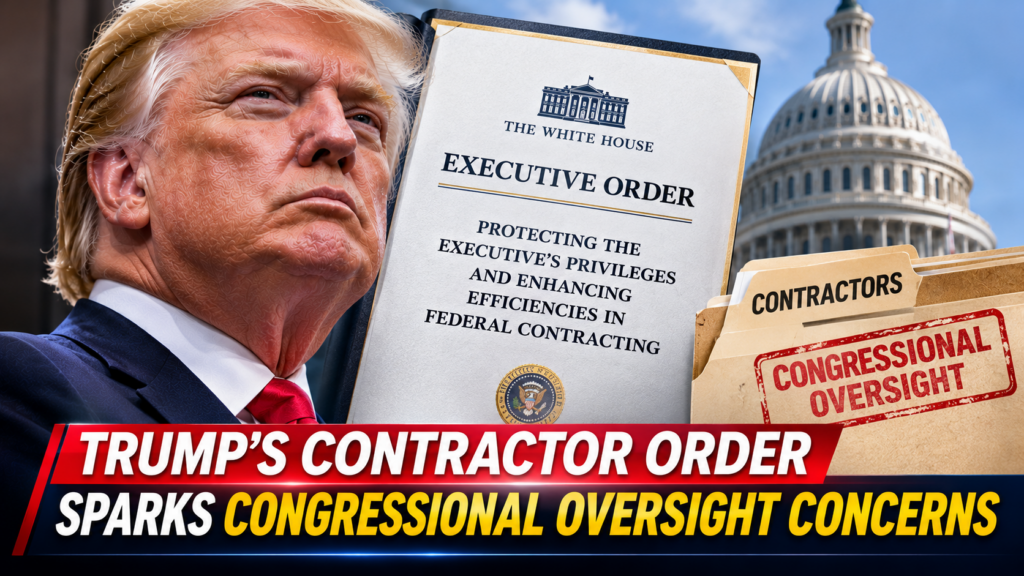
President Donald Trump’s new executive order on federal contractors is facing criticism over its potential impact on congressional oversight. Issued on November 20, the order requires government contractors to notify the White House and federal agencies about congressional requests for information related to their work with the executive branch.
The policy has raised concerns about transparency, constitutional authority, and the ability of Congress to investigate federal spending and potential government misconduct.
What Happened?
The White House introduced the executive order, titled “Protecting the Executive’s Privileges and Enhancing Efficiencies in Federal Contracting,” on November 20, 2026.
The order requires federal contractors and subcontractors to report any pending or future congressional requests concerning their communications or work with the executive branch.
It also directs contractors to follow instructions from the White House or contracting agencies to withhold information considered protected by executive privilege.
Companies that fail to comply could face contract termination, suspension, or debarment from future federal contracting opportunities.
Why the Executive Order Is Controversial
The timing of the order has attracted particular attention. It follows the November midterm elections, ahead of an expected increase in congressional investigations when Democrats take control of Congress in January.
According to a report by Government Executive, the order could limit Congress’s ability to obtain information from contractors involved in federal government transactions.
Contractors are considered important sources of information because they often have direct knowledge of government procurement decisions and agency operations.
The investigations could cover several issues, including:
- Noncompetitive federal contracts.
- Potential conflicts of interest.
- Political influence in contract awards.
- Contract terminations and blacklisting.
- Preferential treatment for politically aligned companies.
The administration has argued that the order protects executive branch authority and prevents congressional interference with government contracting.
However, critics question whether these justifications support such broad restrictions on congressional investigations.
Legal Concerns and Congressional Authority
The executive order relies on the Federal Property and Administrative Services Act (FPASA), which gives the president authority to establish federal procurement policies focused on efficiency and economy.
However, legal concerns remain over whether the legislation supports the notification requirements and restrictions imposed on contractors.
The order also raises questions about the constitutional authority of Congress to investigate federal government activities.
In Watkins v. United States, the Supreme Court recognized Congress’s investigative authority to examine federal departments for potential corruption, inefficiency, and waste.
Another concern involves executive privilege. The order allows the White House and contracting agencies to determine which information should be withheld.
However, a July ruling by the D.C. Circuit in United States v. Navarro addressed who can invoke presidential communications privilege and whether recipients can independently refuse congressional subpoenas.
Contractors that withhold subpoenaed information without a valid privilege claim could face contempt proceedings.
Potential Impact on Federal Contractors
The executive order could create significant legal and financial risks for companies working with the federal government.
Contractors may face a difficult choice when receiving congressional information requests. Cooperating with Congress could risk retaliation from federal agencies, while refusing to cooperate could expose companies to legal consequences.
Possible penalties include:
- Termination of existing government contracts.
- Suspension from federal contracting.
- Debarment from future government opportunities.
- Legal disputes involving congressional subpoenas.
These risks could discourage contractors from sharing information about potential misconduct or questionable government spending.
The concerns are particularly significant given the administration’s previous use of contract terminations, renegotiations, and suspension threats against government contractors.
Implications for Government Transparency
The controversy extends beyond federal contractors and the White House.
Congress controls federal spending through its appropriations authority. Its oversight responsibilities help determine whether government contracts are awarded fairly, managed transparently, and used effectively.
Restricting contractors’ cooperation with congressional investigations could weaken an important accountability mechanism.
It could also make it more difficult for lawmakers to identify potential misuse of taxpayer funds.
What Happens Next?
The executive order could face legal challenges over its interpretation of executive privilege, congressional oversight authority, and First Amendment protections.
However, its practical impact may emerge before courts determine whether the policy is legally sustainable.
Contractors could change how they respond to congressional inquiries out of concern that their existing contracts or future business opportunities might be affected.
The broader issue is whether the executive branch can use federal contracting authority to restrict information sharing with Congress.
As congressional oversight is expected to intensify in January, the dispute could become an important test of the balance of power between the White House, Congress, and private companies working with the federal government.
Related Reading
- Trump Administration Asks Supreme Court to Further Limit Federal Judges’ Power
- DOJ Warns Elizabeth Warren Over Records Linked to Trump Investigations
It requires federal contractors to notify the White House and contracting agencies about congressional information requests and follow instructions concerning information protected by executive privilege.
Critics argue that it could restrict congressional oversight, discourage contractors from cooperating with investigations, and create legal and financial risks for private companies.