The 2026 midterm election results determine whether President Trump governs with a cooperative Congress or faces a chamber controlled by the opposition for the final two years of his term. Final control of the House and Senate sets the pace for legislation, oversight, spending fights and judicial confirmations through January 2029. This guide explains what to look for in the results, how each outcome changes Trump's leverage, and what organizers can do with the information.
As of today, November 22, 2026, the vote counts, certification schedules and recount deadlines vary by state. Treat any single headline number with caution until the relevant state officials certify results.
What the Midterms Decide and Why They Matter
The midterms decide the partisan makeup of Congress halfway through a presidential term. According to USAGov, all 435 voting seats in the U.S. House are up for election in 2026, and the results determine the makeup of Congress at the midpoint of the president's four-year term.
That matters because the president cannot pass most of his agenda alone. Executive orders can move policy quickly, but they are vulnerable to court challenges and to reversal by a future administration. Durable change requires statutes, and statutes require votes in both chambers.
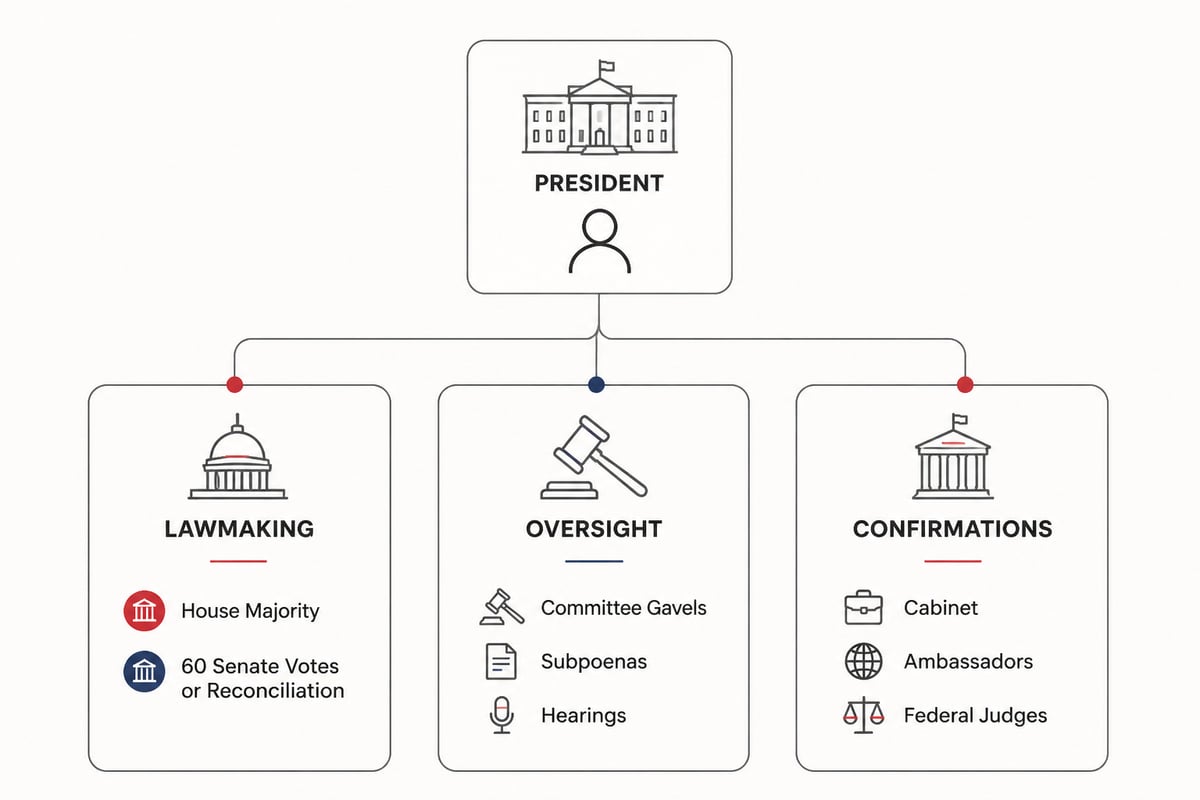
Three levers sit with Congress:
- Lawmaking: Bills on taxes, immigration, energy and technology need majorities in the House and 60 votes in the Senate to overcome a filibuster, unless the bill moves through budget reconciliation.
- Oversight: The majority party controls committee gavels, subpoena power and the hearing calendar.
- Confirmations: The Senate approves cabinet officers, ambassadors and federal judges.
Readers following the broader context can review our analysis of Trump’s midterm losses and the historical pattern behind them.
How to Read the 2026 Midterm Election Results for Trump and Congress
The most useful way to read the 2026 midterm election results for Trump and Congress is to separate four numbers: House seat margin, Senate seat margin, the number of governorships changing hands, and the national popular vote for House candidates. Each tells a different story.
House margin
A narrow majority means every absence or defection matters. A slim House majority gives small factions outsized power, which was visible during the speaker turmoil covered in our report on Johnson allies pushing for Trump’s help. A larger majority gives leadership room to lose several votes and still pass a rule.
Senate margin
The Senate is the chamber that most directly affects Trump's second-term legacy because it controls confirmations. Compare this year's outcome against the baseline in our Senate control forecast versus the 2024 results to see which seats actually flipped.
National popular vote
The aggregate House vote shows the political mood better than seat counts alone, because district lines can blunt or magnify a swing. A multi-point national advantage for one party that produces only a handful of seat changes points to heavily sorted districts.
Governors and state legislatures
State results shape the 2028 map. Governors influence election administration, and legislatures that control redistricting can affect House control for the rest of the decade.
What the Polling Said Before Election Day
Pre-election polling pointed to a political environment unfavorable to the president's party, with voters framing their House vote largely as a verdict on Trump. A September 2026 NPR/PBS News/Marist poll of 1,280 registered voters found a majority favored the Democratic congressional candidate in their district over the Republican, with a margin of error of ±3.8 percentage points.
The same survey asked about motivation. Many respondents said their congressional vote was mostly a vote against President Trump, while fewer said it was mostly a vote for him. Midterms often function as referendums on the sitting president, and this data fit that pattern.
Polls are snapshots, not results. A generic ballot lead does not translate one-for-one into seats, and a margin of error of nearly four points leaves real uncertainty. For deeper background, see our Trump midterm elections poll analysis and the breakdown of Trump’s approval rating in 2026.
Four Scenarios for Trump's Agenda in Congress
Control of each chamber produces one of four governing scenarios, and each carries different consequences for the White House.
| Scenario | House | Senate | Likely effect on Trump |
|---|---|---|---|
| Unified Republican | GOP | GOP | Legislative agenda continues; confirmations proceed; limited oversight |
| Divided, House flips | Democratic | GOP | Gridlock on bills; subpoenas and investigations; judges still confirmed |
| Divided, Senate flips | GOP | Democratic | Confirmations slow or stall; House passes bills the Senate blocks |
| Unified Democratic | Democratic | Democratic | Legislative agenda largely halted; sustained oversight; nominations contested |
The most common divided outcome in modern midterms is a House flip with a Senate hold, which lets the president keep confirming judges while losing the ability to pass major legislation. Executive action then carries more weight, which is why our coverage of Trump's executive orders affecting America in 2026 remains relevant after the votes are counted.
What Changes in the House If Control Flips
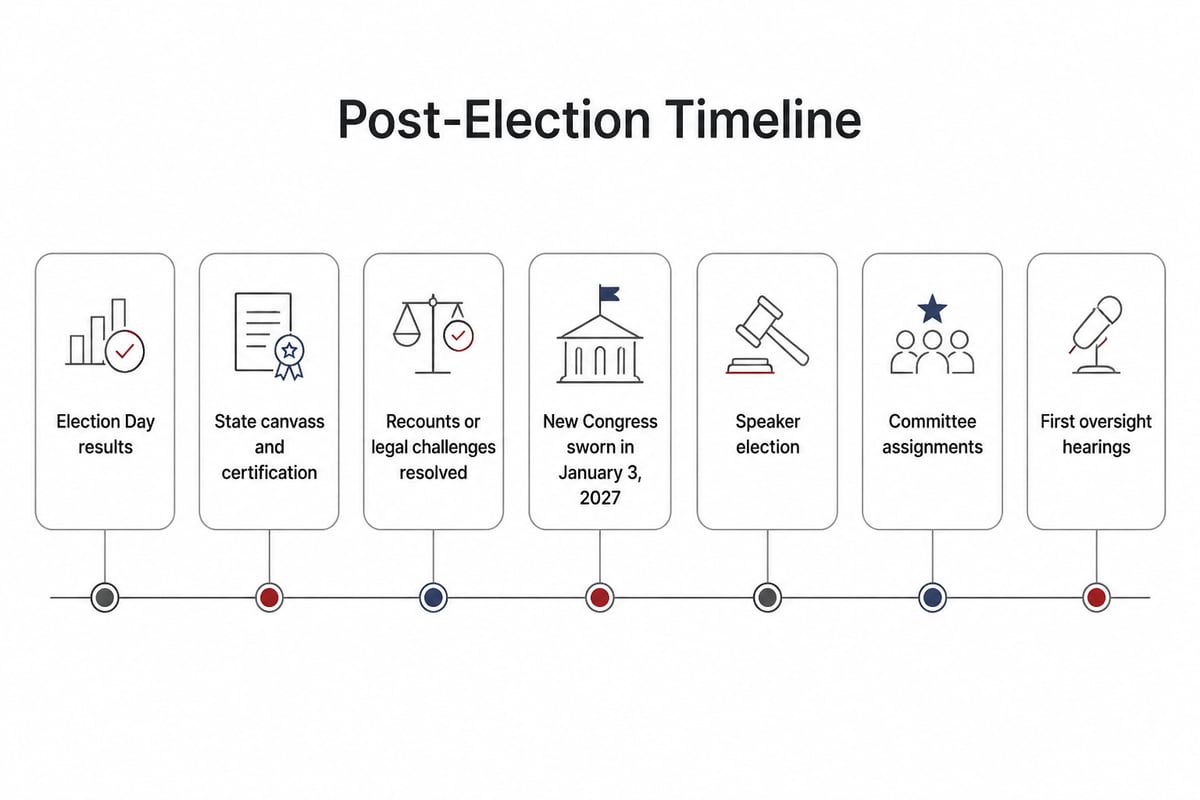
A flipped House changes who sets the agenda, who runs the committees, and who can compel testimony. The new majority elects the speaker and assigns committee chairs on January 3, 2027, when the new Congress convenes.
Expect these shifts under a Democratic House:
- Committee investigations. Oversight, Judiciary and Energy and Commerce could open inquiries into administration actions, with subpoena authority behind them.
- Appropriations leverage. The House writes spending bills first. A hostile majority can use the budget process to constrain programs, which raises the risk of shutdown standoffs.
- Bill blockade. Trump priorities such as the proposals outlined in our 2026 tax plan breakdown would have little chance of advancing through the lower chamber.
Under a retained Republican House, the opposite holds. Committee chairs stay aligned with the White House, and the main friction comes from within the GOP. Our reporting on Trump and GOP tensions in 2026 and MAGA influence in Congress covers where those fault lines appear.

What Changes in the Senate and on Judicial Nominations
The Senate outcome matters most for confirmations, because a majority of senators can approve judges and executive appointees without the House. A Republican Senate majority keeps the confirmation pipeline open for the rest of the term, including any Supreme Court vacancy.
A Democratic Senate would not be able to pass its own agenda over a presidential veto, but it could slow or block nominees through committee control and floor scheduling. Judicial seats left vacant by a stalled Senate can remain open for two years or longer. Our overview of Trump's judicial nominations tracks how the current slate has progressed.
The Senate also ratifies treaties and holds hearings on foreign policy. Trade and security initiatives, including those discussed in our coverage of the Trump-Xi meeting on China, face a different reception depending on who chairs the Foreign Relations Committee.
Policy Areas Most Exposed to the Results
Some policy areas depend more heavily on congressional cooperation than others. The areas below are the ones most likely to shift depending on how the 2026 midterm election results play out for Trump and Congress.
- Taxes and spending: Any extension, expansion or rollback of tax provisions needs legislation or reconciliation. Divided government usually means short-term deals and deadline brinkmanship.
- Immigration and border policy: Funding and statutory changes run through Congress, even when enforcement priorities come from the executive branch. See our report on the border security plan for 2026.
- Technology regulation: Federal rules on artificial intelligence remain unsettled, and our coverage of AI guardrails between Trump and Congress shows why a new majority could change the direction.
- Energy and economy: Permitting, nuclear energy and trade measures depend on both statutes and appropriations. Affordability concerns, discussed in our look at inflation and the midterms, shaped voter attitudes this cycle.
Executive power fills some of the gap, but courts and future administrations can undo it. That asymmetry is why statutory majorities carry such weight.
Certification, Recounts and Election Law Disputes
Election results are not final until each state completes its canvass and certification, and close contests can trigger automatic recounts or litigation. Margins that fall within a state's recount threshold, which varies by state, may delay the seating of a member or the resolution of control.
Readers tracking disputes should follow three things: state certification deadlines, pending court challenges, and any changes to administration rules. Our pages on the status of election law challenges in 2026 and Federal Election Commission rules for 2026 provide current reference points. A narrow House majority can hinge on a handful of late-called districts, so patience with the count is warranted.
What Organizers Can Do With These Results
Local organizers can convert midterm results into planning data by examining precinct-level turnout, margin shifts and issue priorities in their own communities. National seat counts matter, but the practical question for a club or campaign is where participation rose or fell and why.
A workable post-election process looks like this:
- Pull certified precinct results from your county election office once canvassing ends.
- Compare turnout against the 2022 midterm and the 2024 general election to identify growth and decline areas.
- Map margins by precinct to find persuadable neighborhoods and under-mobilized ones.
- Review ballot access rules, including mail-in ballot policies versus in-person voting rules, since procedures affect turnout strategy.
- Set a 2027 calendar covering candidate recruitment, voter registration drives and issue forums ahead of the 2028 cycle.
Clubs that begin recruiting volunteers within weeks of the election tend to hold more momentum into the spring than those that wait for the primary season. Our coverage of the 2026 primaries offers a window into how endorsements and intraparty contests shaped this year's field.
Watch List for the Weeks Ahead
Several developments in the coming weeks will clarify how the 2026 midterm election results translate into governing reality for Trump and Congress.
- Leadership elections: Caucuses in both chambers select speakers, majority and minority leaders, and whips after the votes settle.
- Committee assignments: Chair selections signal which investigations and bills get priority.
- Lame-duck session: The outgoing Congress can still pass spending bills and confirm nominees before January 3, 2027.
- White House response: Trump's reaction, including any shift in tone toward Congress, will indicate whether he plans to bargain or to rely on executive action.
- Approval ratings: Movement in congressional approval ratings can influence how aggressively new majorities pursue confrontation.
Each item is a data point worth tracking, and none should be read in isolation.
Your next step is to request your county's certified precinct results and compare them with the 2022 and 2024 turnout figures so you know exactly where your community moved. U.S. Presidential Report publishes non-partisan coverage of presidents, Congress and federal policy that can anchor that research with reliable context. If the results have you ready to turn analysis into local action, we invite you to Start Your Own Political Club with the reporting and background you need to organize with confidence.