The top issues in the 2026 congressional elections voter priorities picture are the cost of living, gas prices, healthcare costs and the overall state of the economy, with immigration, democracy and the balance of power in Washington close behind. Polling from Gallup and Ipsos shows that pocketbook concerns dominate, and that those concerns often cut across party lines more than the national debate suggests.
This guide breaks down what voters say they care about, how those concerns differ between Democrats, Republicans and independents, which districts are most likely to turn on them, and what you need to do to cast a ballot. Every claim is tied to a named source or a prior U.S. Presidential Report analysis so you can follow the numbers yourself.
What Are the Top Voter Priorities in the 2026 Congressional Elections?
Voters rank affordability first: gas prices, groceries, housing and healthcare outrank nearly every other concern in current polling. Gallup reported that 42% of registered voters rated gas prices extremely important to their congressional vote, while 30% rated them very important.
A post-election survey adds detail on what voters want Congress to do next. A Reuters/Ipsos poll conducted Nov. 6–9, 2026, found that most Americans wanted the next Congress to focus substantially on cost-of-living issues in its first 100 days, and a majority wanted a focus on lowering healthcare costs.
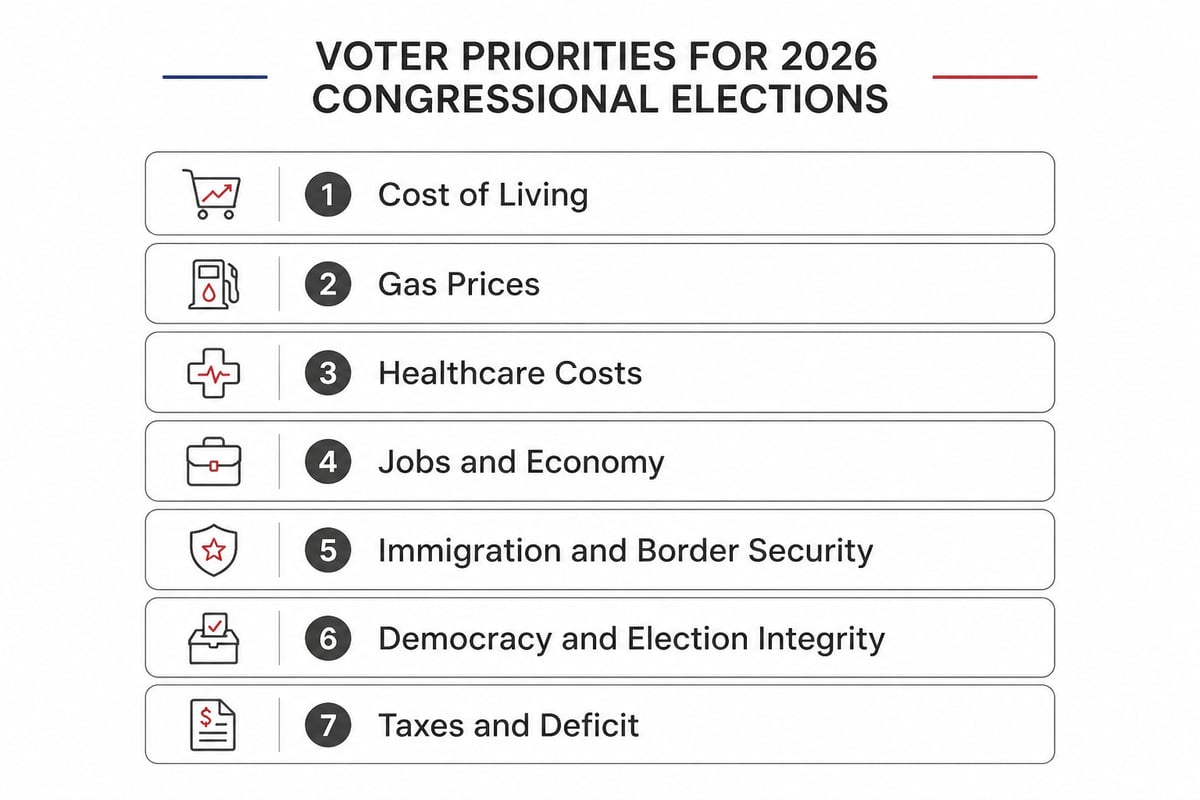
The issues that repeatedly surface across polling fall into a recognizable order:
- Cost of living and inflation, including groceries, rent and utilities
- Gas and energy prices
- Healthcare costs and insurance coverage
- Jobs and the broader economy
- Immigration and border security
- Democracy, election integrity and the rule of law
- Taxes and the federal deficit
The ordering shifts by party, age and region, but the economic cluster at the top is stable. For background on how inflation is shaping the midterm contest specifically, see U.S. Presidential Report's analysis of Trump, inflation and the 2026 midterms.
Why Pocketbook Issues Dominate This Cycle
Economic anxiety leads because voters feel price changes in every weekly transaction, while most other policy debates stay abstract. Gas, rent, insurance premiums and grocery bills are visible and recurring, which makes them easy to attribute to whoever holds power in Washington.
Inflation data complicates the picture. Price growth has cooled from its peak, and U.S. Presidential Report has tracked the moment inflation reached a three-year low. Yet lower inflation does not mean lower prices. Households compare what they pay today with what they paid a few years ago, and that gap keeps affordability at the center of congressional campaigns.
Housing deserves particular attention. High mortgage rates and constrained supply have pushed homeownership out of reach for many first-time buyers, and renters face their own pressures. The housing market outlook for 2026 explains why this concern is likely to persist through the fall.
Small businesses feel the same squeeze from the other side of the counter. Owners weigh input costs, borrowing rates and tariffs, and their sentiment often foreshadows broader economic mood. The small business confidence report offers a useful read on that segment.
How Priorities Differ Among Democrats, Republicans and Independents
Partisan identity changes the ranking beyond the top few issues, even where all three groups agree that costs matter most. The differences below reflect long-running patterns in public opinion research and the coverage U.S. Presidential Report has published on voter behavior.
| Voter group | Typical emphasis | Common framing |
|---|---|---|
| Democrats | Healthcare access, democracy and voting rights, abortion and reproductive policy | Protecting programs and institutions |
| Republicans | Border security, inflation, energy costs, crime | Restoring prices, security and order |
| Independents | Cost of living, economic management, competence in government | Results over party loyalty |
Independents deserve extra scrutiny because they often decide close races. Their concerns tend to track economic conditions more closely than ideology, and they punish whichever party appears to be in control when prices rise. For a fuller look, read how independent voter priorities compare with partisan voter priorities and why independent voters decide elections.
Turnout enthusiasm also matters as much as stated priorities. A voter who ranks an issue highly but stays home does not move the result. The turnout trends comparing Democrats and Republicans show where each party is strongest at getting its base to the polls.
Immigration, Border Security and Public Safety
Immigration remains a top-five concern, and it carries more intensity among Republican voters than any other group. Border funding, enforcement operations and legal immigration policy all feed into how voters judge both the White House and Congress.
Congress holds the purse strings here, which makes the issue directly relevant to a congressional vote. Appropriations decide how much money flows to enforcement, detention, processing and border infrastructure. U.S. Presidential Report's coverage of border security funding status and the America First border funding plan lays out what is on the table. The underlying numbers are collected in the illegal immigration statistics for 2026.
Voters also respond to claims about elections themselves. A recurring one concerns noncitizen voting, which U.S. Presidential Report has examined in a fact check on whether illegal immigrants can vote in U.S. elections.
Democracy, Election Rules and the Courts
Concern about how elections are run is a priority for a large share of voters on both sides, though each side frames it differently. Democrats emphasize access and protection from interference, while Republicans emphasize verification and security.
State rules vary considerably, and those rules affect who votes and how. A look at voter ID laws by state shows how requirements differ across the country, and the election law challenge status tracks the litigation that could change procedures before November. The courts will continue to shape the field, as covered in the report on Supreme Court cases affecting elections.
Executive power is another dimension. Voters weighing how much authority a president should wield will find relevant context in the executive authority legal challenge and the analysis of federal agency restructuring. Each bears on what voters expect Congress to check or support.
Where Priorities Will Matter Most: Swing Districts and Battleground Contests
National priorities translate into seats only in competitive places, so a small number of districts and states carry outsized influence. A district's own economy, its demographics and its recent voting history determine which issue moves the needle.
Several resources help you see where the contests are tightest:
- The list of key swing districts to watch identifies House seats most likely to flip.
- The House majority forecast compared with 2022 outcomes shows how the current environment differs from the last midterm.
- The Senate control forecast compared with 2024 results frames the upper chamber's map.
- The swing state polling analysis shows how local sentiment can diverge from national numbers.
Historically, the president's party tends to lose seats in midterm elections, and presidential approval is the single most reliable indicator of how large that loss might be. Congressional approval is a separate and usually weaker gauge, but it signals how much patience voters have with the institution itself. The latest congressional approval ratings provide that baseline.

How Party Dynamics and Primaries Shape the Choices on Your Ballot
The candidates you see in November are the product of primaries, and primary outcomes reflect what each party's most engaged voters want. That can pull nominees away from the concerns of general-election swing voters.
On the Republican side, presidential endorsements carry significant weight. The effect of the MAGA endorsement on the 2026 midterms is a central storyline, as are the Trump primary victories and the broader question of Trump's role in 2026 Republican primaries. Tension between the White House and congressional Republicans is documented in the coverage of Trump and GOP tensions.
For voters, the practical takeaway is simple. If a nominee's priorities differ from yours, look at their stated positions on the cost-of-living measures you care about, not just their party label.
Federal Spending, Taxes and the Deficit
Fiscal policy is a quieter priority that becomes loud when it touches household budgets. Tax changes, spending levels and the deficit all fall under congressional control, which makes them core to what a vote for the House or Senate actually decides.
Those concerned about the long-term fiscal path can follow the federal budget deficit analysis and the federal spending increase breakdown. Energy costs, which feed directly into gas prices, are addressed in the America First energy plan.
How to Match Your Own Priorities to Your Vote
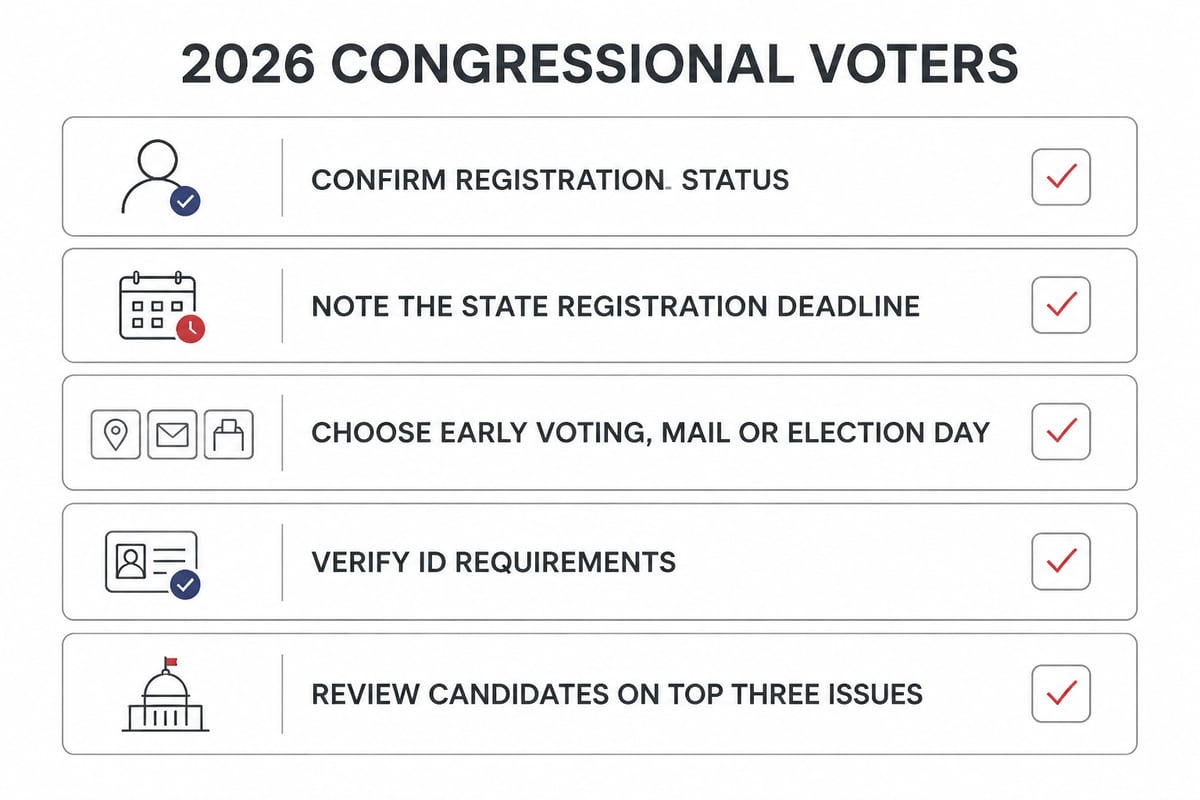
Turning a general concern into a vote means checking what each candidate has said and what each chamber can actually do. A short routine works well:
- Rank your own top three issues before reading campaign material.
- Find out what Congress controls on each one. Appropriations, taxes and oversight are congressional; many other levers sit with the executive branch or the states.
- Compare candidates' voting records or stated plans on those three issues.
- Check the source of any claim, especially viral posts about voting rules or candidates.
- Plan your vote early, including registration and the method you will use.
Misinformation spikes near elections, including fraudulent texts that impersonate officials. U.S. Presidential Report has documented one such voter alert text scam, and voters should confirm any voting instruction through official election offices. Media habits also shape what information reaches you, a dynamic explored in how mainstream media influences elections and in the rise of independent journalism and elections.
Registration and Voting Logistics to Check Now
Your priorities only count if you are registered and able to cast a ballot, and deadlines arrive earlier than many people expect. USAGov says voter registration deadlines vary by state and may be as much as a month before an election, so confirm your own state's date well ahead of time.
Election Day timing and options also differ by state, including early voting and mail ballots. USAGov's guide on when to vote for federal, state and local representatives explains the basics and points to related voting information.
A final consideration is how to read the coverage itself. Poll numbers move, and a single survey is a snapshot rather than a forecast. Reading several sources, and comparing national figures with local ones, gives a sturdier picture of the 2026 congressional elections voter priorities that will decide control of Congress. The Trump midterm elections poll analysis is a practical place to see how those numbers are interpreted.
Start by confirming your voter registration status and your state's deadline today, then write down the three issues that will decide your vote. For daily, non-partisan reporting on the presidency, Congress, the courts and federal policy that can inform those choices, follow the coverage at U.S. Presidential Report, and if you want to discuss these races with neighbors, take the next step and Start Your Own Political Club to turn what you read into informed conversation in your community.