The small business confidence report 2026 reveals a complex landscape for American entrepreneurs navigating unprecedented economic and political shifts. As the backbone of the U.S. economy, small businesses face a dynamic environment shaped by federal policy decisions, technological disruption, and evolving market conditions. Understanding these confidence metrics provides valuable insights into the health of Main Street America and the broader implications for presidential economic agendas.
Current State of Small Business Optimism
The small business confidence report 2026 paints a picture of cautious optimism across America's entrepreneurial landscape. According to OnDeck’s comprehensive research, an impressive 94% of small business owners anticipate growth this year, marking a significant vote of confidence despite ongoing economic uncertainties.
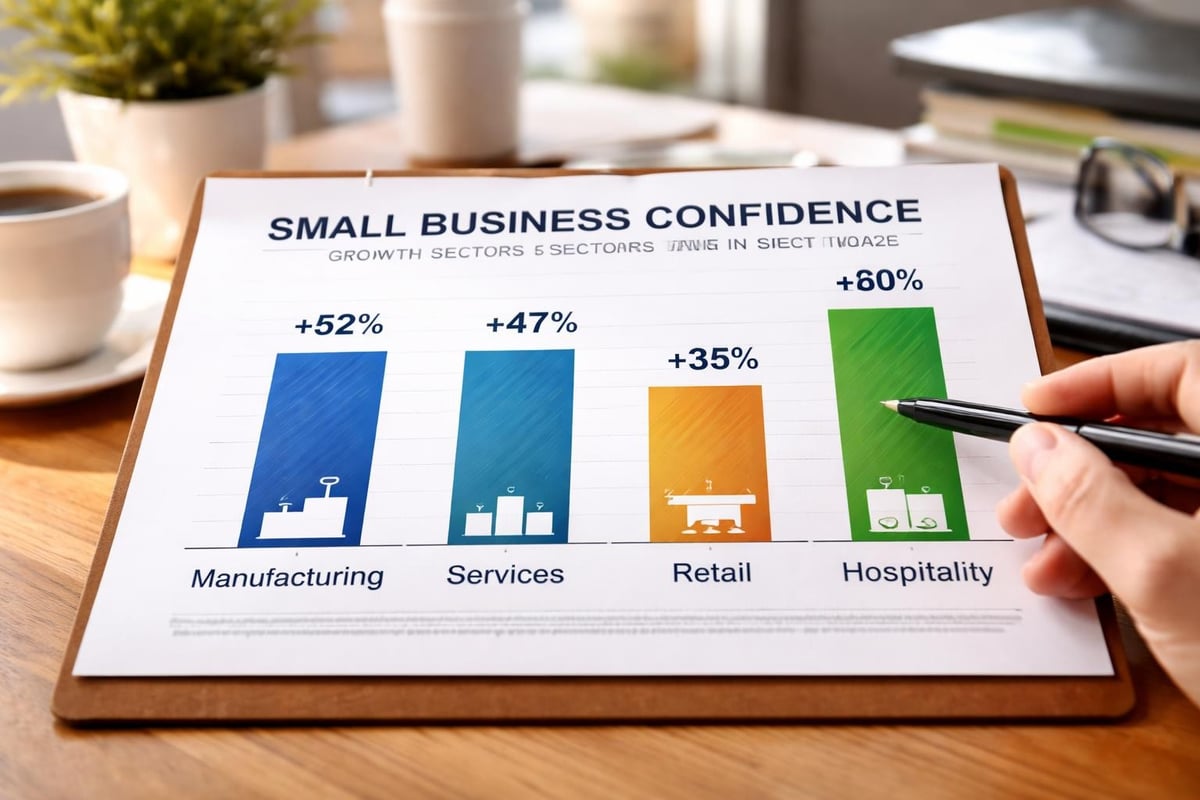
Recent data shows distinct variations in confidence levels across different business sectors and geographic regions. Manufacturing and service industries lead optimism indicators, while retail and hospitality sectors demonstrate more measured expectations.
Regional Confidence Variations
Small business sentiment varies significantly across American regions, influenced by local economic conditions, state policies, and demographic trends. The South and Southwest demonstrate the highest confidence levels, driven by population growth and favorable business climates.
| Region | Confidence Index | Primary Growth Drivers | Key Challenges |
|---|---|---|---|
| Northeast | 72% | Technology, Finance | High Costs, Regulations |
| Southeast | 86% | Population Growth, Manufacturing | Workforce Development |
| Midwest | 78% | Agriculture, Manufacturing | Infrastructure, Demographics |
| West Coast | 75% | Technology, Innovation | Regulatory Environment |
| Southwest | 84% | Energy, Construction | Resource Management |
The NFIB survey findings indicate that optimism remains above the 52-year average, suggesting fundamental strength in the small business ecosystem despite periodic fluctuations.
Presidential Policy Impact on Business Confidence
Presidential administration policies significantly influence the small business confidence report 2026 outcomes. Tax policy, regulatory frameworks, and economic initiatives directly affect entrepreneurial decision-making and investment strategies.
The Small Business Administration’s analysis highlights how recent tax cuts and economic policies have bolstered small business confidence and encouraged capital investment. These policy decisions represent critical factors that entrepreneurs weigh when planning expansion, hiring, or investing in new equipment.
Tax Policy and Regulatory Environment
Current federal tax policies create both opportunities and challenges for small businesses. Lower corporate tax rates encourage reinvestment, while simplified compliance requirements reduce administrative burdens. However, uncertainty about future policy directions remains a persistent concern.
- Simplified tax filing procedures reduce compliance costs by an estimated 15%
- Lower marginal rates enable increased reinvestment in growth initiatives
- Uncertainty about future tax policy affects long-term planning decisions
- State and federal policy alignment remains inconsistent across jurisdictions
Presidential approaches to regulation particularly affect small businesses operating in heavily regulated industries. Healthcare, financial services, and environmental sectors face unique compliance challenges that shape their confidence levels and growth strategies.
For those following presidential policy developments, understanding these regulatory impacts provides context for broader economic trends and political debates shaping the 2026 landscape.
Access to Capital and Investment Trends
Capital availability represents a critical factor driving the small business confidence report 2026 findings. Entrepreneurs consistently cite access to financing as a determining factor in their ability to execute growth plans and navigate economic challenges.
Financing Landscape
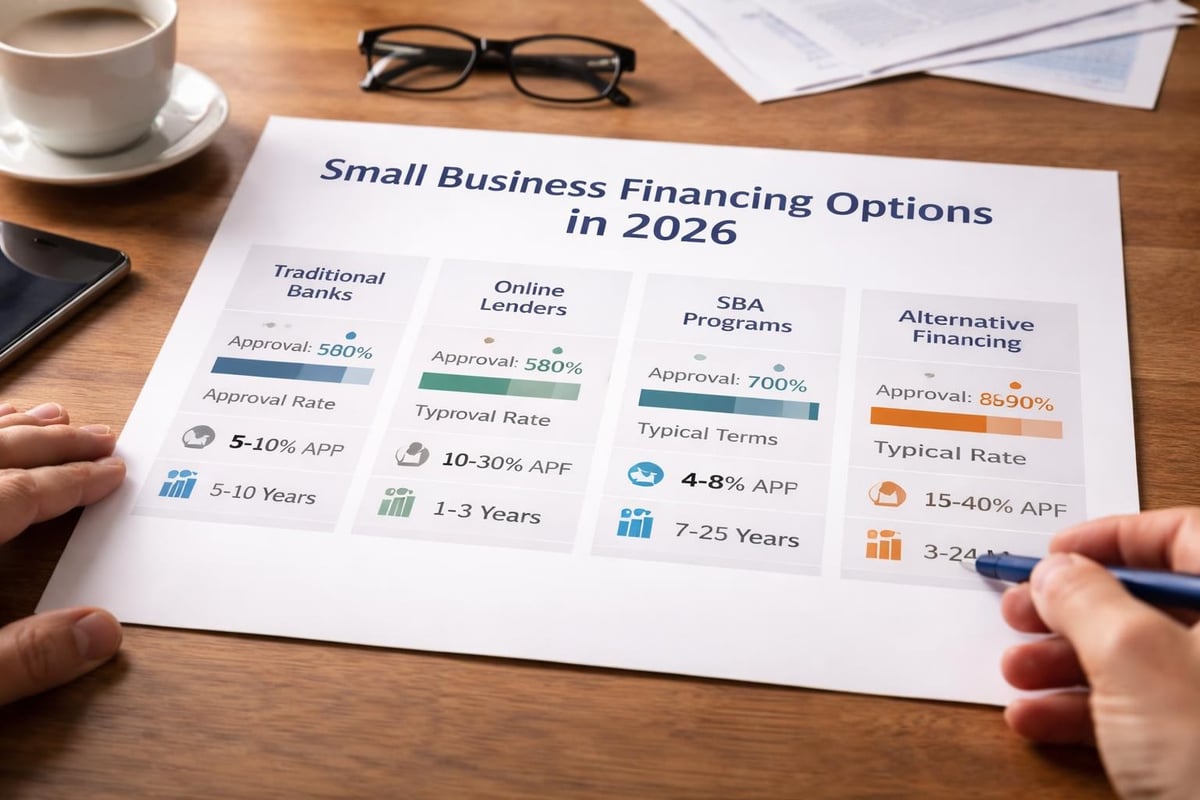
The 2026 lending environment shows significant evolution from previous years. Traditional bank lending, alternative financing platforms, and private equity all play expanded roles in supporting small business growth.
According to Comerica’s Small Business Pulse Index, 80% of small business owners express confidence about their future success, with financing access being a key enabler. Furthermore, 79% expect sales growth this year, demonstrating strong forward momentum.
Traditional banks have adjusted lending criteria to accommodate more diverse business models, while fintech platforms provide faster approval processes and more flexible terms. This diversification of capital sources strengthens overall business confidence.
- Bank lending: Competitive rates but stricter requirements
- Online lenders: Faster processing with higher interest rates
- SBA loans: Government-backed options with favorable terms
- Alternative financing: Invoice factoring, merchant cash advances
- Equity financing: Growing angel and venture interest in small businesses
Economic Challenges and Resilience Factors
The small business confidence report 2026 acknowledges persistent challenges even amid general optimism. LegalZoom’s survey reveals that while 60% of small business owners remain optimistic, they simultaneously grapple with fluctuating costs and economic volatility.
Cost Pressures and Operational Challenges
Rising operational expenses continue to challenge small business profitability and growth potential. Labor costs, supply chain disruptions, and commercial real estate expenses rank among the most significant concerns.
Fox Business reporting indicates that small business owners maintain cautious optimism heading into 2026, with 79% expecting revenue growth despite facing rising costs and labor challenges. This resilience demonstrates the adaptability that characterizes successful entrepreneurship.
Wage pressures reflect tight labor markets in many sectors and regions. Small businesses compete with larger corporations for talent while lacking equivalent resources for compensation packages and benefits. This dynamic requires creative approaches to recruitment and retention.
| Challenge Category | Percentage Reporting | Primary Impact | Common Solutions |
|---|---|---|---|
| Labor Costs | 67% | Margin Compression | Automation, Training |
| Supply Chain | 54% | Inventory Management | Diversified Suppliers |
| Real Estate | 48% | Fixed Cost Burden | Remote Work, Relocation |
| Technology | 43% | Competitive Pressure | Managed Services, Cloud |
| Compliance | 39% | Administrative Costs | Outsourcing, Software |
Workforce Development Concerns
Finding qualified employees remains a top concern reflected in the small business confidence report 2026. Skills gaps in technical fields, changing workplace expectations, and demographic shifts all contribute to hiring difficulties.
Presidential workforce development initiatives and education policies indirectly impact small business operations through their influence on the talent pipeline. Observers tracking U.S. presidential news understand these connections between federal policy and local business conditions.
Technology Adoption and Digital Transformation
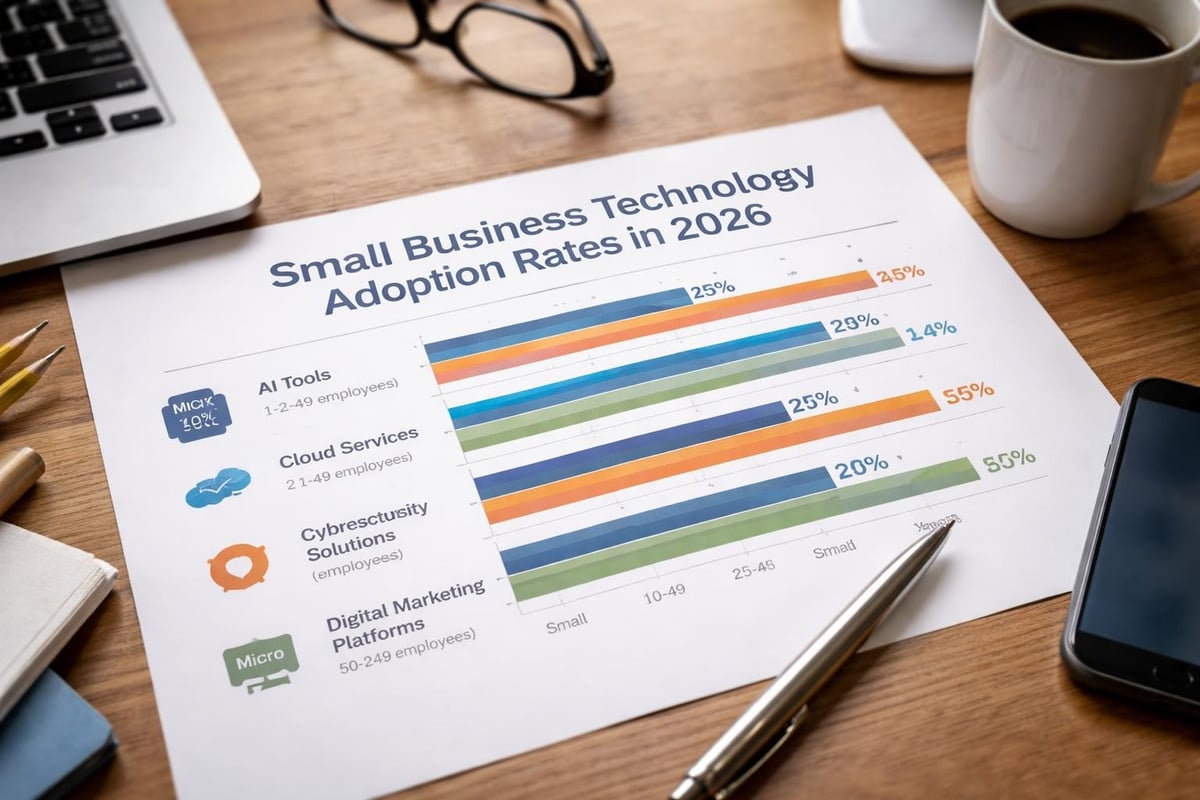
Artificial intelligence and digital tools represent transformative forces shaping small business operations in 2026. The small business confidence report 2026 highlights accelerating technology adoption as both an opportunity and a competitive necessity.
AI Integration Trends
Small businesses increasingly leverage AI for customer service, marketing, inventory management, and financial forecasting. These tools democratize capabilities previously available only to large enterprises, leveling competitive playing fields in significant ways.
Research on AI business planning tools demonstrates how artificial intelligence enhances business resilience and strategic decision-making. Small businesses deploying these technologies report improved efficiency and better resource allocation.
- Customer service chatbots reduce response times and staffing costs
- Marketing automation enables sophisticated campaigns with limited resources
- Inventory optimization minimizes carrying costs and stockouts
- Financial forecasting improves cash flow management and planning
- Cybersecurity tools protect against evolving threats
The cybersecurity challenges facing small businesses require increased attention and investment. Data breaches and ransomware attacks disproportionately impact smaller organizations lacking dedicated IT security teams.
Leadership Perspectives and Growth Expectations
Executive confidence shapes business strategy and investment decisions. Vistage’s Q1 2026 report notes a slight decline in CEO confidence during the first quarter, attributing this to geopolitical uncertainties affecting small and midsize businesses.
Growth Strategy Priorities
The small business confidence report 2026 reveals distinct priorities among entrepreneurs planning for expansion. Market penetration, product development, geographic expansion, and acquisition strategies dominate growth planning discussions.
Business leaders balance aggressive growth ambitions with prudent risk management. This calculated approach reflects lessons learned from previous economic cycles and awareness of potential disruptions on the horizon.
According to JPMorgan Chase’s business leaders outlook, U.S. business leaders maintain optimism about growth prospects in 2026 despite economic uncertainties. They increasingly embrace emerging technologies as competitive differentiators and operational enhancers.
Sales and Revenue Projections
Revenue growth expectations provide crucial indicators of business confidence and economic momentum. The small business confidence report 2026 shows that most entrepreneurs anticipate increased sales, though projections vary by industry and market segment.
Service businesses generally project stronger growth than retail operations, reflecting changing consumer preferences and digital transformation trends. B2B enterprises demonstrate particular confidence based on strong corporate spending expectations.
Political Considerations and Election Year Dynamics
The 2026 midterm election cycle introduces additional variables affecting small business confidence. Political uncertainty, potential policy shifts, and regulatory changes influence planning horizons and investment decisions.
Entrepreneurs monitor presidential approval ratings, congressional dynamics, and policy debates for signals about future business conditions. Election outcomes potentially affect tax policy, regulatory approaches, and economic priorities that directly impact operations.
Understanding these political dimensions requires attention to presidential policy debates and their practical implications for business owners navigating complex decision environments.
Policy Uncertainty Management
Small businesses develop strategies to manage policy-related uncertainties that could affect operations. Scenario planning, flexible business models, and diversified revenue streams help mitigate political and regulatory risks.
The small business confidence report 2026 demonstrates that successful entrepreneurs balance political awareness with operational focus, avoiding paralysis while remaining strategically adaptable to changing conditions.
Market Dynamics and Competitive Pressures
Competitive landscapes evolve rapidly in 2026, driven by technological change, shifting consumer preferences, and market consolidation trends. Small businesses navigate these dynamics while leveraging unique advantages of agility and customer proximity.
Competitive Advantages
Small businesses cultivate distinct competitive strengths that larger competitors struggle to replicate. Personalized service, local market knowledge, rapid decision-making, and entrepreneurial innovation represent powerful differentiators.
The small business confidence report 2026 highlights how successful entrepreneurs leverage these advantages to capture market share and build loyal customer bases. Community connections and authentic relationships create value that purely digital competitors cannot easily duplicate.
| Competitive Factor | Small Business Strength | Large Competitor Advantage |
|---|---|---|
| Customer Service | Personal Relationships | Standardized Systems |
| Flexibility | Rapid Adaptation | Process Efficiency |
| Innovation | Entrepreneurial Spirit | Research Resources |
| Local Focus | Community Integration | National Reach |
| Decision Speed | Immediate Action | Analytical Depth |
Consumer preferences increasingly favor authentic, values-driven brands that demonstrate community commitment. This trend particularly benefits small businesses that genuinely embody these characteristics rather than marketing campaigns simulating them.
Future Outlook and Strategic Considerations
The small business confidence report 2026 establishes a foundation for understanding entrepreneurial sentiment, but forward-looking perspectives require analyzing trend trajectories and emerging opportunities. Strategic planning balances current optimism with realistic assessment of potential challenges.
Emerging Opportunities
New market opportunities emerge from demographic shifts, technological capabilities, and changing consumer behaviors. Sustainability services, remote work solutions, health and wellness offerings, and personalized experiences represent growing segments with strong potential.
Entrepreneurs who position businesses to capitalize on these trends while maintaining operational excellence create competitive advantages that sustain long-term success. The small business confidence report 2026 suggests that forward-thinking businesses demonstrate the strongest confidence levels.
The small business confidence report 2026 reveals an entrepreneurial community displaying resilience and optimism despite navigating complex economic and political landscapes. These insights demonstrate how federal policies, technological changes, and market dynamics converge to shape business conditions across America. For comprehensive coverage of presidential policies affecting the business environment and economic developments, U.S. Presidential Report delivers non-partisan analysis connecting Washington decisions to Main Street realities.