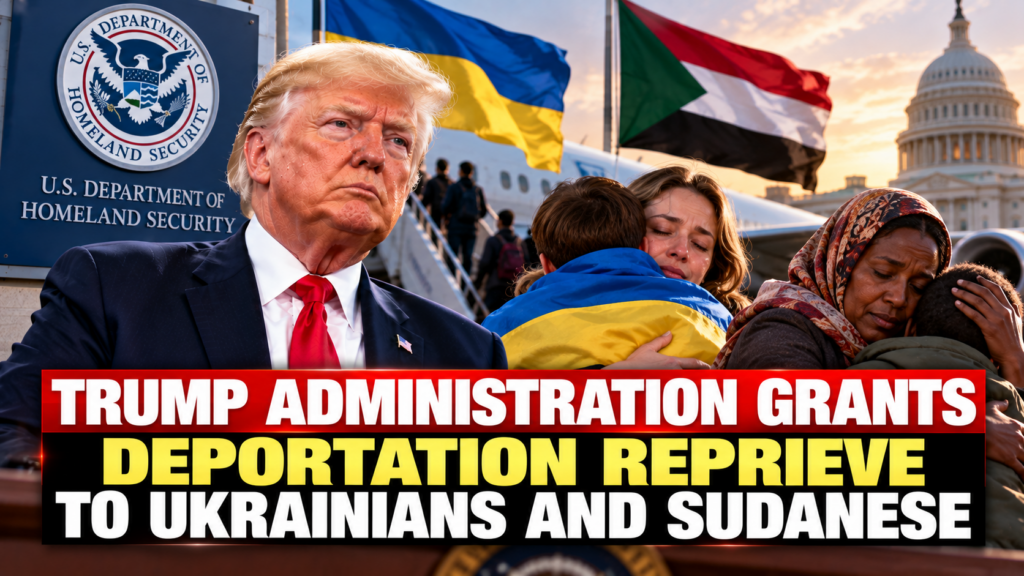
The Trump administration has temporarily extended deportation protections for approximately 101,000 Ukrainians and 1,800 Sudanese living in the United States, allowing them to remain in the country after their Temporary Protected Status (TPS) was due to expire on October 19, 2026. The Department of Homeland Security (DHS) has not announced how long the reprieve will last or when a final decision on their immigration status will be made.
What Happened
The Department of Homeland Security confirmed that Ukrainian and Sudanese nationals covered by the existing protections would retain their protection from deportation while the government considers its next steps.
According to a report by The Guardian, the announcement came on the day the two groups’ Temporary Protected Status was scheduled to expire. Rather than announcing a formal extension or termination, DHS said a further announcement would be made at the appropriate time.
The decision offers temporary relief to more than 100,000 people who faced uncertainty over whether they would be required to leave the United States. However, the administration has not provided a clear timeline for resolving their longer-term status.
Key Details of the Deportation Reprieve
Who Is Covered by the Decision?
The temporary reprieve covers two groups of migrants whose protections were scheduled to expire on October 19, 2026.
- Ukrainians: Approximately 101,000 people who had been covered by Temporary Protected Status.
- Sudanese: Approximately 1,800 people whose protections were also due to expire.
Under the announcement, both groups retain protection from deportation for now. DHS has not specified when a final decision will be made or how long the current arrangements will remain in place.
What Is Temporary Protected Status?
Temporary Protected Status is a U.S. immigration program that allows eligible nationals of designated countries to remain in the United States when conditions at home make their return unsafe.
The program can apply when countries experience armed conflict, environmental disasters, or other extraordinary and temporary conditions. Eligible beneficiaries may also receive authorization to work in the United States while their protections remain valid.
TPS does not automatically provide permanent residency or citizenship. Its duration depends on government decisions about whether a country’s designation should be extended, redesignated, or terminated.
Why Ukrainians and Sudanese Need Protection
Ukraine was designated for Temporary Protected Status in 2022 following Russia’s full-scale invasion. The continuing war has raised concerns about the safety of returning Ukrainian nationals.
Sudan has also experienced prolonged armed conflict and political instability. Successive U.S. administrations have maintained protections for Sudanese nationals because conditions in the country have remained dangerous.
Advocates have argued that deporting people to countries experiencing active conflict could expose them to serious risks.
Political and Immigration Policy Implications
A Shift in the Trump Administration’s Approach
The decision comes amid the Trump administration’s broader efforts to tighten immigration enforcement and end temporary protections for migrants from several countries.
The administration has previously moved to terminate TPS protections for nationals of countries including Venezuela, Haiti, Honduras, Nicaragua, Afghanistan, and Syria. The reprieve for Ukrainians and Sudanese therefore represents a notable contrast with its wider efforts to restrict temporary immigration protections.
The administration also maintained protections for nearly 200,000 Salvadorans whose status was due to expire in September 2026, using a similar approach of postponing a final decision while allowing protections to remain in place.
Advocates Call for Long-Term Clarity
Immigrant advocates welcomed the immediate relief but criticized the lack of a clear long-term solution.
Yuriy Boyechko, chief executive of the nonprofit Hope For Ukraine, described the decision as a temporary fix that does not resolve the underlying uncertainty facing affected families. He called for a more stable pathway to permanent residency for people who cannot safely return to their home countries.
The uncertainty extends to employment. DHS did not clarify whether beneficiaries would retain their existing work permits, leaving questions about their ability to continue working without interruption.
Andrew Arthur, an immigration and national security expert at the Center for Immigration Studies, said the government could eventually decide whether to extend or terminate the protections without a specified deadline for making that decision.
What Happens Next
The Department of Homeland Security is expected to announce its decision on the future of Temporary Protected Status for Ukrainians and Sudanese at a later date. Until then, affected individuals retain their current protection from deportation under the department’s announcement.
Several questions remain unresolved:
- How long will the temporary protections remain in effect?
- Will eligible migrants retain their work authorization?
- Will DHS formally extend TPS or eventually terminate the designations?
- What options will affected families have if the protections end?
The announcement also comes just weeks before the November 2026 midterm elections, when immigration enforcement is expected to remain a major political issue.
For now, the decision provides immediate relief but does not guarantee long-term security for Ukrainian and Sudanese migrants. The administration’s next announcement will determine whether this temporary reprieve becomes a more lasting extension or another period of uncertainty for thousands of families.
Related Reading
- Trump’s Russian Diesel Deal Draws Bipartisan Backlash Over Ukraine
- Trump Highlights Texas Record on Taxes, Crime, Border Security and Jobs
Those covered by the current announcement retain protection from deportation for now. DHS has not announced how long the reprieve will last.
No. TPS provides temporary protection from deportation and may allow eligible individuals to work legally, but it does not automatically grant permanent residency or citizenship.