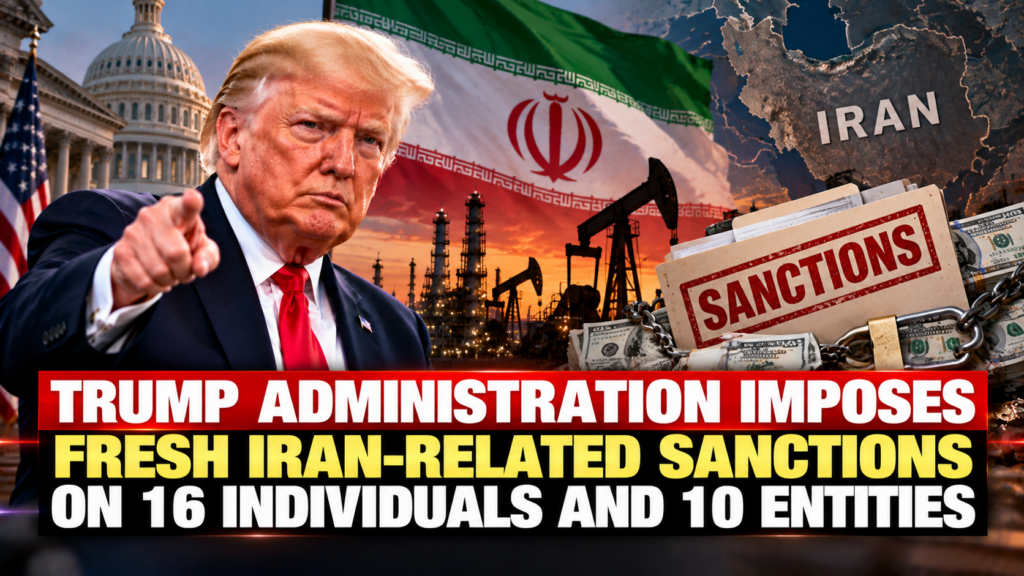
The Trump administration announced new Iran-related sanctions on October 15, 2026. The measures target 16 individuals and 10 entities. Washington aims to limit Iran’s access to global financial networks.
The sanctions are part of a wider U.S. effort to stop Iran from moving money through hidden financial channels. U.S. officials say these networks help Iran avoid sanctions, transfer oil revenue, and support its military and regional allies.
According to a report by Reuters, the new names appeared on the U.S. Treasury Department’s website. The Treasury also announced a wider operation against banks, currency exchanges, and companies linked to Iran. Officials say these groups help Iran move money despite existing restrictions.
What Happened
The latest Iran-related sanctions are part of President Donald Trump’s ongoing pressure campaign against Tehran. The U.S. Treasury said the measures aim to disrupt financial networks that help Iran move money across borders.
The Treasury named the operation Operation Economic Outcast. It focuses on Iran’s financial system and networks that allegedly help the country avoid sanctions.
The operation targets an Iraqi bank, Iranian offshore banks, currency exchanges, and financial intermediaries. It also covers companies linked to financial transactions involving Iran.
Treasury Secretary Scott Bessent said the administration would continue targeting financial channels that it believes support the Iranian government, military, and affiliated groups.
The sanctions use existing U.S. legal powers, including Executive Order 13902. This order allows the United States to target certain parts of Iran’s economy, including its financial and oil sectors.
Key Details of the Iran-Related Sanctions
1. Sanctions Target Financial Networks Outside Iran
One major target was the International Development Bank for Investment and Finance, a bank based in Iraq. U.S. authorities accused the bank of providing financial services and access to U.S. dollars to Iran.
The Treasury also claimed that the bank had links to Iranian government bodies and Iran-aligned militia groups in Iraq. Officials alleged that the bank used Iranian capital for business and sent profits back to Iran.
The Treasury sanctioned the bank under Executive Order 13902 because of its alleged role in Iran’s financial sector. These claims reflect the U.S. government’s stated reasons for the action.
2. Iranian Offshore Banks and Currency Exchanges Face Restrictions
The Treasury also targeted two Iranian offshore banks: Jazireh International Bank Company and Chabahar International Bank Overseas Company.
U.S. officials said offshore banks can use foreign-currency services in free-trade zones to help Iran avoid sanctions.
The measures also target currency exchanges and intermediaries accused of moving money through shell companies. These networks may involve foreign-exchange specialists who help transfer funds between countries.
According to the Treasury, these channels have supported transactions involving Iranian banks and oil-related businesses. Therefore, the sanctions target both financial institutions and the companies that help move their money.
3. Oil Revenue and Financial Intermediaries Are a Major Focus
The sanctions also target people and companies accused of helping Iran move oil revenue through overseas financial networks.
One target was Sayyed Ruhollah Razavi, whom the Treasury identified as an Iranian oil intermediary. Officials alleged that he helped arrange oil shipments and transfer revenue through shell companies, cash couriers, and gold couriers.
The Treasury also sanctioned two Iranian companies linked to him.
Officials said these networks operated through Hong Kong, the United Arab Emirates, and Türkiye. The allegations show how the administration is targeting the financial channels used to move money from Iran’s oil trade.
Political and Economic Impact
Washington Seeks to Restrict Iran’s Access to the U.S. Financial System
The new Iran-related sanctions aim to make it harder for Iranian-linked institutions and intermediaries to use international financial services.
Sanctions can also create risks for banks, businesses, and other groups that deal with listed individuals or companies. These organizations must check whether their transactions involve restricted parties.
Under U.S. rules, designated persons’ property must generally be blocked when it falls under U.S. jurisdiction or the control of U.S. persons. The rules also generally cover companies owned at least 50% by blocked persons, directly or indirectly.
Violations can lead to civil or criminal penalties. The consequences depend on the circumstances and the laws that apply.
Implications for International Banking and Trade
The sanctions highlight the difficulties Iran faces when conducting international business under U.S. restrictions.
According to the Treasury, offshore banks, currency exchanges, and intermediary companies can help move money between countries. The latest measures also raise risks for foreign institutions accused of helping Iran conduct restricted transactions.
As a result, banks and businesses may need to check their partners and financial transactions more carefully. This can help them avoid prohibited dealings and possible penalties.
However, the full economic impact remains unclear. It will depend on how well the sanctions disrupt the targeted networks and whether those networks find other ways to move money. The announcement did not estimate how much Iranian revenue the measures could block.
What Happens Next
The Treasury Department has said that Operation Economic Outcast will continue targeting financial institutions and intermediaries. It will also target other channels that officials believe help Iran avoid sanctions.
The latest measures add to existing U.S. restrictions on Iran’s financial and oil sectors. Their impact will depend on enforcement and cooperation with other countries. It will also depend on whether the targeted groups can find alternative ways to transfer money.
For the Trump administration, the sanctions are another effort to limit Iran’s access to foreign currency and global financial networks. The campaign focuses not only on groups inside Iran but also on overseas institutions accused of supporting Iranian financial activity.
Ultimately, the results will depend on whether the measures disrupt the networks identified by U.S. officials. The administration says these networks support the Iranian government, its military, and its regional activities.
Related Reading
- Trump Accounts Reach Nearly 70 Million American Children
- Trump Highlights Texas Record on Taxes, Crime, Border Security and Jobs
The October 15, 2026, action targeted 16 individuals and 10 entities, according to Reuters.
The Treasury said the measures aim to disrupt financial networks and intermediaries it accuses of helping Iran evade sanctions and move funds internationally.