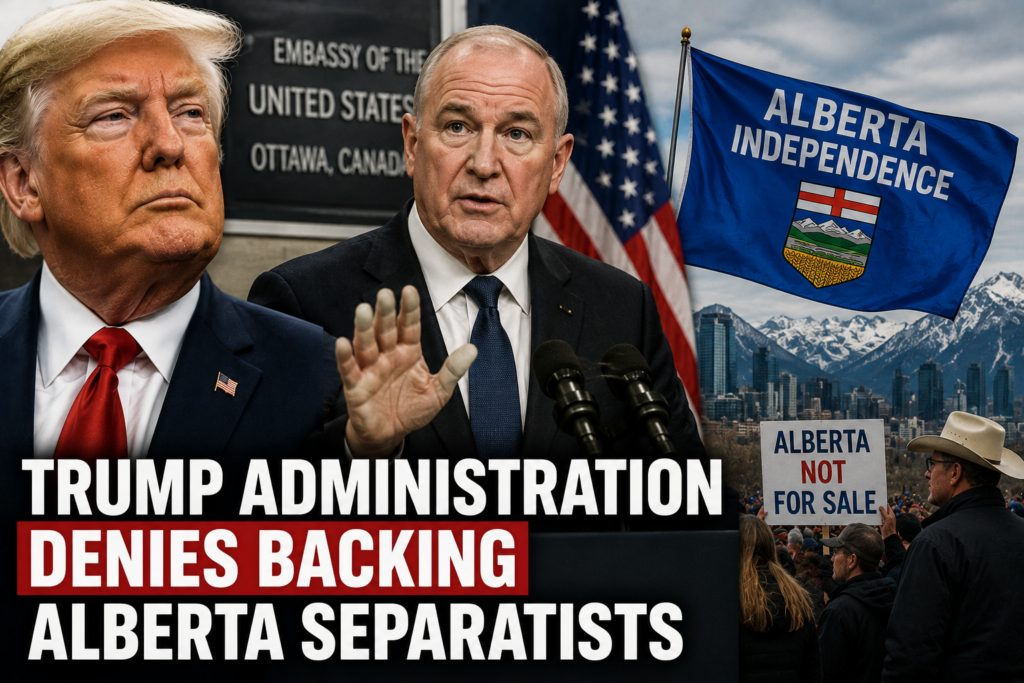
The Trump administration is not supporting Alberta’s separatist movement and has not held meetings with separatist leaders, according to U.S. Ambassador to Canada Pete Hoekstra. His comments directly contradict public claims made by members of the Alberta Prosperity Project, who have said they met with U.S. officials to discuss potential financial support for an independent Alberta.
According to a report by Global News, Hoekstra dismissed allegations that the Trump administration has been coordinating with Alberta separatists, stating there has been no effort by Washington to assist or encourage the movement.
What Happened
Questions about the Trump administration’s position emerged after a Financial Times report, citing unnamed sources, claimed leaders of the Alberta Prosperity Project had met several times with U.S. State Department officials in Washington since April.
Jeffery Rath, leader of the Alberta Prosperity Project, has publicly stated that his organization held discussions with U.S. officials, including Treasury Department representatives, regarding the possibility of a US$500 billion line of credit should Alberta become an independent nation.
Hoekstra rejected those claims during an interview with Global News.
“We’re not meeting with the separatists and strategizing this at all,” the ambassador said.
When asked specifically whether discussions had taken place regarding a potential financial package for an independent Alberta, Hoekstra replied that he was unaware of any such conversations.
Trump Administration Declines to Take a Position
Although Hoekstra firmly denied any involvement with Alberta separatists, he stopped short of saying the Trump administration supports Alberta remaining part of Canada.
Instead, he said the issue is ultimately one for Albertans and the Canadian federal government to decide.
“The president’s call,” Hoekstra said when asked about the administration’s official position, adding that Washington does not intend to advocate either for separation or for Alberta remaining within Canada’s Confederation.
He also said he does not expect to receive instructions from President Donald Trump or Secretary of State Marco Rubio to campaign on either side of the issue ahead of Alberta’s planned referendum.
Contrast With Previous U.S. Administrations
Hoekstra’s comments represent a different approach from previous American administrations.
During Quebec’s 1995 independence referendum, then-President Bill Clinton publicly supported Canadian unity, describing Canada as an international model of cooperation among diverse cultures.
By comparison, the Trump administration is signaling it intends to remain publicly neutral regarding Alberta’s political future.
The administration has generally emphasized allowing sovereign nations to resolve domestic political issues independently while focusing on broader foreign policy priorities. Readers can also explore Trump’s trade negotiations with India, another example of the administration’s international policy agenda.
Previous Comments Sparked Political Debate
Despite Hoekstra’s assurances, remarks made earlier this year by U.S. Treasury Secretary Scott Bessent fueled speculation about Washington’s interest in Alberta.
Speaking on a podcast in January, Bessent described Alberta as a “natural partner” for the United States and praised the province’s independent political culture.
Those comments prompted criticism from several Canadian provincial premiers, who viewed them as unnecessary interference in Canadian politics.
Hoekstra dismissed the controversy, noting that politicians in both countries frequently comment on each other’s domestic affairs.
“There are lots of instances of Canadian politicians saying things about American politics or American policies,” he said.
Political Implications
The ambassador’s denial comes at a sensitive time as Alberta prepares for discussions surrounding a possible separation referendum later this year.
By distancing the Trump administration from separatist claims, Washington appears to be seeking to avoid becoming directly involved in an internal Canadian constitutional debate.
The issue nevertheless remains politically significant because of Alberta’s vast energy resources and its close economic relationship with the United States. Readers may also be interested in Trump’s digital tax and tariff negotiations with Europe, which reflect the administration’s broader international economic strategy.
What Happens Next
Attention will now shift to Alberta’s political process as provincial leaders continue preparing for a possible referendum on separation.
While separatist organizers maintain they have communicated with American officials, the Trump administration has publicly denied providing support or engaging in discussions about financing Alberta independence.
Whether the issue remains a domestic political debate or evolves into a broader diplomatic matter will likely depend on developments inside Canada in the months ahead.
According to U.S. Ambassador Pete Hoekstra, the administration has not met with Alberta separatist groups or discussed supporting Alberta independence.
The issue gained attention after separatist leaders claimed they had met U.S. officials and discussed financial support for an independent Alberta, claims the Trump administration denies.