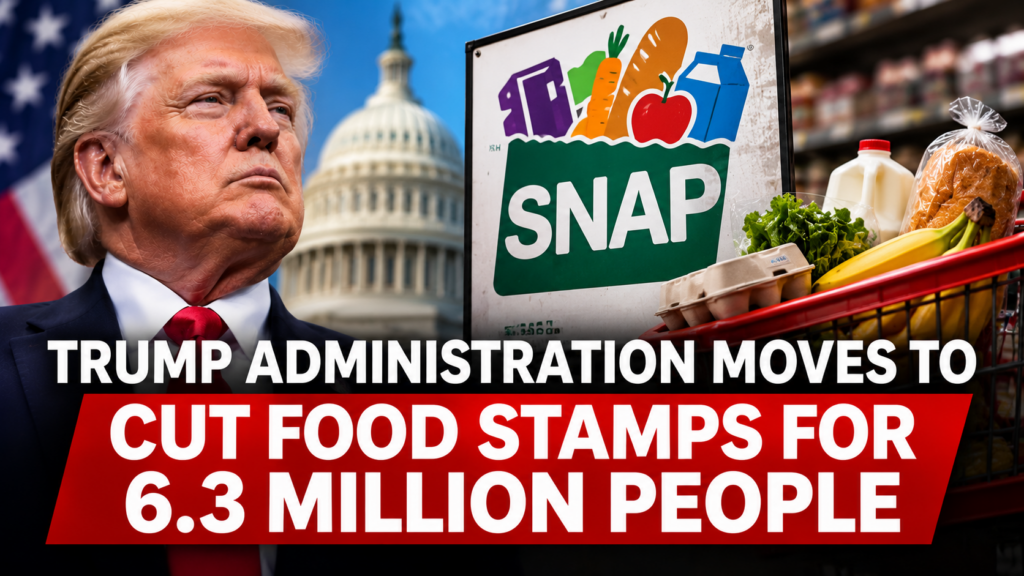
The Trump administration has proposed new restrictions on the Supplemental Nutrition Assistance Program (SNAP), potentially removing 6.3 million Americans from the federal food assistance program. The proposal, announced by the U.S. Department of Agriculture (USDA) on November 10, would change how households qualify for food stamps through other government assistance programs.
The proposed rule could affect nearly 18% of current SNAP recipients and also reduce automatic eligibility for free school meals among approximately 1.8 million children. The changes are part of the administration’s broader effort to tighten federal assistance eligibility and reduce government spending.
What Happened?
According to a report by Reuters, the USDA has proposed ending automatic SNAP eligibility for households receiving certain assistance through the Temporary Assistance for Needy Families (TANF) program.
Under the existing system, states can use eligibility for certain TANF-funded benefits and services to help households qualify for SNAP without independently meeting all federal income requirements. The proposed rule would restrict this arrangement to households receiving qualifying TANF cash assistance.
The USDA estimates that approximately 6.3 million people could lose SNAP eligibility by 2029 if the proposal is finalized.
How Would the New SNAP Rules Work?
SNAP provides monthly food assistance to low-income households through benefits used to purchase groceries. The program generally applies a gross income limit of 130% of the federal poverty level for households without elderly or disabled members.
However, TANF eligibility varies by state and can extend to households with incomes above SNAP’s standard threshold. Under the existing categorical eligibility system, some households can qualify for SNAP through participation in TANF-funded assistance.
The proposed change would require more households to meet SNAP’s own eligibility requirements rather than automatically qualifying through certain non-cash TANF benefits and services.
Impact on Families and Children
The proposed SNAP changes could affect millions of households that currently rely on government assistance to afford groceries.
According to USDA estimates, approximately 1.8 million children could lose automatic eligibility for free school meals because their households would no longer qualify for SNAP through the existing categorical eligibility arrangement. However, the agency estimates that approximately 97% of these children would still qualify for free or reduced-price meals through separate household income assessments.
The proposal could also affect access to other assistance programs that use SNAP participation as an eligibility pathway, including certain nutrition support programs for women and children.
Why Is the Trump Administration Changing SNAP Eligibility?
The USDA argues that the proposed changes would ensure federal food assistance reaches households that meet the program’s intended eligibility standards.
The department says some states have expanded categorical eligibility beyond the federal income and resource limits established for SNAP. Restricting automatic eligibility would therefore make requirements more consistent across states.
However, the proposal could also increase administrative responsibilities for state governments, which would need to conduct additional eligibility assessments for affected households.
Previous Cuts Have Already Reduced SNAP Enrollment
The latest proposal follows earlier reductions to federal food assistance under Trump’s July 2025 tax and spending legislation.
According to USDA data cited by Reuters, more than 5.5 million people had already lost SNAP benefits following those changes, bringing total enrollment to approximately 36 million people.
The administration’s latest proposal could further reduce participation in the country’s largest federal food assistance program, adding pressure to households already facing rising living costs.
Political Opposition and Public Response
The proposal has drawn criticism from Democratic lawmakers, including Representative Angie Craig of Minnesota, the ranking Democrat on the House Agriculture Committee.
Craig described the proposed changes as “heartless and cruel,” arguing that they would make it harder for families to meet basic needs and reverse efforts to simplify access to federal assistance.
Supporters of tighter eligibility rules argue that government benefits should be directed toward households meeting federal requirements. The debate highlights broader disagreements over welfare spending, federal budget priorities, and the government’s responsibility to support low-income Americans.
What Happens Next?
The USDA’s proposal is not yet final. The public has 30 days to submit comments, with the Federal Register setting December 10, 2026, as the deadline.
If finalized, the changes are expected to reach their full impact by 2029, potentially affecting 6.3 million SNAP participants. The final outcome will depend on the regulatory process and the administration’s response to public feedback.
The proposal could become another significant change to America’s social safety net, raising questions about how the government balances spending reductions with access to essential food assistance.
Related Reading
- GAO Raises Concerns Over ICE Immigration Detention Oversight as Facilities Expand
- Federal Judge Blocks Construction of Trump’s Monumental Arch for 14 Days
The proposed rule would restrict automatic SNAP eligibility for households receiving certain TANF-funded benefits, requiring them to meet SNAP’s own eligibility requirements.
The proposal is still under public review, with comments due December 10, 2026. If finalized, its full impact is expected by 2029.