The Democratic Party has long been a coalition of diverse viewpoints, but the tension between its progressive and moderate wings has become increasingly pronounced in recent years. Understanding the divide between progressive democrats vs moderate democrats is essential for anyone following American politics, particularly as these internal dynamics shape presidential elections, legislative priorities, and the overall direction of the party. This ideological split influences everything from healthcare policy to climate action, making it a crucial factor in determining who wins party nominations and what policies ultimately become law.
Defining the Two Democratic Factions
The Democratic Party encompasses a broad spectrum of political thought, with progressives and moderates representing distinct approaches to governance and policy-making. Progressive Democrats typically advocate for sweeping structural changes to address systemic inequalities, favoring bold government intervention in areas like healthcare, climate change, and economic regulation. They often align with movements calling for fundamental transformations of existing institutions.
Moderate Democrats, by contrast, tend to favor incremental reform over revolutionary change. Moderate Democrats emphasize pragmatic, centrist policies that they believe can attract broader electoral support and pass through divided legislatures. This faction often prioritizes electability and bipartisan cooperation, viewing compromise as a necessary component of effective governance.
Historical Context and Evolution
The progressive democrats vs moderate democrats debate has roots extending back decades, but it has intensified dramatically since 2016. The emergence of Senator Bernie Sanders' presidential campaigns energized a new generation of progressive activists, while moderate Democrats pointed to electoral victories in swing districts as evidence for their approach.
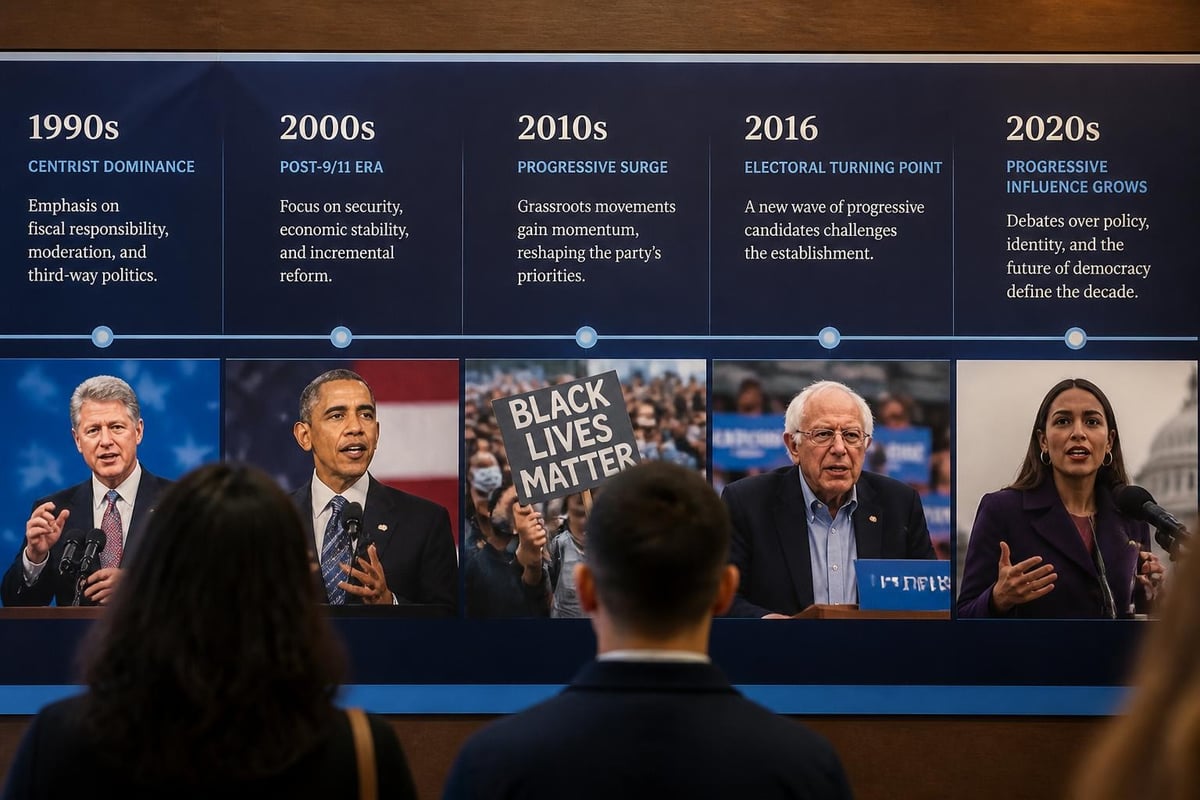
According to Gallup’s analysis of Democratic Party ideology, the composition of the party has shifted considerably over the past two decades. The proportion of Democrats identifying as liberal has grown substantially, while those identifying as moderate or conservative has declined. This demographic shift creates tensions as the party attempts to balance the preferences of its increasingly progressive base with the need to win general elections in competitive districts.
Key Policy Differences
The progressive democrats vs moderate democrats divide manifests most clearly in specific policy areas where the two factions propose fundamentally different approaches.
Healthcare and Social Programs
| Policy Area | Progressive Position | Moderate Position |
|---|---|---|
| Healthcare | Medicare for All, single-payer system | Public option, strengthen ACA |
| Higher Education | Free public college tuition | Targeted debt relief, expanded grants |
| Minimum Wage | $20+ per hour federal minimum | $15 per hour with regional adjustments |
| Climate Action | Green New Deal, rapid transition | Market-based incentives, gradual shift |
Progressive Democrats champion Medicare for All as a fundamental right, arguing that a single-payer system would eliminate private insurance inefficiencies and reduce overall costs. Progressive Democrats advocate for transformative policies that fundamentally restructure existing systems rather than working within them.
Moderate Democrats generally support expanding healthcare access through a public option that would compete with private insurers while allowing Americans to keep existing coverage if they prefer. This approach, they argue, is more politically feasible and less disruptive to the current system.
Economic Policy and Taxation
The economic divide between these factions extends beyond specific tax rates to fundamental questions about capitalism and government's role in the economy. Progressive Democrats advocate for:
- Wealth taxes targeting ultra-high net worth individuals
- Breaking up monopolistic corporations
- Significant increases in corporate tax rates
- Universal basic income or federal jobs guarantees
- Strong labor union protections and expanded worker rights
Moderate Democrats typically support:
- Higher taxes on top earners without wealth taxes
- Antitrust enforcement within existing frameworks
- Corporate tax increases that maintain competitiveness
- Targeted workforce development programs
- Pro-union policies with business community input
The evolving nature of moderate Democratic voters reveals that even traditional moderates have shifted toward supporting more economically populist positions in 2026, blurring some of these distinctions.
Electoral Strategy and Electability
Perhaps no issue divides progressive democrats vs moderate democrats more sharply than questions of electoral strategy. This debate becomes particularly intense during presidential primaries, as covered extensively in U.S. Presidential Report’s presidential race coverage.
The Moderate Argument
Moderate Democrats argue that progressive policies alienate swing voters in crucial battleground states. They point to successful moderate candidates in purple districts who flipped seats from Republican control in recent election cycles. Electability becomes their rallying cry, emphasizing that winning power is a prerequisite for implementing any policies whatsoever.
This faction worries that labels like "socialist" or proposals like abolishing private health insurance provide easy attack lines for Republican opponents. They advocate for messaging discipline and policy moderation to avoid scaring off independents and persuadable Republicans.
The Progressive Counter-Argument
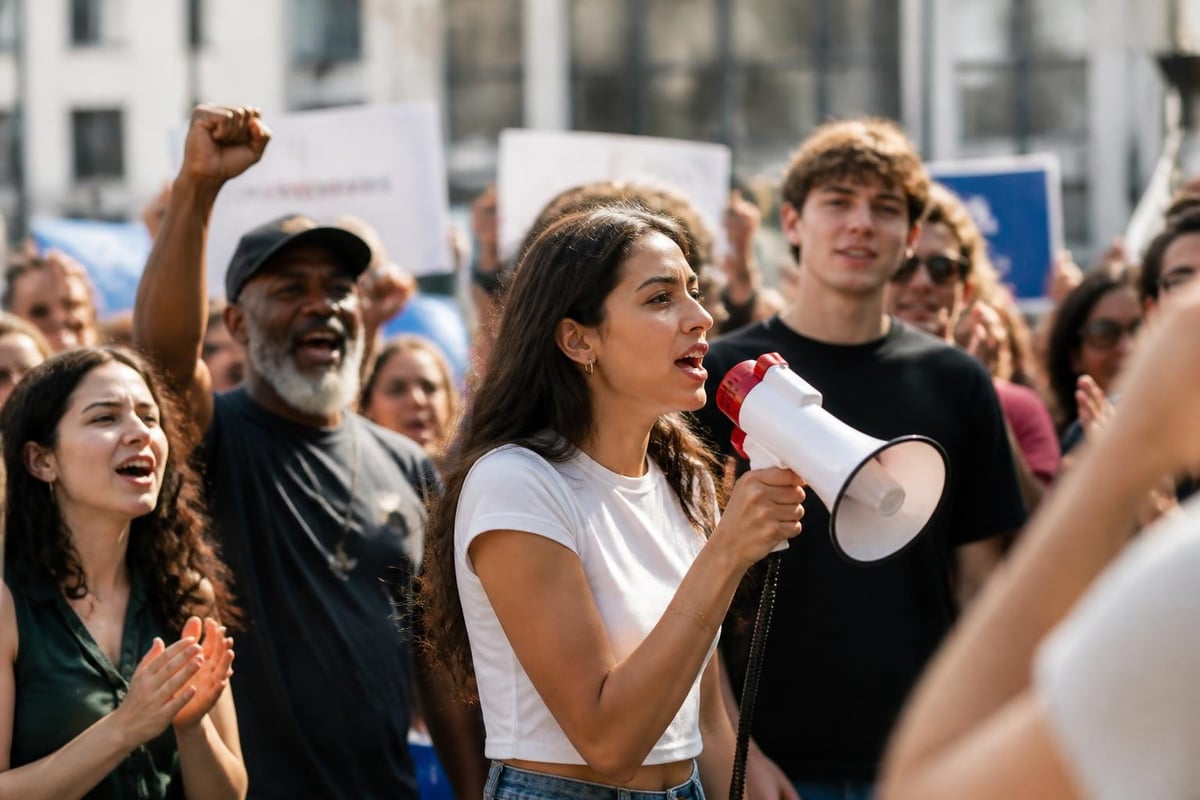
Progressive Democrats counter that bold, transformative policies energize the base and inspire higher turnout among young voters, people of color, and working-class Americans who often sit out elections. They argue that "playing it safe" with moderate policies depresses enthusiasm and fails to offer voters a compelling alternative to the status quo.
Progressive Democrats maintain distinct policy positions designed to mobilize constituencies that moderates often take for granted. They believe that many Americans who don't vote regularly would turn out for candidates offering genuine economic transformation.
Legislative Influence and Congressional Dynamics
The progressive democrats vs moderate democrats split plays out daily in Congress, where narrow margins give both factions significant leverage. The Congressional Progressive Caucus has grown substantially in size and influence, now representing nearly 100 House members. Meanwhile, moderate Democrats often organize through caucuses like the New Democrat Coalition and the Blue Dog Coalition.
Negotiating Within the Party
When Democrats hold power, internal negotiations between these factions often prove more challenging than negotiations with Republicans. Major legislation in recent years has required extensive intra-party compromising:
- Initial progressive proposal introducing ambitious policy goals
- Moderate concerns about cost, scope, or political viability
- Leadership mediation attempting to find middle ground
- Scaled-back compromise that both sides reluctantly accept
- Unified messaging emphasizing achievements while acknowledging limitations
This process creates frustration on both sides. Progressives feel their priorities get watered down, while moderates worry about being pressured into supporting policies they view as politically risky.
Foreign Policy and National Security
While domestic policy differences receive more attention, progressive democrats vs moderate democrats extends to foreign policy as well. Progressive Democrats generally favor:
- Significant reductions in military spending
- Restraint in military interventions abroad
- Conditioning aid to allies on human rights records
- Prioritizing diplomacy over military options
- Ending forever wars and reducing overseas commitments
Moderate Democrats tend to support:
- Maintaining robust defense budgets
- Strategic use of military force when necessary
- Strong alliances with traditional partners
- Balanced approach between diplomacy and deterrence
- Gradual, conditions-based withdrawal from conflicts
These differences emerged clearly in debates over defense authorization bills, with progressives pushing for larger cuts and moderates warning against undermining national security. The Biden administration's approach to issues like China policy, as discussed in articles about protecting American interests, often required balancing these competing perspectives within the Democratic coalition.
Generational and Demographic Factors
The progressive democrats vs moderate democrats divide correlates strongly with age, race, and geography. Younger Democrats overwhelmingly identify as progressive, supporting candidates like members of "The Squad" who entered Congress in recent years. Older Democrats tend to identify as moderate, preferring incremental change and proven approaches.
Geographic Distribution
| Region | Dominant Faction | Key Considerations |
|---|---|---|
| Urban Coastal Areas | Progressive | Safe Democratic seats, diverse populations |
| Suburban Swing Districts | Moderate | Competitive races, college-educated voters |
| Rural/Small Town | Moderate | Conservative-leaning Democrats |
| Rust Belt Industrial | Mixed | Economic populism crosses factional lines |
This geographic reality creates structural tensions. Progressives represent districts where Democrats win by large margins, allowing them to take more liberal positions without electoral risk. Moderates often represent competitive districts where ideological purity could cost them their seats.
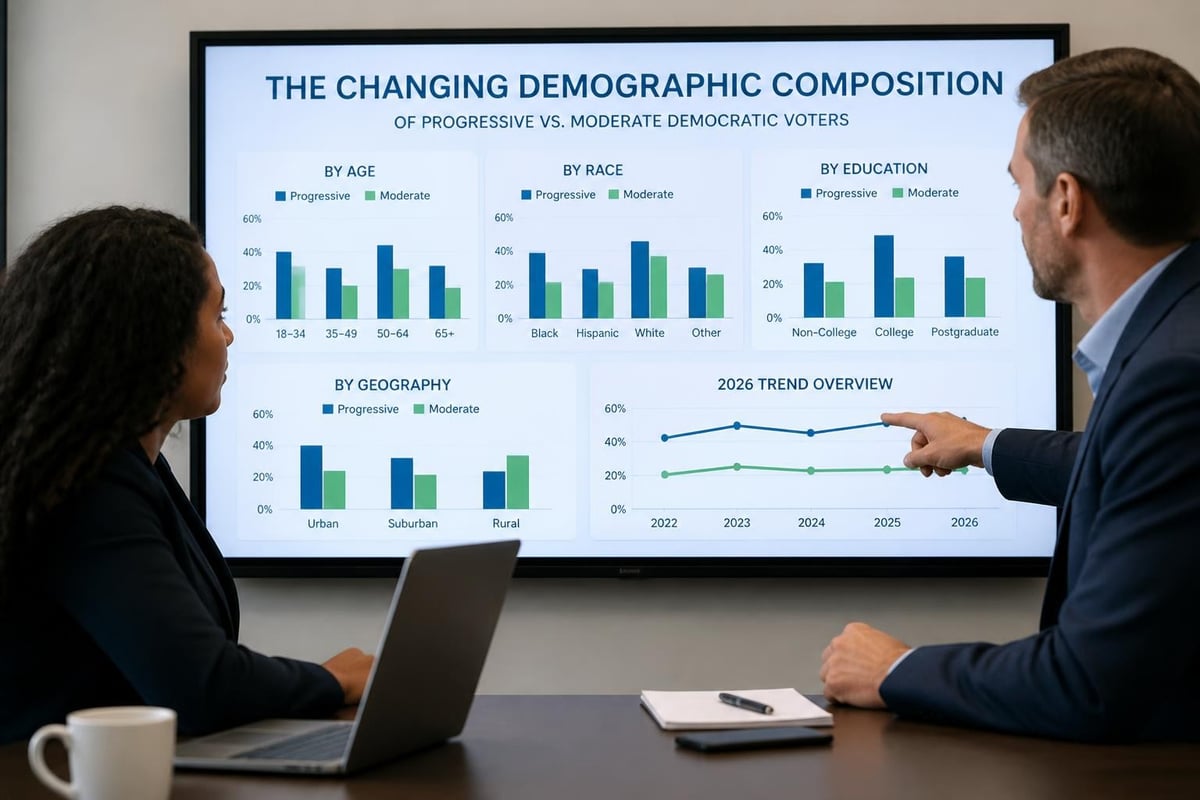
Understanding these ideological differences helps explain why certain policies gain traction in some regions while facing resistance in others.
The 2026 Landscape
As the 2026 midterm elections approach, the progressive democrats vs moderate democrats tension shows no signs of abating. Recent analysis of the 2026 electoral dynamics suggests both factions are positioning themselves for influence over the party's future direction.
Progressive candidates have succeeded in some high-profile primaries, challenging incumbent moderates and pushing the party leftward on issues like climate change and healthcare. However, moderate Democrats point to their success in defending swing seats as evidence that their approach wins general elections.
Presidential Implications
This intra-party debate has profound implications for presidential politics. Primary voters must choose between candidates representing these different visions, and the nominee must then unite the party for the general election. The challenge of maintaining progressive enthusiasm while appealing to moderate swing voters has vexed Democratic presidential candidates for years.
The impact of these divisions extends to vice presidential selections, cabinet appointments, and judicial nominations. A progressive president might face pressure from moderate Senate Democrats on certain nominees, while a moderate president must work to maintain progressive support for their agenda.
Economic Populism as Common Ground
Despite significant differences, some areas of potential convergence exist between progressive democrats vs moderate democrats. Economic populism-skepticism of corporate power and support for working-class Americans-increasingly unites both factions, albeit through different policy mechanisms.
Both progressives and moderates now support:
- Infrastructure investment and job creation
- Strengthening antitrust enforcement
- Protecting American manufacturing
- Addressing income inequality
- Expanding access to affordable childcare
The methods differ-progressives favor direct government provision while moderates prefer tax incentives and public-private partnerships-but the goals overlap more than either faction sometimes acknowledges. Issues like IRS reporting requirements for financial transactions demonstrate how both factions seek to ensure tax compliance from wealthy individuals, though they may disagree on implementation details.
Media Influence and Messaging
The progressive democrats vs moderate democrats debate plays out dramatically in media coverage, with both factions cultivating different media ecosystems. Progressive Democrats effectively use social media to bypass traditional gatekeepers, building direct relationships with supporters through platforms that reward bold, uncompromising messaging.
Moderate Democrats tend to receive more favorable coverage from mainstream political journalists who value bipartisanship and incremental change. This creates asymmetric incentive structures where progressives gain attention through bold proposals while moderates benefit from appearing reasonable and electable.
Messaging discipline remains a persistent challenge for Democrats generally, as these factional divisions provide Republicans with opportunities to highlight Democratic disunity. When progressive and moderate Democrats publicly criticize each other, it reinforces narratives about a party in chaos unable to govern effectively.
Future Trajectory
The resolution of tensions between progressive democrats vs moderate democrats will likely determine the Democratic Party's direction for decades. Several scenarios could unfold:
- Progressive ascendancy as younger voters replace older moderates
- Moderate consolidation if progressive policies prove electorally costly
- Permanent coalition requiring constant negotiation between factions
- Party realignment with some voters switching parties over these divisions
Research on increasing polarization suggests that ideological sorting will likely continue, potentially intensifying rather than resolving these intra-party conflicts. However, the specific balance between progressive and moderate influence remains uncertain and highly dependent on electoral outcomes in competitive races.
The 2026 midterms and the 2028 presidential election will provide crucial tests of both factions' theories about what voters want and which approach can build winning coalitions. These elections will shape not just policy outcomes but the fundamental identity of the Democratic Party moving forward.
The ongoing debate between progressive and moderate Democrats represents more than tactical disagreements-it reflects fundamental questions about the pace of change, the role of government, and what vision of America the party should champion. As these factions continue shaping the Democratic agenda, staying informed about their competing priorities becomes essential for understanding American politics. U.S. Presidential Report provides non-partisan coverage of how these internal Democratic dynamics influence presidential elections, policy debates, and the broader political landscape, helping readers navigate the complex world of presidential politics with clarity and context.