MAGA influence in Congress 2026 remains dominant inside the Republican conference even after the party lost its House majority in the midterms. Republicans chose Jim Jordan, a prominent Trump ally, as House minority leader for the Congress taking office in January 2027, and the vote signals that the movement retains significant influence within the party after its electoral setback.
That outcome surprised some observers who expected a reckoning. Losing a majority usually pushes a party toward its center. This time the opposite happened, and the reasons say a great deal about how the Republican conference is built, who votes in its primaries and what members fear most.
What Happened in the 2026 Midterms and Why It Matters for Congress
The midterms handed Democrats control of the House while leaving the Republican conference more ideologically concentrated than before. Control of the House depends on winning a majority of seats, so even a modest swing in competitive districts reshaped the chamber.
Republicans in competitive districts appear to have borne much of the electoral cost, and the members most likely to resist Trump-aligned positions were among those affected. The result is a smaller conference whose center of gravity may sit further toward the movement.
A few structural points explain the pattern:
- Competitive-district Republicans lost seats at a higher rate than members from safe districts.
- Surviving members owe their positions to primary electorates that reward loyalty to Trump.
- Fewer moderates means fewer votes available to form cross-party coalitions on contested bills.
For readers tracking the House races that produced this result, our coverage of key swing districts to watch in 2026 shows where the majority was won and lost.
Jim Jordan's Rise and the New Republican Leadership
Jim Jordan's election as minority leader is the clearest single indicator of MAGA influence in Congress heading into the next session. The House Republican conference selected Jordan over Scalise, and centrist Republicans were described as a minority within the party after the election.
Jordan is widely known as a prominent Trump ally and a figure associated with aggressive oversight and confrontation with the other party. His elevation suggests what the conference rewards: visible alignment with the president and a willingness to confront the other party.
The leadership contest also revealed the argument playing out inside the party. MS NOW’s analysis of the Republican debate describes a split between members who want to maintain the current course and those urging adjustment after the losses. The leadership result suggests the first camp holds significant support within the conference.
What Minority Leadership Means for Jordan
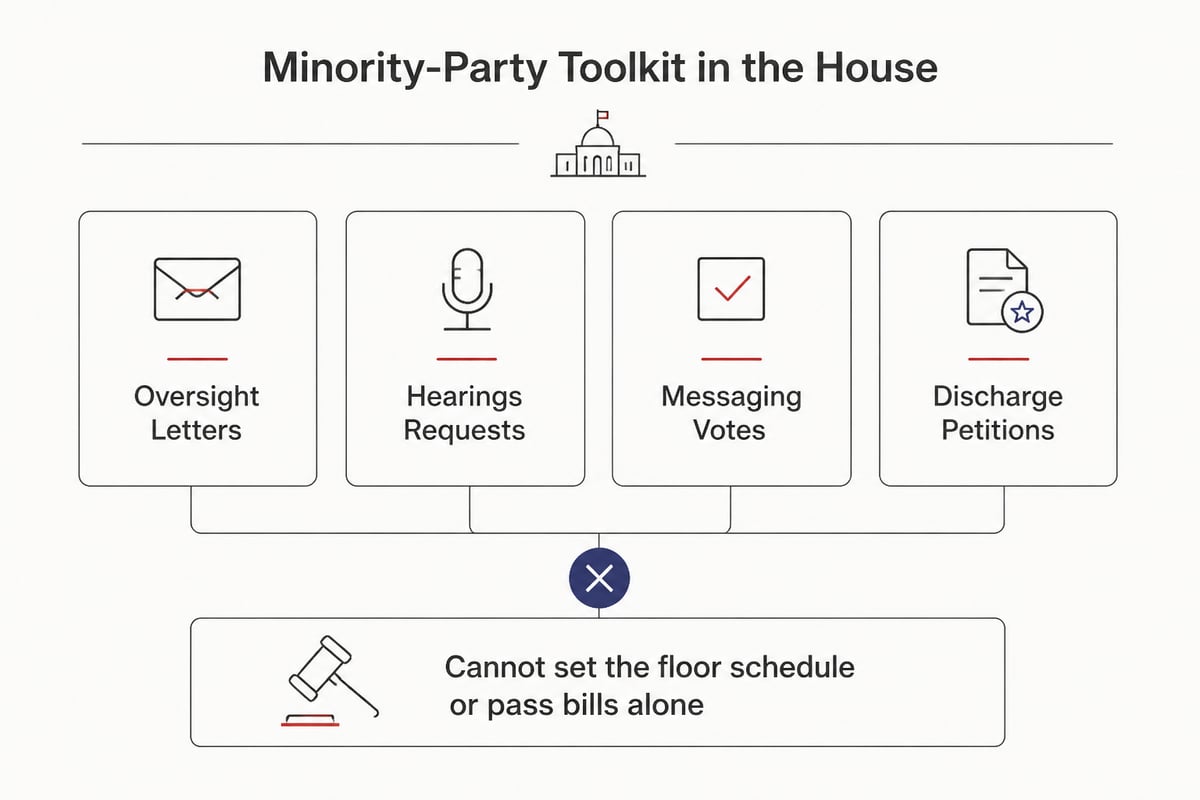
Minority leaders do not control the floor, but they set the tone for opposition. Jordan's priorities will likely include oversight positioning, messaging votes and discipline on procedural questions. He will also shape which Republicans receive committee assignments and campaign support when the conference prepares for the next cycle.
How Large Is the MAGA Bloc Among Voters and Lawmakers?
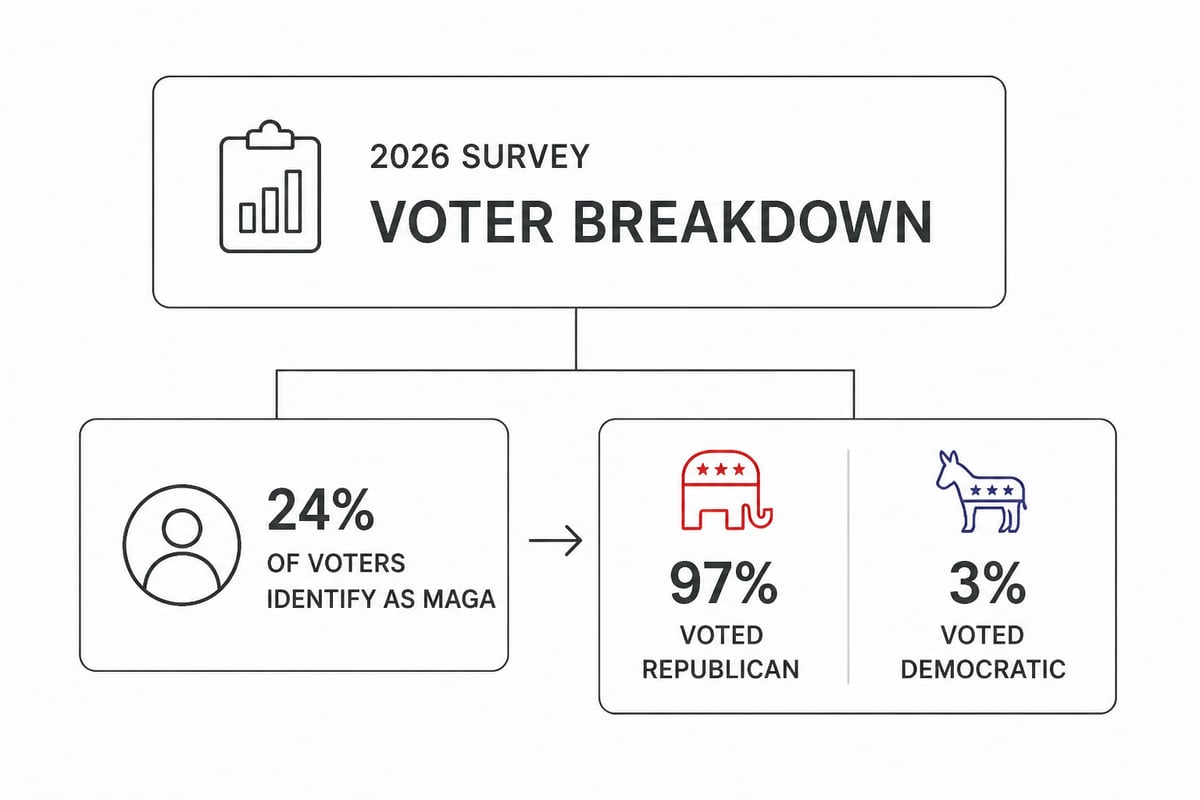
The MAGA bloc is a minority of the national electorate but a strong and reliable base within the Republican Party, which is the source of its congressional leverage. A 2026 voter survey reported that 24% of voters identified as MAGA, and among those voters 97% voted Republican and 3% Democratic.
The survey's figures carry the argument. The first is the size: about one in four voters identified as MAGA, a modest share of the general electorate. The second is the loyalty: a 97% Republican vote means the bloc is a reliable base that candidates have strong reason not to alienate, particularly in primaries where turnout is low and intensity is high.
That gap between general-election weight and primary-election weight explains most of what happens in the conference. A member can be vulnerable in November and still be more afraid of a primary challenge in the spring. For a closer look at how the base is changing, see our report on MAGA movement growth in 2026.
Why Republicans Doubled Down Instead of Moderating
Republicans doubled down because the incentives facing individual members reward loyalty more than electability. Three forces drive the behavior.
- Primary fear. Trump's endorsements carry weight in low-turnout contests, and members remember how his backing shaped earlier races. Our analysis of the MAGA endorsement impact on the 2026 midterms and the Trump primary victories of 2026 documents that track record.
- Conference composition. After the election, the members who remain are disproportionately those from safe seats, so the median Republican voter in the conference is more aligned with the movement than before.
- White House pressure. The administration has shown it will press members directly on votes it cares about.
The third point was visible in a recent test. House Republicans blocked a vote that would have triggered an impeachment effort against Defense Secretary Pete Hegseth, amid pressure from the White House. A near-unanimous result on a politically uncomfortable question shows how effectively leadership and the administration can hold the conference together.
The Senate Picture: Where MAGA Influence Is Weaker
The Senate gives MAGA-aligned members less control than the House because of longer terms, statewide electorates and a tradition of institutional independence. A senator elected for six years faces a primary challenge less often, and a statewide general electorate is broader than a gerrymandered House district. A House member can spend an entire career answering to a few hundred thousand reliably partisan voters. A senator must assemble a coalition large enough to win an entire state, which often includes suburban and independent voters who respond less to movement messaging.
That does not mean the movement lacks Senate allies. It means influence works differently. In the upper chamber, a handful of votes can decide a nomination or a procedural fight, so individual senators with independent bases carry outsized weight. A single Republican who is not up for reelection for several years can decline to follow the White House on a confirmation without facing the immediate primary pressure a House member would feel. Senate rules also give each member tools, such as holds and objections to unanimous consent, that slow a leadership agenda regardless of which faction is pushing it. Readers who want the forecast side of this should compare the 2026 Senate control forecast against the 2024 results.
Three Senate dynamics are worth watching in the new session:
- Nomination fights, where a few defections can block or confirm appointees.
- Spending negotiations, where the filibuster forces bipartisan bargaining.
- Retirements and vacancies, which change the balance between loyalists and institutionalists.
MAGA Versus the Mainstream GOP: Where the Factions Split
The split between MAGA-aligned Republicans and the traditional party establishment shows up most clearly on trade, foreign policy, spending and executive power. The factions agree on many goals, including tax reduction and border enforcement, but they diverge on method and priority.
| Issue | MAGA-aligned Republicans | Traditional GOP establishment |
|---|---|---|
| Trade | Tariffs as a core tool | Skeptical of broad tariffs |
| Executive power | Supportive of expansive authority | Favors congressional prerogatives |
| Foreign policy | Restraint and transactional deals | Alliance-centered posture |
| Spending | Priorities tied to administration goals | Emphasis on deficit discipline |
The tension between the president and congressional Republicans is tracked in our reporting on Trump and GOP tensions in 2026.
Where the Factions Still Agree
Unity is strongest on border security funding, tax policy and judicial confirmations. Those areas give leadership a reliable path to a majority vote even when other topics divide the conference.
Will MAGA Influence Hold in a Democratic House?
Influence will likely hold inside the Republican conference, but its practical power changes once the party no longer controls the House floor. A minority party cannot pass legislation alone, so the movement's tools shift toward oversight, messaging and blocking.
Several constraints will test the bloc:
- A narrow Democratic majority. Small margins make attendance and unity decisive, and Republicans can use procedural tools to complicate the majority's agenda.
- Public opinion. Congressional approval remains low, and our tracker of congressional approval ratings in 2026 shows how little goodwill either party holds.
- Economic conditions. Inflation and jobs data will shape the 2028 cycle, as covered in our reporting on Trump and inflation in the midterms.
- Independent voters. Their movement between parties often decides competitive races, as our analysis of independent voters versus party loyalists explains.
The deeper question is whether the electoral cost of the movement's positions will eventually change member behavior. So far, the leadership vote suggests it has not.
What Local Organizers Should Watch Through 2027
Organizers should watch primary calendars, filing deadlines and member voting records, because those are the points where congressional influence is decided. National headlines move quickly, but the factors that determine who holds power are local and procedural.
A practical monitoring list for activists and club leaders:
- Track your member's key votes. Compare their record on leadership votes, oversight votes and spending bills against their public statements.
- Follow primary filing deadlines. Challenges to incumbents are won or lost months before voters see a ballot.
- Study endorsement patterns. Presidential endorsements often decide which candidates survive, as seen in the Indiana primaries influence test.
- Compare outcomes to forecasts. The House majority forecast against 2022 outcomes offers a model for judging how reliable projections are.
Local clubs also gain by documenting which issues drive turnout in their districts. The top political issues Americans care about in 2026 give a useful starting point for building a platform or a voter-contact script.
Key Takeaways on MAGA Influence in Congress 2026
The evidence points in one direction: MAGA influence in Congress 2026 is concentrated where it matters most, in leadership selection and party discipline, even as the movement's general-election weight is limited. The House Republican conference chose Jordan by a landslide over Scalise, and centrist Republicans were described as a minority within the party after the election. Members then closed ranks on a politically sensitive vote, with all but one House Republican blocking an impeachment effort against Defense Secretary Pete Hegseth amid White House pressure. The remaining caucus may be more aligned with the movement than the one that entered the cycle.
The numbers behind that discipline are consistent. A 2026 voter survey found 24% of voters identifying as MAGA, and 97% of them voted Republican. That is a minority of the electorate but a base no Republican can safely ignore in a primary.
The open questions are electoral rather than institutional. If swing-district losses persist in future cycles, pressure to moderate may build. If the base stays energized and the president retains primary influence, the current pattern will likely continue through the 2028 campaign. The Senate, with its longer terms and statewide electorates, remains the chamber where that pattern is most likely to bend first.
Pick one member of Congress from your area this week and chart their votes on leadership, oversight and spending, then compare that record with the primary calendar in your state. For daily reporting that keeps those details in view, U.S. Presidential Report covers the presidency, Congress and federal policy without partisan framing, and if you are ready to turn that knowledge into local action you can Start Your Own Political Club and organize your neighbors around it.