Ohio has long served as America's electoral bellwether, reflecting national political currents with remarkable precision. From 1964 through 2016, the Buckeye State backed the winning presidential candidate in every election but one, earning its reputation as the ultimate swing state. However, recent cycles have revealed a dramatic transformation in Ohio's political landscape. Understanding ohio voting trends explained requires examining demographic shifts, geographic polarization, and evolving partisan coalitions that have redefined how the state votes in presidential elections.
The Historical Context of Ohio's Electoral Importance
For decades, political strategists viewed Ohio as a must-win state. Its diverse mix of urban centers, suburban communities, and rural areas mirrored the nation's demographic composition, making it an ideal testing ground for campaign messages and coalition-building strategies.
The state's 17 electoral votes (reduced from 18 after the 2020 census) represented a significant prize in competitive presidential races. Campaign operatives poured resources into field offices across Cleveland, Columbus, Cincinnati, and smaller manufacturing towns throughout the industrial corridor. Presidential candidates understood that winning Ohio meant understanding working-class concerns, suburban anxieties, and rural values simultaneously.
Shifting from Purple to Red
Beginning in 2020, Ohio's political identity underwent a fundamental transformation. The state that Barack Obama won twice by comfortable margins swung decisively Republican, signaling a realignment that has only accelerated through 2024 and into the current cycle. This shift reflects broader changes in partisan coalitions happening across post-industrial regions.
Several factors contributed to this evolution:
- Educational polarization: College-educated voters in urban cores trended Democratic while non-college voters in smaller towns moved sharply Republican
- Economic anxiety: Deindustrialization concerns resonated more strongly with Republican economic messaging
- Cultural issues: Social and cultural debates increasingly sorted voters along partisan lines
- Geographic sorting: Like-minded individuals increasingly clustered in politically homogeneous communities
The U.S. Presidential Report has tracked these developments extensively, providing non-partisan analysis of how presidential campaign strategies have adapted to Ohio's changing electorate.
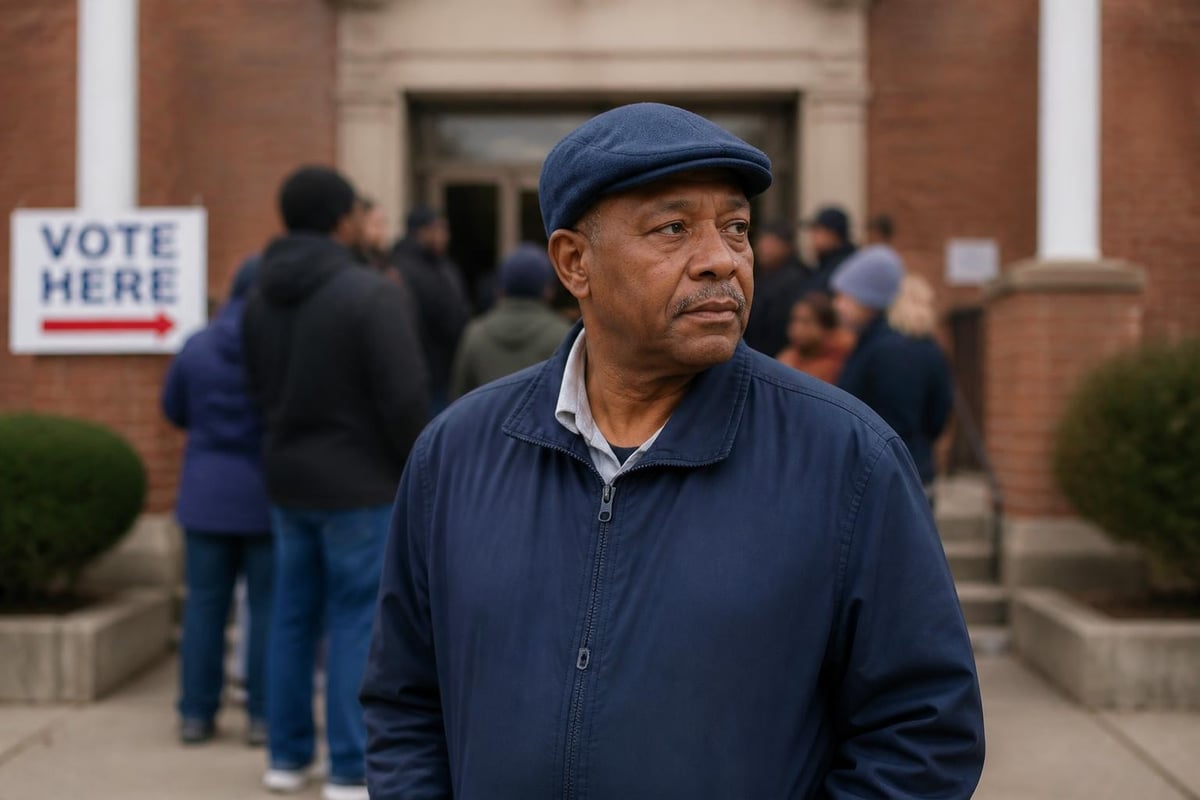
County-Level Analysis: Where Ohio Voting Trends Emerge
Understanding ohio voting trends explained requires moving beyond statewide margins to examine county-level patterns. Ohio's 88 counties tell distinct stories about partisan realignment, demographic change, and electoral volatility.
Urban Core Counties
Ohio's three major metropolitan counties-Cuyahoga (Cleveland), Franklin (Columbus), and Hamilton (Cincinnati)-have grown increasingly Democratic. Franklin County, home to Ohio State University and a thriving tech sector, exemplifies this trend most dramatically.
| County | 2012 Margin | 2020 Margin | 2024 Margin | Shift |
|---|---|---|---|---|
| Franklin | D+23 | D+30 | D+34 | D+11 |
| Cuyahoga | D+41 | D+42 | D+44 | D+3 |
| Hamilton | D+5 | D+15 | D+18 | D+13 |
These urban areas have seen population growth driven by young professionals, diverse immigrant communities, and knowledge-economy workers. Their increasing Democratic lean, however, has been overwhelmed by Republican gains in the rest of the state.
Suburban Battlegrounds
Ohio's suburban counties once defined the state's swing-state status. Counties like Delaware (north of Columbus) and Warren (north of Cincinnati) were genuine toss-ups in the 2000s. Today, these affluent suburbs have split in fascinating ways.
Delaware County, one of America's fastest-growing and wealthiest counties, has remained competitive despite national trends showing college-educated suburbanites moving Democratic. Warren County, by contrast, has become deeply Republican, reflecting a preference among conservative-leaning suburbanites for traditional values messaging.
The FiveThirtyEight Ohio coverage provides detailed data visualizations showing how these suburban counties have evolved, offering insights into which demographic factors drive voting behavior in communities experiencing rapid change.
Small-Town and Rural Transformation
The most dramatic component of ohio voting trends explained lies in small-town and rural Ohio. Counties across Appalachia, the industrial northeast, and agricultural northwest have delivered overwhelming Republican margins that dwarf Democratic gains in cities.
Mahoning County, home to Youngstown, illustrates this transformation vividly. Once a Democratic stronghold built on union manufacturing jobs, it swung from supporting Obama by 28 points in 2012 to supporting Trump by just 3 points in 2020, and by double digits in 2024.
Similar patterns emerged across:
- Trumbull County (Warren area)
- Stark County (Canton area)
- Ashtabula County (northeast corner)
- Athens County (Ohio University, bucking the rural trend)
Research from the Kirwan Institute at Ohio State University has documented how economic opportunity gaps between urban and rural Ohio drive divergent political preferences, with rural voters increasingly viewing Democratic candidates as disconnected from their economic realities.
Demographic Drivers Behind Voting Patterns
Ohio's demographic composition continues shifting in ways that reshape electoral outcomes. The state's population growth has lagged behind the national average, resulting in lost congressional seats and electoral votes after both the 2010 and 2020 censuses.
Race and Ethnicity
Ohio remains less diverse than the nation overall, with a population that is approximately 78% non-Hispanic white compared to 59% nationally. This demographic reality influences voting patterns significantly.
African American voters, concentrated in Cleveland, Columbus, Cincinnati, Dayton, and Akron, remain the most reliably Democratic constituency, typically supporting Democratic candidates at rates exceeding 85%. However, analyses from Brookings Institution research show modest Republican gains among Black voters in 2024, particularly Black men, though these shifts remain relatively small in Ohio.
Hispanic and Latino voters represent a growing but still relatively small share of Ohio's electorate, concentrated in urban areas and certain agricultural regions. Asian American voters, while increasing in suburban Columbus and Cincinnati, also represent a small but growing demographic.
Age and Generational Divides
Younger voters in Ohio lean Democratic, while older voters tilt Republican, following national patterns. However, the state's aging population-with a median age above the national average-creates structural challenges for Democrats.
- Voters under 30: Favor Democrats by approximately 15-20 points
- Voters 30-44: Competitive, slight Democratic edge in urban areas
- Voters 45-64: Lean Republican by 5-10 points
- Voters 65+: Strongly Republican, especially in small towns and rural areas
The Election Administration and Voting Survey comprehensive report provides detailed turnout data showing how different age cohorts participate at varying rates, with implications for understanding which groups drive Ohio's voting trends.
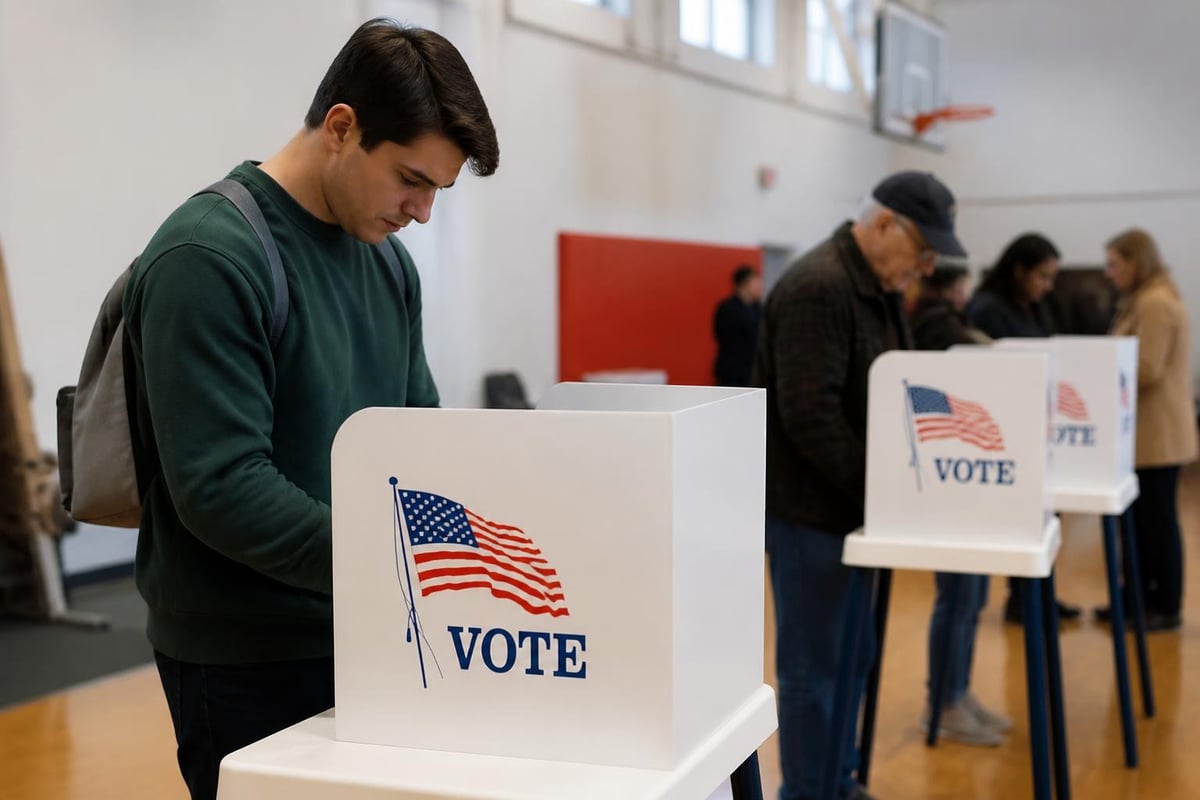
Educational Attainment
No demographic factor better predicts Ohio voting behavior than educational attainment. The gap between college-educated and non-college voters has widened dramatically, creating the core dynamic of ohio voting trends explained in recent cycles.
Voters with four-year college degrees, once a Republican-leaning group, now favor Democrats, especially in white-collar suburbs and university towns. Conversely, voters without college degrees-once the backbone of Democratic labor coalitions-have shifted decisively Republican, drawn by messaging on trade, immigration, and cultural issues.
This education-based realignment appears across racial lines, though it manifests most strongly among white voters. The pattern has transformed counties with major universities (like Athens County, home to Ohio University) into Democratic islands surrounded by increasingly Republican territory.
Policy Issues Driving Ohio Voter Decisions
Economic concerns consistently rank as the top priority for Ohio voters, but the specific economic issues that resonate vary dramatically by region and demographic group.
Manufacturing and Trade
Ohio lost over 400,000 manufacturing jobs between 2000 and 2020, fundamentally reshaping communities across the industrial corridor. Trade policy remains intensely personal for many Ohio voters who watched factories close and jobs move overseas or to the South.
Republican candidates have gained traction by opposing trade agreements and promising to bring manufacturing jobs back, while Democratic candidates emphasize workforce development, infrastructure investment, and support for emerging industries like electric vehicle production.
The ongoing debate over manufacturing policy plays out differently across Ohio:
- Former industrial cities: Focus on revitalization and preventing further job losses
- Growing suburban areas: Emphasis on attracting new businesses and maintaining quality of life
- Agricultural regions: Concern about markets for soybeans, corn, and other exports
- Appalachian areas: Interest in energy jobs, including both fossil fuels and renewables
Healthcare Access and Costs
Healthcare emerged as a decisive issue in suburban counties during 2024, with voters particularly concerned about prescription drug costs and insurance premiums. Ohio's Medicaid expansion under the Affordable Care Act extended coverage to hundreds of thousands of residents, creating a constituency invested in preserving access.
Energy and Environment
Ohio's energy landscape reflects its diverse economy. The state produces significant natural gas from shale drilling, maintains coal-fired power plants in southeastern counties, and increasingly develops wind and solar projects. Energy policy debates intersect with job creation concerns and environmental priorities differently across regions.
Voter Access and Administration Changes
Recent years have brought significant changes to how Ohioans cast ballots, with implications for turnout and participation across demographic groups. The Brennan Center’s Voting Laws Roundup tracks these legislative changes and their impacts.
Early Voting and Absentee Ballots
Ohio offers both in-person early voting (beginning 28 days before Election Day) and no-excuse absentee voting by mail. These options have become increasingly popular, with roughly 40% of voters casting ballots before Election Day in recent presidential elections.
Utilization patterns vary significantly by party and geography. Urban and suburban Democrats disproportionately use early voting and mail ballots, while rural Republicans tend to prefer Election Day voting. These patterns create dramatic swings in reported results as different ballot types are counted.
Voter ID Requirements
Ohio requires voters to present identification, though the requirements include both photo and non-photo options. Recent legislative discussions have focused on tightening ID requirements, standardizing drop-box access, and adjusting early voting hours.
Registration and Turnout Rates
Ohio's voter registration rates exceed the national average, with approximately 78% of eligible citizens registered. Turnout in presidential elections typically ranges from 65-72%, placing Ohio in the upper tier of states for participation.
The University of Florida Election Lab maintains detailed historical datasets on Ohio registration and turnout by county, precinct, and demographic group, enabling researchers to identify participation gaps and trends over time.
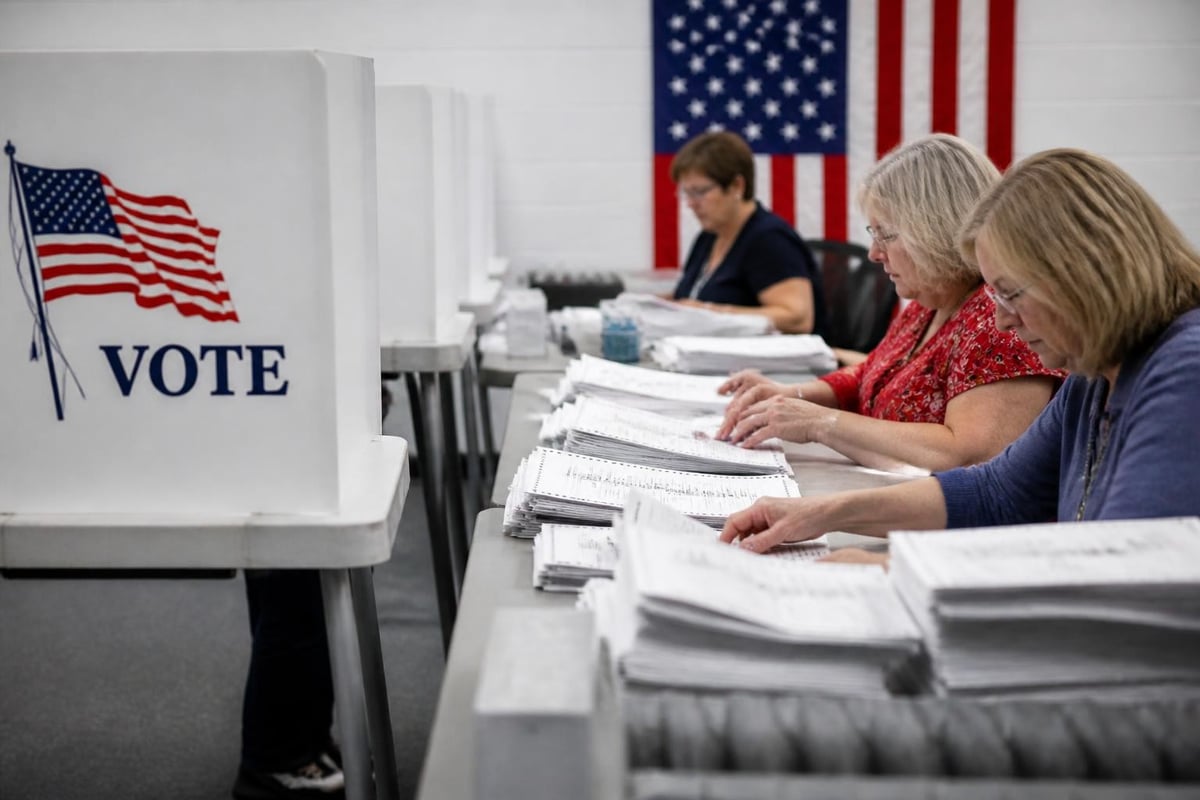
Media Markets and Campaign Strategy
Ohio's fragmented media landscape complicates campaign communications. Unlike states dominated by one or two major media markets, Ohio requires candidates to advertise across eight distinct markets, increasing campaign costs and strategic complexity.
Major Media Markets
The state's primary media markets include:
- Cleveland-Akron: Reaches northeastern Ohio industrial areas
- Columbus: Central Ohio, capital city, swing region
- Cincinnati: Southwestern Ohio, Kentucky suburbs
- Dayton: Western Ohio manufacturing cities
- Toledo: Northwestern Ohio, Michigan border
- Youngstown: Northeastern Ohio, Pennsylvania border
- Wheeling-Steubenville: Southeastern Ohio, West Virginia overlap
- Lima: West-central Ohio markets
This fragmentation means campaigns must develop multiple message strategies tailored to regional concerns, economic conditions, and demographic compositions. What resonates in Columbus's growing tech sector differs substantially from messages that work in Youngstown's recovering manufacturing communities.
The 2024 Election and Recent Trends
The 2024 presidential election reinforced Ohio's rightward trajectory. Republican candidates won statewide by margins exceeding 8 points, a dramatic shift from the razor-thin margins of the 2000s and early 2010s.
Statewide Results Analysis
Exit polls and voter surveys revealed several key patterns that define current ohio voting trends explained:
Gender gaps widened, with men supporting Republicans by 12-15 points while women split more evenly or favored Democrats by small margins in urban areas. This gender polarization appeared across racial and educational groups.
Union household voters, once reliably Democratic, split nearly evenly or even leaned Republican in some industrial counties. This represents a fundamental shift in a state where organized labor historically wielded enormous political influence.
Issue priorities varied by region, with economic concerns dominating in manufacturing areas, education and quality-of-life issues resonating in suburbs, and cultural/social issues playing strongly in rural communities.
Analysis from the Associated Press VoteCast methodology provides validated voter data showing how different demographic groups actually voted, rather than relying solely on exit polls, offering more accurate insights into coalition composition.
Readers interested in comprehensive presidential election coverage can explore the presidential list for historical context on how Ohio's voting patterns relate to national outcomes across different administrations.
Comparing Ohio to National Trends
Ohio's transformation from bellwether to Republican-leaning state reflects broader national realignments, but the pace and magnitude of change distinguish it from similar states.
Rust Belt Comparisons
Ohio's shift resembles but exceeds changes in other industrial Midwest states:
| State | 2012 Margin | 2024 Margin | Total Shift |
|---|---|---|---|
| Ohio | R+3 | R+8.5 | R+5.5 |
| Pennsylvania | D+5 | R+0.5 | R+5.5 |
| Michigan | D+10 | D+2 | R+8 |
| Wisconsin | D+7 | R+1 | R+8 |
Ohio moved furthest right fastest, losing its competitive status while neighbors Pennsylvania, Michigan, and Wisconsin remained genuine battlegrounds. This divergence stems from Ohio's greater concentration of non-college white voters, its slower population growth, and its less diverse demographic profile.
Sunbelt Contrasts
While Ohio trends Republican, several Sunbelt states have moved Democratic due to rapid population growth, increasing diversity, and migration of college-educated professionals. Arizona, Georgia, and Nevada exemplify this opposite trajectory, highlighting how demographic destiny shapes electoral outcomes.
Looking Ahead: Ohio in 2026 and Beyond
Ohio faces several state-level elections in 2026, including gubernatorial and Senate races that will test whether current voting trends hold or evolve. Several factors could influence future outcomes.
Potential Inflection Points
Economic development initiatives, particularly in electric vehicle manufacturing and semiconductor production, could reshape regional economies and voting patterns. Large-scale investments in central Ohio and northeastern Ohio may strengthen Democratic performance in those regions if they generate visible prosperity.
Generational replacement will gradually shift the electorate as older voters who remember Democratic-leaning manufacturing unions are replaced by younger voters with different economic experiences and priorities. However, this process unfolds slowly, measured in decades rather than election cycles.
Continued suburban growth around Columbus, Cincinnati, and Cleveland could create new competitive areas, though Republicans have demonstrated ability to compete effectively even in affluent suburbs by emphasizing local governance, education quality, and tax policy.
Data-Driven Forecasting
Modern campaign analytics combine voter file data, consumer behavior patterns, social media engagement, and traditional polling to identify persuadable voters and optimize resource allocation. Ohio's extensive electoral history provides rich datasets for modeling, making it a laboratory for testing predictive techniques even as its battleground status diminishes.
County Profiles: Microcosms of Larger Trends
Examining specific counties in depth reveals how broader ohio voting trends explained manifest in local contexts.
Summit County (Akron)
Summit County exemplifies the challenges facing Democrats in mid-sized industrial cities. While the city of Akron itself leans Democratic, surrounding suburbs and townships have moved Republican, reducing overall Democratic margins from 15 points in 2012 to single digits in recent cycles.
The county contains diverse communities: affluent suburban areas like Hudson, working-class neighborhoods in Akron, and rural townships in the southern portion. This diversity creates internal political variation that reflects statewide patterns in miniature.
Portage County (Kent)
Home to Kent State University, Portage County demonstrates how university communities increasingly diverge from surrounding rural areas. The city of Kent votes overwhelmingly Democratic, while outer townships deliver strong Republican margins. The county overall has become competitive, swinging based on turnout variations between these polarized communities.
Butler County (North of Cincinnati)
Butler County represents Ohio's Republican-leaning suburbs. Despite proximity to Cincinnati and relative affluence, the county consistently delivers large Republican margins, driven by social conservatism, business-friendly attitudes, and skepticism of urban Democratic politics.
The county's growth rate exceeds the state average, yet unlike rapidly growing areas in some states, Butler's newcomers tend to share the political preferences of existing residents, reinforcing rather than challenging the Republican lean.
Presidential Campaign Resource Allocation
Ohio's diminishing battleground status has dramatic implications for campaign strategy and resource allocation. Presidential campaigns that once poured hundreds of millions of dollars into Ohio advertising, field operations, and candidate visits now redirect those resources to more competitive states.
This shift affects local economies, media revenues, and civic engagement. Hotels, restaurants, and event venues in Columbus, Cleveland, and Cincinnati that once hosted frequent campaign rallies and surrogate visits see reduced presidential campaign activity. Local news stations receive fewer advertising dollars during election season, affecting their business models.
The reduced attention also influences voter enthusiasm and turnout. When presidential candidates campaign heavily in a state, they generate media coverage, volunteer energy, and voter excitement that can boost downballot races. Ohio's shift from battleground to safer Republican state potentially dampens these spillover effects.
Survey Research and Public Opinion
Understanding ohio voting trends explained requires examining not just election results but the underlying attitudes, priorities, and affiliations that drive voting behavior. Survey research organizations conduct regular polling to track public opinion on candidates, issues, and party preference.
Partisan Identification Trends
Self-identified Republicans now outnumber Democrats in Ohio by approximately 5-7 points, a reversal from the near-parity or slight Democratic edge that existed through the early 2010s. This shift in party identification precedes and predicts voting behavior changes.
Independent voters, who comprise roughly 15-20% of the electorate, lean Republican in Ohio by modest margins. These voters tend to prioritize economic issues and express skepticism of both parties, but ultimately break for Republicans more often than not in statewide races.
Issue Polling
Surveys consistently show Ohio voters prioritizing:
- Economic conditions and job security
- Healthcare costs and access
- Education quality and school safety
- Crime and public safety
- Infrastructure and roads
The relative weight voters assign to these issues varies by region, with urban voters emphasizing healthcare and education while rural voters focus more heavily on economic security and cultural issues.
Ohio's transformation from America's premier swing state to a Republican-leaning stronghold represents one of the most significant electoral realignments of the past decade, driven by educational polarization, demographic shifts, and evolving issue priorities across its diverse regions. For readers seeking comprehensive, non-partisan coverage of how presidential politics shape and respond to these trends, U.S. Presidential Report provides detailed analysis of campaign strategies, policy positions, and electoral outcomes that define American presidential governance.