Nevada has emerged as one of America's most consistently competitive swing states, delivering razor-thin margins in presidential elections while reflecting the nation's evolving demographic and political landscape. This nevada swing state analysis explores the unique factors that make the Silver State a critical battleground, from its rapidly changing electorate to the complex coalition-building required for victory. Understanding Nevada's political dynamics offers essential insights into broader electoral trends and the strategies campaigns must employ to win in diverse, Western swing states.
The Demographic Foundation of Nevada's Swing Status
Nevada's transformation into a swing state stems directly from its demographic composition. The state has experienced explosive population growth since 2000, with most new residents settling in Clark County (Las Vegas) and Washoe County (Reno). This urbanization has fundamentally altered the political landscape.
The Latino population now comprises approximately 30% of Nevada's residents, making it the largest minority group in the state. Asian American and Pacific Islander communities represent another 10-12% of the population, concentrated primarily in the Las Vegas metropolitan area. These demographic shifts have created a more diverse electorate than the national average.
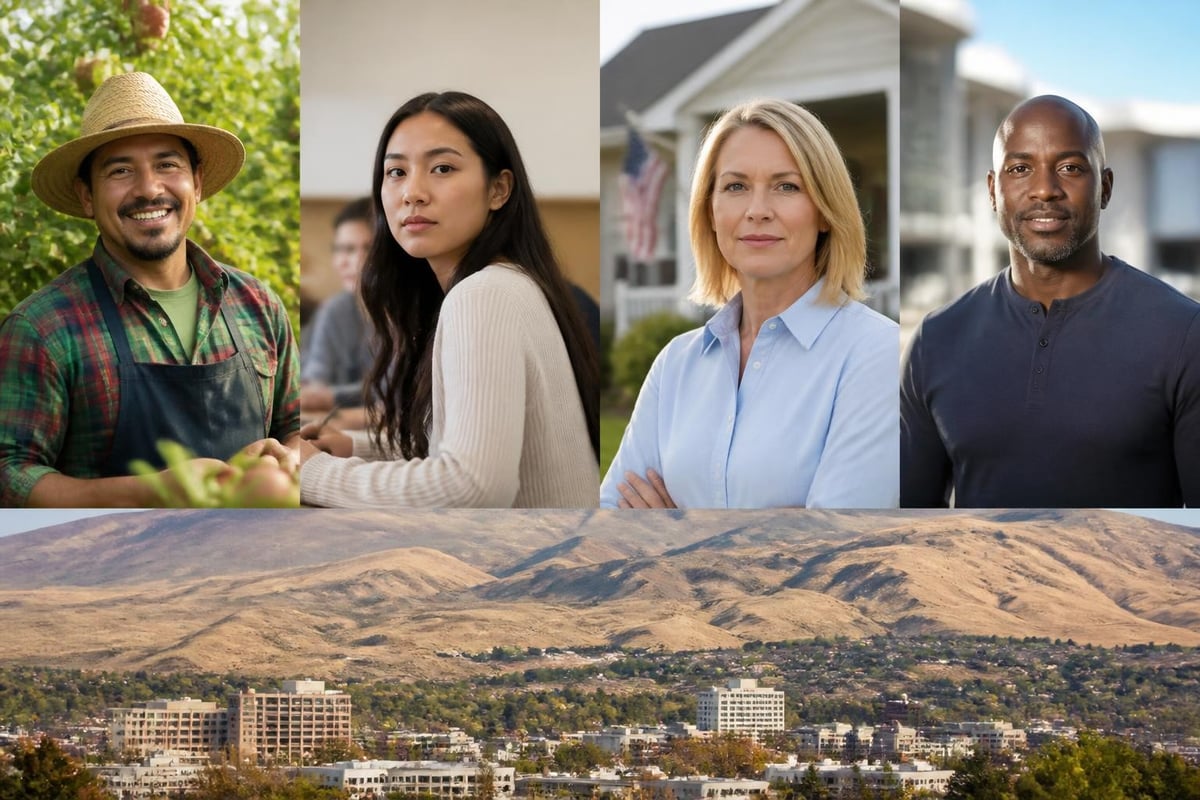
Urban-Rural Political Divide
The political geography of Nevada reveals stark contrasts:
- Clark County (Las Vegas) contains approximately 75% of the state's population and trends Democratic
- Washoe County (Reno) holds about 15% of residents and serves as a true swing region
- Rural Nevada represents the remaining 10% and votes reliably Republican
This distribution means that any nevada swing state analysis must account for the overwhelming influence of Las Vegas while recognizing that margins in Washoe County and rural turnout can determine statewide outcomes. According to data from Pew Research Center, the concentration of diverse, younger voters in urban areas contrasts sharply with the older, predominantly White populations in rural counties.
| Region | Population Share | Typical Lean | Key Demographics |
|---|---|---|---|
| Clark County | ~75% | Democratic +5-10 | Latino, Asian, Service Workers |
| Washoe County | ~15% | Swing (±3) | Mix of College-Educated, Working Class |
| Rural Counties | ~10% | Republican +30-40 | White, Older, Agricultural |
Electoral Performance Patterns and Trends
Nevada's recent electoral history demonstrates remarkable consistency in competitiveness. Since 2008, no presidential candidate has won Nevada by more than 5 percentage points, and most margins have been narrower. This tight competitiveness makes Nevada essential to both parties' electoral college strategies.
The 2024 election continued this pattern, with results falling within the typical 2-4 point range. The Brookings Institution’s analysis highlighted how Nevada's outcomes often mirror national popular vote trends while maintaining its competitive character.
Voter Registration Dynamics
Nevada's voter registration statistics reveal important nuances:
- Democrats hold a registration advantage, though it has narrowed since 2016
- Non-partisan voters now represent approximately 25-28% of registered voters
- Republican registration has grown in rural areas and among certain demographic subgroups
The growth of non-partisan voters complicates traditional nevada swing state analysis because these voters don't align consistently with either party. In recent cycles, non-partisan voters have split relatively evenly, though they tend to be younger and more responsive to candidate quality than partisan loyalty.
Voting Law Changes and Administrative Factors
Nevada has implemented significant changes to its voting procedures since 2020, which have altered turnout patterns and campaign strategies. The state's permanent mail-ballot system, adopted during the pandemic and made permanent in 2021, has fundamentally changed how Nevadans vote.
According to the Brennan Center, these changes have increased overall participation while also creating new dynamics in vote counting and result timing. Universal mail ballots are now sent to all active registered voters, while same-day registration remains available at in-person voting locations.
Impact on Campaign Strategy
The mail ballot system has required campaigns to adjust their strategies significantly:
- Earlier voter contact is essential since ballots arrive weeks before Election Day
- Ballot chase operations have become critical, with teams following up with voters who received but haven't returned ballots
- In-person voting still matters, particularly for certain demographic groups and last-minute deciders
- Post-Election Day counting can extend for days as mail ballots with valid postmarks are tallied
These administrative realities mean that any comprehensive nevada swing state analysis must account for the extended voting period and the complex logistics of modern Nevada campaigns, as detailed by The Nevada Independent’s reporting.
The Latino Vote: Nevada's Critical Swing Component
No nevada swing state analysis would be complete without examining the Latino electorate, which has become the decisive factor in close elections. Latino voters in Nevada are not monolithic, with important distinctions based on generation, national origin, and economic status.
First and second-generation immigrants tend to vote more reliably Democratic, particularly on issues related to immigration policy and economic opportunity. However, third-generation and beyond Latino voters show more diverse political preferences, with some demographic subgroups trending toward Republicans on issues like education, crime, and economic policy.
Issue Priorities Within Latino Communities
Recent polling and electoral analysis reveal distinct priorities:
- Economic opportunity and wage growth consistently rank as top concerns
- Healthcare access remains critical, particularly for working-class families
- Education quality has grown in importance, especially among parents
- Immigration policy matters but varies in salience by generation and legal status
The diversity within Nevada's Latino population means campaigns cannot rely on single-issue appeals. Third Way’s battleground analysis emphasizes the need for multifaceted messaging that addresses economic concerns while respecting cultural values.

Service Industry and Economic Factors
Nevada's economy is uniquely dependent on hospitality, gaming, and service industries, creating distinct political dynamics. The Culinary Workers Union in Las Vegas represents over 60,000 workers and serves as one of the state's most powerful political organizations.
Union membership and organizing activities directly impact electoral outcomes:
| Factor | Electoral Impact | 2024 Relevance |
|---|---|---|
| Culinary Union Endorsement | +2-3 points for endorsed candidates | Critical in close races |
| Union Get-Out-The-Vote | High-quality voter contact reaching 100k+ voters | Extended early voting period |
| Worker Economic Concerns | Drives issue salience on wages, benefits, healthcare | Post-pandemic recovery issues |
The service economy also creates a large population of shift workers who benefit from Nevada's extended early voting periods. Campaigns that successfully mobilize service workers through workplace contacts and union partnerships typically perform better in Clark County.
Economic Recovery and Political Sentiment
Nevada's economy experienced severe pandemic disruption, with unemployment reaching historic highs when casinos closed in 2020. The recovery trajectory has been uneven:
- Tourism has rebounded to near pre-pandemic levels in Las Vegas
- Housing costs have increased dramatically, creating affordability challenges
- Wage growth in service industries has accelerated but hasn't kept pace with inflation
- Small business formation has been strong, particularly among immigrant communities
These economic factors shape voter sentiment and create opportunities for both parties depending on how effectively they address working-class economic concerns. For context on broader political dynamics, U.S. Presidential Report’s coverage provides comprehensive analysis of presidential policy impacts on state economies.
Turnout Disparities and Voter Access
Analyzing turnout patterns reveals important disparities that affect electoral outcomes. Research from the Brennan Center documents how racial and ethnic turnout gaps have evolved in Nevada since 2008.
Key Turnout Observations
Latino turnout consistently lags White and Black turnout by 5-10 percentage points, creating both a challenge and opportunity for campaigns focused on mobilization. Asian American turnout shows similar patterns, though with significant variation based on national origin and citizenship status.
Young voters (18-29) represent a substantial portion of Nevada's electorate but vote at lower rates:
- Registration rates among young people are relatively high
- Actual turnout drops significantly compared to registration
- College students face unique challenges with address changes and registration maintenance
- Youth turnout spikes when campaigns invest in targeted mobilization
Rural turnout typically exceeds urban turnout on a percentage basis, though the raw vote totals favor urban areas given population distribution. Rural voters are more likely to vote on Election Day rather than through mail ballots, creating distinct temporal patterns in vote counting.
Data-Driven Analysis and Modeling
Modern nevada swing state analysis increasingly relies on granular, precinct-level data to identify voter behavior patterns and predict outcomes. The MIT Election Data and Science Lab provides official datasets that enable sophisticated modeling of Nevada's electorate.
Researchers and campaigns now use precinct-level results to:
- Identify ticket-splitting patterns and persuadable voters
- Model demographic change effects on future elections
- Optimize resource allocation for field operations and advertising
- Predict result timing based on which counties report when
- Assess the impact of specific campaign interventions
Electionline’s 2024 Precinct Project offers methodological frameworks for analyzing Nevada data, accounting for the state's unique characteristics including its significant transient population and the complexity of tracking voters who frequently move between addresses.

Geographic Micro-Targeting
Advanced analysis reveals meaningful variation even within seemingly homogeneous areas. Las Vegas itself contains hundreds of distinct precincts with different demographic profiles, turnout histories, and partisan leanages. Campaigns that treat all of Clark County identically miss opportunities for efficient targeting.
Similarly, Washoe County's swing status masks internal diversity, with college-educated suburban voters in south Reno behaving differently from working-class voters in north Reno and Sparks. Effective campaigns identify these micro-geographic patterns and adjust messaging and turnout operations accordingly.
Campaign Strategy Implications
Understanding Nevada's swing state characteristics requires campaigns to execute several strategic imperatives simultaneously:
Coalition building must bridge diverse demographic groups with sometimes competing priorities. Successful campaigns in Nevada typically construct coalitions that combine:
- Strong Latino and Asian American turnout with culturally appropriate messaging
- Organized labor support through workplace organizing and economic populism
- Young voter enthusiasm through digital engagement and issue-driven appeals
- Moderate suburban voters through messaging on stability and competence
Resource allocation must balance expensive Las Vegas media markets with retail campaigning in Reno and selective rural outreach. The cost-per-voter-contact varies dramatically across Nevada's geography.
Timing strategies have become more complex with universal mail ballots. Campaigns must maintain intensity for 3-4 weeks rather than building to a single Election Day crescendo. This extended timeline requires sustained funding and volunteer engagement.
For historical perspective on campaign strategies in competitive states, readers can explore coverage of previous presidential races to understand how approaches have evolved.
Future Trajectory and 2026 Outlook
Nevada's swing state status appears likely to continue through the 2026 cycle and beyond. Several factors suggest ongoing competitiveness:
Demographic trends continue to diversify the electorate, though the political preferences of new Nevadans aren't predetermined. Migration patterns from California, the Midwest, and within the Mountain West bring voters with varied political histories.
Generational replacement is accelerating as the state's population ages and younger, more diverse cohorts enter the electorate. These younger voters show less partisan attachment and more issue-focused decision-making.
Economic restructuring may reduce Nevada's dependence on gaming and hospitality, potentially altering the political salience of industry-specific issues. Technology sector growth in Reno and efforts to diversify Las Vegas's economy could reshape voter coalitions.
The 2026 Midterm Context
While 2026 is a midterm year without a presidential race in Nevada, the governor's race and federal congressional contests will test many of the same dynamics discussed in this nevada swing state analysis. Midterm electorates typically differ from presidential year turnout, with:
- Lower overall participation rates
- Older, Whiter demographic composition
- Higher engagement among highly partisan voters
- Greater influence of national political environment and presidential approval
These patterns suggest that 2026 results may not perfectly predict 2028 presidential outcomes, but they will provide important data on how Nevada's electorate is evolving.
County-Level Performance Deep Dive
Examining individual county performance reveals the building blocks of statewide results. While Clark and Washoe counties dominate discussions, understanding rural county patterns completes the picture.
Clark County typically needs to deliver Democratic margins of 80,000-120,000 votes to offset Republican advantages elsewhere. The precise margin required varies based on turnout levels in other counties. Within Clark, performance varies by:
- Henderson suburbs (more competitive, educated voters)
- North Las Vegas (heavily Democratic, diverse working-class)
- Las Vegas urban core (Democratic, lower turnout)
- Outer suburbs (trending Republican, faster growing)
Washoe County functions as Nevada's bellwether, with margins rarely exceeding a few thousand votes either direction. Winning Washoe isn't essential for statewide victory, but it provides a useful indicator of overall political environment.
Rural counties collectively can generate Republican margins of 40,000-60,000 votes despite representing only 10% of the population. These counties have become increasingly Republican, with some delivering 70-80% Republican vote shares.
| County Type | Vote Share | Typical Margin | Turnout Rate |
|---|---|---|---|
| Clark (Urban) | 68-72% | Dem +90-120k | 60-65% |
| Washoe (Suburban) | 14-16% | Swing ±2-5k | 65-70% |
| Rural (15 counties) | 12-14% | GOP +40-60k | 70-75% |
This geographic distribution means that the nevada swing state analysis ultimately depends on Clark County turnout and margins, moderated by performance in Washoe and rural areas.
Nevada's position as a swing state reflects broader American political dynamics while maintaining unique characteristics shaped by its demographics, economy, and geography. Understanding these factors provides essential context for interpreting electoral outcomes and predicting future trends. For comprehensive, non-partisan coverage of presidential politics and how national dynamics affect swing states like Nevada, U.S. Presidential Report delivers in-depth analysis of current and historical presidential elections, policy decisions, and their impacts on America's political landscape.