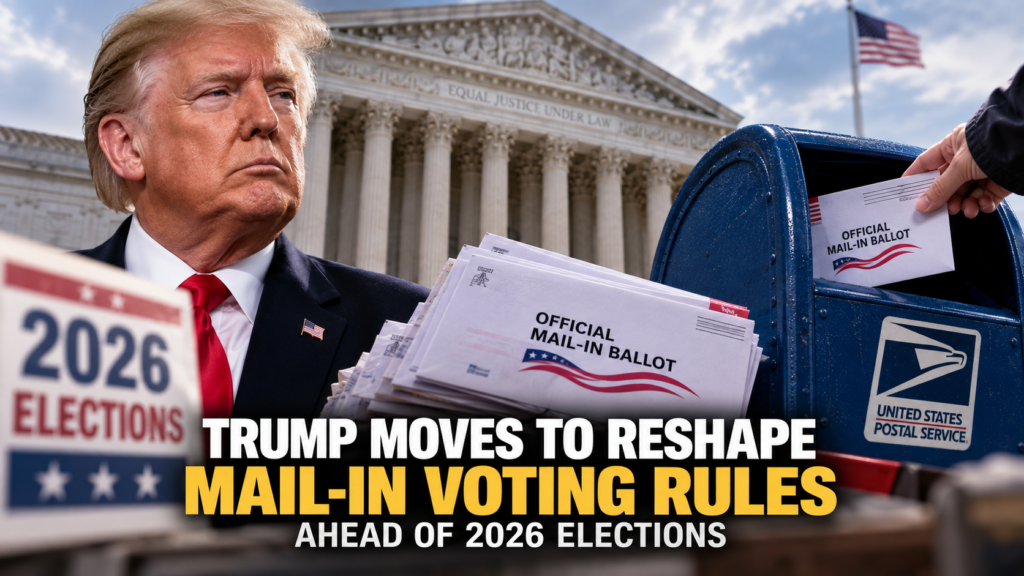
The Trump administration is asking the U.S. Supreme Court to allow new mail-in voting restrictions to take effect before the 2026 midterm elections, as states begin sending ballots to voters. The dispute could affect how millions of Americans cast ballots by mail and comes with control of Congress at stake.
What Happened
The Trump administration renewed its appeal to the Supreme Court on September 6, seeking permission to enforce new restrictions on mail ballots before the November elections.
The filing came after U.S. District Judge Indira Talwani extended an order blocking the U.S. Postal Service from enforcing the new requirements. According to a report by AP News, the administration argues that the restrictions are necessary and within its authority to regulate the mail.
The legal fight is unfolding as states have already started mailing ballots. North Carolina began the process, while Alabama is scheduled to begin mailing ballots September 9 and at least five additional states are expected to begin during the week of September 13.
Key Details
Administration Seeks Immediate Supreme Court Action
Solicitor General John Sauer urged the Supreme Court to immediately suspend Talwani’s order and allow the Postal Service rule to take effect.
The administration argues that keeping the injunction in place could create confusion because election officials are already preparing and mailing ballots. Sauer said each additional day could make implementation more difficult as ballot envelopes enter the postal system.
This is the third time the Trump administration has asked the Supreme Court to intervene in the dispute. The justices have previously allowed the plan to move forward procedurally but have not issued a final ruling on whether the restrictions are legally valid.
What the Mail-In Voting Rules Would Change
The contested Postal Service rules stem from President Donald Trump’s broader effort to change federal oversight of mail voting.
The rules would require states to provide information about mail-ballot recipients to the Postal Service and impose specific requirements for ballot envelopes, including unique barcodes. The Postal Service could reject ballots that fail to comply with the requirements.
The administration maintains that state and local election officials would continue to determine who is eligible to vote by mail and which ballots can ultimately be counted. The Postal Service says it would not determine voter eligibility, maintain voter rolls or count ballots.
Political and Economic Impact
The dispute has potentially significant political consequences because nearly one-third of U.S. voters cast ballots by mail, according to AP. The November 2026 election will determine control of Congress, making changes to voting procedures particularly consequential.
The timing is also important. Election officials are already preparing ballots, and states operate under different deadlines and procedures. Implementing a major federal change close to Election Day could require election offices to modify systems and processes that are already underway.
The administration says the rules would provide greater consistency and security in mail voting. Opponents argue that imposing new requirements so close to an election could create confusion and prevent eligible ballots from being counted.
Reactions and Opposition
Democratic-led states and voting rights organizations have challenged the restrictions in court, arguing that the changes are unconstitutional and exceed the federal government’s authority over elections. Election officials have also raised concerns about whether there is enough time to modify existing systems.
The American Civil Liberties Union has strongly opposed the Postal Service rule. Sophia Lin Lakin, director of the ACLU’s Voting Rights Project, said states could face serious difficulties complying with the requirements without disenfranchising voters who rely on mail ballots.
A separate federal judge, Indira Talwani, previously concluded that the executive branch and Postal Service lacked authority to impose the new voting requirements without congressional authorization. Reuters reported that Talwani described the rule as conflicting with Congress’s statutory framework governing elections.
What Happens Next
The Supreme Court will now consider the administration’s latest emergency request. The timing is critical because ballots are already being mailed in some states and more states are approaching their distribution deadlines.
Justice Ketanji Brown Jackson has set a Wednesday deadline for responses to the administration’s latest filing, according to Reuters.
The court’s decision could determine whether the Postal Service can enforce the new requirements during the 2026 election cycle. A ruling allowing the rules to take effect could force states to make rapid operational changes, while leaving the injunction in place would prevent the administration from implementing the restrictions for now.
The outcome will have broader implications for federal authority over elections, state control of voting procedures and access to mail-in voting ahead of one of the most consequential election cycles of the Trump presidency.
Related Reading
- Trump Renames Lake Ontario “Lake America” Amid Canada Trade War
- Trump Declares National Emergency Over U.S. Power Grid
The rules would impose new requirements on ballot information and envelopes, including voter lists and unique barcodes for mail ballots.
Not yet. A federal judge has blocked enforcement, and the Supreme Court is considering the administration’s request to allow the rules to take effect.