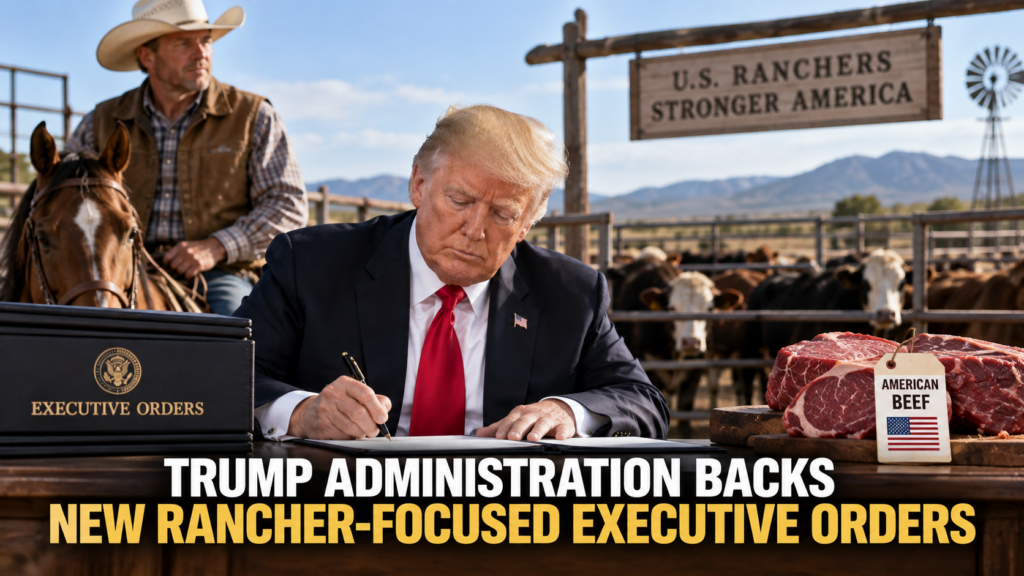
The Trump administration is backing new rancher-focused executive orders aimed at strengthening the U.S. cattle industry, expanding meat-market competition and giving ranchers more tools to protect livestock. The actions were announced September 4 as the administration seeks to rebuild the nation’s cattle herd and address challenges facing American beef producers.
What Happened
President Donald Trump signed two executive orders on September 4 focused on supporting U.S. ranchers, while Agriculture Secretary Brooke L. Rollins announced additional measures involving cattle production, meat processing and consumer transparency.
According to a report by USDA, the measures build on the USDA’s 2025 Plan to Fortify the American Beef Industry and the Ranchers First Initiative announced earlier in the week.
The administration said the actions are intended to provide ranchers with additional tools to rebuild the U.S. cattle herd, respond to livestock predators, expand market opportunities and improve transparency for consumers.
Key Details
New Measures Address Wolf Predation
One of the executive orders directs the Interior Department to determine whether gray wolves and Mexican wolves meet the criteria for being removed from or downgraded under the Endangered Species Act.
The orders also direct the Interior and Agriculture departments to update compensation standards for ranchers who lose livestock to predators and make it easier to authorize lethal removal when necessary.
The wolf provisions are part of a broader effort to give ranchers greater control over threats to their herds.
Country-of-Origin Labeling Under Review
The administration is also targeting beef labeling rules.
The executive order directs the USDA, working with the U.S. Trade Representative, to review its authority concerning mandatory country-of-origin labeling for beef products. The review could lead to new regulations as well as legislative recommendations.
The administration says clearer labeling would give consumers more information about where their beef comes from while supporting domestic producers.
USDA Targets Meat-Packing Competition
Another major component focuses on competition in livestock markets.
The executive order directs the USDA to prioritize investigations into possible violations of the Packers and Stockyards Act and increase enforcement resources and staffing.
The USDA will also coordinate with the Justice Department and provide the president with information on current enforcement efforts, resource needs and plans for stronger enforcement over the coming year.
Small Meat Processors to Get More Support
The administration is also seeking to expand processing options for ranchers.
The USDA’s Food Safety and Inspection Service was directed to expand the Cooperative Interstate Shipment and Talmadge-Aiken programs, allowing more state-inspected meat to cross state lines.
The department will also establish a one-stop resource and technical assistance program for small and very small processors while working to modernize meat-inspection regulations and reduce unnecessary regulatory burdens.
Broader Rancher Support
The executive orders were accompanied by additional initiatives under the administration’s Ranchers First program.
The USDA said it plans to enroll nearly 1 million additional acres in the Grasslands Conservation Reserve Program, providing rental payments and cost-share assistance for maintaining grazing lands.
The department is also working to nearly double participation in its remote beef-grading program, which uses technology such as smartphones and specialized applications to allow USDA grading from offsite locations.
USDA also plans to expand its instrument-enhanced grading program, which is already used on approximately 20% of fed cattle slaughtered in the United States.
Other measures include support for beginning and veteran ranchers, efforts to counter legal actions affecting ranching operations and continued work to improve access to markets.
Political and Economic Impact
The new executive orders come as the U.S. cattle herd remains at its smallest level since the 1950s, according to the USDA.
The administration argues that rebuilding the herd requires policies that give ranchers greater access to grazing land, processing facilities and competitive livestock markets.
The measures also come amid elevated beef prices and pressure across the cattle industry. Reuters reported that U.S. cattle numbers have fallen to a 75-year low, contributing to higher retail beef prices and intensifying pressure on policymakers to increase beef supplies.
The administration has simultaneously pursued additional beef imports, creating tension between efforts to lower consumer prices and ranchers’ desire to rebuild domestic herds.
Reactions and Opposition
Agriculture Secretary Brooke Rollins presented the actions as part of the administration’s broader effort to put ranchers at the center of federal agricultural policy.
The USDA said the measures would help ranchers address predator threats, improve market transparency and expand opportunities while maintaining food-safety standards.
The approach is also likely to draw debate over environmental protections, particularly the treatment of federally protected wolves. The administration’s decision to reconsider wolf protections has already placed wildlife management and ranching interests at the center of a renewed federal debate.
What Happens Next
The Interior Department and USDA will now begin implementing the directives contained in the executive orders, including the review of federal protections for gray and Mexican wolves, livestock-loss compensation standards and beef-labeling authorities.
USDA will also move forward with initiatives involving meat-processing capacity, livestock-market enforcement, grazing lands and beef grading.
Together, the actions represent a significant expansion of the Trump administration’s rancher-focused agricultural agenda. Their long-term impact will depend on how quickly the measures are implemented and whether they succeed in increasing cattle production, expanding competition and strengthening the domestic beef supply.
Related Reading
- Trump Renames Lake Ontario “Lake America” Amid Canada Trade War
- Trump Administration Moves to Expand Biofuel Waivers
They address livestock predators, beef labeling, meat-market competition, processing capacity and other issues affecting U.S. ranchers.
The administration says the measures will help rebuild the U.S. cattle herd, expand market opportunities and strengthen the domestic beef industry.