The mail-in voting debate explained has become one of the most contentious issues in American electoral politics over the past decade. As the 2026 midterm elections approach, understanding both sides of this discussion is essential for voters, policymakers, and anyone concerned with the integrity and accessibility of democratic processes. This debate encompasses questions of security, fraud prevention, voter accessibility, partisan advantage, and the fundamental infrastructure needed to support widespread mail-in ballot systems. While some view mail-in voting as a necessary expansion of democratic participation, others raise concerns about verification processes and potential vulnerabilities in the system.
Historical Context and Evolution
Mail-in voting is not a recent innovation in American democracy. Absentee ballots have existed since the Civil War, when Union soldiers needed a way to participate in elections while serving far from home. Over time, states gradually expanded absentee voting eligibility beyond military personnel to include overseas citizens, individuals with disabilities, and those who would be traveling on Election Day.
The transformation accelerated in the early 2000s when several states began implementing no-excuse absentee voting, allowing any registered voter to request a mail-in ballot without providing a specific reason. By 2020, five states-Colorado, Hawaii, Oregon, Utah, and Washington-had transitioned to all-mail voting systems where every registered voter automatically receives a ballot by mail.
The COVID-19 pandemic in 2020 dramatically accelerated the adoption of mail-in voting nationwide. States expanded access to protect public health, leading to unprecedented numbers of Americans voting by mail. This expansion brought the mail-in voting debate explained into sharp focus, with competing claims about security, fraud, and fairness dominating political discourse. Research on Colorado's all-mail system has shown substantial increases in voter turnout and reduced inequality across demographic groups, providing empirical evidence for one side of the debate.
State-by-State Variations
The current landscape of mail-in voting varies dramatically across the United States:
- Universal mail-in states: Automatically send ballots to all registered voters
- No-excuse states: Allow any voter to request a mail-in ballot
- Excuse-required states: Require voters to provide specific reasons for absentee voting
- Hybrid systems: Combine elements of multiple approaches based on circumstances
| State Approach | Number of States | Key Features |
|---|---|---|
| Universal Mail | 8 | Automatic ballot delivery, extensive drop-box networks |
| No-Excuse Absentee | 34 | Voter-initiated requests, variable deadlines |
| Excuse Required | 8 | Limited eligibility, stricter verification |
Security Concerns and Fraud Claims
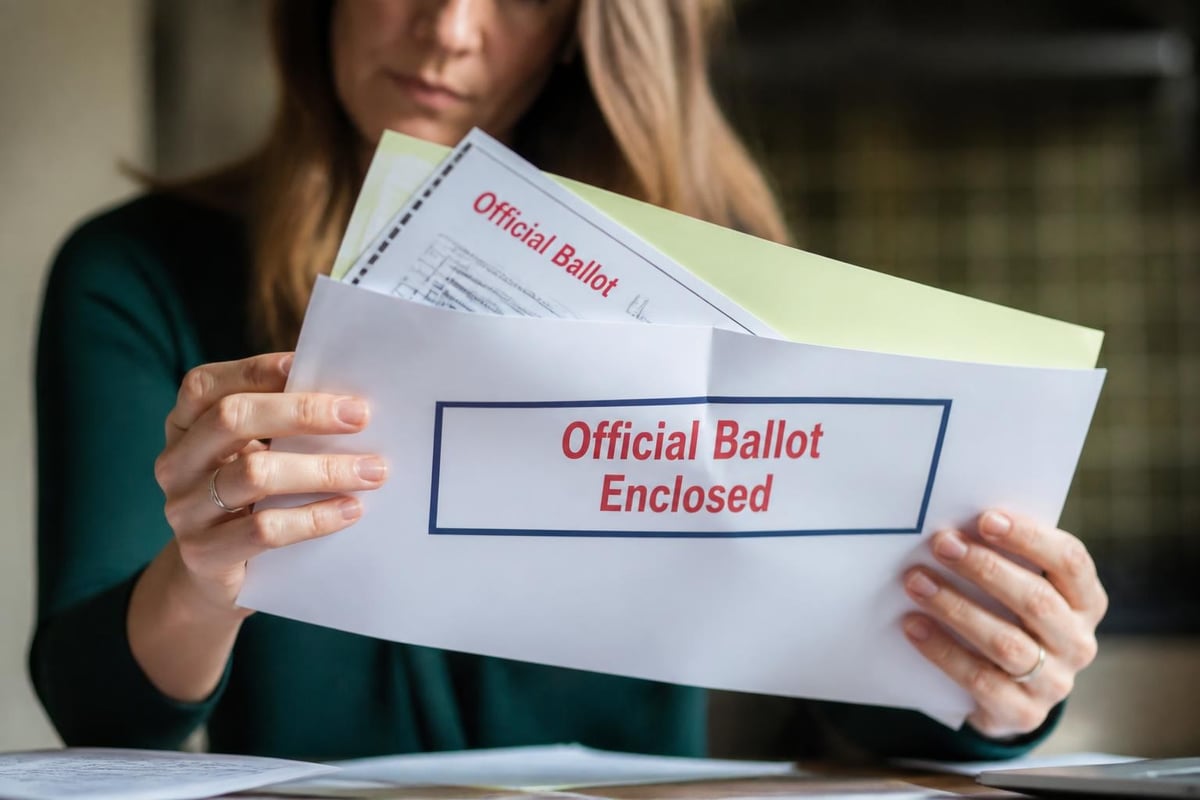
The security dimension of the mail-in voting debate explained centers on competing assessments of fraud risk and verification effectiveness. Critics argue that mail-in voting creates opportunities for ballot harvesting, signature forgery, and coercion that don't exist with in-person voting. They point to isolated incidents of fraud and express concern about chain-of-custody issues when ballots leave official control.
Proponents counter with empirical evidence showing extraordinarily low fraud rates. Recent data from the Brookings Institution demonstrates that fraud occurs in approximately four cases per 10 million ballots cast-a rate so low it could not plausibly affect election outcomes. These findings align with decades of research showing that voter fraud of all types is exceptionally rare in American elections.
Multi-Layered Security Measures
Modern mail-in voting systems incorporate multiple security features:
Signature verification remains the primary authentication method, with election officials comparing signatures on ballot envelopes to those on file. Advanced systems use both human reviewers and digital matching software.
Ballot tracking systems allow voters to monitor their ballot's journey from printing through counting, similar to package tracking. These systems alert voters if issues arise, enabling them to take corrective action.
Barcode technology ensures each ballot is unique and can be traced to a specific voter, preventing duplicate voting while maintaining ballot secrecy.
Secure drop boxes provide alternatives to postal delivery, with video monitoring, tamper-evident seals, and regular collection schedules managed by election officials.
The U.S. Election Assistance Commission provides detailed guidance on implementing these security measures effectively. Despite these protections, the mail-in voting debate explained often revolves around whether these safeguards are sufficient or whether inherent vulnerabilities remain.
Accessibility and Voter Participation
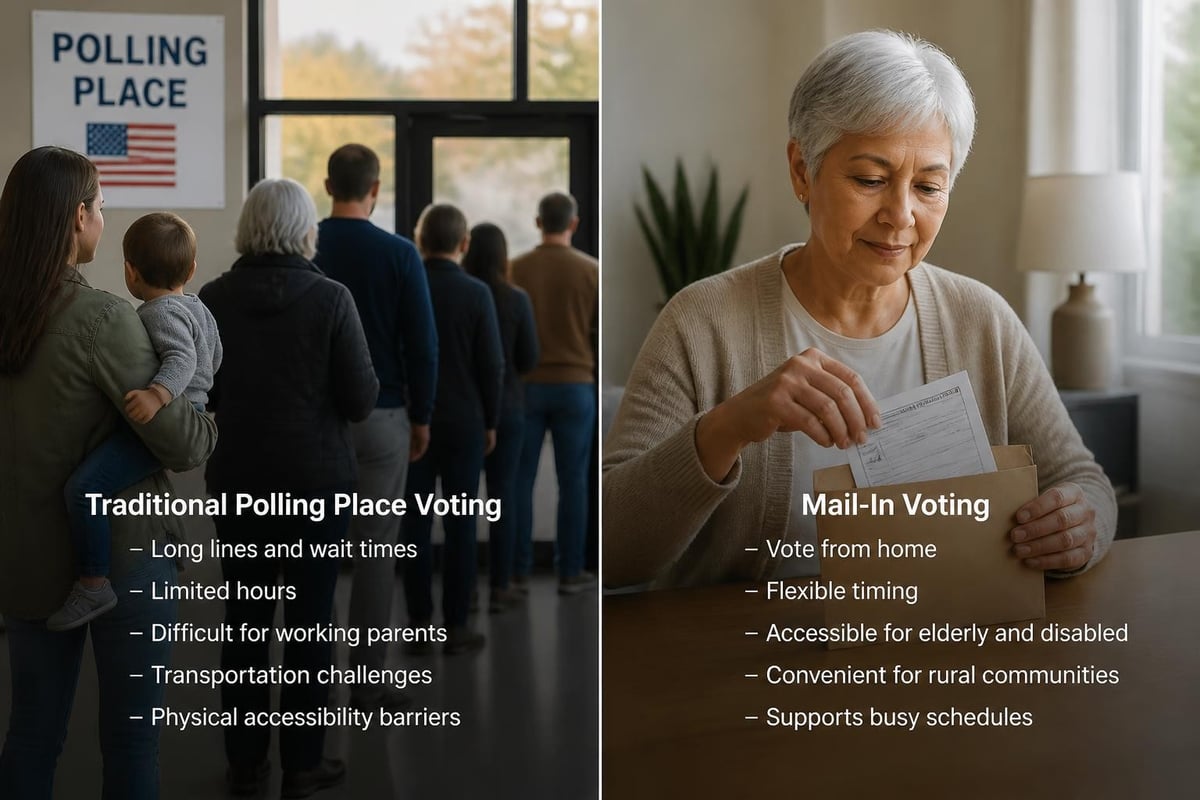
One of the strongest arguments favoring mail-in voting centers on accessibility. Voting by mail removes significant barriers that prevent many Americans from participating in democracy. For individuals with disabilities, chronic illnesses, or mobility limitations, traveling to polling places can range from difficult to impossible. Rural voters may face long distances to the nearest polling location, while urban voters in underserved areas often encounter hours-long wait times.
Mail-in voting provides particular benefits for several populations:
- Working parents who struggle to find time during limited polling hours
- Elderly citizens for whom standing in line poses health risks
- Shift workers whose schedules conflict with polling place hours
- Students attending college away from their registration address
- Military personnel and overseas citizens serving abroad
Research indicates that mail-in voting can improve the quality of voter decision-making, with voters spending more time researching candidates and issues when they can complete their ballots at home over several days rather than in a voting booth under time pressure.
Critics of expanded mail-in voting acknowledge these accessibility benefits but question whether they outweigh security concerns. Some propose alternatives like expanded early voting periods or more polling locations as ways to improve accessibility while maintaining in-person verification.
Partisan Dimensions
The mail-in voting debate explained cannot be separated from its partisan context, though the reality is more complex than simple talking points suggest. Republicans have generally expressed greater skepticism about mail-in voting, emphasizing fraud concerns and advocating for stricter verification requirements. Democrats have typically championed expanded access, emphasizing participation and equity.
These positions don't always align with partisan self-interest, however. Early research suggested mail-in voting might benefit Democrats by increasing participation among demographics that lean Democratic. More recent comprehensive studies have found minimal partisan advantage, with both parties' supporters using mail-in voting in roughly equal proportions when available.
The partisan split became particularly pronounced during the 2020 election cycle when then-President Trump repeatedly questioned mail-in voting integrity. This messaging created a participation gap, with Democratic voters using mail-in options at significantly higher rates than Republicans who were encouraged to vote in person. Political coverage on platforms like U.S. Presidential Report has documented how these partisan narratives have evolved through subsequent election cycles.
State-Level Political Battles
Since 2020, state legislatures have enacted divergent policies:
Expansion states have:
- Extended mail-in ballot request deadlines
- Increased drop box availability
- Allowed ballot collection by third parties
- Implemented automatic ballot mailing
Restriction states have:
- Required excuse documentation
- Limited drop box locations and hours
- Prohibited third-party ballot collection
- Shortened application windows
Infrastructure and Administrative Challenges
The practical implementation of large-scale mail-in voting presents significant logistical challenges that factor into the mail-in voting debate explained. The United States Postal Service plays a critical role in this infrastructure, and its operational capacity directly affects voting access and reliability.
Recent analysis of USPS performance highlights ongoing concerns about delivery times, funding constraints, and policy decisions that impact mail-in voting systems. Delays in ballot delivery or return can disenfranchise voters even when they complete everything correctly and on time.
Election administrators face their own capacity challenges:
- Staff training on verification procedures and security protocols
- Technology investments in tracking systems and signature verification software
- Envelope design that prevents errors while maintaining secrecy
- Processing timelines that allow for verification without delaying results
- Cure procedures enabling voters to fix problems with rejected ballots
The Brennan Center’s research on mail-voting accuracy examines how different states implement these administrative functions and their effectiveness at preventing errors while maintaining security.
Cost-Benefit Analysis
| Factor | In-Person Voting | Mail-In Voting |
|---|---|---|
| Per-Voter Cost | $7-15 | $5-10 |
| Infrastructure Investment | Polling places, machines | Printing, postage, processing equipment |
| Staff Requirements | Poll workers on Election Day | Year-round election staff |
| Accessibility | Limited hours/locations | Extended period, home delivery |
| Processing Speed | Immediate counting | Multi-day verification |
Legal Framework and Court Battles
The legal dimension of the mail-in voting debate explained encompasses constitutional questions, state authority, and federal oversight. The Constitution grants states primary authority over election administration, but federal laws like the Voting Rights Act and Help America Vote Act establish minimum standards and protections.
Litigation over mail-in voting has accelerated dramatically since 2020. Courts have addressed questions including:
- Whether states can change voting rules close to elections
- The constitutionality of signature verification requirements
- Deadlines for ballot receipt versus postmark dates
- Witness signature requirements
- Ballot collection restrictions
These cases often involve competing constitutional principles: the state's interest in preventing fraud versus voters' fundamental right to participate in elections. Different courts have reached different conclusions on similar questions, creating a patchwork of legal precedents.
Technology and Innovation
Emerging technologies are reshaping the mail-in voting debate explained by addressing some traditional concerns while raising new questions. Electronic ballot tracking has become standard in many jurisdictions, giving voters real-time updates on their ballot's status and reducing uncertainty about whether votes were received and counted.
Digital signature matching uses algorithms to compare ballot envelope signatures with registration records, potentially improving consistency and reducing human error. However, these systems also raise concerns about accuracy rates and disparate impacts on voters whose signatures vary due to age, disability, or other factors.
Risk-limiting audits provide mathematical certainty about election outcomes by manually checking statistically significant samples of ballots. These audits can verify results regardless of how votes were cast, potentially bridging trust gaps in the mail-in voting debate.
Some jurisdictions are exploring blockchain-based tracking systems that could provide transparent, tamper-proof records of ballot handling while maintaining voter privacy. These technologies remain experimental but represent potential future directions for addressing security concerns.
Public Opinion and Trust
Understanding public attitudes is essential to the mail-in voting debate explained. Polling consistently shows that Americans' views on mail-in voting correlate strongly with partisan identity, though specific questions reveal more nuanced perspectives.
Majorities across the political spectrum support:
- Allowing military and overseas voters to use mail-in ballots
- Providing mail-in options for voters with disabilities
- Implementing signature verification and other security measures
- Prosecuting confirmed cases of voting fraud
Significant disagreement emerges on:
- Whether all voters should receive mail-in ballots automatically
- The severity of fraud risks in mail-in voting systems
- Whether convenience or security should be prioritized
- The role of ID requirements in mail-in voting
Trust in election integrity has declined overall in recent years, with mail-in voting becoming a focal point for broader concerns about democratic institutions. This erosion of confidence represents perhaps the most significant challenge in the mail-in voting debate, as effective democratic governance requires public acceptance of electoral outcomes regardless of who wins.
International Comparisons
The United States is not alone in grappling with mail-in voting questions. Other democracies offer instructive examples:
Switzerland has used mail-in voting extensively for decades, with approximately 90% of voters casting ballots by mail. Swiss elections maintain high public confidence despite minimal in-person voting infrastructure.
Germany allows absentee voting but requires in-person application with ID verification, representing a middle-ground approach between U.S. systems.
Canada expanded mail-in voting during the pandemic while maintaining predominantly in-person voting, similar to many U.S. states.
Australia uses postal voting for about 10% of voters, primarily those in remote areas, while maintaining compulsory in-person voting for most citizens.
These international examples demonstrate that multiple approaches can work effectively, with appropriate security measures and public trust building.
Future Directions
As the mail-in voting debate explained continues to evolve, several trends are likely to shape future discussions. Hybrid systems combining mail-in and in-person voting with robust security measures represent a potential consensus approach, offering choice while addressing concerns from both sides of the debate.
Standardization of best practices across states could reduce confusion and build confidence, though it requires balancing federal guidance with traditional state control over elections. Professional organizations and nonpartisan groups continue developing recommendations that could inform more uniform standards.
Transparency initiatives that allow independent observers to monitor mail-in voting processes may help build public trust regardless of political perspective. Making data about rejection rates, cure procedures, and verification methods publicly available enables informed debate rather than speculation.
The role of presidential leadership in shaping public discourse around mail-in voting cannot be understated. Comments and policies from current and former presidents significantly influence both public opinion and state-level policy debates, as documented in ongoing presidential news coverage.
Evidence-Based Assessment
Synthesizing research across security, accessibility, and administrative dimensions provides a comprehensive picture of the mail-in voting debate explained. The empirical evidence demonstrates that:
Fraud remains exceptionally rare across all voting methods, with mail-in voting showing fraud rates consistent with in-person voting. No evidence supports claims of widespread fraud affecting election outcomes.
Accessibility significantly improves with mail-in options, particularly for populations facing barriers to in-person voting. This improvement translates to measurable increases in participation rates.
Security measures are effective when properly implemented, with multi-layered verification catching the vast majority of improper ballots while allowing legitimate votes to count.
Administrative capacity varies substantially across jurisdictions, with well-resourced election offices successfully managing large-scale mail-in voting while under-resourced offices struggle with both mail-in and in-person systems.
Public confidence depends more on political messaging than objective security measures, suggesting that how leaders discuss mail-in voting matters as much as the technical details of implementation.
These findings don't resolve all legitimate questions in the mail-in voting debate, but they establish a factual foundation for policy discussions moving forward.
The mail-in voting debate explained encompasses legitimate concerns about security, accessibility, and electoral integrity that deserve serious consideration from all perspectives. Rather than accepting simplified narratives from either political camp, citizens benefit from understanding the empirical evidence, security measures, and real-world performance of different voting systems. For comprehensive, non-partisan coverage of how presidential candidates and administrations approach voting policy and other critical governance issues, U.S. Presidential Report provides balanced analysis that helps readers form their own informed conclusions about the most important questions facing American democracy.