Early voting has fundamentally transformed how Americans participate in presidential elections, reshaping campaign strategies and election administration across the nation. Understanding early voting trends in America provides critical insights into voter behavior, access to the ballot box, and the evolving landscape of democratic participation. As we analyze patterns through the 2024 election cycle and into 2026, clear shifts emerge in who votes early, where early voting expands, and how these changes influence political outcomes at the highest levels of government.
The Growth Trajectory of Early Voting Across Presidential Cycles
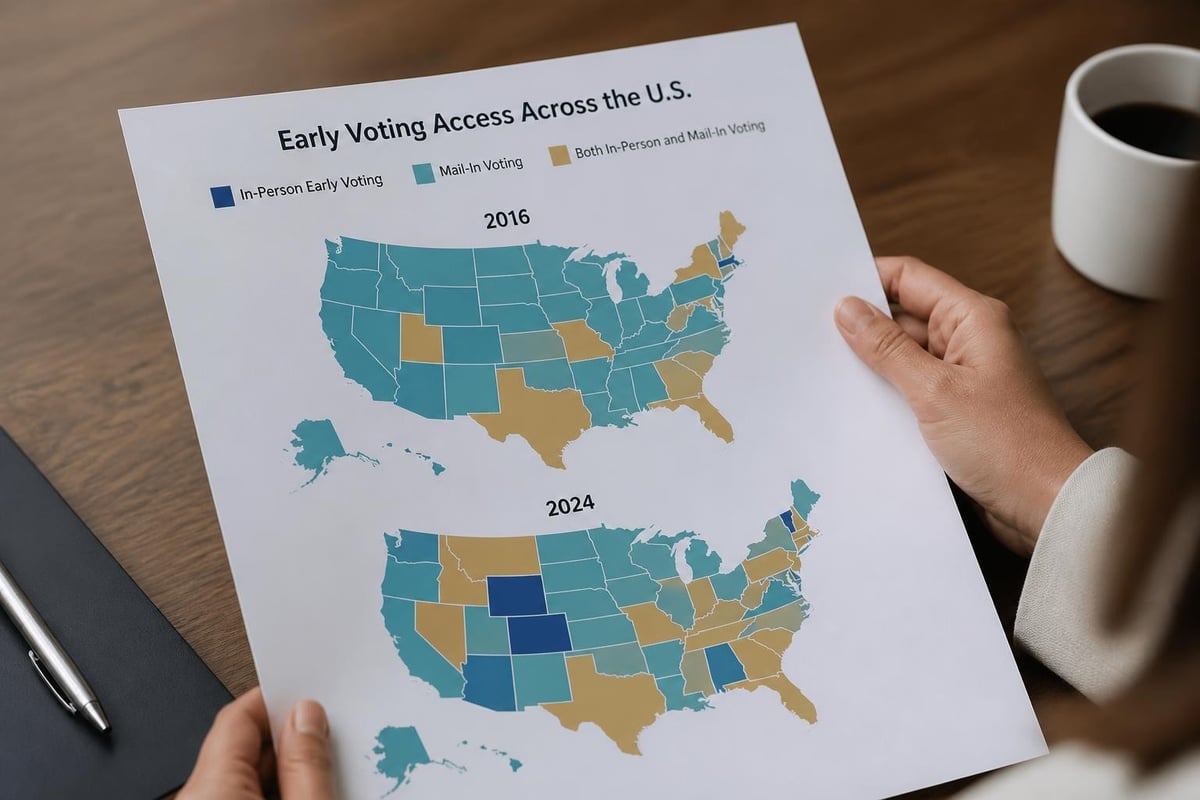
The expansion of early voting opportunities represents one of the most significant structural changes to American elections over the past two decades. According to the U.S. Election Assistance Commission’s comprehensive 2024 report, early voting options have expanded substantially since 2018, with more states offering both in-person early voting and no-excuse absentee ballot access.
State-Level Adoption Patterns
Different states have embraced early voting at varying rates, creating a patchwork of access across the country. Western states pioneered universal vote-by-mail systems, while Southern and Midwestern states gradually expanded in-person early voting windows.
- States with universal mail voting: Oregon, Washington, Colorado, Utah, Nevada, California, and Hawaii
- States offering extensive early voting periods (14+ days): Texas, Florida, Georgia, North Carolina, Illinois
- States with limited or no early voting: New Hampshire, Mississippi, Alabama (though changes continue)
The political implications of these differences shape presidential campaign resource allocation significantly. Candidates now dedicate substantial attention to early voting states, recognizing that many contests are effectively decided before Election Day arrives.
Demographic Patterns in Early Voting Participation
Early voting trends in America reveal distinct demographic patterns that influence presidential election outcomes. Census Bureau data from the 2022 midterm elections highlights significant variations in early voting usage across racial, ethnic, age, and educational groups.
Age-based participation shows older Americans embracing mail voting at higher rates, while younger voters demonstrate preference for in-person early voting when available. Educational attainment correlates strongly with early voting usage, particularly for mail ballots requiring advance planning.
| Demographic Group | Early Voting Rate | Mail Voting Preference | In-Person Early Preference |
|---|---|---|---|
| Ages 18-29 | Moderate | Low | High |
| Ages 65+ | High | Very High | Moderate |
| College Educated | High | High | Moderate |
| Non-College | Moderate | Low | High |
Racial and Ethnic Voting Patterns
The intersection of race, ethnicity, and early voting reveals important trends for presidential elections. Black voters have historically utilized early in-person voting at particularly high rates in states offering this option, viewing it as both convenient and secure.
Hispanic voters show growing early voting participation, though rates vary considerably by region and state-specific policies. Asian American voters demonstrate increasing mail ballot usage, particularly in states with established vote-by-mail infrastructure.
These patterns matter enormously for presidential candidates building coalitions across diverse communities. Campaign strategies increasingly focus on early voting mobilization rather than solely Election Day turnout drives.
Partisan Dynamics and Political Implications
Early voting trends in America have developed distinct partisan dimensions that shape presidential campaign strategies. Public opinion research indicates broad bipartisan support for early voting access, though recent Pew Research Center analysis shows some partisan differences in preferred methods.
Republican and Democratic Voting Patterns
Historically, Democrats led in mail ballot and early voting utilization, particularly in the 2020 presidential election when pandemic concerns accelerated this trend. However, Republican early voting participation increased substantially in 2022 and 2024 as party messaging shifted to encourage these voting methods.
Presidential campaigns now operate sophisticated early vote tracking programs, monitoring returned ballots to:
- Identify which supporters have already voted
- Reallocate resources toward mobilizing remaining voters
- Adjust closing arguments based on remaining electorate composition
- Project likely outcomes before Election Day results
The strategic importance of early voting extends beyond simple convenience. Banking votes early provides campaigns certainty and allows tactical flexibility in final campaign days.
Election Administration and Security Considerations
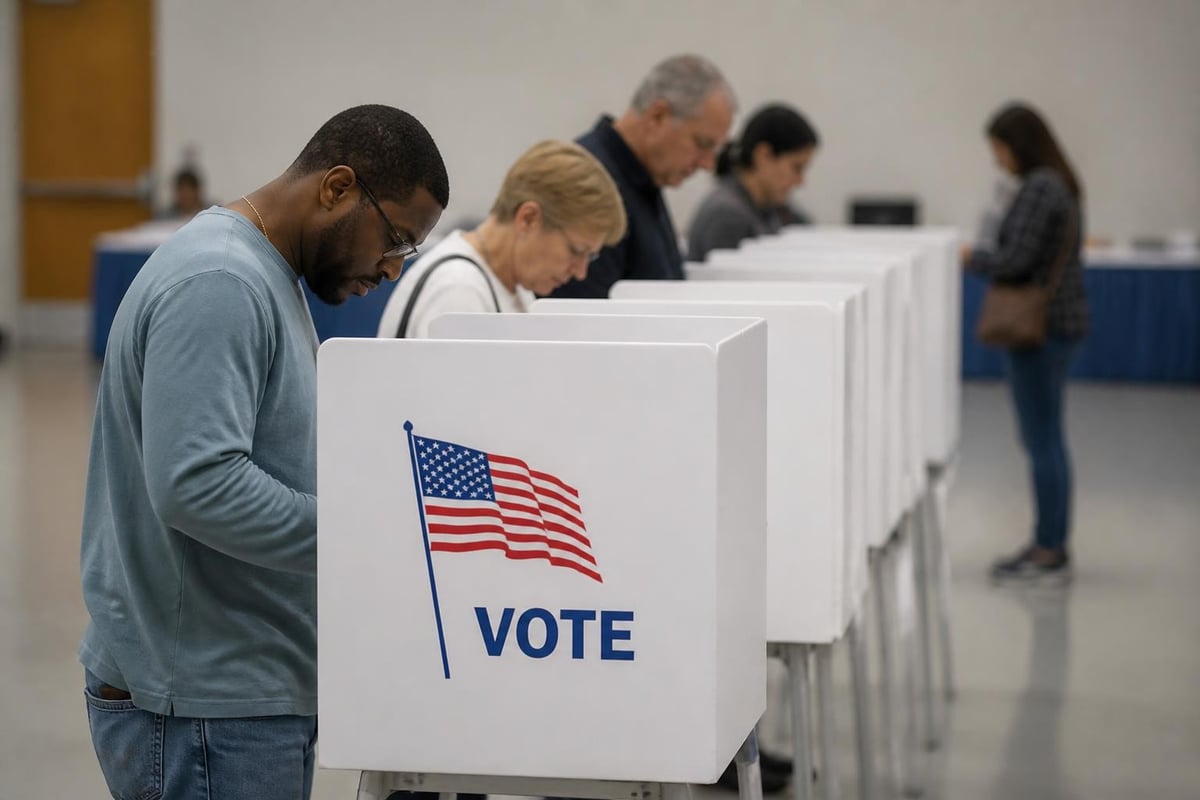
Understanding early voting trends in America requires examining the administrative infrastructure supporting these systems. Election officials face unique challenges managing extended voting periods while maintaining security and accuracy standards voters expect in presidential elections.
Processing timelines vary dramatically across states, with some beginning mail ballot counting weeks before Election Day while others wait until polls close. This creates the phenomenon of election night "mirages" where early counts may not represent final outcomes, particularly relevant to those following presidential election coverage.
Security Measures and Verification Systems
States employ multiple security layers for early voting:
- Signature verification on mail ballots
- Ballot tracking systems allowing voters to monitor their ballot status
- Secure drop box networks with video surveillance
- Chain of custody protocols for ballot transportation
- Post-election audits comparing early and Election Day results
According to MIT Election Lab research on 2024 voting methods, voter confidence in early voting security remains high overall, though partisan differences exist in perceptions of mail ballot security versus in-person methods.
The Impact on Presidential Campaign Strategy
Early voting fundamentally reshapes how presidential campaigns operate. Traditional campaign calendars built around a single Election Day give way to extended mobilization efforts spanning weeks or months.
Resource Allocation and Messaging
Campaign advertising now must sustain intensity throughout entire early voting periods rather than building to a single climax. Field operations shift from concentrating volunteer efforts on a few final weekends to sustained canvassing throughout early voting windows.
| Campaign Element | Traditional Strategy | Early Voting Era Strategy |
|---|---|---|
| Ad Spending | Peak in final week | Sustained throughout early voting |
| Field Operations | Final 72-hour push | Rolling mobilization |
| Candidate Schedule | Focus on undecided voters | Mix of persuasion and turnout |
| Messaging | Single closing argument | Evolving themes |
Presidential candidates must also manage the challenge of responding to October surprises when millions have already cast ballots. Major news events or debate performances carry less impact when significant portions of the electorate have already voted.
Geographic Variations and Swing State Dynamics
Early voting trends in America show particularly interesting patterns in presidential battleground states. Competitive states often experience the most intensive early voting activity as campaigns concentrate resources where outcomes remain uncertain.
Florida pioneered extensive early voting among swing states, with both parties building sophisticated early vote programs. Pennsylvania traditionally limited early voting but expanded options significantly, changing its electoral dynamics. Arizona and Nevada operate primarily vote-by-mail systems, creating different campaign approaches than in-person early voting states.
Urban vs. Rural Early Voting Access
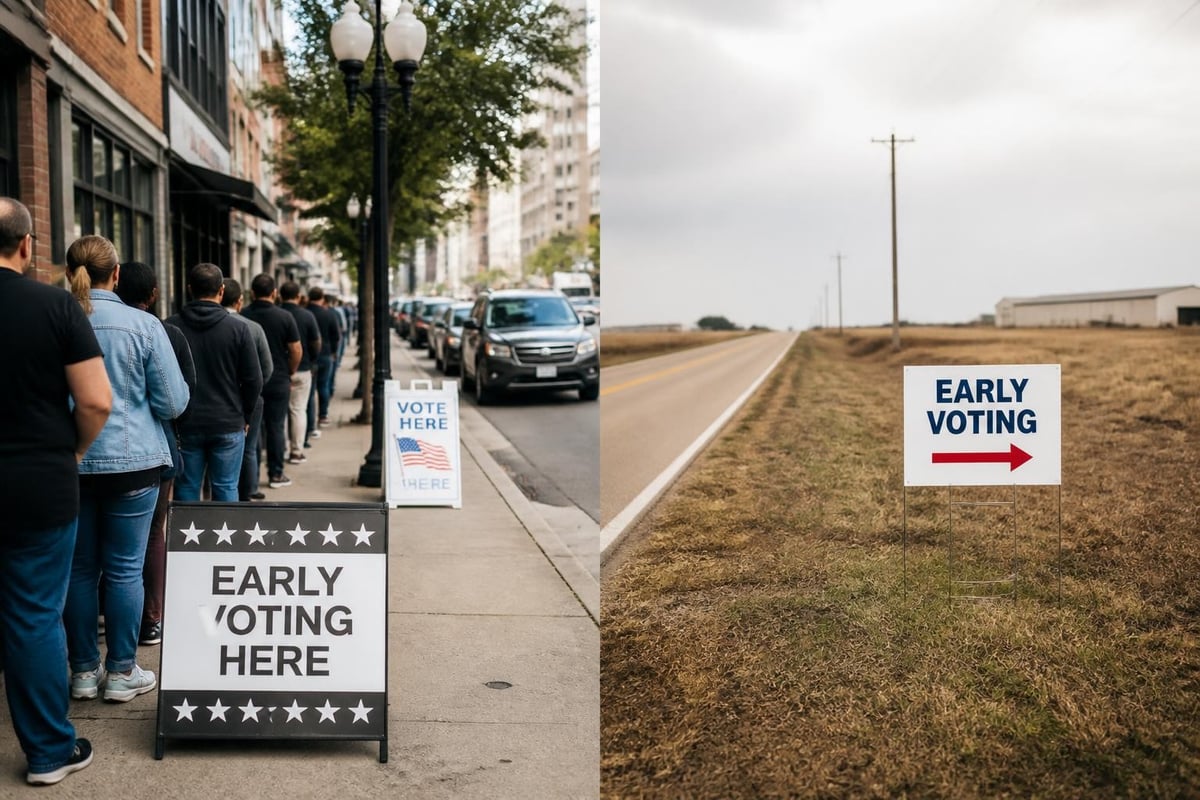
Geographic disparities in early voting access within states raise important questions about equitable participation. Urban counties typically offer more early voting locations and extended hours, while rural areas may have limited options despite longer travel distances to polling places.
This affects presidential elections because rural and urban areas often lean toward different parties. Ensuring balanced access becomes both an administrative challenge and a political flashpoint.
Technological Integration and Modern Voting Methods
Technology increasingly shapes early voting trends in America, from online ballot request systems to electronic poll books tracking who has voted. Ballot tracking technology allows voters to monitor their mail ballot journey from election office to final counting, increasing transparency and confidence.
Mobile applications developed by election offices and third-party organizations help voters:
- Find early voting locations and hours
- Request absentee ballots
- Track ballot status
- Receive voting reminders
- Access sample ballots and candidate information
These technological advances particularly benefit younger voters and those tracking presidential campaigns and policy developments who expect digital integration in all aspects of civic participation.
Policy Debates and Future Directions
The future trajectory of early voting trends in America remains subject to ongoing policy debates in state legislatures and Congress. Some states continue expanding access, while others reconsider aspects of their early voting systems following the 2020 presidential election.
Legislative Trends Across States
Expansion states focus on:
- Extending early voting periods
- Adding early voting locations, particularly in underserved areas
- Implementing automatic mail ballot systems
- Creating permanent absentee voter lists
Restriction states emphasize:
- Limiting mail ballot request periods
- Reducing ballot drop box availability
- Restricting third-party ballot collection
- Tightening identification requirements for mail voting
National data from election administration surveys indicates that despite policy divergence, overall early voting participation continues trending upward across most states, suggesting voter demand drives usage regardless of specific access details.
The Role of Messaging and Education
Voter education significantly influences early voting trends in America. Many eligible voters remain unaware of available early voting options or harbor misconceptions about the security and reliability of various methods.
Nonpartisan education efforts by election officials, civic organizations, and media outlets help voters understand:
- When early voting begins in their jurisdiction
- Where to vote early or obtain mail ballots
- Deadlines for mail ballot requests and returns
- Identification or verification requirements
- How to correct errors on rejected ballots
Presidential campaigns supplement official information with partisan mobilization messaging, creating a complex information environment voters must navigate. Those following comprehensive presidential news and analysis benefit from understanding both procedural details and strategic implications of early voting trends.
Measuring the Democratic Health Implications
Beyond tactical campaign considerations, early voting trends in America raise fundamental questions about democratic participation and representation. Does expanded early voting increase overall turnout, or simply redistribute when existing voters cast ballots?
Research evidence suggests modest turnout increases from early voting availability, with larger effects for certain demographic groups facing scheduling constraints. Convenience voting particularly benefits:
- Working parents juggling childcare responsibilities
- Shift workers unable to reach polls during traditional hours
- Students voting from college locations
- Elderly voters preferring to avoid Election Day crowds
The goal of maximizing informed, voluntary participation by all eligible citizens should guide early voting policy regardless of partisan advantage calculations. Presidential elections function best when reflecting genuine preferences of the full electorate rather than just those able to navigate voting barriers.
International Comparisons and Context
Examining early voting trends in America gains perspective from international comparisons. Many democracies worldwide employ advance voting systems, though specific designs vary considerably.
| Country | Advance Voting System | Typical Usage Rate |
|---|---|---|
| United States | Varies by state | 40-70% (presidential years) |
| Canada | Advance polls (4 days) | ~25% |
| Germany | Mail voting (no excuse) | ~25% |
| Australia | Early voting (2 weeks) | ~30% |
The American system's state-level variation creates unique complexity compared to nations with uniform national election administration. This federalist structure means early voting trends in America reflect 50+ different policy environments rather than a single coherent system.
COVID-19 Pandemic Legacy Effects
The 2020 presidential election during the COVID-19 pandemic dramatically accelerated early voting trends in America. Emergency expansions of mail voting and early in-person options introduced millions of voters to methods they previously had not utilized.
Post-pandemic retention of these voting methods varies by voter characteristics. Many who tried mail voting during the pandemic continue using it, while others returned to Election Day voting once health concerns subsided. This natural experiment provided valuable data about voter preferences when given expanded choices.
Presidential campaigns now build on pandemic-era experience, recognizing that larger portions of the electorate feel comfortable with early and mail voting than ever before. This baseline shift affects everything from advertising timing to volunteer recruitment strategies.
Early voting trends in America continue reshaping presidential elections through expanding access, changing demographic participation patterns, and transforming campaign strategies. As states experiment with different approaches and voters increasingly embrace advance voting options, understanding these trends becomes essential for anyone following presidential politics and election outcomes. For comprehensive, non-partisan coverage of how presidential campaigns navigate these evolving voting patterns and what they mean for American democracy, U.S. Presidential Report provides the detailed analysis and context readers need to stay informed about the leaders and elections shaping our nation's future.