The intersection of artificial intelligence and democratic processes has created unprecedented challenges for election integrity. As deepfake technology becomes increasingly sophisticated and accessible, election officials, campaigns, and voters face new threats that can undermine trust in democratic institutions. These AI-generated videos, audio recordings, and images can convincingly impersonate candidates, spread false information about voting procedures, or create entirely fabricated scenarios that influence public opinion. Understanding deepfakes and election security risks is essential for protecting the integrity of presidential elections in 2026 and beyond.
The Evolution of Deepfake Technology in Political Contexts
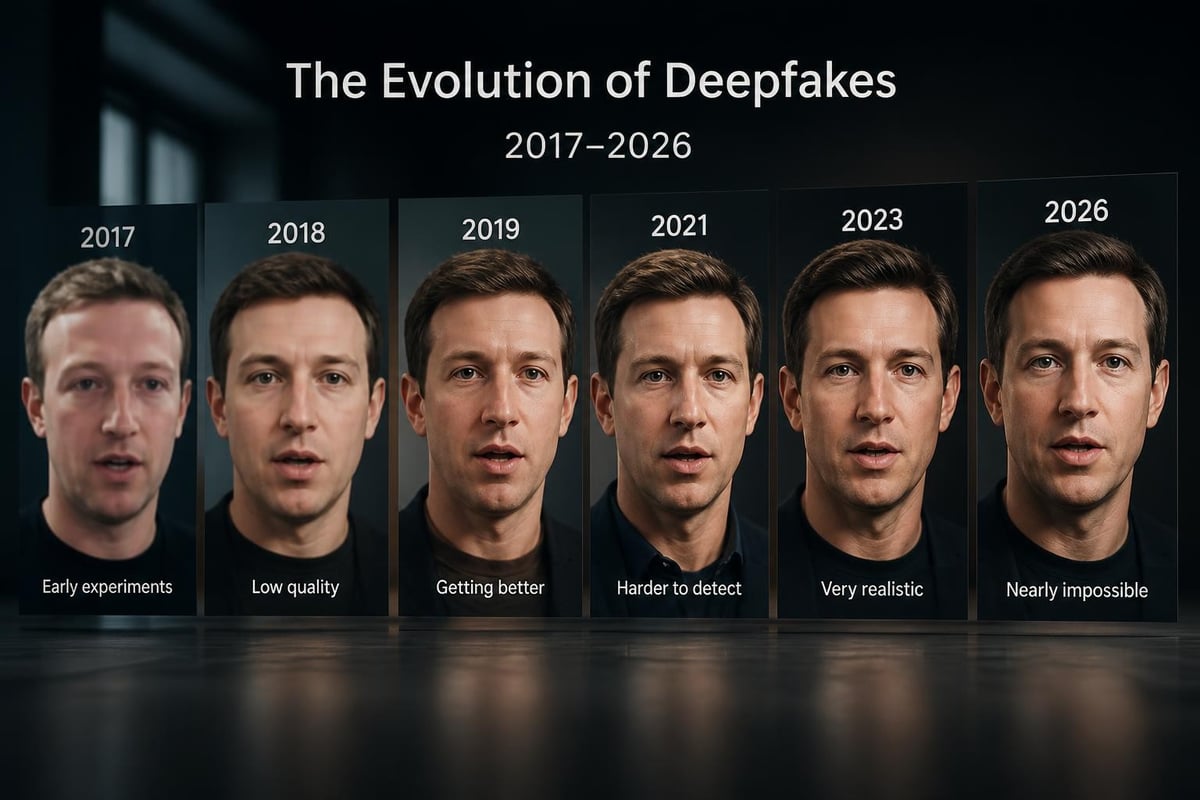
Deepfake technology has advanced dramatically since its emergence in 2017. Early attempts at AI-generated content were often detectable through visual artifacts, unnatural movements, or audio inconsistencies. Today's generative AI tools can create remarkably convincing synthetic media that challenges even expert scrutiny.
The technical capabilities now include:
- Real-time voice cloning from minimal audio samples
- Face-swapping in high-definition video
- Complete synthetic video generation from text descriptions
- Audio deepfakes that replicate speech patterns and emotional inflection
- AI-generated images that pass visual inspection
Political actors have taken notice of these capabilities. According to research on deepfakes in election campaigns, the technology has already been deployed in various electoral contexts worldwide, creating a concerning precedent for U.S. presidential races.
How Deepfakes Threaten Electoral Integrity
The threats posed by deepfakes extend beyond simple misinformation. They can undermine fundamental democratic processes in several distinct ways. Candidate impersonation remains the most obvious risk, where fabricated videos show presidential candidates making inflammatory statements they never uttered or engaging in compromising situations that never occurred.
Voter suppression represents another critical vulnerability. Deepfake audio or video could spread false information about polling locations, voting deadlines, or eligibility requirements, specifically targeting demographics likely to support particular candidates. This tactic exploits trust in authoritative voices while creating confusion during critical voting periods.
The Council on Foreign Relations highlights that deepfakes create what researchers call the "liar's dividend," where authentic damaging content can be dismissed as fake, while fabricated content gains credibility. This dual effect erodes the shared reality necessary for democratic discourse.
Real-World Examples and Emerging Patterns
The 2024 global election cycle provided numerous case studies that inform our understanding of deepfakes and election security risks. CIVICUS research documented multiple instances where AI-generated content influenced electoral outcomes across different nations, offering valuable lessons for U.S. presidential security planning.
Documented Deepfake Incidents
| Incident Type | Target | Impact Level | Detection Time |
|---|---|---|---|
| Voice clone robocall | Voter outreach | High | Hours |
| Fabricated endorsement video | Candidate credibility | Medium | Days |
| Fake policy announcement | Campaign messaging | High | Minutes |
| Synthetic debate clip | Public opinion | Medium | Hours |
These incidents demonstrate the speed at which deepfakes can spread and the varying difficulty in identifying synthetic content. The European Commission’s 2024 election report provided detailed analysis of AI-generated content deployed during European Parliament elections, revealing patterns that parallel vulnerabilities in U.S. systems.
Presidential campaigns face unique exposure due to extensive media coverage and public scrutiny. Every statement, appearance, and policy position generates vast amounts of source material that can be manipulated. This abundance of training data makes presidential candidates particularly vulnerable to convincing deepfakes.
Technical Detection and Prevention Strategies
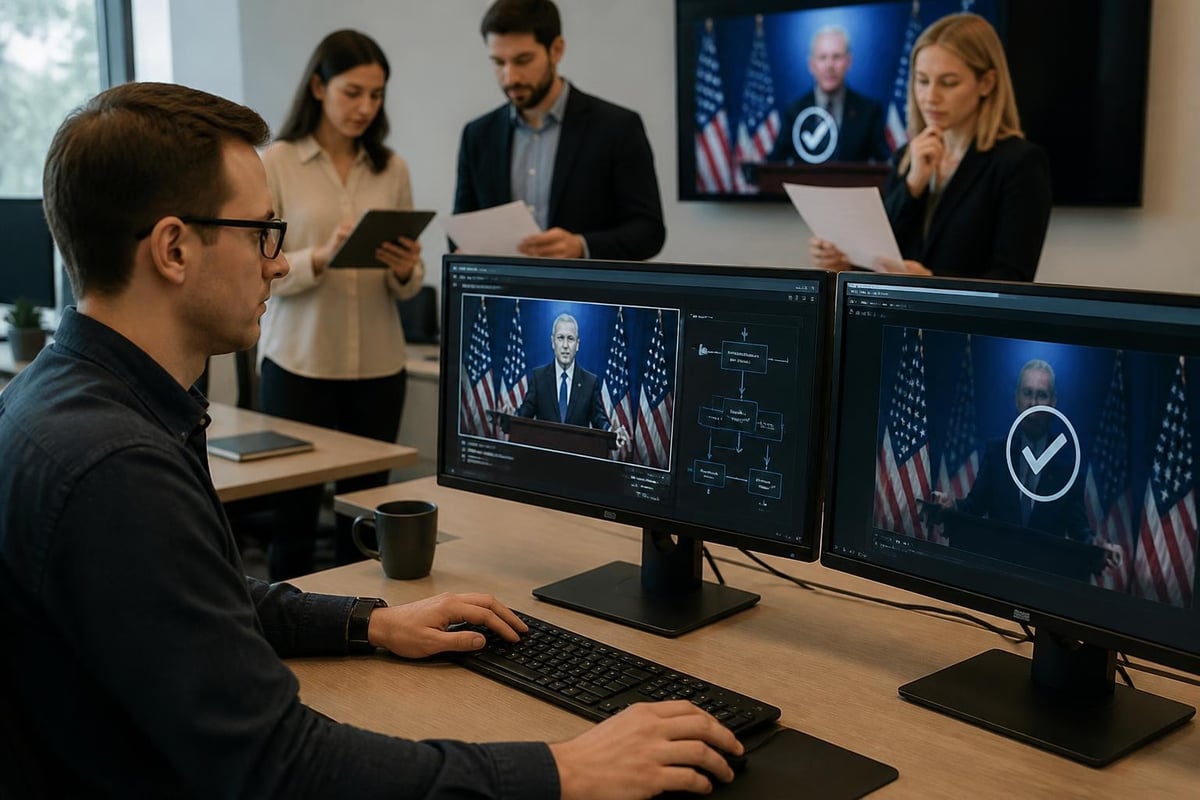
Combating deepfakes and election security risks requires multilayered technical approaches. Detection technologies have advanced alongside generation capabilities, creating an ongoing technological arms race. Machine learning algorithms can identify subtle artifacts in synthetic media, analyzing facial movements, lighting inconsistencies, and compression patterns that indicate manipulation.
Effective detection methods include:
- Biological signal analysis examining heartbeat visibility and micro-expressions
- Temporal consistency checks identifying unnatural frame-to-frame transitions
- Audio forensics detecting synthetic voice patterns and environmental inconsistencies
- Metadata verification tracking content provenance and modification history
- Behavioral biometrics analyzing gesture patterns and speech characteristics
The National Institute of Standards and Technology outlines technical approaches for reducing risks through content provenance systems, watermarking standards, and detection frameworks. These standardized approaches enable consistent protection across different platforms and jurisdictions.
Authentication and Provenance Systems
Prevention often proves more effective than detection. Content authentication systems establish verifiable chains of custody for legitimate media. When a presidential candidate delivers a speech or makes an announcement, cryptographic signatures can certify the authentic content immediately upon creation.
Blockchain-based provenance tracking creates immutable records of when, where, and how content was produced. News organizations and campaign teams can verify that video footage originated from official sources rather than manipulated versions circulating on social media. These systems provide transparency that helps voters distinguish authentic communications from fabrications.
Policy and Legal Frameworks
Addressing deepfakes and election security risks demands coordinated policy responses at federal and state levels. Current legal frameworks struggle to keep pace with technological capabilities. Questions of jurisdiction, free speech protections, and enforcement mechanisms complicate regulatory efforts.
Several states have enacted legislation specifically targeting deepfakes in electoral contexts. These laws typically criminalize the knowing distribution of manipulated media intended to influence elections within specific timeframes before voting. However, enforcement challenges persist, particularly when content originates from outside U.S. jurisdiction.
Federal Response and Coordination
Federal agencies play crucial roles in election security infrastructure. The Cybersecurity and Infrastructure Security Agency (CISA) coordinates with state election officials to identify and counter disinformation campaigns, including those employing deepfakes. The Federal Election Commission has begun examining whether and how to regulate synthetic media in campaign communications.
According to Brookings analysis on AI and disinformation, effective responses require collaboration among government agencies, technology platforms, civil society organizations, and academic researchers. No single entity possesses the resources or authority to address these challenges independently.
Key policy considerations include:
- Balancing regulation with First Amendment protections
- Establishing clear liability for platform hosting and distribution
- Creating rapid response mechanisms for high-impact incidents
- Developing international cooperation frameworks
- Funding research into detection and prevention technologies
The intersection of deepfakes and election security risks with existing domestic policy debates creates complex legal questions about government authority and individual rights.
Platform Responsibilities and Industry Standards
Technology platforms serve as primary distribution channels for both authentic campaign content and deepfakes. Their policies and enforcement mechanisms significantly influence the spread and impact of synthetic media during elections. Major platforms have implemented varying approaches to labeling, restricting, or removing manipulated content.

Content Moderation Challenges
Platform moderators face difficult decisions when evaluating suspected deepfakes. Premature removal risks censoring legitimate satire or political commentary. Delayed action allows harmful content to spread widely before intervention. The volume of content shared during presidential campaigns overwhelms human review capacity, necessitating automated systems that may produce false positives or negatives.
| Platform Approach | Detection Method | Action Threshold | Appeal Process |
|---|---|---|---|
| Automated removal | AI scanning | High confidence | Standard review |
| Warning labels | Hybrid review | Medium confidence | Expedited review |
| Reduced distribution | User reporting | Low confidence | No appeal |
| No action | Manual flagging | Case-by-case | Not applicable |
Industry standards for handling deepfakes remain fragmented. Some platforms prioritize rapid removal to limit spread, while others emphasize transparency and user education. Analysis from the Atlantic Council suggests that public perceptions of deepfake prevalence may exceed actual deployment, but the threat to democratic processes remains substantial regardless of frequency.
Voter Education and Media Literacy
Technical solutions alone cannot fully address deepfakes and election security risks. An informed electorate capable of critically evaluating information sources provides essential resilience against manipulation attempts. Media literacy programs help voters recognize manipulation tactics and verify content authenticity before sharing or acting on information.
Effective voter education programs emphasize:
- Source verification techniques and authoritative information channels
- Red flags indicating potential manipulation or synthetic content
- Official channels for campaign communications and candidate statements
- Reporting mechanisms for suspected disinformation
- Healthy skepticism toward emotionally charged or sensational claims
The Brookings assessment of generative AI in elections emphasizes that resilience building through education and institutional trust creates more durable protection than reactive detection efforts alone. Voters who understand how deepfakes function and maintain critical consumption habits prove less susceptible to manipulation.
News Organizations' Critical Role
Credible journalism serves as a vital defense against deepfakes targeting presidential candidates and elections. News organizations that maintain rigorous verification standards and transparent correction policies help establish shared factual baselines. When deepfakes emerge, rapid debunking by trusted media sources limits their impact and reach.
Journalists covering politics must develop expertise in identifying synthetic media while educating audiences about manipulation techniques. Collaborative fact-checking initiatives allow news organizations to pool resources and expertise, creating comprehensive responses to coordinated disinformation campaigns.
Government Use and Ethical Considerations
While much attention focuses on malicious deepfake deployment, research on government use of deepfakes reveals that state actors, including democratic governments, may employ similar technologies for legitimate purposes. Presidential communications teams might use AI-generated translations or accessibility features that technically constitute synthetic media.
These benign applications raise important questions about disclosure and transparency. Should governments clearly label all AI-assisted content? What standards should apply to synthetic media created for educational or archival purposes? The answers shape public expectations and trust in official communications.
Adversarial State Actors
Foreign governments seeking to influence U.S. presidential elections possess both motivation and capability to deploy sophisticated deepfakes. Election interference campaigns may combine traditional disinformation tactics with cutting-edge synthetic media to amplify divisive narratives or undermine confidence in democratic processes.
Adversarial strategies typically include:
- Creating content that exploits existing social divisions
- Targeting swing states or demographics with tailored deepfakes
- Timing releases to maximize impact while minimizing detection opportunities
- Using authentic-seeming accounts to distribute synthetic content
- Coordinating across multiple platforms to create artificial consensus
Intelligence agencies monitor for signs of foreign deepfake operations targeting presidential campaigns. Early detection enables preemptive debunking and public warnings that reduce potential impact. International cooperation helps track actors across borders and establish consequences for interference attempts.
Building Resilient Electoral Infrastructure
Long-term election security requires structural changes that account for deepfakes and similar emerging threats. This includes updating campaign finance laws to address synthetic media, enhancing coordination between federal and state officials, and investing in detection capabilities that keep pace with generation technology.
Essential infrastructure improvements:
- Real-time verification systems for official campaign communications
- Secure channels for rapid candidate response to false content
- Coordinated platform policies with clear escalation procedures
- Public awareness campaigns explaining authentication measures
- Research funding for next-generation detection technologies
Presidential campaigns in 2026 operate in an environment fundamentally altered by AI capabilities. Candidates must proactively authenticate their communications, respond swiftly to deepfakes, and educate supporters about verification methods. Campaign strategies now include deepfake preparedness alongside traditional opposition research and messaging development.
The challenges of deepfakes and election security risks intersect with broader questions about information integrity in the digital age. Solutions developed for electoral contexts often have applications in other domains where truth and authenticity matter. The stakes in presidential elections simply make these issues more urgent and visible.
Coordinated Response Frameworks
Effective management of deepfakes and election security risks demands coordinated action among diverse stakeholders. No single organization possesses all necessary capabilities. Election officials bring operational expertise and legal authority. Technology companies control distribution platforms and detection tools. Civil society organizations provide public education and monitoring capabilities. Academic researchers develop new countermeasures and analyze emerging threats.
Successful coordination requires:
- Regular information sharing about detected threats and emerging tactics
- Pre-established communication channels for rapid crisis response
- Clear role definitions to avoid duplication or gaps in coverage
- Trust-building exercises before high-pressure election periods
- Post-election analysis to identify improvements for future cycles
These frameworks must balance speed with accuracy. False alarms about deepfakes can themselves become tools for manipulation, creating the "liar's dividend" where authentic content faces unwarranted skepticism. Verification processes need sufficient rigor to establish credibility while operating quickly enough to counter rapidly spreading false narratives.
Looking ahead to future presidential elections, the threat landscape will continue evolving as both generation and detection technologies advance. Staying ahead of deepfakes and election security risks requires sustained investment, adaptive policies, and vigilant monitoring. The democratic process depends on maintaining voter confidence in the authenticity of information that shapes electoral decisions.
As deepfake technology continues to evolve, staying informed about election security threats becomes increasingly critical for every voter and stakeholder in the democratic process. Understanding these risks helps build the resilience necessary to protect presidential elections from manipulation and maintain public trust in electoral outcomes. For comprehensive, non-partisan coverage of presidential elections, campaign developments, and the evolving security landscape, U.S. Presidential Report provides reliable reporting and analysis that keeps you informed about the issues shaping American democracy.