The relationship between social media platforms and electoral processes has become one of the most debated issues in contemporary democracy. As we navigate 2026, the intersection of social media censorship and elections continues to shape how candidates communicate, how voters receive information, and how democratic institutions function. Platform companies face mounting pressure from governments, civil society, and users themselves to strike the right balance between preventing harmful content and protecting political speech during critical campaign periods.
The Evolution of Platform Moderation During Elections
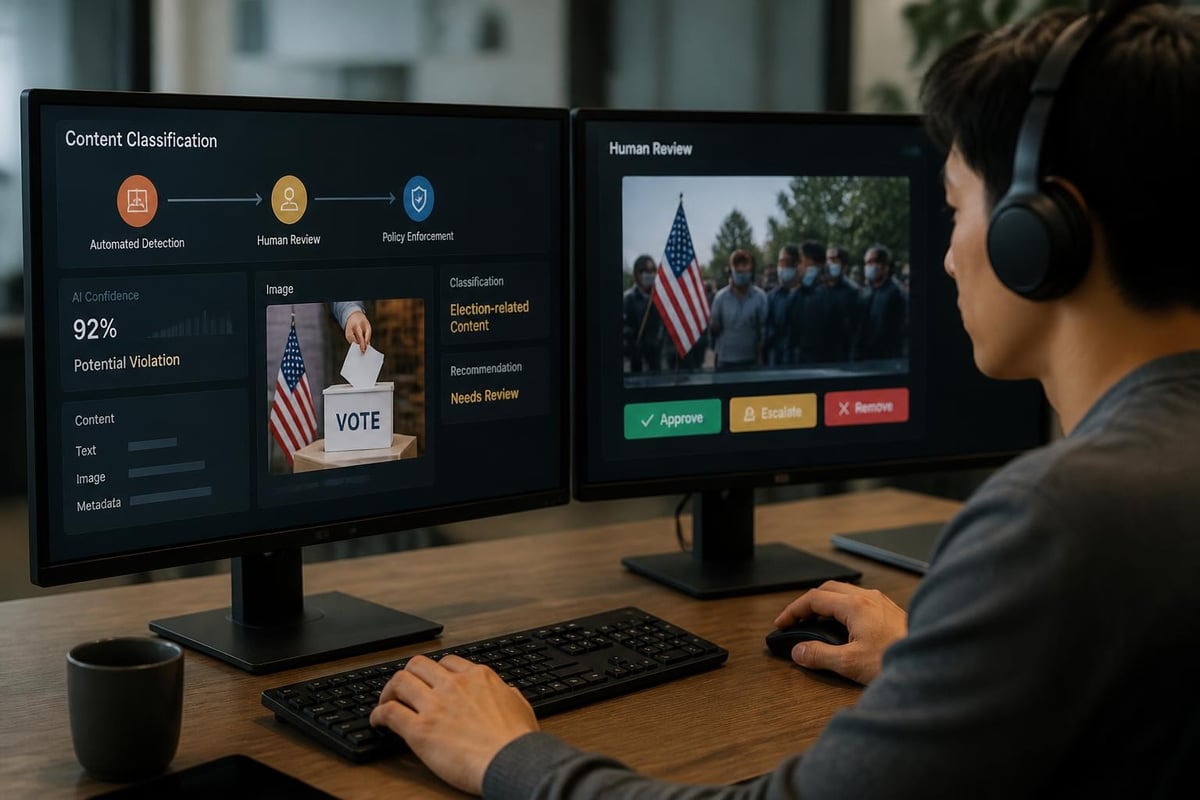
Social media companies have dramatically transformed their approach to content moderation during election cycles since 2016. Major platforms now deploy specialized teams, artificial intelligence systems, and third-party fact-checkers to monitor and moderate election-related content. These efforts aim to combat disinformation, prevent voter suppression, and maintain platform integrity during high-stakes political moments.
Key moderation measures implemented by platforms include:
- Labeling disputed claims about election procedures or results
- Removing coordinated inauthentic behavior networks
- Reducing the viral spread of unverified information
- Restricting political advertising during blackout periods
- Partnering with election officials for authoritative information
The Oversight Board’s analysis of content moderation during the 2024 election year provides critical insights into how these practices affected political discourse across multiple democracies. Their findings reveal significant variation in how platforms apply identical policies across different jurisdictions and languages.
Transparency Gaps in Moderation Practices
Despite increased public scrutiny, substantial gaps remain in understanding how social media censorship and elections truly intersect. Platforms provide limited data about moderation decisions, making independent verification difficult. The empirical analysis of the EU’s Digital Services Act transparency database demonstrates both the promise and limitations of mandated platform reporting, revealing that self-reported data often lacks the granularity needed for meaningful oversight.
Research indicates that platforms remove or downrank millions of election-related posts during campaign seasons, yet the criteria and consistency of these actions remain opaque. This opacity fuels concerns about potential bias, arbitrary enforcement, and the chilling effect on legitimate political speech.
Government Regulation and Platform Autonomy
The regulatory landscape surrounding social media censorship and elections has fragmented significantly across democracies. Different jurisdictions pursue vastly different approaches, ranging from hands-off policies to comprehensive regulatory frameworks. The United States maintains relatively light-touch regulation through Section 230 protections, while the European Union has implemented strict transparency and due-process requirements under the Digital Services Act.
| Regulatory Approach | Key Characteristics | Examples |
|---|---|---|
| Self-Regulation | Platforms develop internal policies with minimal government oversight | United States (traditional model) |
| Co-Regulation | Government sets objectives; platforms implement with oversight | United Kingdom Online Safety Act |
| Strict Regulation | Detailed requirements with significant penalties | EU Digital Services Act, Germany NetzDG |
| State Control | Government directly controls permissible content | Authoritarian regimes |
The UN Special Rapporteur’s report on freedom of expression and elections emphasizes that both excessive platform censorship and insufficient moderation can threaten electoral integrity. This human rights perspective highlights the need for nuanced approaches that protect both election security and free expression rights.
Policymakers increasingly recognize that blanket approaches fail to account for the complexity of social media censorship and elections. The Brookings Democracy Playbook 2025 advocates for evidence-based policies that distinguish between different types of harmful content while preserving robust political debate.
Presidential Campaigns and Content Moderation
U.S. presidential elections present unique challenges for platform moderation. Candidates command massive audiences, their statements drive news cycles, and their posts often test the boundaries of platform policies. When platforms take action against presidential candidates or sitting presidents, they face accusations of political bias regardless of which party is affected.
Notable moderation dilemmas in presidential contexts include:
- Candidate misstatements about vote counts or election procedures
- Inflammatory rhetoric that may violate harassment policies
- Premature victory claims before official results
- Allegations of election fraud without substantiation
- Calls for action that could incite violence or intimidation
The asymmetry between the reach of false claims and the effectiveness of corrections creates particular challenges. A presidential candidate's post can reach tens of millions of users within minutes, while fact-checking labels or content warnings may have limited impact on virality or belief persistence.
The Information Ecosystem Beyond Major Platforms
Focusing exclusively on mainstream social media platforms provides an incomplete picture of how social media censorship and elections interact. Alternative platforms, encrypted messaging apps, and niche communities play increasingly important roles in political organizing and information dissemination. These spaces often operate with minimal moderation, creating parallel information ecosystems where different narratives flourish.
Many users who feel censored on mainstream platforms migrate to alternative services with more permissive policies. This fragmentation complicates efforts to establish consistent norms around election-related speech and creates echo chambers where false claims circulate unchecked.

AI-Powered Moderation and Its Limitations
Artificial intelligence systems have become central to how platforms manage election-related content at scale. These systems can process billions of posts, identify potentially problematic content, and enforce policies far faster than human moderators alone. However, AI-driven moderation introduces new concerns about accuracy, bias, and accountability.
The Oxford Internet Institute’s research on AI systems and social media monitoring during elections reveals significant challenges in training algorithms to navigate political nuance. Systems may struggle to distinguish between legitimate political criticism and harassment, or between reporting on false claims and amplifying them.
Common AI moderation errors in election contexts:
- Over-removal of partisan but permissible speech
- Under-detection of sophisticated disinformation campaigns
- Inconsistent treatment of similar content across languages
- Difficulty assessing context and intent
- Bias reflecting training data limitations
The Harvard Berkman Klein Center’s work on AI, media, and information quality emphasizes the need for human oversight and continuous algorithmic auditing, particularly during sensitive election periods when moderation mistakes carry heightened consequences.
Disinformation Versus Misinformation in Election Discourse
Understanding the distinction between disinformation (deliberately false content designed to mislead) and misinformation (false content shared without malicious intent) proves crucial for effective moderation policies. Social media censorship and elections become particularly contentious when platforms must judge intent and distinguish between lies, mistakes, and political spin.
Presidential campaigns routinely make exaggerated claims, selectively cite statistics, and frame issues in ways that opponents consider misleading. Determining where acceptable political rhetoric ends and removable false information begins requires subjective judgments that invite criticism from all sides.
| Content Type | Definition | Typical Platform Response |
|---|---|---|
| Disinformation | Deliberately false content with intent to deceive | Removal or heavy demotion |
| Misinformation | False content shared without malicious intent | Labels, fact-checks, reduced distribution |
| Malinformation | True content shared to cause harm | Context labels, harassment policy enforcement |
| Political spin | Selective or exaggerated but not provably false | Generally permitted |
The Carnegie Endowment’s evidence-based policy guide recommends focusing enforcement on clear, verifiable falsehoods about voting procedures while avoiding attempts to arbitrate broader political debates. This approach seeks to protect election infrastructure without expanding platform power over political discourse.
Platform Accountability and Independent Oversight
Calls for greater accountability in how platforms handle social media censorship and elections have intensified across the political spectrum. Critics argue that private companies wield excessive power over public discourse without sufficient democratic oversight or due process protections for users.
Several accountability mechanisms have emerged:
- Content appeals processes allowing users to challenge moderation decisions
- Transparency reports detailing enforcement actions and government requests
- Independent oversight boards reviewing controversial cases
- Academic research partnerships enabling external analysis
- Regulatory audits examining algorithmic systems
Meta’s retrospective on 2024’s global elections illustrates the industry perspective on transparency efforts, though critics note that platform-provided data remains selective and incomplete. The gap between what platforms share and what independent researchers need to assess moderation effectiveness remains substantial.

Impact on Voter Behavior and Democratic Participation
The effects of social media censorship and elections on actual voter behavior remain actively debated. Some research suggests moderation reduces exposure to false claims and increases trust in electoral processes, while other studies find limited impact on firmly held beliefs or that removal can increase suspicion and conspiracism.
Documented effects of content moderation include:
- Reduced viral spread of specific false narratives
- Increased user awareness of fact-checking resources
- Migration of some users to unmoderated platforms
- Perception of bias among users whose content is removed
- Decreased engagement with election-related content overall
Presidential races drive enormous social media engagement, with billions of interactions during campaign seasons. When platforms adjust algorithms to reduce political content or flag controversial claims, they fundamentally alter how millions of Americans engage with presidential race news and form political opinions.
The downstream effects on democratic participation merit continued study. If aggressive moderation leads politically engaged users to abandon mainstream platforms or decreases overall political discussion, the cure may create new problems even as it addresses disinformation concerns.
Looking Ahead: Sustainable Approaches to Election Integrity
Finding sustainable approaches to social media censorship and elections requires moving beyond polarized debates toward evidence-based policies that protect both election security and free expression. No perfect solution exists, but several principles can guide more effective and legitimate moderation practices.
Core principles for balanced election moderation:
- Transparency: Clear policies applied consistently with public reporting
- Proportionality: Enforcement scaled to actual harm potential
- Due process: Meaningful appeals for removed content
- Human rights grounding: Respecting freedom of expression norms
- Evidence-based: Regular evaluation of policy effectiveness
- Multi-stakeholder input: Incorporating diverse perspectives
The challenge intensifies as artificial intelligence, synthetic media, and new platform formats emerge. Presidential campaigns in 2026 already incorporate AI-generated content, personalized messaging, and novel platform features that existing policies struggle to address. Staying ahead of these developments requires adaptive governance frameworks that can evolve alongside technology.
Readers seeking comprehensive, balanced coverage of how these issues affect U.S. democracy can explore top U.S. president news in 2026 to understand the broader electoral context in which moderation decisions occur.
The Role of Civil Society and Media Literacy
Platform policies and government regulations represent only part of the solution to challenges surrounding social media censorship and elections. Civil society organizations, journalists, educators, and individual users all play crucial roles in fostering healthier information ecosystems during campaign periods.
Media literacy initiatives help voters critically evaluate sources, recognize manipulation techniques, and distinguish reliable information from propaganda. These skills reduce susceptibility to disinformation regardless of platform policies, creating more resilient democratic discourse.
Journalists and fact-checkers provide independent verification that both informs users and supports platform moderation. However, they face resource constraints and the fundamental challenge that corrections rarely achieve the reach of initial false claims. Sustainable funding models for quality journalism remain essential to election integrity efforts that extend beyond content removal.
The intersection of social media censorship and elections will continue evolving as platforms, regulators, and democratic societies grapple with balancing competing values. Understanding these complex dynamics requires staying informed through reliable, non-partisan sources that contextualize platform decisions within broader democratic processes. U.S. Presidential Report provides comprehensive coverage of how content moderation, election integrity, and presidential campaigns intersect, helping readers navigate these critical issues with clarity and balance.