The 2026 midterm elections are rapidly approaching, and political analysts across the nation are already identifying the congressional districts that could determine control of the House of Representatives. With narrow margins in recent election cycles and shifting demographic patterns, understanding which districts will be most competitive is essential for anyone following American politics. These key swing districts to watch 2026 represent the battlegrounds where both parties will invest heavily in campaign resources, field operations, and messaging strategies to secure victory.
Understanding the 2026 Electoral Landscape
The current political environment heading into 2026 differs significantly from previous midterm cycles. Historical patterns suggest that the party controlling the White House typically loses House seats during midterm elections, but several factors unique to this cycle could disrupt traditional trends.
Economic conditions, policy achievements, and presidential approval ratings will all play crucial roles in determining voter sentiment. Districts that swung by narrow margins in 2024 remain particularly vulnerable to shifts in the political winds. Meanwhile, demographic changes and redistricting effects from the 2020 census continue to reshape the competitive landscape in several states.
Defining Swing Districts
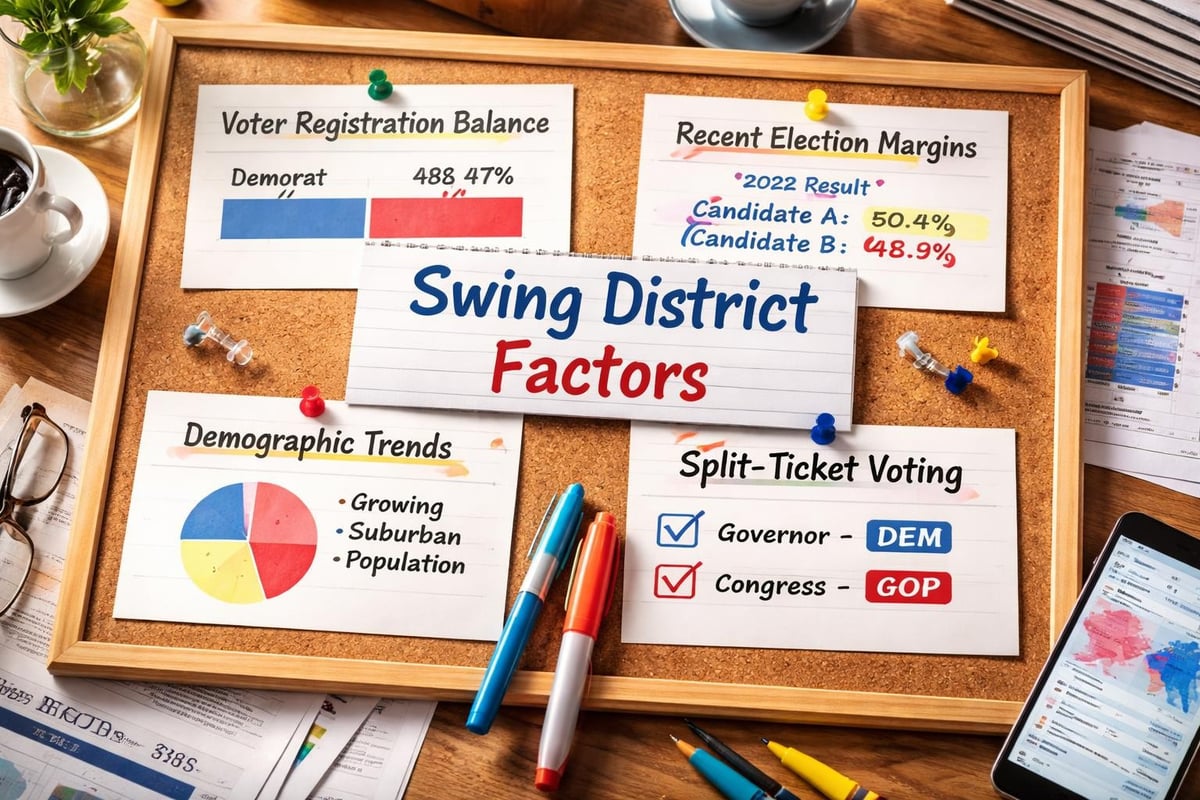
A swing district typically exhibits several key characteristics that make it politically competitive:
- Narrow victory margins in recent elections (typically within 5-10 percentage points)
- Split-ticket voting patterns where voters support candidates from different parties
- Balanced partisan voter registration or a significant independent voter bloc
- Changing demographics that create uncertainty about future election outcomes
- Local issues that transcend traditional party lines
The comprehensive list of the 30 most competitive House districts provides detailed analysis of Cook Political ratings and Partisan Voting Index scores that help identify these battlegrounds.
Geographic Hotspots for Competitive Races
Certain states consistently produce multiple competitive congressional districts due to their diverse populations and evolving political alignments. These geographic concentrations of key swing districts to watch 2026 will receive disproportionate attention from national party organizations and presidential visits.
California's Competitive Districts
California, despite its reputation as a solidly blue state, hosts several highly competitive House districts. The Central Valley and Orange County regions contain districts where suburban voters have shown willingness to swing between parties based on candidate quality and national political conditions.
Districts in these areas often feature:
- Growing Latino populations with complex political preferences
- Suburban communities concerned about housing affordability and education
- Agricultural interests that don't align neatly with either party's platform
- Split results between presidential and congressional races
New York's Vulnerable Seats
The Empire State presents a fascinating mix of competitive districts, particularly in suburban areas surrounding New York City and upstate regions. According to analysis of New York’s most competitive House districts, seven districts stand out as particularly vulnerable in 2026.
| District | 2024 Margin | Key Issues | Current Rating |
|---|---|---|---|
| NY-03 | R+2.1% | Taxes, Crime | Toss-up |
| NY-04 | R+3.8% | Immigration, Economy | Lean R |
| NY-17 | D+0.9% | Healthcare, Education | Toss-up |
| NY-19 | R+2.4% | Rural Economy, Infrastructure | Toss-up |
| NY-22 | D+1.2% | Manufacturing, Trade | Toss-up |
These districts demonstrate how local concerns intersect with national political trends to create competitive environments.
Midwest Battlegrounds
The Midwest remains crucial territory for both parties, with key swing districts to watch 2026 scattered across Ohio, Michigan, Wisconsin, and Iowa. These districts often feature working-class voters who have shifted their partisan allegiances over the past decade.
Manufacturing job trends, agricultural policy, and healthcare access dominate voter concerns in these regions. Candidates who can authentically connect with blue-collar workers while addressing suburban voters' priorities often perform best in these competitive districts.
Strategic Implications for Both Parties
National party organizations have already begun identifying target districts and developing strategic approaches to maximize their chances in 2026. The DCCC’s announcement of 44 critical districts demonstrates the aggressive offensive strategy Democrats are pursuing.
Democratic Strategy
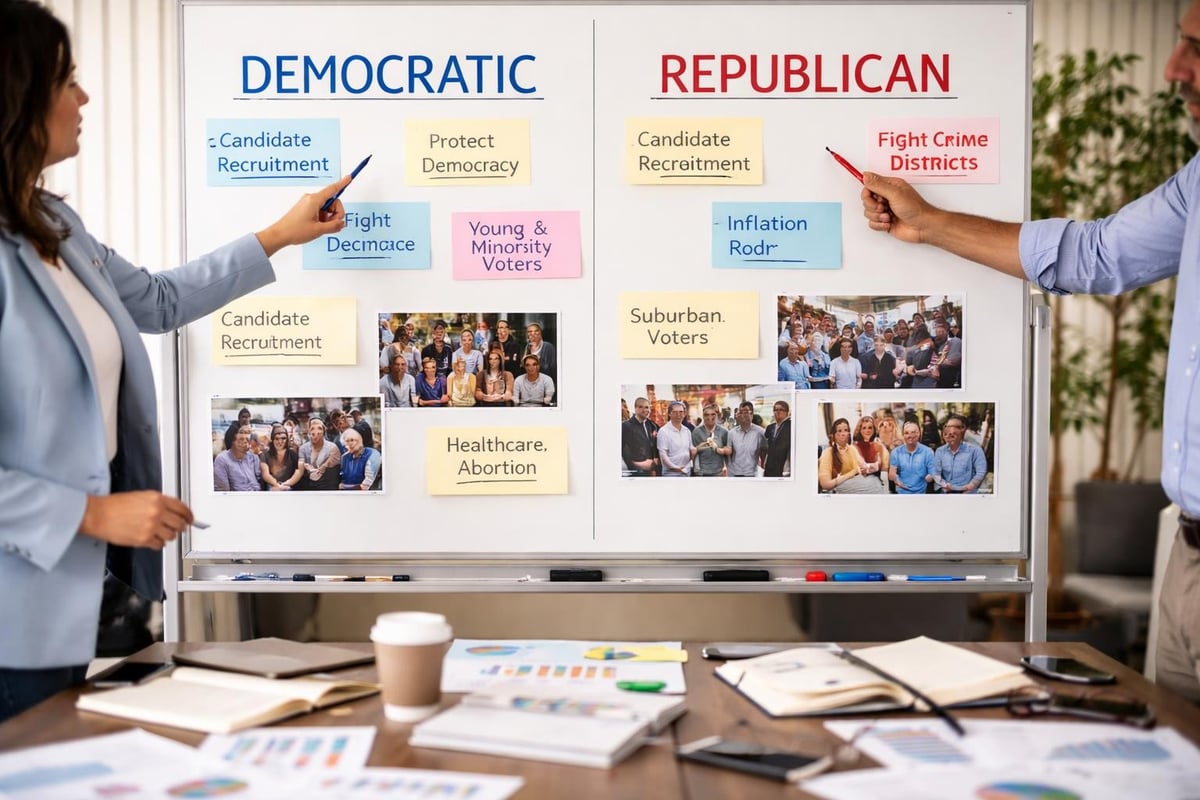
Democrats face the challenge of defending vulnerable seats while attempting to reclaim districts lost in recent cycles. Their strategic approach focuses on several key elements:
- Candidate recruitment emphasizing local ties and moderate positions on contentious issues
- Economic messaging highlighting legislative achievements and constituent services
- Coalition building among diverse demographic groups within each district
- Early investment in field operations and voter registration drives
- Healthcare focus particularly prescription drug costs and insurance coverage
The party's detailed offensive strategy targeting 35 Republican-held districts shows their commitment to expanding the battlefield rather than playing defense exclusively.
Republican Approach
Republicans are working to consolidate gains from recent election cycles while identifying opportunities to expand their majority. Their strategy typically emphasizes:
- Border security and immigration enforcement in districts with relevant concerns
- Economic growth messaging focused on tax policy and regulatory reduction
- Education issues including parental rights and curriculum transparency
- Public safety concerns in suburban districts experiencing crime increases
- Energy policy particularly in districts with significant fossil fuel industry presence
Voter Dynamics in Swing Districts
Understanding the electorate within key swing districts to watch 2026 requires examining multiple demographic and behavioral factors that influence election outcomes. Modern swing districts often contain highly educated suburban voters, working-class communities, and diverse ethnic populations with varying political priorities.
Independent Voter Influence
Independent and unaffiliated voters constitute decisive voting blocs in many competitive districts. These voters typically:
- Prioritize candidate character and competence over strict party loyalty
- Focus on specific issues rather than broader ideological alignment
- Respond more to local concerns than national political narratives
- Show higher volatility in their voting patterns across election cycles
Survey data from swing districts provides valuable insights into how these voters are responding to current political conditions and which issues resonate most strongly.
Demographic Shifts
Population changes continue reshaping the political landscape in many swing districts. Key demographic trends include:
| Trend | Impact on Competitiveness | Affected Regions |
|---|---|---|
| Urban to Suburban Migration | Increased Democratic competitiveness | Sun Belt suburbs |
| Aging Population | Mixed effects depending on region | Rust Belt, Florida |
| Latino Population Growth | Complex partisan impacts | Southwest, Texas |
| College-Educated Voters | Generally favors Democrats | Suburban districts |
| Working-Class Realignment | Often benefits Republicans | Industrial areas |
These shifts create both opportunities and challenges for both parties as they navigate changing electoral coalitions.
Issue Priorities Across Swing Districts
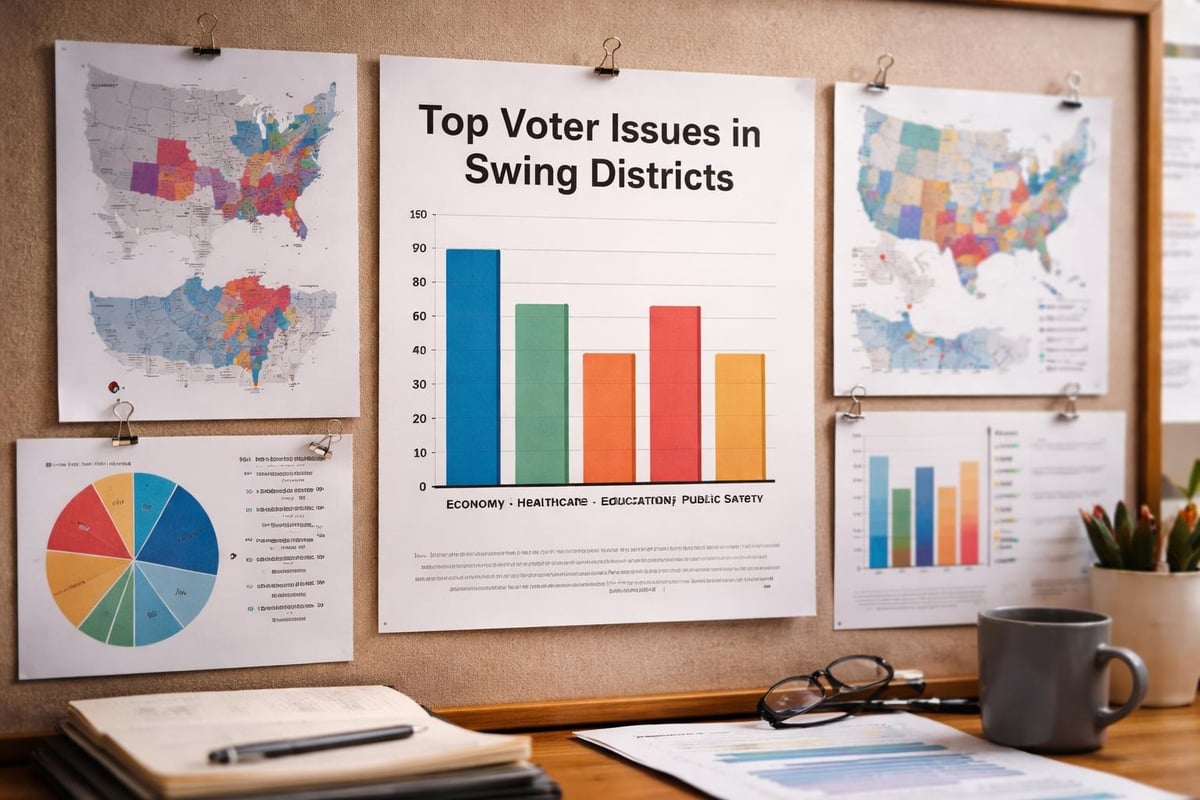
While national political themes receive significant media attention, local and regional issues often prove decisive in competitive congressional races. Successful candidates in key swing districts to watch 2026 will need to demonstrate understanding of constituent priorities while connecting them to broader policy solutions.
Economic Concerns
Economic issues consistently rank among voters' top priorities, though specific concerns vary by district:
- Job security and wage growth in manufacturing-dependent districts
- Small business support in entrepreneurial communities
- Housing affordability in rapidly growing suburban areas
- Agricultural policy in rural and semi-rural districts
- Technology sector regulation in innovation hubs
Candidates must balance national party positions with local economic realities to build winning coalitions.
Healthcare and Social Services
Healthcare access and affordability remain critical concerns across diverse swing districts. Voters focus on:
- Prescription drug pricing and insurance coverage
- Mental health services availability
- Rural hospital closures and healthcare deserts
- Medicare and Social Security sustainability
- Long-term care costs for aging populations
Campaign Resources and Media Markets
The financial and organizational dynamics of competitive races significantly impact outcomes in swing districts. Both parties will direct substantial resources toward these battlegrounds, making them among the most expensive House races in the country.
Fundraising Dynamics
Candidates in key swing districts to watch 2026 must navigate complex fundraising landscapes:
- Local donor cultivation to demonstrate grassroots support
- National party committee contributions and independent expenditures
- Political action committee funding from aligned interest groups
- Small-dollar online fundraising through social media and email campaigns
- Self-funding considerations for wealthy candidates
The ability to raise and spend money effectively often determines which candidates can compete vigorously through Election Day.
Media Market Challenges
Congressional districts rarely align perfectly with media markets, creating unique challenges for campaign communications:
- Expensive urban media markets where most viewers live outside the district
- Shared media markets covering multiple competitive districts
- Digital advertising precision allowing targeted messaging to specific voters
- Local news decline reducing opportunities for earned media coverage
- Social media dynamics enabling both grassroots organizing and misinformation spread
Savvy campaigns develop integrated communication strategies that maximize reach while minimizing wasted spending on voters outside their districts.
The Presidential Impact on Congressional Races
Presidential approval ratings and policy positions significantly influence outcomes in key swing districts to watch 2026, though the relationship proves more complex than simple correlation. Midterm elections traditionally serve as referendums on the sitting president's performance, but local factors and candidate quality can override national trends.
Historical Midterm Patterns
Data from previous midterm cycles shows consistent patterns:
- The president's party typically loses House seats, averaging 20-30 seat losses
- Presidential approval ratings below 50% correlate with larger losses
- Economic conditions at election time strongly influence voter behavior
- Overperformance in special elections often predicts midterm outcomes
- Turnout differentials between parties determine close race outcomes
Understanding these patterns helps analysts identify which districts face the greatest vulnerability based on current political conditions. Readers interested in presidential approval dynamics can explore more at U.S. Presidential Report for comprehensive coverage of how these factors intersect.
Local Versus National Dynamics
Successful candidates in swing districts often excel at separating themselves from unpopular national party positions while maintaining enough partisan loyalty to energize base voters. This delicate balance requires:
- Strategic position-taking on controversial issues
- Constituent service emphasis to build personal brand independent of party
- Local endorsement cultivation from trusted community leaders
- Moderate messaging without appearing inauthentic to core supporters
The candidates who master this balance typically outperform their party's national standing within their districts.
Early Indicators and Predictive Factors
Political observers use various metrics to assess district competitiveness and predict likely outcomes months before Election Day. These indicators help identify which races deserve the designation of key swing districts to watch 2026.
Polling and Survey Data
While individual polls carry significant margins of error, polling averages and trends provide valuable insights:
- Generic ballot preferences showing overall partisan environment
- Presidential approval ratings within specific districts
- Issue priority rankings among likely voters
- Name recognition and favorability for announced candidates
- Voter enthusiasm measurements for each party's coalition
Professional poll aggregation and analysis helps separate signal from noise in evaluating district competitiveness.
Fundraising Reports
Quarterly campaign finance disclosures reveal crucial information about race dynamics:
| Metric | Significance | Warning Signs |
|---|---|---|
| Cash on Hand | Resources available for final push | Opponent has 3x+ advantage |
| Burn Rate | Campaign efficiency | Spending faster than raising |
| Donor Count | Grassroots enthusiasm | Over-reliance on few donors |
| Out-of-District % | Local support level | More than 75% from outside |
| Small-Dollar Ratio | Base engagement | Less than 20% under $200 |
Strong fundraising doesn't guarantee victory, but consistently weak numbers typically predict difficult races ahead.
Special Election Results
Off-year special elections in competitive districts provide real-world testing of political environment and party messaging effectiveness. Analysts examine these results for evidence of enthusiasm gaps, messaging resonance, and turnout patterns that might replicate in November 2026.
Redistricting Effects on Competitiveness
The redistricting cycle following the 2020 census created new political realities in many states, generating additional competitive districts while reducing competitiveness in others. Understanding these changes is essential for identifying key swing districts to watch 2026.
States with Significant Changes
Several states experienced substantial redistricting impacts:
- Florida: Republican-controlled process created favorable maps
- New York: Court-ordered redistricting increased competitiveness
- North Carolina: New maps following legal challenges
- Georgia: Demographic growth necessitated significant adjustments
- Texas: Population increases created new districts
These redistricting efforts continue influencing which districts remain genuinely competitive versus those leaning more definitively toward one party.
Legal Challenges and Uncertainty
Ongoing litigation over redistricting maps in several states creates uncertainty about final district boundaries. Court decisions in 2026 could potentially alter competitive dynamics in affected districts, making this cycle particularly unpredictable in certain states.
Candidate Quality and Recruitment
While structural factors like district partisanship and presidential approval matter enormously, individual candidate quality often determines outcomes in the most competitive races. Both parties invest heavily in recruiting strong candidates for key swing districts to watch 2026.
Characteristics of Strong Candidates
Successful congressional candidates in swing districts typically demonstrate:
- Local roots and community connections that establish authenticity
- Professional accomplishments outside politics that demonstrate competence
- Fundraising ability to remain financially competitive
- Communication skills for both retail politics and media appearances
- Issue expertise on topics important to district voters
- Coalition-building capacity to unite diverse supporter groups
Parties prioritize recruiting candidates with these attributes when targeting competitive districts.
Incumbent Advantages
Sitting members of Congress enjoy significant advantages in competitive districts:
- Name recognition from previous campaigns and ongoing constituent outreach
- Fundraising networks established over multiple election cycles
- Free media coverage through official congressional activities
- Staff resources for constituent services building goodwill
- Institutional knowledge and established relationships
However, these advantages can be overcome when national political winds blow strongly against the incumbent's party or when challengers successfully link incumbents to unpopular policies.
The 2026 midterm elections will be shaped by the competitive dynamics in dozens of swing districts across the country, where voter preferences, candidate quality, and resource allocation intersect to determine congressional control. These battlegrounds deserve close attention as election season approaches. For comprehensive, non-partisan coverage of how presidential politics intersect with these crucial congressional races, U.S. Presidential Report provides ongoing analysis and updates to help readers stay informed about the political landscape shaping America's future.