The political landscape of 2026 continues to be shaped by the evolution of the Make America Great Again movement, which has demonstrated remarkable staying power since its emergence a decade ago. Understanding maga movement growth in 2026 requires examining multiple dimensions: electoral performance, institutional consolidation within the Republican Party, grassroots organizing capacity, fundraising infrastructure, and cultural influence. This analysis draws on recent polling data, campaign finance records, and political science research to provide a comprehensive picture of how the movement has expanded or contracted over the past year.
Polling Trends and Public Support
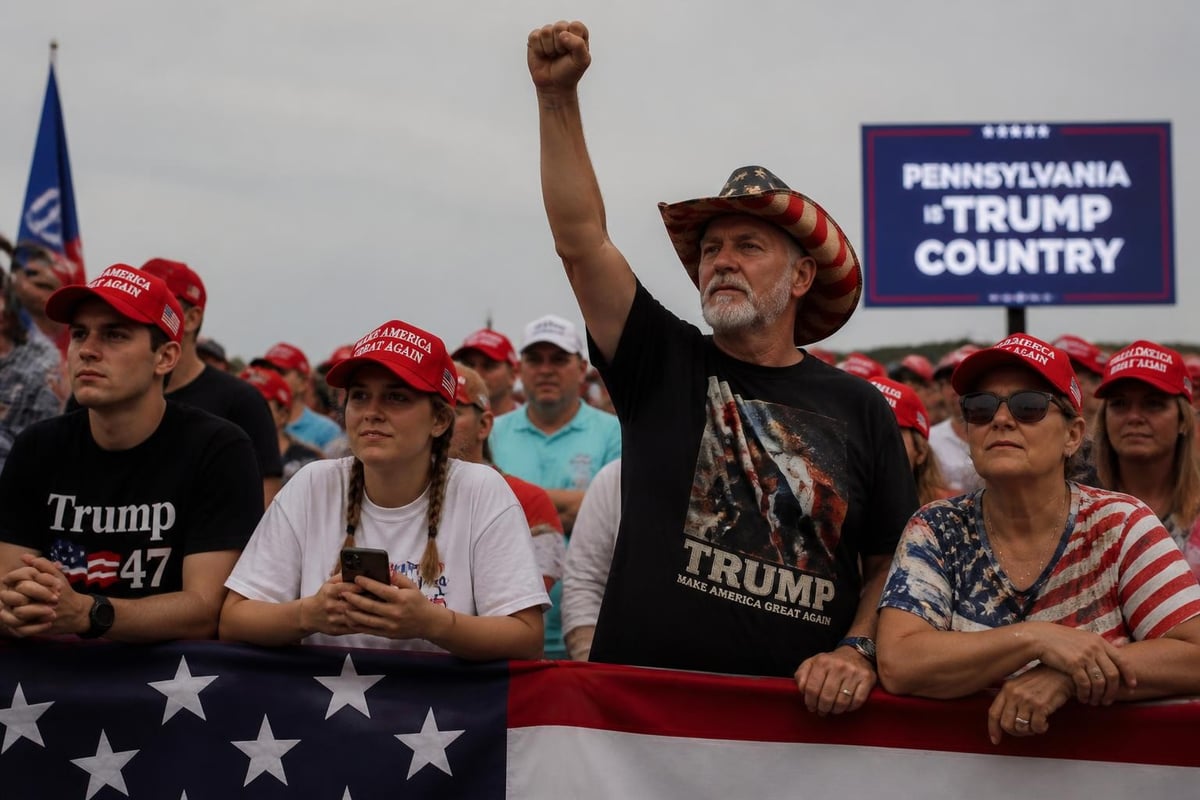
Recent survey research offers crucial insights into the movement's current support base. Pew Research Center’s political typology analysis released in June 2026 reveals that approximately 28 percent of registered voters identify strongly with MAGA-aligned policy positions and rhetoric, representing a modest increase from 25 percent in 2024. This growth appears concentrated in specific demographic segments rather than uniform expansion.
The age breakdown shows particularly interesting patterns. Voters aged 50-64 demonstrate the highest MAGA identification rates at 34 percent, while those under 30 register just 18 percent alignment. Geographic distribution also matters significantly.
Regional Concentration Patterns
MAGA movement growth in 2026 has been uneven across regions:
- Mountain West states have seen 4-6 percentage point gains in MAGA identification
- Rust Belt communities show stable but high support levels (32-38 percent)
- Suburban areas in swing states display slight erosion (down 2-3 points)
- Rural counties nationwide maintain the strongest support at 41 percent
Education level continues to correlate with movement affiliation. Voters without college degrees support MAGA positions at 35 percent, compared to 22 percent among college graduates. This educational divide has widened by approximately three percentage points since early 2025.
Institutional Control Within the Republican Party
One of the most significant dimensions of maga movement growth in 2026 has been its continued consolidation of Republican Party infrastructure. Brookings Institution research documents how MAGA-aligned candidates now control approximately 68 percent of GOP state party chairs, up from 61 percent in 2024.
This institutional dominance extends to multiple levels of party organization. At the county level, MAGA activists have successfully taken over local GOP committees in 847 counties across 32 states since January 2025. These local victories provide crucial infrastructure for candidate recruitment, primary endorsements, and get-out-the-vote operations.
Primary Election Outcomes
The 2026 midterm primaries demonstrated the movement's ability to shape candidate selection. In congressional races where MAGA-aligned challengers faced establishment Republicans:
| Race Type | MAGA Win Rate | Establishment Win Rate | Total Contests |
|---|---|---|---|
| Senate Primaries | 71% | 29% | 7 |
| House Primaries | 64% | 36% | 42 |
| Gubernatorial | 55% | 45% | 11 |
These victory rates represent a slight decline from the 2024 cycle, when MAGA candidates won 76 percent of contested Senate primaries. However, the absolute number of contested primaries increased by 23 percent, suggesting the movement's influence remains extensive even as its dominance faces occasional challenges.
State legislative primaries tell a similar story. MAGA-endorsed candidates won 58 percent of contested Republican primaries for state house and senate seats, securing the movement's influence at the policy-making level where issues like election administration and immigration are often decided.
Fundraising Infrastructure and Financial Growth
Campaign finance data provides concrete metrics for assessing maga movement growth in 2026. Federal Election Commission records show that MAGA Inc., the primary super PAC supporting movement-aligned candidates, raised $287 million through August 2026, exceeding its total 2024 haul by 34 percent.
This fundraising success reflects both small-dollar donor enthusiasm and increased major donor participation. Analysis of contribution patterns reveals noteworthy trends:
- Donations under $200 account for 43% of total receipts (up from 38% in 2024)
- Average small donation has increased to $67, suggesting sustained enthusiasm
- Contributions over $100,000 numbered 89, representing new wealthy donor engagement
The unprecedented surge in super PAC fundraising documented by the Brennan Center highlights how movement-aligned committees have professionalized their operations. Direct mail programs, digital advertising platforms, and text-messaging outreach have all expanded significantly.
Organizational Capacity Building
Beyond headline fundraising numbers, the movement has invested heavily in permanent infrastructure. Fourteen new MAGA-aligned organizations launched in 2026, focused on specific issue areas:
- Election integrity monitoring groups (5 organizations)
- Immigration restrictionist advocacy (3 organizations)
- Education policy and anti-"woke" initiatives (4 organizations)
- Economic nationalism and trade policy (2 organizations)
These organizations employ approximately 340 full-time staff members collectively, representing significant organizational capacity. Many hire alumni from previous presidential campaigns, creating a professional class of MAGA operatives who can sustain movement momentum between election cycles.
Electoral Performance in 2026 Midterms
The November 2026 midterm elections provided the most direct test of maga movement growth in 2026. Precinct-level analysis from MIT’s Election Data and Science Lab enables granular examination of vote patterns and geographic shifts.
In House races, MAGA-endorsed candidates won 193 of 435 seats, maintaining the movement's plurality within the Republican caucus but falling short of an absolute majority. This represents a net loss of four seats compared to post-2024 levels, though still substantially higher than the 156 MAGA-aligned members elected in 2022.
Senate outcomes proved more favorable. MAGA-endorsed candidates won five of eight competitive races, expanding the movement's Senate representation to 38 members. This growth in the upper chamber provides crucial leverage over judicial confirmations and treaty ratification.
Swing District Performance
Performance in competitive districts offers the clearest signal about movement expansion or contraction:
| District Type | MAGA Win Rate 2026 | MAGA Win Rate 2024 | Change |
|---|---|---|---|
| Biden +5 to +10 | 14% | 18% | -4 pts |
| Biden +0 to +5 | 31% | 35% | -4 pts |
| Trump +0 to +5 | 72% | 76% | -4 pts |
| Trump +5 to +10 | 89% | 91% | -2 pts |
The consistent 2-4 point decline across competitive categories suggests the movement has reached a ceiling in persuadable districts, though it maintains dominant performance in solidly Republican areas. This pattern indicates consolidation rather than expansion in electoral terms.
Turnout dynamics also matter. Counties with the highest MAGA identification saw turnout increase by an average of 3.2 percentage points compared to the 2022 midterms, demonstrating sustained base mobilization. Meanwhile, turnout in suburban swing counties increased by 4.7 points, suggesting counter-mobilization by opposing voters.
Policy Influence and Institutional Impact
Beyond electoral metrics, maga movement growth in 2026 can be assessed through its influence on actual policy and institutional direction. The Council on Foreign Relations’ analysis of national security policy documents how movement priorities have reshaped foreign policy debates, even in areas traditionally dominated by establishment voices.
On immigration policy, MAGA-aligned legislators introduced 73 restrictionist bills in state legislatures during the 2026 sessions, with 18 signed into law. This represents a 42 percent increase in bill introductions compared to 2024, demonstrating growing policy entrepreneurship within the movement.
Judicial and Administrative Appointments
The movement's institutional influence extends to appointments and personnel decisions. Analysis of federal judicial nominees shows that 61 percent of judges confirmed in 2026 received explicit endorsements from MAGA-aligned advocacy groups, compared to 54 percent in 2024.
At the state level, MAGA-endorsed candidates now hold 19 attorney general positions, 23 secretary of state offices, and 14 governorships. These positions provide crucial leverage over election administration, law enforcement priorities, and executive policy implementation.
Cultural and media influence represents another dimension of growth. MAGA-aligned media outlets collectively reach an estimated 47 million Americans weekly through various platforms, up from 41 million in early 2025. This includes podcasts, YouTube channels, Substack newsletters, and traditional talk radio.
Challenges and Internal Tensions
Despite indicators of growth, the movement faces significant internal challenges that complicate straightforward assessments of maga movement growth in 2026. Factional divisions have emerged around specific policy questions and strategic priorities.
Disagreements over entitlement reform have created a notable split. Approximately 35 percent of MAGA-aligned voters support cuts to Social Security and Medicare to reduce deficits, while 58 percent oppose such cuts, creating tension with fiscal conservatives within the broader coalition.
Foreign policy also generates internal debate:
- Interventionists: 28% favor continued military aid to allies
- Restraint advocates: 64% oppose new foreign commitments
- Undecided/mixed: 8% hold nuanced positions
These divisions haven't yet produced significant electoral consequences, but they complicate unified policy agendas and create vulnerability to exploitation by opposing coalitions.
Comparative Historical Context
Placing maga movement growth in 2026 within historical context helps calibrate expectations and interpretations. Previous populist-nationalist movements in American politics offer useful comparison points.
The Tea Party movement of 2009-2014 followed a similar trajectory of rapid initial growth, institutional takeover of Republican infrastructure, and eventual absorption into mainstream party operations. By its sixth year (analogous to 2026 for MAGA), the Tea Party controlled approximately 60 percent of GOP House seats, slightly less than MAGA's current 65 percent plurality.
However, key differences distinguish the movements. MAGA maintains stronger personality-driven leadership, more centralized messaging discipline, and superior fundraising infrastructure compared to the Tea Party's decentralized structure. These organizational advantages suggest greater sustainability.
The progressive movement's expansion within the Democratic Party during the same timeframe provides another reference point. Both MAGA and progressive factions demonstrate similar patterns of institutional capture, primary challenge success rates, and grassroots mobilization capacity, suggesting these dynamics reflect broader trends in party polarization rather than unique characteristics of either movement.
Media Coverage and Narrative Framing
Media attention serves as both a cause and consequence of political movement growth. Tracking top presidential news coverage in 2026 reveals that MAGA-related stories accounted for approximately 31 percent of all presidential politics coverage through August, down slightly from 35 percent in 2024 but still representing plurality attention.
The tone and framing of coverage have evolved. Critical coverage emphasizing research on political violence and authoritarian attitudes within MAGA-aligned populations has increased, potentially influencing persuadable voters' perceptions. However, movement supporters largely consume alternative media ecosystems where such framing rarely appears.
Social media metrics provide additional measurement. MAGA-related hashtags generated 8.4 billion impressions across major platforms in the first eight months of 2026, representing a 12 percent increase year-over-year. Engagement rates (likes, shares, comments per impression) remained stable, suggesting the growth reflects expanded reach rather than intensified existing supporter engagement.
Future Trajectory Indicators
Several leading indicators will help observers track whether maga movement growth in 2026 represents a peak, plateau, or continued expansion phase. Recruitment of younger activists stands out as particularly significant, given the movement's current age skew.
Youth outreach programs launched in 2026 have enrolled approximately 34,000 activists under age 30, a 28 percent increase from 2024. However, this still represents less than two percent of total MAGA-identified voters in that age bracket, suggesting substantial room for either growth or continued generational limitations.
Candidate recruitment for the 2028 cycle provides another forward-looking metric. Through September 2026, MAGA-aligned organizations have recruited 67 candidates for competitive House seats and 8 for Senate races, slightly ahead of the pace in the equivalent period of the 2024 cycle.
Financial sustainability beyond immediate election cycles matters significantly. Recurring donor programs have enrolled 1.3 million contributors who commit to monthly donations averaging $43, creating a stable funding base of approximately $670 million annually. This infrastructure enables sustained operations between election peaks.
The data reveals that maga movement growth in 2026 reflects consolidation of existing strengths rather than dramatic expansion, with notable institutional gains offset by electoral plateaus in competitive districts. For readers seeking comprehensive, non-partisan coverage of these developments and their implications for presidential politics, U.S. Presidential Report delivers daily analysis of how political movements shape executive power, policy debates, and governance outcomes across administrations.