Understanding hispanic voting trends in america has become essential for anyone analyzing presidential elections and broader political dynamics. The Hispanic electorate represents one of the fastest-growing demographic groups in the United States, with nearly 36.2 million eligible voters as of 2024, accounting for approximately 15% of all eligible voters. This significant and expanding constituency continues to reshape campaign strategies, policy platforms, and electoral outcomes across the nation. As we examine these patterns in 2026, the data reveals complex, nuanced behaviors that challenge oversimplified narratives about Hispanic political preferences.
The Demographic Foundation of Hispanic Electoral Power
The growth trajectory of Hispanic eligible voters has fundamentally altered the American electoral landscape. Between 2000 and 2024, the number of Hispanic eligible voters more than doubled, driven primarily by U.S.-born citizens reaching voting age rather than naturalization patterns. This youth advantage creates distinct political dynamics that differ markedly from other demographic cohorts.
Geographic Concentration and Electoral Impact
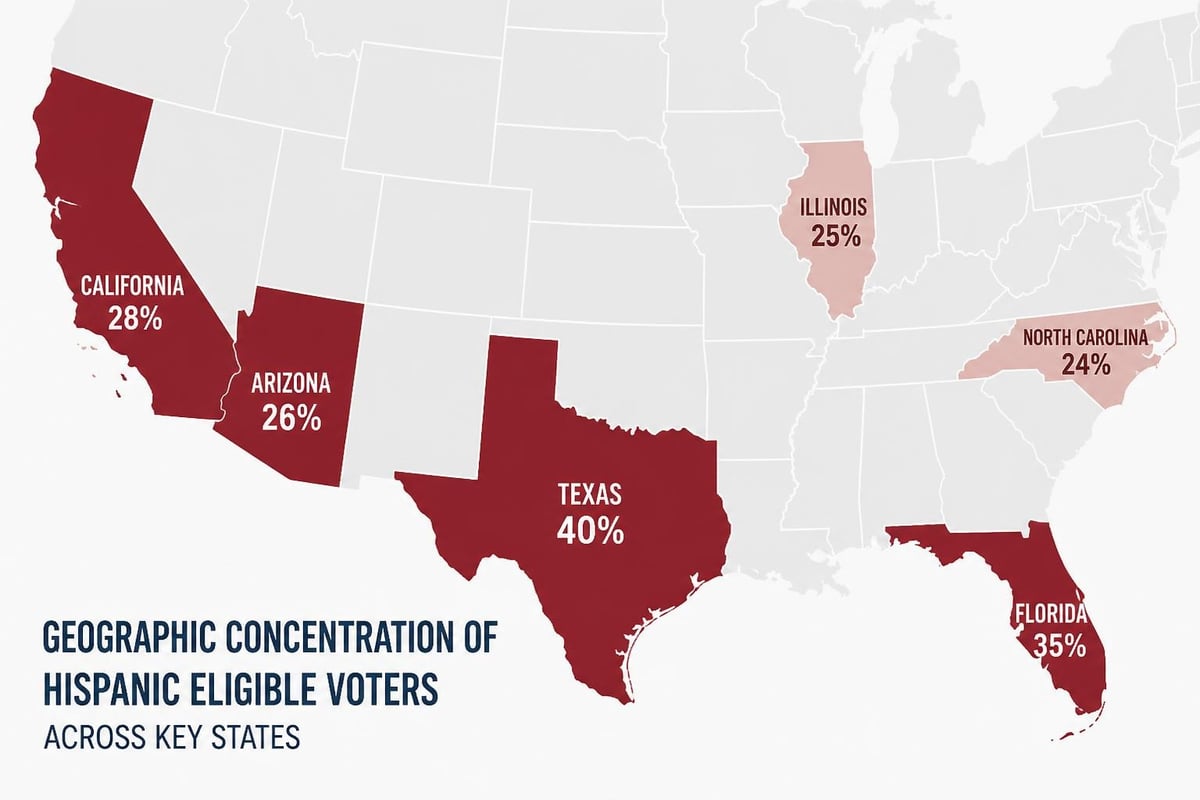
Hispanic voters concentrate heavily in specific states that often determine presidential outcomes. California, Texas, Florida, New York, and Arizona collectively account for approximately 60% of all Hispanic eligible voters, though meaningful populations exist in battleground states like Nevada, Colorado, Pennsylvania, and North Carolina.
Key state-level concentrations include:
- California: 8.9 million eligible Hispanic voters
- Texas: 6.4 million eligible Hispanic voters
- Florida: 3.7 million eligible Hispanic voters
- New York: 2.1 million eligible Hispanic voters
- Arizona: 1.2 million eligible Hispanic voters
The UCLA Latino Policy and Politics Institute has documented how these regional variations create distinct political subcultures within the broader Hispanic electorate, with Cuban Americans in Florida exhibiting markedly different voting patterns than Mexican Americans in Texas or Puerto Ricans in Pennsylvania.
Generational Divides Shaping Hispanic Voting Trends in America
Generational differences represent perhaps the most significant variable in understanding hispanic voting trends in america. First-generation immigrants, second-generation voters, and third-plus generation Hispanic Americans often display dramatically different political priorities, turnout rates, and partisan preferences.
Age-Based Participation Patterns
| Age Group | Typical Turnout Rate | Primary Policy Concerns | Partisan Lean Variation |
|---|---|---|---|
| 18-29 | 38-42% | Education, climate, student debt | More Democratic |
| 30-44 | 52-58% | Economic opportunity, healthcare | Mixed/competitive |
| 45-64 | 64-68% | Healthcare, economy, retirement | Increasingly competitive |
| 65+ | 71-75% | Social Security, Medicare, immigration | More conservative lean |
Younger Hispanic voters demonstrate higher rates of college attendance than previous generations, which correlates with both increased political engagement and distinct issue priorities. According to Pew Research Center data, Hispanic millennials and Gen Z voters show stronger environmental concerns and social justice priorities compared to older cohorts who emphasize economic stability and traditional values.
Language Preference and Media Consumption
Language dynamics significantly influence political information consumption patterns. While approximately 70% of Hispanic eligible voters are English-dominant or bilingual, Spanish-language media outlets maintain substantial influence, particularly among older voters and recent arrivals. This dual-media environment creates opportunities for targeted messaging but also challenges for candidates attempting to reach diverse Hispanic audiences with consistent narratives.
Economic Issues as Primary Vote Drivers
Economic concerns consistently rank as the top priority for Hispanic voters across nearly all surveys and exit polls. The economy, job creation, and financial security matter more to Hispanic voters than any single cultural or identity-based issue, challenging narratives that assume immigration automatically dominates Hispanic political thinking.
Kitchen Table Economics
Hispanic households experienced particular economic pressures during recent inflation cycles, with median Hispanic household income ($62,800 in 2024) sitting below the national median. Small business ownership rates among Hispanic Americans have grown substantially, reaching approximately 15% of all Hispanic workers, creating distinct economic perspectives around taxation, regulation, and entrepreneurship support.
The 2024 election cycle revealed interesting patterns when Brookings Institution researchers examined economic anxiety among Latino male voters specifically. Their analysis showed that concerns about inflation, wages, and job security drove significant portions of this demographic toward candidates emphasizing economic populism, regardless of party affiliation.
Top economic priorities for Hispanic voters include:
- Inflation and cost of living
- Job availability and wage growth
- Small business support and entrepreneurship
- Healthcare costs and accessibility
- Housing affordability
Immigration's Complex Role in Hispanic Political Preferences
Contrary to conventional wisdom, immigration policy does not universally unite Hispanic voters behind a single position. Instead, hispanic voting trends in america reveal substantial diversity in immigration attitudes based on citizenship status, generation, national origin, and personal experience.
Nuanced Immigration Perspectives
Second and third-generation Hispanic Americans often hold more restrictive immigration views than recently naturalized citizens. Economic concerns about wage competition, particularly in construction, hospitality, and service sectors where Hispanic workers concentrate, create complex political calculations that don't align neatly with either major party's platform.
Border security resonates differently across Hispanic subgroups. Mexican American voters in Texas border communities sometimes express stronger border security support than Hispanic voters in states distant from the border. This geographic variation reflects lived experience with border-related challenges versus abstract policy preferences.
Gender Dynamics Within the Hispanic Electorate
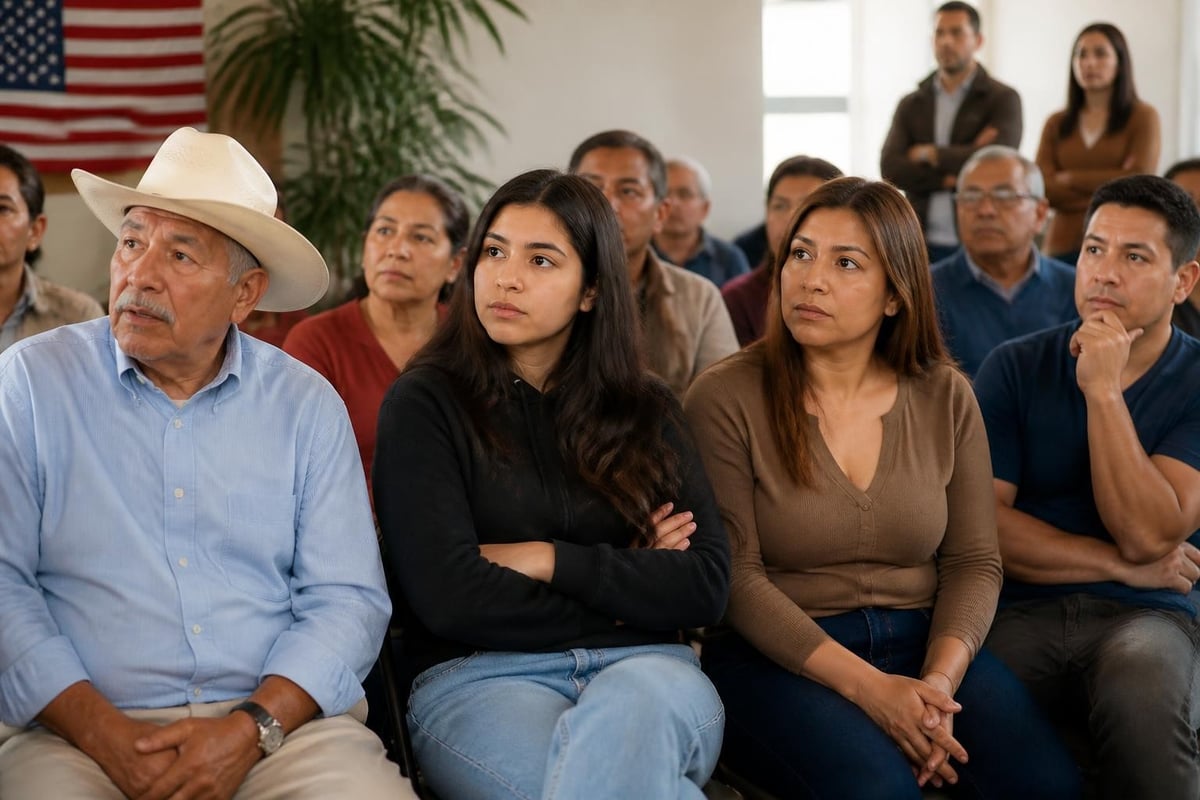
The 2024 election highlighted growing gender divides within Hispanic voting patterns that persist into 2026 analysis. Hispanic women and men increasingly diverge on candidate preferences, with gaps sometimes reaching 15-20 percentage points in presidential contests.
Male Voter Shift Patterns
Hispanic male voters demonstrated notable movement in recent election cycles, with younger Latino men in particular showing increased openness to Republican candidates. The detailed analysis from Brookings identified several factors driving this shift, including economic messaging that emphasized masculine provider roles, concerns about cultural progressivism, and targeted outreach through sports media and podcasting platforms.
Factors influencing Hispanic male vote choice:
- Economic opportunity and entrepreneurship messaging
- Masculine identity appeals and traditional values
- Criminal justice and public safety concerns
- Media consumption through male-dominated platforms
- Generational rejection of assumed partisan loyalty
Female Voter Priorities
Hispanic women maintain stronger Democratic preferences on average, driven largely by healthcare access, reproductive rights, education quality, and social safety net programs. Single Hispanic mothers particularly prioritize childcare affordability, healthcare coverage, and education funding. The intersection of gender and economic class creates distinct political priorities that candidates increasingly recognize and target.
Turnout Challenges and Civic Engagement Patterns
Despite rapid growth in eligible voter numbers, Hispanic turnout rates consistently lag behind Black and white voting populations. In 2024, Hispanic turnout reached approximately 54% of eligible voters compared to 65% for white voters and 63% for Black voters, according to U.S. Census Bureau voting data.
Barriers to Participation
Multiple factors suppress Hispanic turnout rates beyond simple disengagement. Younger average age means more first-time voters navigating registration and voting processes. Lower rates of home ownership correlate with residential mobility that complicates voter registration maintenance. Some states with large Hispanic populations implement voting laws that disproportionately affect younger, more mobile populations.
| Turnout Barrier | Impact Level | Primary Affected Groups |
|---|---|---|
| Registration requirements | High | Young voters, mobile populations |
| Voter ID laws | Medium | Low-income, urban voters |
| Limited polling locations | Medium-High | Rural and urban Hispanic communities |
| Language access | Low-Medium | Spanish-dominant older voters |
| Work schedule conflicts | High | Service sector workers |
Organizations like the NALEO Educational Fund work specifically to address these barriers through voter registration drives, education campaigns, and advocacy for improved ballot access in Hispanic communities. Their state-by-state data reveals that targeted civic engagement programs can substantially increase turnout when implemented consistently.
Party Identification and the Myth of Monolithic Voting
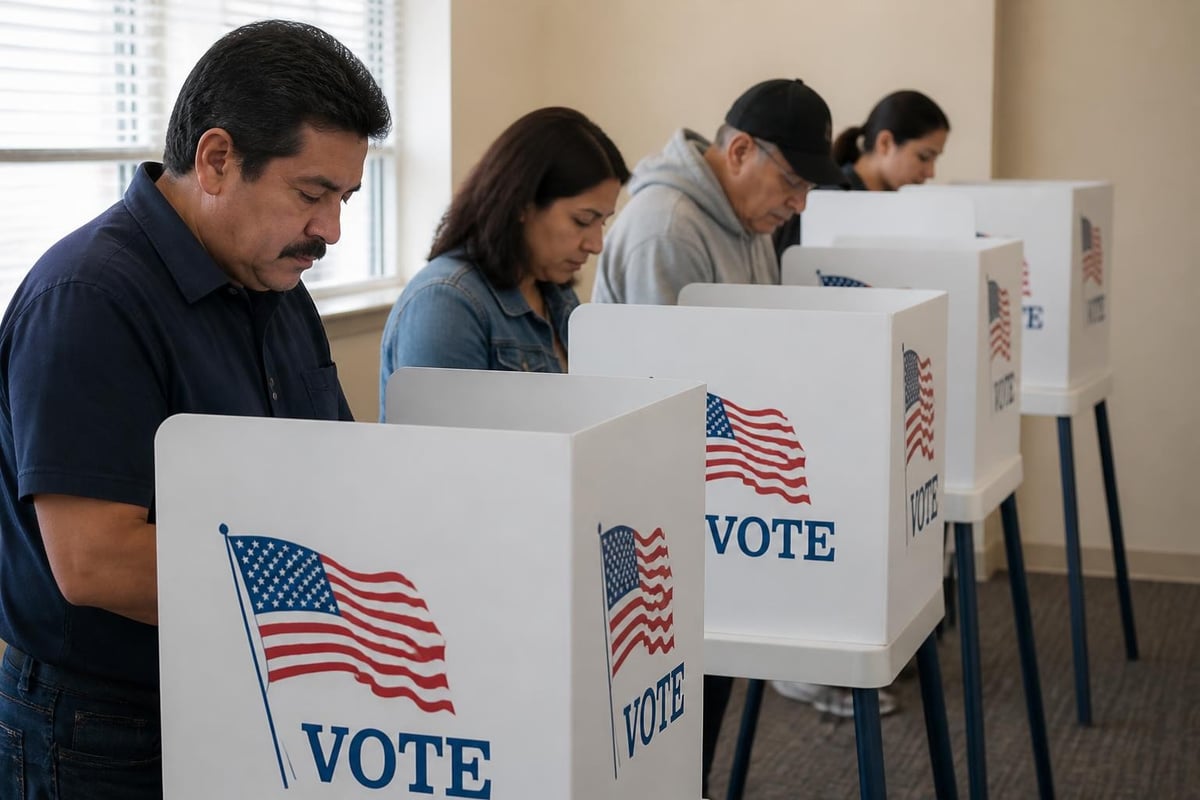
Hispanic voting trends in america defy simple partisan categorization. While Hispanic voters have leaned Democratic in recent presidential elections, the margin varies substantially by national origin, religion, geography, and generation. Cuban Americans, Venezuelan Americans, and Colombian Americans often show Republican preferences, while Mexican Americans, Puerto Ricans, and Dominican Americans typically favor Democratic candidates.
The Decline of Automatic Democratic Loyalty
Recent election cycles demonstrated erosion in automatic Democratic party loyalty among Hispanic voters, particularly among younger men and Catholic voters. Republicans gained ground in heavily Hispanic counties along the Texas-Mexico border in 2020 and 2024, with some counties flipping partisan control for the first time in generations. These shifts reflect successful Republican economic messaging, cultural conservatism appeals, and Democratic complacency regarding Hispanic outreach.
The AP VoteCast methodology and findings provide crucial insight into how major surveys measure Hispanic vote choice across different states and demographic subgroups, revealing that national percentages often mask significant regional and demographic variation.
Religious Affiliation and Social Conservatism
Religion plays a substantial role in shaping hispanic voting trends in america, though less uniformly than often assumed. While approximately 47% of Hispanic adults identify as Catholic, growing Protestant evangelical populations (approximately 24% of Hispanic adults) and increasing religious unaffiliation (approximately 23%) create diverse moral and political frameworks.
Catholic and Evangelical Political Behavior
Hispanic Catholics demonstrate considerable political diversity, with younger Catholics showing more progressive social views while older Catholics maintain traditional positions on abortion, marriage, and gender issues. Hispanic evangelicals, particularly Pentecostals and non-denominational Christians, tend toward social conservatism that sometimes aligns with Republican positions despite economic interests that might favor Democratic policies.
Religious service attendance correlates strongly with voting patterns. Hispanic voters attending religious services weekly or more show substantially higher Republican vote shares compared to non-attending Hispanic voters, even controlling for age and income. This attendance gap creates opportunities for faith-based political organizing in both partisan directions.
Educational Attainment and Class Mobility
Educational polarization increasingly shapes Hispanic political behavior similarly to broader American patterns. College-educated Hispanic voters show markedly different preferences than those with high school education or less, though the gap remains smaller than among white voters.
Education-based political divergence:
- College graduates: Higher turnout, more progressive on social issues, mixed on economics
- Some college: Competitive partisan territory, economically focused
- High school diploma: Lower turnout, economically conservative, socially mixed
- Less than high school: Lowest turnout, pro-safety net, immigration-affected
The rise in Hispanic college completion rates, reaching approximately 29% for 25-29 year-olds in 2024, suggests continued evolution in Hispanic political coalitions. As more Hispanic voters achieve higher education credentials, their issue priorities, media consumption, and partisan preferences shift in ways that benefit Democrats on social issues while potentially creating new Republican opportunities on economic concerns.
Media Ecosystem and Information Consumption
Understanding hispanic voting trends in america requires examining how Hispanic voters consume political information across fragmented media landscapes. Traditional Spanish-language television (Univision, Telemundo) competes with digital platforms, English-language mainstream media, Spanish-language streaming services, and social media for attention and influence.
Digital Media and Generational Divides
Younger Hispanic voters overwhelmingly consume news and political information through social media platforms, particularly TikTok, Instagram, and YouTube, creating vulnerability to both misinformation and sophisticated micro-targeting. Older Hispanic voters maintain stronger connections to traditional television news, both Spanish and English-language, creating generational information silos that complicate unified political messaging.
The Hispanic Federation’s voter survey work documents how media consumption patterns correlate with policy priorities and candidate preferences, showing that voters relying primarily on social media demonstrate different issue salience rankings than those consuming traditional news sources.
Policy Priorities Beyond Immigration and Economy
While economics and immigration dominate discussion of Hispanic voter concerns, additional policy areas significantly influence Hispanic vote choice and merit attention from campaigns and political analysts.
Education Policy Salience
Hispanic families demonstrate particularly strong interest in education policy, from K-12 school quality to college affordability. With Hispanic students comprising approximately 28% of public school enrollment nationally and higher percentages in many states, education funding, school choice, and college access programs directly affect most Hispanic families. Charter school expansion and school choice programs show split support among Hispanic voters, with some viewing them as escape routes from underperforming schools while others worry about public school defunding.
Healthcare Access and Costs
Hispanic Americans experience higher uninsured rates than white or Black Americans, making healthcare access and affordability particularly salient. The Affordable Care Act's expansion reduced uninsured rates among Hispanics substantially, creating strong support for healthcare access programs. However, healthcare system navigation complexity and limited Spanish-language resources create ongoing frustration that shapes voter perceptions of government effectiveness.
Criminal Justice and Public Safety
Public safety concerns resonate strongly in Hispanic communities, particularly urban neighborhoods experiencing higher crime rates. "Defund the police" messaging showed particularly poor performance among Hispanic voters in 2020 and 2024, who generally favor police presence while simultaneously supporting criminal justice reforms addressing excessive force and sentencing disparities. This nuanced position creates opportunities for candidates emphasizing both public safety and police accountability.
Future Trajectory and Emerging Patterns
As we analyze hispanic voting trends in america heading toward future presidential cycles, several patterns appear likely to intensify. Generational replacement will continue increasing the Hispanic eligible voter share, potentially reaching 17-18% of all eligible voters by 2028. This growth concentrates in states already trending competitive, accelerating demographic-driven political realignment.
Increasing Political Sophistication
Third and fourth-generation Hispanic voters demonstrate political engagement patterns increasingly similar to the broader electorate, with comparable turnout rates and similar responsiveness to economic conditions, candidate quality, and campaign intensity. This normalization suggests declining effectiveness of identity-based appeals and increasing importance of substantive policy positions.
Emerging trends shaping future cycles:
- Continued gender polarization within Hispanic electorate
- Growing educational divide mirroring broader American patterns
- Regional divergence between border, urban, and suburban Hispanic voters
- Generational replacement accelerating secular and progressive shifts
- Economic volatility creating partisan fluidity among working-class Hispanic voters
Organizations like the MIT Election Data and Science Lab continue developing more sophisticated analytical approaches to understanding Hispanic political behavior, moving beyond simple demographic categorization toward models incorporating geography, religion, education, gender, age, and national origin simultaneously.
Implications for Presidential Campaign Strategy
Presidential campaigns increasingly recognize that Hispanic voters cannot be reached through monolithic strategies. Successful Hispanic outreach in recent cycles combined Spanish and English messaging, addressed economic concerns authentically, acknowledged cultural diversity within Hispanic communities, and maintained year-round rather than election-season-only engagement.
Targeted Messaging Approaches
Effective Hispanic voter mobilization requires recognizing subgroup differences. Florida campaigns emphasizing anti-socialism messaging that resonates with Cuban and Venezuelan voters may alienate Mexican American voters in Arizona or Texas. Border security emphasis that appeals to Texas Hispanic voters may seem irrelevant or offensive to Puerto Rican voters in Pennsylvania. This complexity demands sophisticated targeting and substantial resource investment that many campaigns historically underallocated.
Early voting promotion shows particular effectiveness in Hispanic communities, where flexible voting schedules help overcome work schedule conflicts common in service sector employment. Bilingual poll workers and Spanish-language voting materials increase comfort and participation among Spanish-dominant voters, though younger Hispanic voters rarely require such accommodations.
Hispanic voting trends in america demonstrate increasing complexity and political sophistication that demand serious analytical attention from anyone following presidential politics. As this crucial demographic continues expanding and evolving, staying informed through reliable, non-partisan analysis becomes essential. U.S. Presidential Report provides comprehensive coverage of how demographic shifts, including Hispanic voter behavior, shape presidential elections and governance, offering the balanced, data-driven perspective necessary to understand America's changing political landscape. Whether tracking campaign strategies, policy debates, or electoral outcomes, our coverage keeps you informed about the forces shaping U.S. presidential politics.