The American electorate continues to evolve in complex ways, and understanding black voter trends in 2026 requires examining multiple intersecting factors that influence turnout, party preference, and issue priorities. Following the historic 2024 presidential election, which saw notable shifts in racial voting coalitions, political analysts and campaign strategists are closely monitoring how Black Americans engage with the political process during this midterm election cycle. This demographic group, which comprises roughly 13 percent of eligible voters nationwide, has historically demonstrated strong electoral cohesion while also showing increasing heterogeneity in political attitudes and candidate preferences.
Electoral Participation and Turnout Patterns
Black voter turnout has fluctuated significantly over the past decade, shaped by candidate enthusiasm, voting access laws, and grassroots mobilization efforts. In 2026, preliminary data suggests that participation rates vary considerably across states and localities, influenced by both administrative barriers and community organizing.
The 2024 election revealed important baseline trends that continue to shape black voter trends in 2026. Research from Pew shows that Trump’s 2024 victory included gains among Black voters, particularly among younger Black men, signaling potential erosion of traditional Democratic dominance within certain segments of the community. This shift has prompted both major parties to recalibrate their outreach strategies for 2026 congressional and gubernatorial races.
Regional Disparities in Access and Engagement
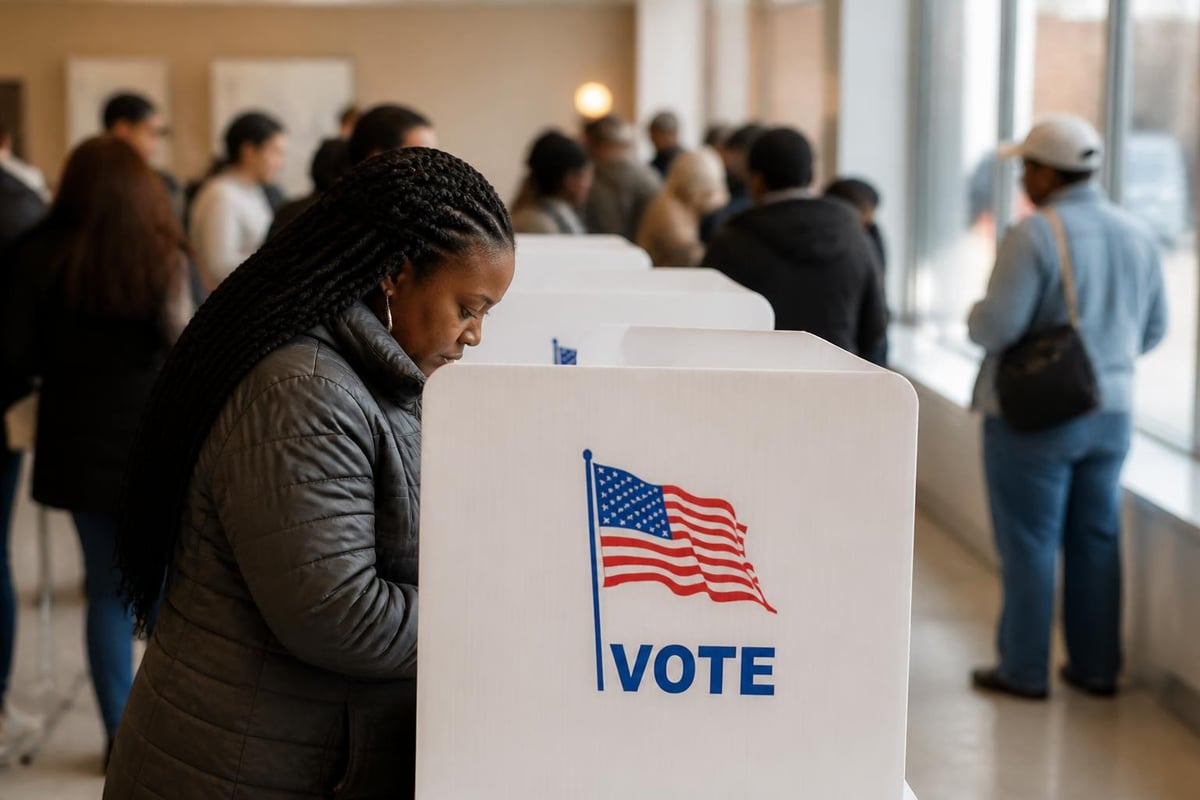
Turnout gaps between white and Black voters persist in several states, often correlated with restrictive voting legislation. Alabama’s racial turnout gap reached a 16-year high in 2024, a troubling indicator that administrative changes and policy shifts can suppress participation even when enthusiasm remains high.
The following factors contribute to regional variations in Black voter participation:
- Early voting availability and weekend polling hours in urban centers
- Voter ID requirements that disproportionately affect communities without easy access to documentation
- Polling place closures in predominantly Black neighborhoods
- Registration purges and maintenance procedures that remove eligible voters
- Transportation infrastructure connecting residential areas to voting locations
Southern states with large Black populations show the most pronounced access challenges, while states with automatic voter registration and expanded mail voting demonstrate higher and more equitable participation rates.
Shifting Party Loyalty and Coalition Dynamics
One of the most significant aspects of black voter trends in 2026 involves changing attitudes toward the two major political parties. While Black voters remain the most reliably Democratic demographic group, recent elections show subtle but measurable movement that merits attention.
Analysis from the Cooperative Election Study highlights how Trump built a coalition in 2024 that exploited fractures in Democratic support, including among specific segments of the Black electorate. These gains, though modest in percentage terms, proved consequential in tight swing states.
Generational and Gender Divides
The Black electorate is not monolithic, and internal diversity has become more pronounced in recent cycles:
| Demographic Segment | Primary Concerns | Party Lean Shift |
|---|---|---|
| Black women 45+ | Healthcare access, Social Security | Strongly Democratic (90%+) |
| Black men under 40 | Economic opportunity, criminal justice reform | Democratic (70-75%) |
| College-educated Black voters | Climate policy, reproductive rights | Democratic (85-90%) |
| Working-class Black men | Jobs, inflation, public safety | Democratic (65-70%) |
This table illustrates that while Democrats maintain majority support across all segments, the margins vary significantly. Younger Black men in particular show greater openness to Republican messaging on economic issues, though social policy positions often pull them back toward Democratic candidates.
Issue Priorities Driving Electoral Decisions
Understanding black voter trends in 2026 requires examining which policy areas most strongly influence vote choice. Pew’s February 2026 demographic brief provides context on the social and economic conditions facing Black Americans, which directly shape political priorities.
Economic Concerns Take Center Stage
Inflation, wage growth, and wealth-building opportunities rank among the top concerns for Black voters heading into the 2026 midterms. Many community leaders express frustration with abstract policy discussions that don't translate into tangible household benefits.
The cost of housing, childcare, and healthcare consume disproportionate shares of income for Black families, making kitchen-table economics central to candidate evaluations. Politicians who articulate concrete plans for reducing these burdens gain traction, regardless of party label.
Criminal Justice and Public Safety Balance
Black voters navigate complex attitudes toward criminal justice reform and public safety. While overwhelming majorities support police accountability measures and sentencing reform, there's also strong demand for effective responses to violent crime affecting Black neighborhoods.
Successful candidates in 2026 are those who avoid simplistic "tough on crime" versus "defund the police" binaries, instead proposing comprehensive approaches that address root causes while ensuring community safety. This nuanced position reflects how Black voters use group consensus and information networks to evaluate candidates, seeking alignment with community values rather than partisan talking points.

Media Influence and Information Ecosystems
The channels through which Black voters receive political information have diversified considerably, moving beyond traditional outlets to include social media platforms, podcasts, and community-specific digital media.
Trusted messengers matter significantly in shaping candidate perceptions. Endorsements from Black religious leaders, local elected officials, and community organizers carry substantial weight. National political figures can amplify messages, but local credibility remains paramount.
Campaigns that invest in authentic community engagement rather than parachuting in during election season see better results. This includes:
- Year-round presence in Black neighborhoods and institutions
- Employment of Black staff in senior campaign positions
- Advertising in Black-owned media and on platforms with high Black viewership
- Partnership with local organizations on non-electoral community service
- Transparent communication about policy positions and past records
The most effective campaigns recognize that Black voters conduct thorough candidate vetting, cross-referencing information from multiple sources before making decisions.
Voting Rights and Legal Frameworks
Legislative changes at the state level continue to shape black voter trends in 2026, with some states expanding access while others impose new restrictions. Research documenting new state voting laws reveals how these policy decisions create vastly different electoral landscapes across jurisdictions.
Federal and State Policy Tensions
The absence of comprehensive federal voting rights legislation leaves states with wide latitude to set election rules. This patchwork creates confusion and unequal access, with Black voters in restrictive states facing obstacles that their counterparts in other regions don't encounter.
Recent scholarship on statutory voting rights protections suggests paths forward for establishing baseline standards while respecting federalism. Advocates argue that turnout disparities documented in places like Alabama demonstrate the urgent need for intervention.
Litigation continues in multiple states over provisions including:
- Voter ID requirements and acceptable forms of identification
- Proof of citizenship mandates for registration
- Restrictions on mail voting and ballot drop boxes
- Limits on third-party registration drives
- Purge protocols and list maintenance procedures
These legal battles directly affect how many Black citizens can exercise their franchise in 2026 and beyond.
Geographic Concentration and Electoral Impact
Black voters are not evenly distributed across the country, and their geographic concentration amplifies their influence in certain states while limiting it in others. Understanding this distribution is crucial for analyzing black voter trends in 2026 and their impact on national politics.
Swing State Dynamics
In battleground states like Georgia, Pennsylvania, Michigan, North Carolina, and Nevada, Black voters often provide the margin of victory in close elections. High turnout and strong Democratic performance among Black voters in metropolitan areas like Atlanta, Philadelphia, Detroit, and Charlotte can offset Republican advantages in rural regions.
The following swing states have Black populations that significantly influence outcomes:
| State | Black % of Electorate | Recent Trend | 2026 Key Races |
|---|---|---|---|
| Georgia | 30% | Competitive | Governor, Senate |
| North Carolina | 22% | Lean Republican | Senate, House |
| Michigan | 14% | Lean Democratic | Governor |
| Pennsylvania | 11% | Competitive | Governor, Senate |
| Nevada | 10% | Competitive | Governor, Senate |
Candidates in these states cannot win without either strong Black voter support or historically high white rural turnout to compensate for deficits in urban areas.
Youth Engagement and First-Time Voters
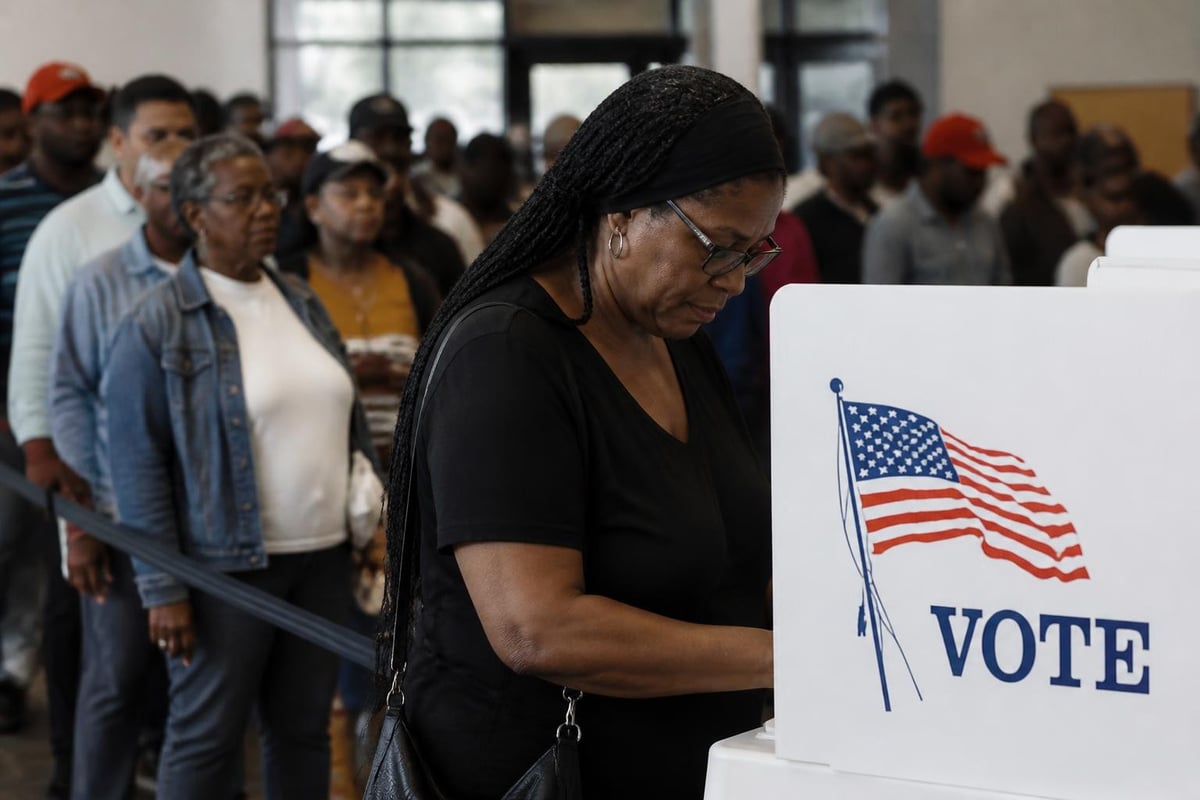
Young Black voters represent both opportunity and challenge for political campaigns. This cohort demonstrates high levels of political awareness and activism around issues like climate change, student debt, and social justice, yet turnout among voters under 30 consistently lags older age groups.
Reaching younger Black voters requires meeting them where they are, both physically and digitally. Traditional campaign methods like door-knocking remain effective when executed authentically, but digital engagement through Instagram, TikTok, and YouTube is increasingly essential.
Issues that resonate particularly strongly with younger Black voters include:
- Student loan forgiveness and college affordability
- Climate justice and environmental racism
- Criminal justice reform and police accountability
- Reproductive rights and healthcare access
- Economic mobility and entrepreneurship support
Candidates who connect these issues to personal narratives and community impact see stronger engagement from this demographic segment. Abstract policy discussions without clear benefits fail to motivate participation.
The Role of Black Women in Electoral Politics
Black women remain the most politically engaged and reliably Democratic segment of the Black electorate. They vote at higher rates than Black men and demonstrate strong ideological consistency across election cycles. This pattern holds true in black voter trends in 2026, where preliminary turnout data shows Black women again outpacing Black men in participation.
Leadership and Organizational Strength
Black women lead many of the grassroots organizations driving voter registration, education, and turnout efforts in Black communities. From neighborhood-level organizing to statewide mobilization campaigns, Black women provide the infrastructure that enables high participation.
Political parties and candidates who fail to recognize and support this leadership infrastructure struggle to achieve optimal turnout. Conversely, campaigns that invest resources in Black women-led organizations and elevate Black women's voices in messaging see measurably better results.
The influence extends beyond mobilization to candidate preference. Post-election analysis of 2024 voting patterns confirms that Black women's issue priorities and candidate evaluations often set the tone for broader community consensus.
Economic Conditions and Vote Choice
Material conditions shape political behavior, and the economic circumstances facing Black households in 2026 directly influence electoral decisions. With inflation moderating but still elevated compared to pre-pandemic levels, purchasing power remains a central concern.
Unemployment rates, wage growth, and wealth accumulation all factor into how Black voters assess incumbent performance and opposition promises. When economic conditions improve tangibly in Black communities, incumbents benefit. When progress stalls or reverses, voters become open to alternatives.
The wealth gap between Black and white households persists despite periods of economic growth. This structural inequality means that macroeconomic indicators like GDP growth or stock market performance often feel disconnected from lived experience in Black communities, where homeownership rates, business ownership, and retirement savings lag national averages.
Candidate Characteristics and Representation
Descriptive representation-candidates who share racial or ethnic identity with constituents-influences Black voter enthusiasm and turnout. The historic nature of Barack Obama's candidacy in 2008 and 2012 drove record participation, and representation continues to matter in 2026 races at all levels.
However, racial identity alone doesn't guarantee support. Black voters conduct substantive evaluations of candidates' policy positions, track records, and authenticity. Black candidates who are perceived as out of touch with community concerns or who take Black support for granted face pushback.
For candidates of all racial backgrounds, demonstrating genuine understanding of Black community priorities and maintaining authentic relationships matters more than symbolic gestures during campaign season. Resources like presidential polling data help track how different candidate profiles perform among various demographic segments.
Looking Ahead to Future Election Cycles
While this analysis focuses on black voter trends in 2026, the patterns emerging this year will shape electoral dynamics for years to come. The combination of generational replacement, changing information ecosystems, evolving issue priorities, and shifting party strategies creates a dynamic rather than static political landscape.
Both major parties face pressure to adapt their approaches. Democrats cannot take Black support for granted while Republicans see opportunities to make inroads with targeted messaging on economic issues and school choice. The party that better addresses the concrete needs of Black families while respecting the community's political sophistication will be rewarded at the ballot box.
For comprehensive analysis of how these trends affect presidential politics and governance, readers can explore U.S. Presidential Report’s extensive coverage of electoral dynamics and policy debates shaping American democracy.
The data emerging from 2026 confirms that black voter trends in 2026 reflect a community with sophisticated political priorities navigating complex choices in a changing electoral landscape. From turnout barriers to shifting party dynamics and issue-driven decision-making, these patterns will continue shaping American politics for years to come. For non-partisan, comprehensive coverage of how presidential leadership and policy affect all Americans, visit U.S. Presidential Report for daily updates on elections, governance, and the political forces shaping our nation's future.