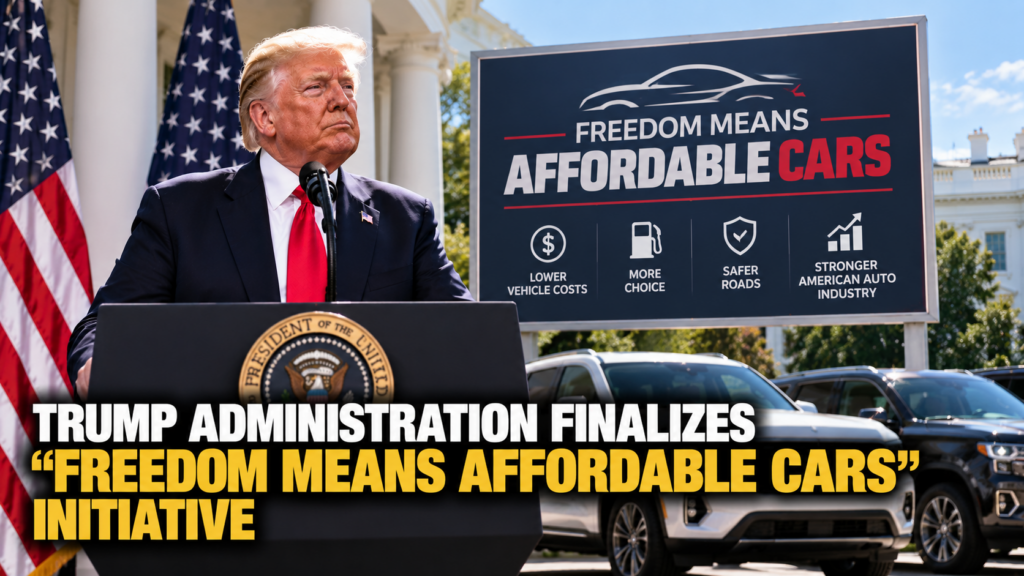
The Trump administration has finalized the Freedom Means Affordable Cars initiative, resetting federal fuel-economy standards for passenger cars and light trucks in a major change to the U.S. vehicle regulatory framework.
According to a report by U.S. Department of Transportation, Transportation Secretary Sean P. Duffy released the final rule on September 28, 2026. The department says the changes will give automakers greater flexibility, reduce vehicle costs and improve vehicle safety.
What Happened
The final Freedom Means Affordable Cars rule resets the National Highway Traffic Safety Administration’s (NHTSA) Corporate Average Fuel Economy (CAFE) standards for passenger cars and light trucks covering model years 2022 through 2031.
The Transportation Department estimates that the new rules will reduce the average cost of a new vehicle by $1,300 for American families and save Americans $138 billion over the next five years.
NHTSA also estimates that the changes could prevent more than 300,000 serious injuries and save approximately 1,900 lives by encouraging consumers to purchase newer vehicles.
The department has described the initiative as one of the largest deregulatory actions of President Donald Trump’s second administration.
Key Changes to Fuel Economy Standards
The new Freedom Means Affordable Cars framework changes how automakers will meet federal fuel-economy requirements.
NHTSA estimates that the standards will produce a fleet-average fuel economy of 34.9 miles per gallon by model year 2031, compared with 30.1 miles per gallon for model year 2024.
The department also projects that annual oil consumption in 2050 will be approximately 1.3 billion barrels lower than annual consumption in 2024.
The rule includes changes to vehicle classification and CAFE credit trading.
Vehicle Classification Changes
Beginning with model year 2030, NHTSA will change vehicle classification criteria to better reflect a vehicle’s intended use.
The agency says the change could shift the current fleet mix from approximately 70% light trucks and 30% passenger vehicles to roughly 70% passenger cars and 30% light trucks.
According to the Transportation Department, the change is intended to reduce incentives for manufacturers to modify vehicle designs or add equipment primarily to qualify for light-truck classifications.
The department also says the revised system could increase the availability of smaller vehicles, including hatchbacks, wagons and other vehicles with smaller footprints.
CAFE Credit Trading Ends
NHTSA will also eliminate the CAFE credit trading program beginning with model year 2028.
The administration says ending the program will create a more uniform system for automakers and encourage manufacturers to spread fuel-saving technologies across their vehicle fleets.
Administration’s Position on EV Requirements
The Trump administration argues that the previous Biden-era fuel-economy standards effectively created what it describes as a “backdoor” electric vehicle mandate.
The Transportation Department says those standards required automakers to make substantial investments in electric vehicle production and contributed to higher vehicle costs.
Those statements represent the administration’s characterization of the previous rules. Independent reporting has described the new measure as a rollback of fuel-economy requirements that had been intended to reduce fuel consumption and emissions and encourage the transition toward electric vehicles.
Transportation Secretary Sean P. Duffy said the administration’s new standards are intended to give automakers more flexibility while making vehicles more affordable for consumers.
NHTSA Administrator Jonathan Morrison similarly said the rule seeks to balance vehicle affordability, energy conservation and roadway safety.
Economic and Automotive Impact
The Freedom Means Affordable Cars initiative could affect both vehicle pricing and the types of vehicles automakers choose to produce.
The Transportation Department expects lower regulatory costs to provide manufacturers with more flexibility in responding to consumer demand.
The agency also argues that lower vehicle prices could make newer vehicles more accessible to American families. Its safety argument is based on the premise that newer vehicles generally incorporate newer safety technologies.
The broader impact will depend on how automakers respond to the revised requirements and how the changes affect vehicle prices, production decisions and consumer demand.
What Happens Next
The final rule establishes CAFE standards for passenger cars and light trucks covering model years 2022 through 2031.
Several major changes will take effect on different timelines. The elimination of CAFE credit trading begins with model year 2028, while the revised vehicle-classification rules begin with model year 2030.
The finalization of Freedom Means Affordable Cars marks a significant shift in federal vehicle regulation, with the administration emphasizing affordability, manufacturer flexibility and consumer choice while environmental groups and other critics have raised concerns about the effects of weaker fuel-economy requirements.
Related Reading
- Trump Announces All 50 States Joining Medicaid Drug Pricing Model
- Trump Orders Changes to Federal Chesapeake Bay Water Strategy
It is a Trump administration initiative that resets NHTSA fuel-economy standards for passenger cars and light trucks for model years 2022 through 2031.
The Transportation Department estimates that the rule could reduce the average cost of a new vehicle by $1,300 and save Americans $138 billion over five years.