The integrity of American democracy rests fundamentally on the security of its electoral process. As the 2026 midterm elections approach, election security measures in america have evolved into a sophisticated network of technological safeguards, institutional protocols, and collaborative frameworks designed to protect every stage of the voting process. From voter registration databases to ballot tabulation systems, modern election infrastructure incorporates multiple layers of protection developed through lessons learned from past vulnerabilities and ongoing threat assessments. Understanding these comprehensive security measures provides essential context for evaluating the reliability and trustworthiness of American electoral outcomes.
Federal Framework for Election Security
The United States employs a decentralized election system where states and localities administer elections while federal agencies provide coordination, resources, and expertise. This distributed model creates both challenges and strengths in implementing election security measures in america.
The Cybersecurity and Infrastructure Security Agency (CISA), established within the Department of Homeland Security, serves as the primary federal coordinator for election security. CISA provides election security resources and guidance to state and local officials, facilitating information sharing about emerging threats and best practices. The agency's role expanded significantly following the 2017 designation of election infrastructure as critical infrastructure, enabling enhanced federal support without compromising state sovereignty over election administration.
Key Federal Agencies and Their Roles
Multiple federal entities contribute specialized expertise to election security:
- CISA: Coordinates cybersecurity assessments, provides technical assistance, and manages threat intelligence sharing
- FBI: Investigates election-related crimes, foreign interference attempts, and coordinates counterintelligence operations
- Election Assistance Commission (EAC): Develops voluntary voting system guidelines and certifies voting equipment
- National Institute of Standards and Technology (NIST): Establishes technical standards for voting systems and cybersecurity protocols
The EAC maintains comprehensive election security preparedness resources that help election officials implement consistent security standards across jurisdictions. These resources include checklists, training materials, and collaborative frameworks developed in partnership with CISA and state officials.

Cybersecurity Protections for Voting Systems
Modern election security measures in america prioritize protecting voting systems from cyber threats through technical safeguards, rigorous testing, and continuous monitoring. These protections address vulnerabilities across the entire technology stack used in election administration.
Voting Equipment Security Standards
The National Institute of Standards and Technology develops the Voluntary Voting System Guidelines that establish baseline security, accessibility, and reliability standards for voting equipment. While voluntary, most states require voting systems to meet or exceed these guidelines before certification for use.
Current VVSG standards emphasize:
- Software independence: Systems designed so undetected software changes cannot cause undetectable outcome changes
- Audit capabilities: Equipment that produces voter-verifiable paper records enabling post-election verification
- Cybersecurity resilience: Protection against malware, unauthorized access, and data manipulation
- Physical security: Tamper-evident seals, access controls, and chain-of-custody procedures
| Security Layer | Implementation | Purpose |
|---|---|---|
| Paper backups | Voter-verified paper audit trails | Enable manual recounts independent of technology |
| Encryption | End-to-end data encryption | Protect transmission of results and voter data |
| Access controls | Multi-factor authentication, role-based permissions | Limit system access to authorized personnel only |
| Network segmentation | Air-gapped or isolated election networks | Prevent external network intrusions |
Verified Voting maintains detailed information about voting equipment security across different voting technologies, helping jurisdictions make informed procurement decisions based on security implications.
Pre-Election Testing and Certification
Before any election, voting equipment undergoes extensive testing protocols. Logic and accuracy testing verifies that machines correctly record and tabulate votes. This testing occurs at multiple levels, from manufacturer certification through state acceptance testing to pre-election logic testing in each jurisdiction.
Election officials conduct parallel monitoring systems during elections, using statistical sampling and test ballots marked by poll workers to verify accurate counting throughout election day. These redundant verification methods create multiple opportunities to detect anomalies or malfunctions.
Voter Registration Database Security
Protecting voter registration databases represents a critical component of election security measures in america, as these systems determine ballot access and prevent duplicate voting. Modern registration systems employ sophisticated security protocols while maintaining accessibility for eligible voters.
State voter registration databases implement multiple security layers:
- Access authentication: Multi-factor authentication requirements for all database users
- Activity logging: Comprehensive audit trails tracking every database query and modification
- Regular backups: Encrypted backups stored in geographically distributed locations
- Intrusion detection: Real-time monitoring systems identifying suspicious access patterns
- Data validation: Cross-referencing with other government databases to verify information accuracy
The Electronic Registration Information Center (ERIC) enables participating states to share registration data securely, identifying voters registered in multiple states and updating records when voters move. This interstate collaboration improves registration accuracy while maintaining individual privacy protections through data-use agreements and security protocols.
Physical Security Measures
While cybersecurity receives significant attention, election security measures in america also incorporate extensive physical security protocols. These tangible safeguards protect ballots, equipment, and facilities throughout the election cycle.
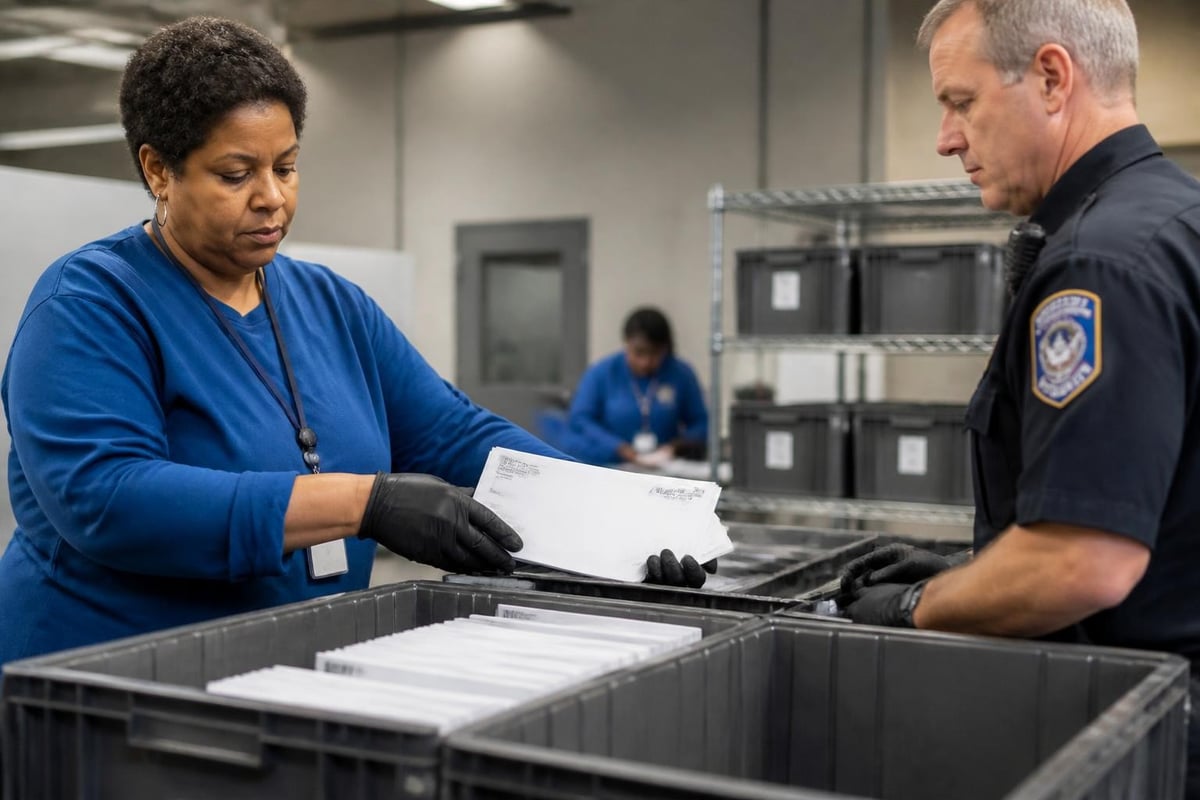
Physical security encompasses:
- Facility access controls: Limited entry to election offices and storage areas through keycard systems, security cameras, and visitor logs
- Ballot security: Tamper-evident seals, locked containers, and two-person integrity teams for ballot handling
- Equipment security: Locked storage for voting machines with serial number tracking and regular inventory verification
- Poll site security: Law enforcement coordination, observer credentialing systems, and emergency response protocols
Many jurisdictions employ bipartisan teams for sensitive tasks like ballot transportation and tabulation room access, ensuring no single party controls security-critical processes. This bipartisan oversight model builds public confidence while creating accountability through mutual monitoring.
Post-Election Audits and Verification
Perhaps the most robust election security measures in america involve post-election verification processes that independently confirm results accuracy. These audits provide mathematical certainty that reported outcomes match actual voter intent as recorded on paper ballots.
Risk-Limiting Audits
Risk-limiting audits represent the gold standard in post-election verification. These statistically rigorous procedures manually examine randomly selected paper ballots to confirm electronic tabulation accuracy within defined confidence levels.
The process works through these steps:
- Establish risk limit (typically 5-10%) representing maximum acceptable probability of certifying an incorrect outcome
- Randomly select ballots for manual review using secure random number generation
- Hand count selected ballots and compare to machine-reported results
- Continue sampling until statistical confidence threshold is reached or full hand count is triggered
As of 2026, thirty-eight states have implemented some form of post-election audit, with twenty-four specifically conducting risk-limiting audits for statewide contests. These audits have never revealed outcome-changing discrepancies in properly administered elections, reinforcing confidence in tabulation accuracy.
Continuous Process Improvement
Election security remains dynamic, with threats and countermeasures evolving continuously. The National Association of Secretaries of State facilitates ongoing collaboration among chief election officials, sharing lessons learned and emerging best practices across states.
Regular tabletop exercises simulate various threat scenarios, from cyberattacks to natural disasters, helping election officials prepare coordinated responses. These exercises involve federal, state, and local partners, building relationships and clarifying responsibilities before actual incidents occur.
Transparency and Public Confidence
Effective election security measures in america must not only protect against threats but also maintain public visibility and understanding. Transparency initiatives help voters understand security protocols without compromising operational security.
Many jurisdictions now offer public observation opportunities throughout the election process:
- Pre-election logic and accuracy testing open to observers
- Poll watcher access during voting and tabulation
- Live-streamed ballot processing in central counting facilities
- Public post-election audit observations
Election officials balance transparency with security by publishing detailed process information while protecting specific technical vulnerabilities. Security protocols are documented and available for public review, but implementation details that could enable exploitation remain confidential.
| Transparency Measure | Public Benefit | Security Consideration |
|---|---|---|
| Published procedures | Enables informed oversight | Generic enough to avoid exploitation guidance |
| Observer access | Builds confidence through direct witnessing | Managed to prevent interference with operations |
| Audit live-streaming | Remote public verification | Camera angles avoid revealing security details |
| Incident reporting | Demonstrates responsive problem-solving | Delayed disclosure until vulnerabilities patched |
The U.S. Presidential Report provides non-partisan coverage of election administration topics, helping citizens understand the security measures protecting their votes without political spin influencing the narrative.
Training and Workforce Development
Human expertise remains fundamental to implementing election security measures in america effectively. Even the most sophisticated technology requires skilled personnel to deploy, monitor, and maintain security protocols.

Professional Development Programs
CISA offers comprehensive training programs for election officials at all levels. These programs cover cybersecurity fundamentals, incident response, risk management, and security communications. Training formats include online modules, regional workshops, and annual national conferences facilitating peer learning.
State election directors increasingly require cybersecurity certifications for IT staff managing election systems. Some jurisdictions partner with universities to develop specialized election technology programs, building a pipeline of professionals with both cybersecurity expertise and election administration knowledge.
Recruiting and Retention Challenges
Election offices face significant workforce challenges that impact security implementation. Many jurisdictions struggle with limited budgets, high turnover, and difficulty competing with private sector salaries for cybersecurity talent. The federal government has increased grant funding to help states address these challenges, but sustainable workforce development remains ongoing work.
Poll worker recruitment presents particular challenges, as these temporary workers require security training despite limited tenure. Effective programs emphasize simple, memorable security protocols that volunteers can implement consistently throughout election day.
State-Level Innovations
While federal frameworks provide coordination, individual states often pioneer innovative election security measures in america that later spread nationally. This laboratories of democracy approach enables experimentation and evidence-based adoption of successful practices.
Several states have implemented noteworthy security enhancements:
- Automatic voter registration: Reduces database manipulation opportunities by limiting manual data entry
- Same-day registration: Shortens window for registration database attacks while improving accessibility
- Blockchain pilots: Limited experiments with distributed ledger technology for specific election functions
- Biometric authentication: Some jurisdictions testing fingerprint or facial recognition for poll worker access
- AI-powered anomaly detection: Machine learning systems identifying unusual patterns in registration or voting data
These innovations undergo careful evaluation balancing security benefits against privacy concerns, implementation costs, and potential accessibility impacts. Political coverage on platforms like U.S. Presidential Report helps inform public understanding of these evolving practices.
Information Security and Disinformation Defense
Beyond protecting technical systems, election security measures in america increasingly address information operations designed to undermine public confidence or influence voter behavior through deception. These efforts complement traditional security measures by protecting the information environment surrounding elections.
Federal and state officials coordinate with social media platforms, news organizations, and civil society groups to identify and counter election-related disinformation. This coordination respects First Amendment protections while enabling rapid response to false claims about voting processes, eligibility requirements, or results.
Key disinformation defense strategies include:
- Prebunking campaigns: Proactive public education about common false narratives before they spread
- Rapid response teams: Monitoring social media and quickly correcting factual errors about election administration
- Trusted information sources: Promoting official election websites and verified sources for voting information
- Media literacy initiatives: Helping voters evaluate information credibility and identify manipulation tactics
Election officials maintain dedicated communications teams prepared to respond quickly to false information that could suppress turnout or create confusion about voting procedures. These teams coordinate messaging across jurisdictions to ensure consistent, accurate information reaches voters through multiple channels.
International Collaboration and Threat Intelligence
Election security measures in america benefit from international cooperation on threat intelligence and best practices. Democratic nations face similar challenges from state-sponsored interference and cybercriminal activity, making information sharing mutually beneficial.
The United States participates in multilateral forums where election security officials exchange threat information and coordinate responses to transnational actors targeting democratic processes. These partnerships enable earlier detection of emerging tactics and broader perspective on effective countermeasures.
Intelligence agencies provide classified threat briefings to election officials with appropriate clearances, ensuring state and local administrators understand specific risks their jurisdictions face. This intelligence flow improved significantly after 2016, with more systematic sharing protocols and expanded security clearance access for election officials.
Understanding election security measures in america reveals a comprehensive, multilayered approach to protecting democratic processes through technology, procedures, and collaboration. These evolving safeguards reflect ongoing commitment to election integrity while adapting to emerging threats. For comprehensive, non-partisan coverage of presidential elections and the security measures protecting them, U.S. Presidential Report provides trusted analysis and updates throughout every election cycle, helping citizens stay informed about the systems safeguarding their fundamental right to vote.