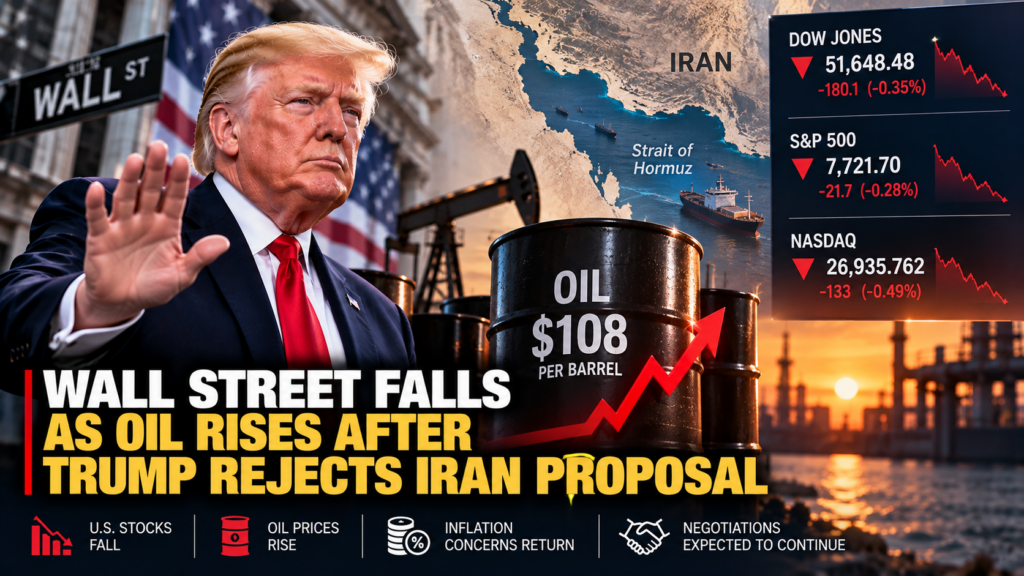
U.S. stocks fell on September 28 as oil prices rose after President Donald Trump rejected an Iranian proposal to end the conflict, reviving inflation concerns and pushing Treasury yields higher. Investors also weighed the possibility of continued negotiations between Washington and Tehran.
According to a report by Reuters, Wall Street’s main indexes declined as markets reacted to renewed uncertainty surrounding the conflict and its potential effect on energy prices.
What Happened
The Dow Jones Industrial Average, S&P 500 and Nasdaq Composite all moved lower on Monday.
At the opening bell, the Dow fell 180.1 points, or 0.35%, to 51,648.48. The S&P 500 declined 21.7 points, or 0.28%, to 7,721.70, while the Nasdaq dropped 133 points, or 0.49%, to 26,935.762.
The market reaction followed Trump’s rejection of an Iranian proposal that sought to reopen the Strait of Hormuz and end fighting.
Oil Prices Rise as Iran Talks Stall
Oil prices became a central market concern as investors assessed the possibility of a prolonged conflict.
Brent crude rose above $108 per barrel during Monday trading after initially gaining more than $4 per barrel. U.S. West Texas Intermediate crude also moved higher.
The Strait of Hormuz is a major route for global energy shipments, making developments around the waterway particularly important for oil markets.
Reuters reported that Brent prices had gained nearly 20% during September and remained substantially above their level before the conflict began.
Inflation Concerns Return
Higher energy prices can add pressure to inflation by increasing costs across transportation, manufacturing and other parts of the economy.
The rise in oil prices also pushed U.S. Treasury yields higher as investors reassessed the outlook for inflation and interest rates. Markets were already focused on whether the Federal Reserve could keep rates elevated for longer if energy costs continue to put pressure on prices.
The combination of higher oil prices and higher yields contributed to the pressure on stocks.
Iran Peace Proposal and Further Talks
Iran presented its proposal during last week’s United Nations General Assembly in New York. The proposal was transmitted to the United States through Qatari mediators and included reopening the Strait of Hormuz as part of efforts to end the conflict.
Trump said Saturday that he had rejected the proposal. However, he told Axios on Sunday that U.S. negotiators were expected to continue talks during the week.
Iranian Foreign Minister Abbas Araqchi has said that Tehran’s conditions for reopening the Strait remain in place and that a negotiated solution is necessary to resolve the deadlock.
Nvidia Limits Some Market Losses
Not every major stock moved lower.
Nvidia shares gained after the chipmaker announced a $150 billion share repurchase authorization, its largest increase in buyback authorization on record. The move helped limit some of the broader market decline.
Other major technology and consumer stocks faced pressure as investors focused on oil prices, Treasury yields and the broader economic implications of the conflict.
What Happens Next
Markets will continue to watch developments in U.S.-Iran negotiations, oil prices and the security of the Strait of Hormuz.
The outcome of further diplomatic talks could affect energy markets and inflation expectations, while continued disruption or uncertainty could keep pressure on crude prices and financial markets.
For investors, the immediate focus remains on whether negotiations can reduce geopolitical risks or whether elevated energy prices continue to influence expectations for inflation and interest rates.
Related Reading
- US and Denmark Reach Greenland Security Deal as Trump Expands Arctic Military Role
- Trump Bans CNN, MS NOW and Politico From White House
U.S. stocks declined after Trump’s rejection of an Iranian peace proposal pushed oil prices higher and revived inflation concerns.
Higher oil prices can increase inflation pressure and influence expectations for interest rates, Treasury yields and economic growth.