Public confidence in the United States Congress remains a critical barometer for American democracy, reflecting citizen satisfaction with their elected representatives. As we navigate through 2026, understanding the state of congressional approval ratings 2026 has become essential for political observers, voters, and policymakers alike. The current landscape reveals a complex picture of partisan divisions, legislative challenges, and evolving public expectations that shape how Americans view their legislative branch. These ratings not only influence electoral outcomes but also provide insights into the broader health of our democratic institutions and the effectiveness of governance in addressing pressing national concerns.
Understanding Congressional Approval Metrics
Congressional approval ratings measure the percentage of Americans who approve of the job Congress is doing as an institution. Unlike individual member approval, which often remains relatively high, institutional approval has historically languished at lower levels. This phenomenon, sometimes called the "Fenno Paradox," highlights the disconnect between how voters view their own representatives versus Congress as a whole.
The measurement of congressional approval ratings involves various polling organizations conducting surveys with statistically representative samples of American adults. These surveys typically ask respondents whether they approve or disapprove of the way Congress is handling its job, with some polls offering additional nuances such as "strongly approve" or "strongly disapprove" options.
Methodology Behind the Numbers
Polling organizations employ different methodologies that can affect results:
- Sample size and demographics: Ensuring representative coverage across age, race, geography, and political affiliation
- Contact methods: Phone interviews (landline and cell), online panels, or mixed-mode approaches
- Question wording: Subtle variations can influence responses
- Timing: Events, legislation, and news cycles impact immediate sentiment
The aggregation of multiple polls provides a more stable view of public opinion than any single survey. This approach helps smooth out statistical noise and methodology-specific variations, offering a clearer picture of genuine trends in congressional approval ratings 2026.

Current State of Congressional Approval Ratings 2026
As of July 2026, congressional approval ratings continue to reflect deep public frustration with legislative performance. Recent polling data indicates that approval hovers in the low-to-mid twenties percentage-wise, consistent with patterns observed over the past decade. This persistent dissatisfaction stems from multiple factors that have become entrenched in modern American politics.
The partisan composition of Congress significantly influences these ratings. With divided government scenarios or narrow majorities, legislative gridlock becomes more pronounced, leading to public frustration over the lack of substantive action on critical issues. The 119th Congress, which convened in January 2025, has faced particular challenges in advancing major legislation amid tight partisan margins.
Party-Specific Approval Trends
| Demographic Group | Approval Rating | Primary Concerns |
|---|---|---|
| Democrats | 28-32% | Climate action, healthcare reform, social programs |
| Republicans | 18-24% | Border security, fiscal responsibility, regulatory reform |
| Independents | 15-20% | Bipartisan cooperation, economic stability, government efficiency |
| Overall Average | 22-26% | Economic issues, partisan dysfunction, legislative productivity |
These figures demonstrate how partisan polarization shapes approval patterns, with voters typically rating Congress more favorably when their preferred party controls either chamber. However, even among partisans, approval remains subdued compared to historical standards, reflecting broader dissatisfaction with institutional performance.
Factors Driving Low Approval in 2026
Multiple interconnected factors contribute to the persistently low congressional approval ratings 2026. Understanding these dynamics requires examining both immediate political circumstances and longer-term structural issues affecting legislative effectiveness.
Partisan Gridlock and Legislative Dysfunction
The inability to pass significant legislation remains the primary driver of public disapproval. Major policy initiatives stall repeatedly in committee, fall victim to procedural maneuvers, or die in the opposing chamber. This gridlock creates a perception that Congress prioritizes political positioning over practical problem-solving.
Procedural battles over appropriations, continuing resolutions, and debt ceiling negotiations consume disproportionate energy while fundamental policy questions remain unaddressed. The public witnesses repeated brinkmanship that threatens government shutdowns or default, undermining confidence in institutional competence.
Economic Concerns and Congressional Response
Economic anxiety continues to dominate voter priorities in 2026. Issues demanding congressional attention include:
- Inflation and cost of living: Despite some moderation, prices remain elevated across housing, food, and essential goods
- Healthcare costs: Medical expenses continue rising faster than wages, straining household budgets
- Tax policy debates: Disagreements over revenue measures and spending priorities remain unresolved
- Infrastructure implementation: Execution challenges with previously passed infrastructure investments
- Deficit and debt concerns: Growing national debt sparks debates over fiscal sustainability
The perception that Congress fails to adequately address economic challenges significantly depresses approval ratings. Voters across the political spectrum express frustration when they perceive lawmakers as disconnected from everyday financial struggles facing ordinary Americans.
Perceived Corruption and Ethical Concerns
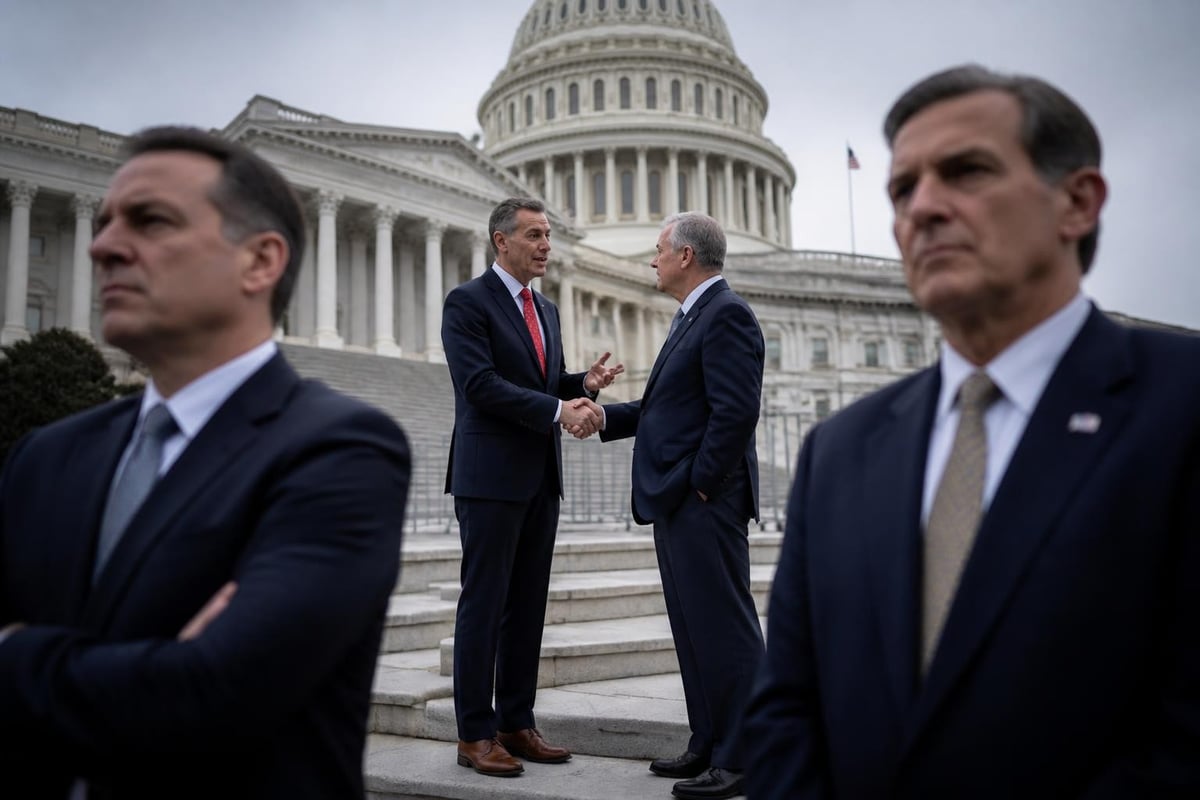
Public trust in congressional ethics remains fragile. Recent research into potential conflicts of interest regarding stock trading by members of Congress has renewed calls for stronger ethics regulations. When lawmakers appear to benefit financially from privileged information or maintain investments that create conflicts with their legislative responsibilities, it reinforces public cynicism about whose interests Congress truly serves.
Ethics scandals, lobbying influence, and campaign finance concerns contribute to the narrative that special interests hold disproportionate sway over legislative outcomes. This perception, whether entirely accurate or not, damages institutional credibility and depresses approval ratings across demographic groups.
Leadership Approval and Individual Performance
While institutional approval languishes, congressional leadership approval ratings provide additional context for understanding public sentiment. As of mid-2026, key leaders face their own approval challenges that both reflect and contribute to broader institutional ratings.
Speaker Mike Johnson navigates narrow House Republican majorities while managing internal caucus divisions between traditional conservatives and more populist-oriented members. His approval ratings among Republicans remain moderate, while Democrats and independents view his performance unfavorably.
Senate Majority Leader Chuck Schumer faces similar challenges coordinating Democratic priorities with limited margins and intra-party ideological diversity. Moderate senators from competitive states often diverge from progressive caucus positions, complicating legislative strategy.
The Individual vs. Institutional Paradox
Interestingly, many individual members maintain substantially higher approval ratings in their home districts than Congress receives nationally. This phenomenon reflects several dynamics:
- Constituent services: Direct assistance with federal agencies, veteran benefits, and local concerns builds goodwill
- Local media coverage: Home-state press often portrays members more favorably than national coverage of Congress
- Partisan identification: Voters tend to approve of representatives who share their political affiliation
- Symbolic representation: Members effectively articulate constituent values and concerns, even when legislative accomplishments remain limited
This paradox means that low congressional approval ratings 2026 do not necessarily translate into widespread incumbent defeats. Corruption concerns may affect individual races, but most members retain sufficient local support to win reelection despite institutional unpopularity.
Historical Context and Comparative Analysis
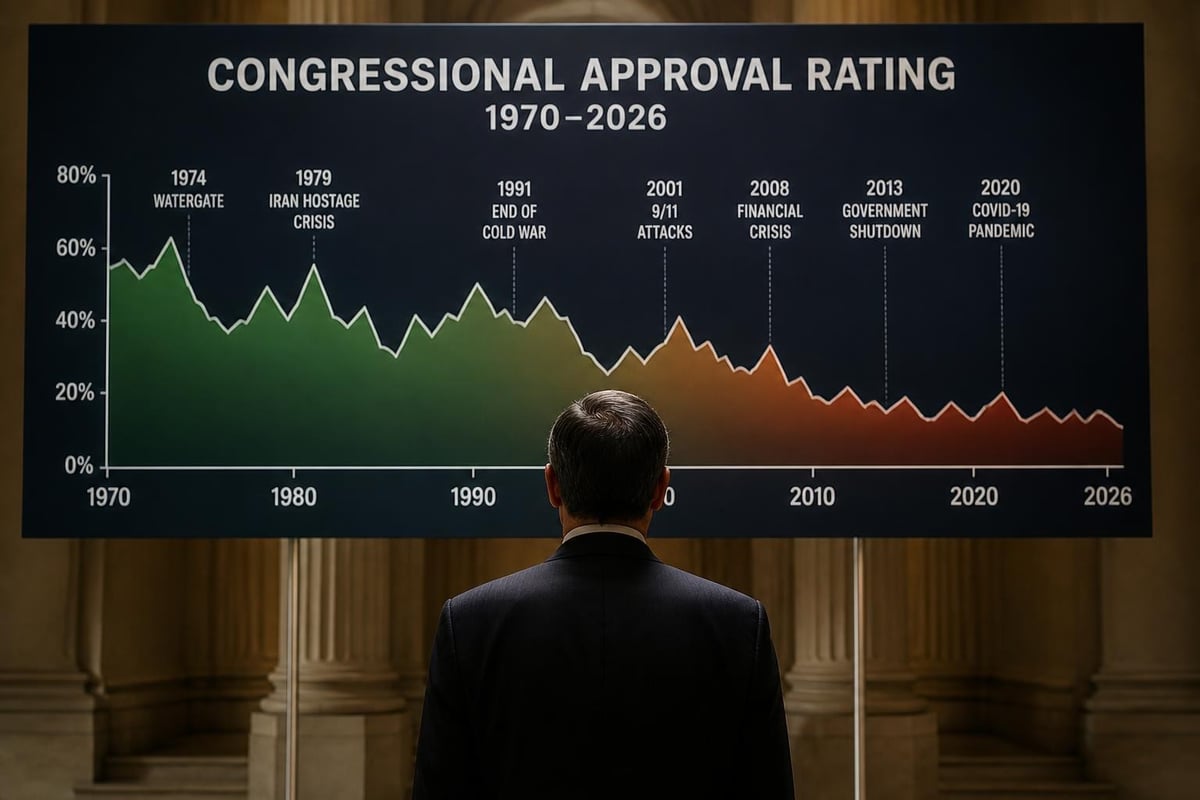
Understanding current congressional approval ratings 2026 requires historical perspective. Congress has experienced cyclical approval patterns throughout American history, with ratings influenced by economic conditions, war, scandal, and legislative productivity.
The modern era of congressional polling, beginning in the 1970s, reveals several significant trends:
High Approval Periods:
- Post-9/11 rally effect (2001-2002): Approval reached 84%, the highest recorded
- Major legislative accomplishments: Ratings typically improve when significant bipartisan bills pass
- Strong economic growth: Prosperity generally lifts congressional approval
Low Approval Periods:
- Watergate era (1973-1974): Scandal depressed confidence in government institutions
- Government shutdowns (1995-1996, 2013, 2018-2019): Dysfunction drives approval down
- Financial crisis (2008-2009): Economic turmoil and bailout controversies damaged trust
- Partisan gridlock periods: Extended stalemates consistently correlate with low ratings
| Time Period | Average Approval | Key Factors |
|---|---|---|
| 1970s | 35-40% | Watergate, economic stagflation |
| 1980s | 40-45% | Reagan era, divided government |
| 1990s | 35-55% | Government shutdowns, impeachment, economic boom |
| 2000s | 30-40% | 9/11 spike, Iraq War, financial crisis |
| 2010s | 15-25% | Tea Party, government shutdowns, polarization |
| 2020s | 20-30% | COVID-19, January 6th, continued polarization |
The current congressional approval ratings 2026 fall within the range established over the past decade and a half, suggesting structural factors rather than temporary circumstances drive sustained low approval.
Impact on Electoral Politics and Governance
Low congressional approval ratings carry significant implications for electoral outcomes and governance effectiveness. While the paradox of individual versus institutional approval somewhat insulates incumbents, broader patterns emerge that shape political strategy and policy outcomes.
Electoral Consequences
Challengers regularly campaign against "Washington dysfunction" and promise to disrupt the status quo. Anti-incumbent sentiment, fueled by low approval, creates opportunities for:
- Primary challenges: Activists target sitting members perceived as insufficiently aligned with base voters
- Competitive general elections: Swing districts become more volatile when national mood sours on Congress
- Party brand damage: The controlling party often faces electoral headwinds when approval is particularly low
- Presidential coattails: Executive branch approval can either amplify or counteract congressional unpopularity
The 2026 midterm elections will test whether current approval levels translate into significant seat changes. Historical patterns suggest the party controlling the White House typically loses congressional seats in midterms, with the magnitude influenced by factors including congressional approval, presidential performance, and economic conditions.
Governance Challenges
Sustained low approval creates governance obstacles beyond electoral concerns:
- Reduced political capital: Members struggle to convince constituents that legislative priorities merit support
- Heightened media scrutiny: Low approval invites more critical press coverage, creating negative feedback loops
- Institutional legitimacy questions: Persistent disapproval may undermine democratic norms and civic engagement
- Policy implementation difficulties: Public skepticism complicates executive branch efforts to implement congressional mandates
These challenges affect congressional capacity to address major national issues, from immigration reform to economic policy to foreign affairs. When the public lacks confidence in Congress, even necessary and beneficial legislation faces skepticism and resistance.
Regional and Demographic Variations
Congressional approval ratings 2026 vary considerably across demographic groups and geographic regions, reflecting diverse political perspectives and priorities. These variations provide insight into the multifaceted nature of public opinion toward the legislative branch.
Geographic Patterns
Regional differences in congressional approval often correlate with partisan control and policy priorities:
- Urban areas: Generally lower approval, particularly in progressive cities frustrated with perceived legislative inaction on climate, healthcare, and social justice
- Suburban communities: Mixed approval depending on partisan lean and economic conditions
- Rural regions: Approval varies based on agricultural policy, healthcare access, and cultural issues
- Swing states: Often reflect national averages with higher volatility based on local economic conditions
These geographic patterns influence congressional strategy, with members tailoring messaging and priorities to their constituents' specific concerns and approval drivers.
Demographic Breakdown
Different demographic groups express varying levels of approval based on how congressional actions affect their interests and values:
Age Groups:
- Young adults (18-29): Lower approval, frustrated with climate inaction, student debt, and economic opportunity
- Middle-aged adults (30-54): Moderate approval, focused on economic stability, healthcare, and education
- Older adults (55+): Relatively higher approval, concerned with Social Security, Medicare, and stability
Educational Attainment:
- College graduates: More likely to follow legislative details, approval influenced by process and policy substance
- Non-college adults: More focused on economic outcomes and direct impacts on daily life
Income Levels:
- Higher earners: Approval influenced by tax policy, regulatory environment, and economic growth
- Middle-income households: Focus on cost of living, healthcare affordability, and job security
- Lower-income Americans: Concerned with social programs, minimum wage, and economic opportunity
These demographic variations explain why congressional approval ratings 2026 represent an average of diverse perspectives rather than a monolithic public opinion. Understanding these nuances helps explain voting behavior and the complex relationship between approval and electoral outcomes.
Media Influence and Information Ecosystems
The role of media in shaping congressional approval ratings 2026 cannot be overstated. How Americans receive information about Congress significantly influences their perceptions of institutional performance and individual member effectiveness.
Traditional news media, social media platforms, and partisan outlets each contribute to the information ecosystem surrounding congressional activities. Cable news networks often emphasize conflict and dysfunction, which can depress approval ratings by highlighting gridlock over substantive policy work. Meanwhile, community-driven platforms tracking congressional performance provide alternative perspectives on member effectiveness.
Information Fragmentation
The fragmented media landscape means different Americans receive dramatically different information about congressional activities:
- Partisan news consumers: Receive coverage filtered through ideological lenses that emphasize particular narratives
- Social media users: Encounter viral moments, controversies, and simplified narratives rather than comprehensive policy coverage
- Traditional news followers: Access more detailed legislative reporting but may miss grassroots perspectives
- Low-information voters: Rely on general impressions and major headlines rather than detailed knowledge
This fragmentation complicates efforts to improve approval ratings, as there is no single narrative or communication strategy that reaches all Americans effectively. Members must navigate multiple media ecosystems simultaneously, each with different norms, audiences, and messaging requirements.
Paths Toward Improved Approval
While congressional approval ratings 2026 remain depressed, potential pathways exist for improving public confidence in the legislative branch. These approaches require both institutional reforms and changes in political culture and practice.
Legislative Productivity and Bipartisanship
Passing significant bipartisan legislation consistently improves congressional approval. When members demonstrate capacity to work across party lines on issues of genuine public concern, approval ratings typically rise. Areas with potential for bipartisan cooperation include:
- Infrastructure maintenance and modernization beyond previously passed measures
- Targeted economic policies addressing specific cost-of-living concerns
- Criminal justice reforms balancing public safety and civil liberties
- Technology regulation addressing privacy, competition, and national security
- Healthcare measures focused on cost reduction and access expansion
The challenge lies in creating political incentives for cooperation rather than obstruction. Electoral dynamics often reward partisan conflict over collaboration, making bipartisan achievement difficult despite public demand for it.
Transparency and Ethics Reform
Addressing public concerns about congressional ethics and transparency could improve approval ratings by demonstrating institutional accountability. Potential reforms include:
- Stricter stock trading restrictions or outright bans for members and immediate family
- Enhanced financial disclosure requirements with real-time reporting
- Lobbying reform limiting revolving-door practices
- Campaign finance changes reducing perception of special interest influence
- Ethics enforcement mechanisms with genuine independence and authority
While ethics reforms alone would not transform approval ratings, they would address one significant driver of public cynicism and distrust.
Communication and Civic Engagement
Improving how Congress communicates with the public represents another potential avenue for better approval. This includes:
- Enhanced digital engagement: More effective use of social media and digital platforms for substantive policy discussion
- Town halls and constituent contact: Regular, meaningful interaction between members and constituents
- Educational initiatives: Helping citizens understand legislative processes and challenges
- Media strategy: More effective communication of accomplishments and legislative work beyond partisan talking points
These communication improvements require sustained effort and genuine commitment to transparency rather than merely improved public relations tactics.
Congressional approval ratings 2026 reflect deep-seated frustrations with legislative dysfunction, partisan gridlock, and perceived disconnection between lawmakers and ordinary Americans. While these low ratings persist across demographic groups and regions, understanding the specific factors driving dissatisfaction provides insight into both electoral dynamics and governance challenges facing the nation. For comprehensive, non-partisan coverage of how congressional actions intersect with presidential leadership and broader governance issues, U.S. Presidential Report offers balanced analysis and reporting to help you stay informed about the political landscape shaping American democracy.