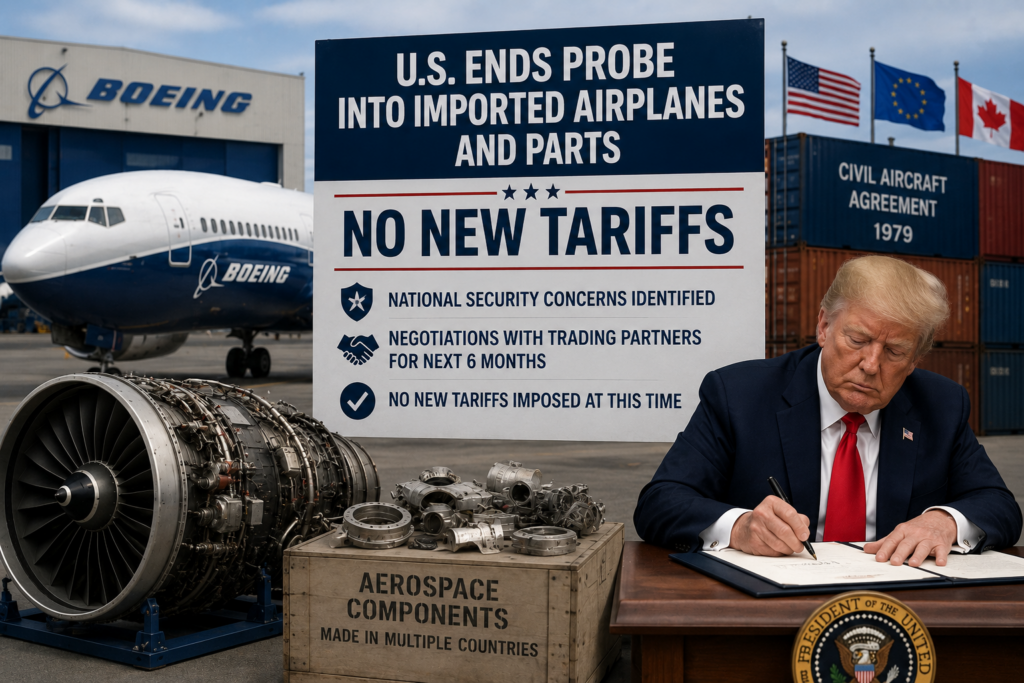
The Trump administration has concluded a national security investigation into imported commercial aircraft, jet engines, and aviation parts without imposing new tariffs. Although the Commerce Department determined that reliance on foreign aerospace supply chains presents national security concerns, the White House opted to pursue negotiations with trading partners rather than introduce immediate import duties.
According to a report by Reuters, Commerce Secretary Howard Lutnick recommended against imposing new tariffs after completing the investigation, despite identifying vulnerabilities within the U.S. commercial aerospace supply chain.
What Happened?
The U.S. Commerce Department finalized its investigation into imported commercial aircraft, jet engines, and aerospace components under a national security review.
The report concluded that the American aviation industry remains heavily dependent on foreign suppliers, creating potential risks to national security and the long-term competitiveness of domestic manufacturers.
Despite those findings, the Trump administration decided not to impose additional tariffs at this time.
Instead, President Donald Trump directed federal officials to negotiate with trading partners to address supply chain concerns over the next six months.
Why the Investigation Was Conducted
National Security Concerns
The Commerce Department found several factors contributing to national security risks, including:
- Heavy reliance on foreign aerospace supply chains
- Risks associated with counterfeit aircraft components
- Quality control concerns involving imported parts
- Competitive pressure from lower-cost foreign manufacturers
According to the report, these challenges may reduce investment in domestic manufacturing and make aerospace careers less attractive by limiting wage growth and hiring opportunities.
Why No New Tariffs Were Announced
Although the investigation identified national security concerns, Commerce Secretary Howard Lutnick recommended delaying additional trade restrictions.
The decision follows extensive lobbying from U.S. airlines, aircraft manufacturers, and aviation trade organizations, which warned that tariffs on airplanes and components could increase costs throughout the industry.
The administration had briefly imposed tariffs affecting aviation products in 2025 but later exempted many aircraft and parts through trade agreements negotiated with key partners.
Impact on Boeing and the Aviation Industry
Commercial aircraft and aviation parts have largely operated under the 1979 Civil Aircraft Agreement, which allows tariff-free trade among participating countries.
The agreement has supported a strong export market for the U.S. aerospace industry, contributing to an estimated $75 billion annual trade surplus in aircraft and related products.
President Trump has frequently highlighted international aircraft sales—particularly Boeing orders—as a significant component of his trade strategy.
The administration’s decision avoids immediate tariff increases that industry leaders warned could have affected:
- Aircraft production costs
- Airline operating expenses
- Passenger ticket prices
- Global aerospace supply chains
- Aviation safety and maintenance operations
Major industry stakeholders, including airlines and manufacturers, had argued that new tariffs could disrupt one of the world’s most integrated manufacturing sectors.
Administration Seeks Negotiated Solutions
Rather than implementing tariffs immediately, President Trump instructed federal agencies to pursue negotiations with foreign trading partners aimed at strengthening the U.S. commercial aerospace industry.
The White House indicated that additional action remains possible if negotiations fail to address concerns within the next six months.
The approach is consistent with broader administration efforts to balance domestic manufacturing priorities with international trade relationships, including ongoing discussions over USMCA trade policy and North American manufacturing.
It also aligns with the administration’s broader economic strategy supporting major American industries alongside initiatives promoting advanced domestic energy and industrial investment.
Political and Economic Impact
The decision offers short-term certainty for airlines, aircraft manufacturers, and suppliers that had feared higher import costs.
For manufacturers such as Boeing, maintaining tariff-free access to global supply chains remains important as international demand for commercial aircraft continues to recover.
At the same time, the Commerce Department’s findings suggest the administration will continue evaluating ways to reduce dependence on foreign aerospace suppliers while strengthening domestic production capacity.
What Happens Next?
The Trump administration will begin negotiations with trading partners to address the national security concerns identified during the investigation.
If sufficient progress is not achieved within six months, the White House retains the option to pursue additional trade actions, including tariffs or other import restrictions.
For now, airlines, manufacturers, and suppliers can continue operating under the existing tariff framework while monitoring future trade negotiations that could reshape the global aerospace industry.
No. Although the Commerce Department identified national security concerns related to foreign aerospace supply chains, the administration decided not to impose new tariffs and instead pursue negotiations.
The investigation examined whether reliance on foreign aircraft, jet engines, and aerospace components posed national security risks to the United States and its commercial aviation industry.