The intersection of artificial intelligence and election coverage represents one of the most critical challenges facing democracy in 2026. As AI-powered tools increasingly generate news summaries about presidential campaigns, policy debates, and voting information, questions about accuracy and reliability have emerged at the forefront of public discourse. The technology promises efficiency and broader access to information, yet recent studies reveal troubling patterns of errors and misinformation that could influence voter decisions during critical election cycles.
The Rise of AI-Generated Election Coverage
Artificial intelligence has transformed how news organizations produce and distribute political content. Major platforms now employ AI systems to summarize lengthy policy speeches, analyze debate performances, and condense complex legislative proposals into digestible formats for time-constrained readers.
The appeal is straightforward. AI news summaries and elections coverage can be produced at scale, theoretically allowing news organizations to cover more races, candidates, and issues than traditional reporting methods permit. Publishers can generate summaries of presidential addresses within minutes, breaking down hour-long speeches into key points that readers can consume during their morning commute.
Key applications include:
- Real-time summarization of campaign speeches and debates
- Condensed versions of policy white papers and legislative proposals
- Quick-hit summaries of breaking election news
- Automated updates on polling data and electoral trends
- Simplified explanations of complex ballot initiatives

Market Adoption and Publisher Implementation
News organizations across the political spectrum have adopted AI summarization tools with varying degrees of transparency. Some publishers clearly label AI-generated content, while others integrate these summaries seamlessly into their editorial workflows without explicit disclosure to readers.
The technology has proven particularly popular for covering down-ballot races where traditional newsroom resources are stretched thin. Local election coverage, historically underfunded, has seen an influx of AI-generated summaries attempting to fill information gaps about city council races, school board elections, and state legislative contests.
Critical Accuracy Problems in Election Summaries
The promise of AI news summaries and elections coverage faces a harsh reality: widespread accuracy problems that undermine voter trust. A comprehensive study by the BBC and the European Broadcasting Union found that 45% of AI-generated news summaries contained significant errors, raising fundamental questions about their reliability during election cycles.
These errors range from minor factual mistakes to complete fabrications that could mislead voters about candidate positions, voting procedures, or election outcomes. The stakes become particularly high when AI systems summarize information about voting locations, registration deadlines, or ballot requirements.
| Error Type | Frequency | Impact Level | Example Context |
|---|---|---|---|
| Factual Inaccuracies | 45% | High | Incorrect vote counts, misattributed quotes |
| Contextual Omissions | 38% | Medium | Missing policy nuances, simplified positions |
| Complete Fabrications | 12% | Critical | Invented statements, false event descriptions |
| Temporal Confusion | 23% | Medium | Mixing past and current election data |
Perhaps most alarming, research from NewsBench revealed that major AI chatbots provided flawed answers to election-related questions 90% of the time, highlighting systemic challenges that extend beyond individual platforms or publishers.
The Hallucination Problem
AI systems frequently "hallucinate," generating plausible-sounding information that has no basis in source material. Studies indicate AI-generated summaries can influence reader behavior despite a 60% rate of fabricating information, a phenomenon with profound implications for election integrity.
When applied to election coverage, hallucinations might produce:
- Invented candidate statements that never occurred
- Fabricated poll numbers mixing multiple surveys
- Nonexistent policy positions based on contextual misunderstanding
- False endorsements derived from ambiguous language patterns
- Incorrect voting information combining outdated and current data
The challenge intensifies when these hallucinations appear alongside accurate information, making detection difficult for average readers who lack time to verify every claim against original sources.
Real-World Consequences and Case Studies
The practical impact of AI news summaries and elections intersected dramatically when Apple temporarily suspended its AI-generated news feature due to inaccuracies, demonstrating how major technology companies struggle to ensure reliability even with substantial resources.
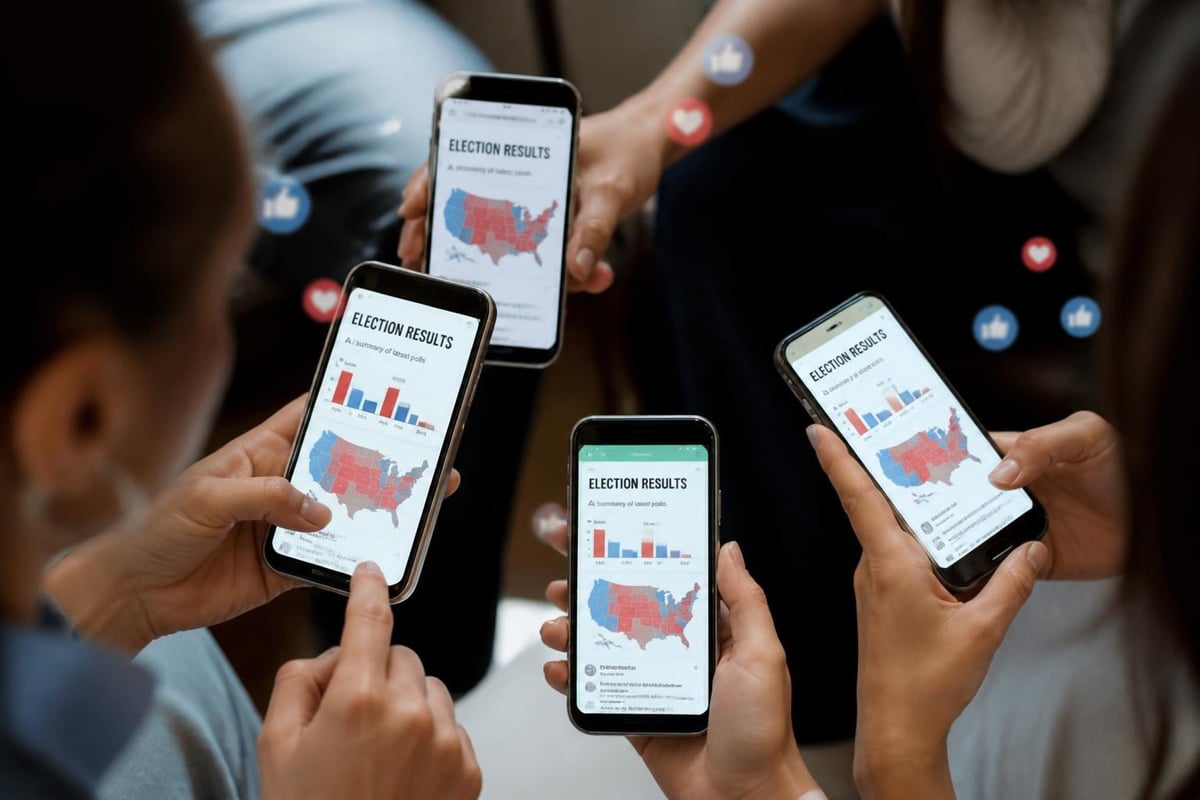
This suspension followed several high-profile errors where AI systems misrepresented breaking news about political developments, creating confusion among readers seeking reliable information about candidates and campaigns. The incident highlighted systemic challenges that smaller publishers with fewer resources face when implementing similar technologies.
Impact on Specific Electoral Contexts
Different types of elections face unique vulnerabilities when AI summarization goes wrong. Presidential elections attract significant attention and fact-checking resources, potentially mitigating some AI errors through rapid correction cycles. However, less prominent races lack these safeguards.
Consider these scenarios:
Presidential primaries: AI systems struggle with nuanced policy distinctions between candidates sharing similar platforms, often oversimplifying positions or creating false contrasts that don't exist in candidates' actual statements.
Local elections: Limited training data about local candidates and issues leads to higher error rates, with AI systems sometimes conflating candidates from different jurisdictions or misrepresenting local ballot measures.
Special elections: The speed required for coverage of unexpected special elections can lead publishers to rely more heavily on AI systems, increasing the risk of distributing unverified summaries during critical voting periods.
Those following immigration policy debates have seen AI summaries particularly struggle with candidate positions, often missing crucial distinctions between enforcement approaches, pathway programs, and border security proposals.
Transparency and Disclosure Challenges
Publishers face difficult decisions about how transparently to disclose AI involvement in election coverage. Some organizations prominently label AI-generated summaries, while others integrate them without clear attribution, leaving readers unaware they're consuming machine-generated content.
The lack of standardized disclosure practices creates information asymmetry. Readers who assume they're reading human-authored election analysis may approach AI summaries with unwarranted trust, while those aware of AI involvement might overcorrect by dismissing accurate summaries alongside flawed ones.
Current disclosure approaches include:
- Explicit AI-generated content labels at article beginning
- Subtle footnotes or end-of-article attribution
- No disclosure with AI-assisted content presented as traditional reporting
- Hybrid models where AI drafts receive human editing without clear delineation
- Platform-level disclosures buried in general terms of service
The Brookings Institution highlights the lack of comprehensive data on AI’s role in elections, emphasizing how opacity around AI use hampers efforts to assess its true impact on voter knowledge and decision-making.
Mitigating Risks While Preserving Benefits
The relationship between AI news summaries and elections need not be entirely adversarial. Properly implemented with appropriate safeguards, AI tools can expand election coverage reach while maintaining accuracy standards that serve democracy.
Technical Safeguards and Human Oversight
Responsible implementation requires layered verification systems:
- Source verification protocols ensuring AI systems only summarize from credible, verified sources
- Human review checkpoints where experienced journalists validate AI output before publication
- Confidence scoring systems that flag low-confidence summaries for additional scrutiny
- Real-time fact-checking integration cross-referencing AI summaries against authoritative databases
- Continuous monitoring and feedback loops identifying error patterns for system improvement
News organizations covering topics like economic impact news have found that AI summaries work best when focused on structured data (employment figures, GDP growth) rather than nuanced policy analysis requiring contextual understanding.
| Mitigation Strategy | Implementation Difficulty | Effectiveness | Resource Requirements |
|---|---|---|---|
| Mandatory human review | Medium | High | Significant |
| Automated fact-checking | High | Medium | Moderate |
| Source restrictions | Low | Medium | Low |
| Confidence thresholds | Medium | Medium | Low |
| User reporting systems | Low | Low-Medium | Moderate |

Reader Education and Media Literacy
Publishers bear responsibility for educating audiences about AI limitations in election coverage. Transparent communication about what AI can and cannot reliably accomplish helps readers develop appropriate skepticism and verification habits.
Effective reader education initiatives include:
- Clear labeling systems that distinguish AI-generated, AI-assisted, and human-authored content
- Explainers about AI limitations specific to election coverage contexts
- Guidance on verification techniques readers can employ independently
- Transparency reports detailing error rates and correction processes
- Interactive tools allowing readers to compare AI summaries with source material
The Regulatory and Policy Landscape
Government responses to AI news summaries and elections vary globally, with some jurisdictions implementing strict requirements while others adopt wait-and-see approaches. The United States currently lacks comprehensive federal regulation specifically addressing AI-generated election content, leaving decisions to individual states and publishers.
Several states have proposed legislation requiring disclosure of AI-generated election materials, though implementation varies widely. Enforcement challenges abound, particularly for content created and distributed across state and national boundaries through digital platforms operating beyond single-jurisdiction control.
Analysis by the Center for a New American Security argues that concerns about AI’s impact on elections may be exaggerated, suggesting regulatory frameworks should focus on measurable harms rather than speculative risks. This perspective emphasizes evidence-based policymaking that distinguishes between genuine threats to election integrity and technological changes that primarily affect information delivery methods.
Platform Responsibilities and Content Moderation
Social media platforms face particular challenges moderating AI-generated election content. TechCrunch examines the potential impact of AI-generated images on elections, discussing risks of deepfakes and challenges in moderating such content at scale.
Platforms must balance competing concerns:
Free expression: Avoiding overly aggressive content removal that suppresses legitimate political discourse
Election integrity: Preventing spread of demonstrably false information about voting procedures or candidates
Operational capacity: Moderating billions of content pieces with limited human reviewer resources
Transparency: Providing clear explanations for content decisions without revealing manipulation vulnerabilities
Looking Toward 2026 Elections and Beyond
As the 2026 midterm elections approach, the role of AI news summaries and elections coverage will likely expand despite ongoing accuracy concerns. Publishers seeking competitive advantage through faster, more comprehensive coverage continue adopting these tools, while improvements in underlying AI technology promise incremental accuracy gains.
The key question isn't whether AI will play a role in election coverage, but rather how responsibly publishers, platforms, and technology companies implement these systems. CBS News discusses studies indicating that AI-powered tools produce inaccurate election information more than half the time, underscoring the urgency of developing robust safeguards before these tools become further entrenched in election infrastructure.
Voters must develop critical consumption habits, questioning AI-generated summaries the same way they would any other information source. This includes verifying claims through multiple sources, checking original source material when stakes are high, and maintaining healthy skepticism about conveniently packaged information that confirms existing beliefs.
Publishers committed to democratic values should prioritize accuracy over efficiency, implementing strict verification protocols even when competitors rush AI-generated content to market. The long-term credibility of news organizations depends on maintaining trust during election cycles when accurate information matters most.
The intersection of AI technology and election coverage presents both opportunities and risks. While AI news summaries and elections reporting can expand access to political information, current accuracy limitations demand careful implementation with robust oversight. As technology evolves and 2026 elections draw closer, the journalism industry faces crucial decisions about balancing innovation with the democratic imperative of accurate, trustworthy election information.
Understanding the accuracy challenges surrounding AI news summaries and elections helps voters make informed decisions about the sources they trust during critical political moments. For reliable, non-partisan coverage of presidential elections, domestic policy, and political developments backed by human editorial judgment, U.S. Presidential Report delivers the trustworthy election information democracy demands without the risks of AI-generated errors.