The 2026 Senate election results determine whether Republicans keep their majority in the upper chamber, and as of the current party division the Senate seats Republicans as the majority party, with 2 independents also in the chamber. That arithmetic frames every question about the 2026 senate election results congressional majority: who controls the floor, who chairs committees, and which party sets the pace for nominations and legislation through the end of the decade. This guide explains how the numbers work, which races shaped the outcome, and how to read the result alongside the House.
How the Senate Majority Is Counted
The Senate majority is the party that holds at least 51 seats, or 50 seats plus the vice presidency to break ties. Control carries real consequences beyond bragging rights, since the majority party picks the Majority Leader, sets the floor schedule and holds the gavel on every standing committee.
The chamber's current alignment is well documented. According to the U.S. Senate’s party division page, the 119th Congress includes Republicans as the majority party, along with Democrats and 2 independents.
That distinction matters when you read results. A net change of just three seats could move the chamber from a comfortable majority to a tie, and a net change of four would flip control outright.
Key terms to keep straight:
- Majority: 51 or more seats, or 50 with the vice president's tiebreaking vote.
- Caucus: a group of senators who organize together, including independents who align with a party.
- Class: one of three groups of Senate seats, each up for election every six years on a staggered schedule.
The 2026 Map: Which Seats Were on the Ballot
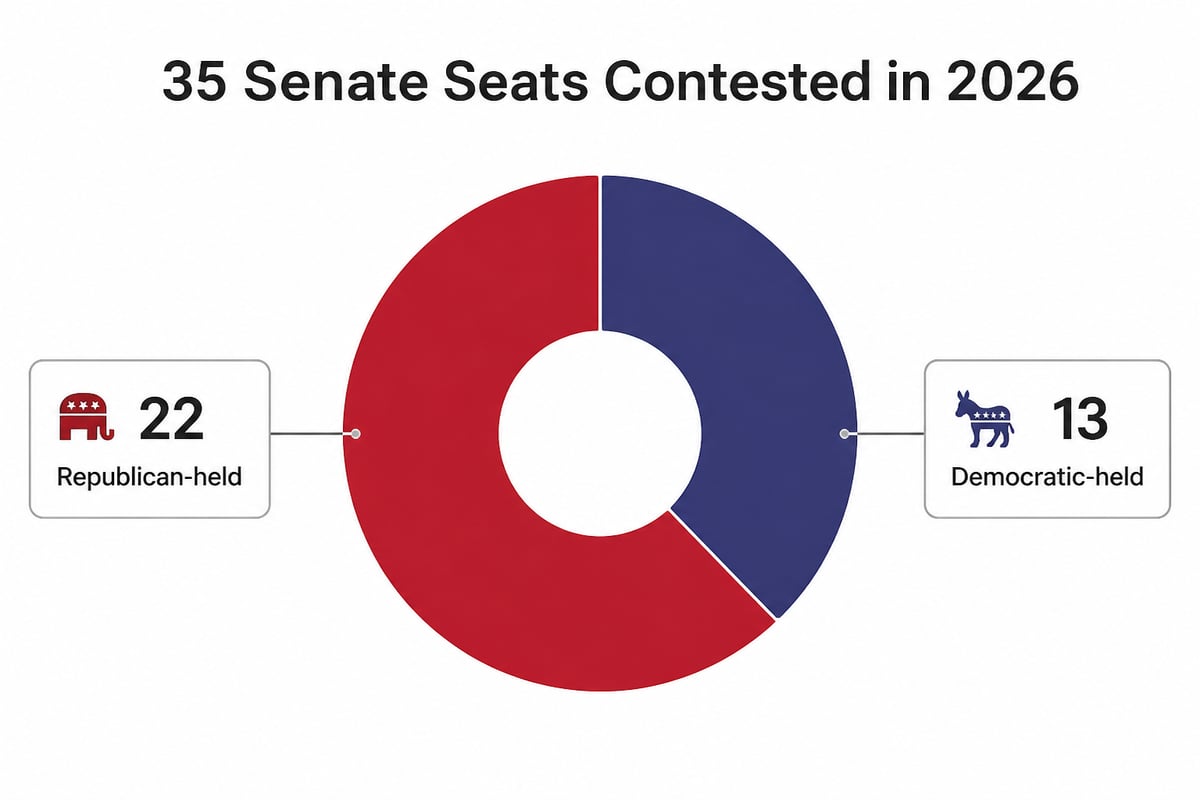
Thirty-five Senate seats were contested in 2026, and the split of those seats shaped the strategy of both parties. Of the 35 Senate seats on the 2026 ballot, 13 were Democratic-held and 22 were Republican-held, according to Ballotpedia’s 2026 congressional results page.
At first glance, that distribution suggests Republicans had more to defend. In practice, many of those 22 seats sit in deeply Republican states, so the number of genuinely competitive contests was far smaller than the raw count implies. Democrats, by contrast, had fewer seats to protect but needed to flip Republican-held seats to change control.
Why the Net Number Matters More Than the Headline
A party can win most of the individual contests and still lose ground in the chamber. What counts is the net change from the starting alignment. Winning a majority requires a net gain that depends on the pre-election split, and a tie is broken by the vice president's vote.
For readers tracking the result as it develops, the most useful habit is to maintain a running tally of net flips rather than a list of calls by state. Our earlier Senate control forecast compared with 2024 results lays out how the baseline from the last cycle set the starting line.
Reading the 2026 Senate Election Results and Congressional Majority Together
The Senate result is only half of the congressional picture, because control of Congress depends on both chambers. A split outcome, with one party holding the Senate and the other holding the House, produces a very different governing environment than unified control.
Consider the practical differences:
- Unified control: one party runs both chambers, so the president's agenda moves through committees with fewer obstacles.
- Divided control: each chamber can block the other's priorities, which shifts leverage toward negotiation, oversight and must-pass spending bills.
- Senate-only control: the party holding the Senate retains confirmation power over judges and cabinet officials regardless of House outcomes.
The House side has its own dynamics, covered in our analysis of the House majority forecast for 2026 versus 2022 outcomes. For the full cross-chamber picture, our report on the 2026 midterm election results and what they mean for Trump and Congress connects both results to the presidency.
What a Senate Majority Actually Controls
A Senate majority controls the confirmation process, the committee system and the legislative calendar. Those three levers explain why the chamber draws so much attention even when the margin is wide.
Confirmations
The Senate confirms federal judges, cabinet secretaries, ambassadors and agency heads. A president whose party holds the majority can move nominees quickly. A president facing an opposition majority must negotiate or accept slower, narrower confirmations. For followers of the presidency, this is often the most visible consequence of Senate control, since vacancies on federal courts persist across administrations.
Committees
Chairs of committees such as Judiciary, Finance, Armed Services and Foreign Relations come from the majority party. Chairs decide which hearings occur, which bills receive markups and which investigations proceed. A shift in majority therefore changes oversight of the executive branch overnight. Readers following inquiry activity can see how this plays out in our federal corruption hearings update.
The Floor and the Filibuster
The Majority Leader controls what reaches the floor. Most legislation still requires 60 votes to overcome a filibuster, so even a Senate majority cannot pass many bills without minority-party support. Budget reconciliation is the notable exception, since it needs only a simple majority and has become a primary vehicle for tax and spending priorities.
Races and Regions That Shaped the Outcome
The result turned on a small group of battleground states rather than on the full slate of 35 contests. Readers who follow state-level dynamics should focus on places where margins have been narrow in recent cycles and where both parties invested heavily.
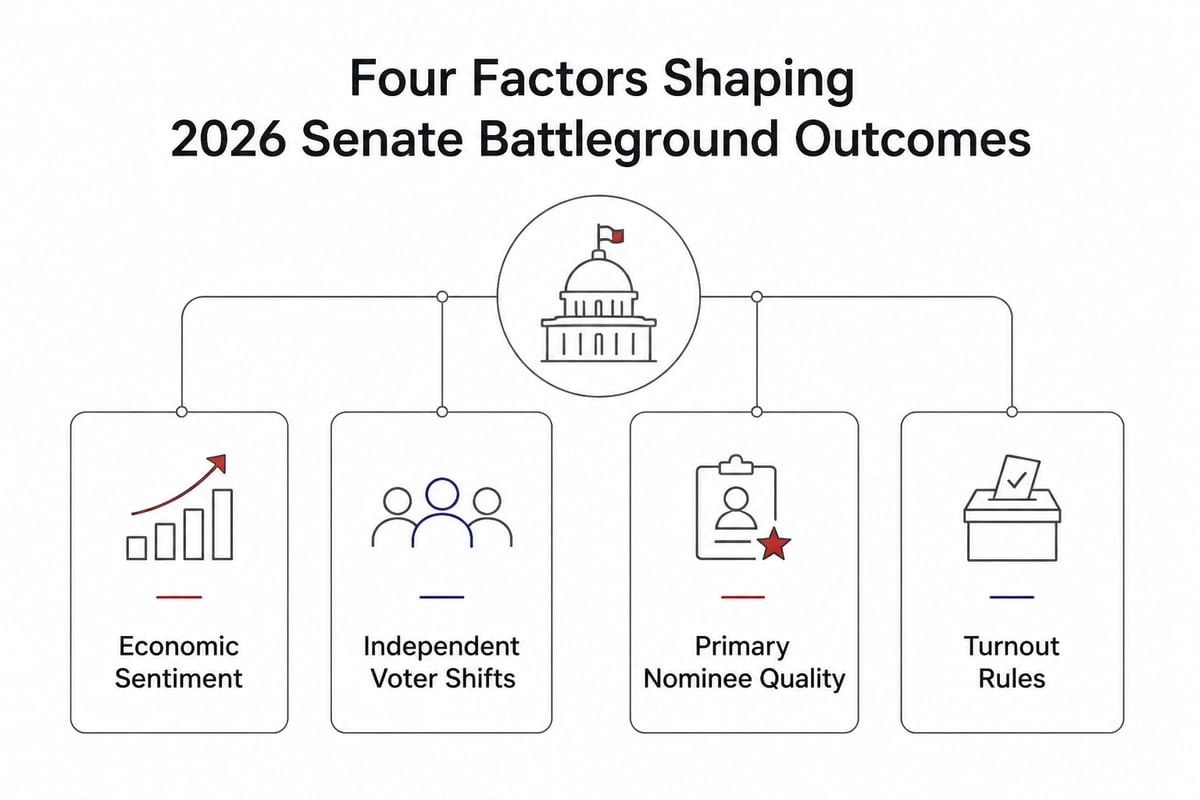
Several themes shaped those contests:
- Economic sentiment: household costs, housing and tax policy drove much of the messaging. Our housing market outlook for 2026 and middle-class tax burden analysis cover the underlying data.
- Independent voters: swings among unaffiliated voters often decided close races, a trend examined in our report on independent voters and the 2026 midterm impact.
- Primary dynamics: endorsements and contested primaries influenced which nominees reached November, as discussed in our look at Trump and the 2026 Republican primaries.
- Turnout mechanics: rules on ballots and identification affected how votes were cast and counted in several states.
For state-specific context, our Wisconsin election forecast and Arizona election trends explainer show how local conditions interact with national mood.
How to Verify Results and Avoid Premature Calls
Official certification, not election-night projection, settles who holds each seat. State election officials certify results on a schedule set by state law, and recounts or legal challenges can extend timelines in close contests.
Early returns can mislead because ballots are reported in waves. In many states, in-person votes are counted first and mail or provisional ballots later, so a lead on election night can narrow or reverse as the remaining ballots arrive. Reporting that identifies which counties are still outstanding, and what type of ballots remain, is more reliable than a bare vote total.
A disciplined approach to tracking results includes these steps:
- Start with the state election authority's published returns for each race.
- Compare those returns to the totals compiled by a nonpartisan tracker such as Ballotpedia.
- Confirm the seated senators against the official Senate directory of current senators once the new Congress convenes.
- Watch for pending litigation that could alter a certified outcome.
Margins matter as well. Many states provide for an automatic recount when the gap falls below a set threshold, so a race within a fraction of a percentage point should be treated as unresolved until the recount concludes. Keep a running net-seat tally and update it only when a result is certified or conceded.
Legal disputes sometimes follow close races, and the status of those cases can affect timelines.

What the Result Means for the Presidency
The Senate majority shapes how much of a president's agenda survives contact with Congress. A friendly Senate can confirm nominees and advance priorities through reconciliation. A hostile Senate can stall appointments, scrutinize executive actions and force compromise on spending.
Executive power often expands when Congress is gridlocked, since presidents turn to executive orders and agency directives when legislation stalls. That dynamic is central to the debates covered in our reporting on executive authority legal challenges and the shifting scope of federal agency restructuring.
Three questions help readers interpret the practical stakes:
- Does the president's party control the Senate, the House, or both?
- Is the margin large enough to survive a handful of defections on contested votes?
- Which must-pass deadlines, such as government funding, fall in the next twelve months?
Public attitudes toward Congress also color how members vote and campaign. Our tracker of congressional approval ratings in 2026 offers a running view of that mood.
Using the Results for Local Organizing
Senate outcomes offer organizers a clear map of where persuasion and turnout work paid off, and where it did not. A club or campaign starting now can use precinct-level and county-level returns to identify its most winnable targets for the next cycle.
Practical steps for organizers:
- Pull county-level returns for your state's Senate race and compare them to the 2024 presidential results in the same counties.
- Identify the counties where the margin shifted most, since those show where voter sentiment moved.
- Match those shifts to local issues, using resources such as our overview of the top political issues Americans care about in 2026 and the congressional elections voter priorities report.
Organizers should also confirm local rules before building a voter contact plan. Registration, identification and ballot policies vary widely, and our guide to voter ID laws by state in 2026 helps teams avoid compliance mistakes.
Looking Ahead to the Next Congressional Cycle
The majority established in 2026 sets the terms for the 2028 cycle, when the next class of Senate seats and the presidency share the ballot. Each party will study where it overperformed and underperformed, then adjust candidate recruitment and resource allocation accordingly.
Because Senate seats follow a staggered schedule, the class contested in 2028 differs from the one contested in 2026, which changes the defensive burden for each party. Tracking that shift early gives readers and organizers a head start on understanding where the next majority fight will occur.
Several early signals are worth following. Retirement announcements often arrive within the first year after an election, and an open seat is usually more competitive than one held by an incumbent. Candidate filing deadlines and the first fundraising reports show which challengers have built a viable operation. Party committees also begin reserving advertising time well ahead of the fall, and the states they choose reveal which seats each side considers winnable.
A presidential year also changes the electorate. Turnout is typically higher than in a midterm, so a coalition that carried a Senate race in 2026 may not hold under different conditions. Comparing 2026 returns against 2024 presidential results in the same counties gives a practical sense of how much the map could move.
For readers who want continuing coverage, the most dependable indicators are certified results, the official party division on the Senate's website, and sustained reporting on how the majority uses its committee and floor powers.
Your next step is to pull your own state's certified Senate returns and compare them with the county map from 2024, so you know where opinion actually moved. If you want to turn that analysis into action, U.S. Presidential Report offers non-partisan coverage of elections, Congress and federal policy that can inform your plans, and you can Start Your Own Political Club with the reporting and context you need to organize with confidence.