Pennsylvania has emerged as the ultimate bellwether in modern presidential politics, wielding disproportionate influence over who occupies the White House. With its 19 electoral votes and history of razor-thin margins, the Keystone State has become the linchpin in Electoral College mathematics, forcing candidates to invest millions of dollars and countless hours courting voters from Philadelphia to Pittsburgh. Understanding why Pennsylvania decides elections requires examining the state's unique demographics, evolving political landscape, and critical position in the path to 270 electoral votes.
The Electoral College Mathematics Behind Pennsylvania's Power
Pennsylvania's electoral significance stems directly from the constitutional framework established by the Founders. Under the Electoral College system, presidential candidates must secure 270 of 538 total electoral votes to win the presidency, making every state's allocation a strategic puzzle piece.
Pennsylvania commands 19 electoral votes, representing the fifth-largest prize in the nation. Only California (54), Texas (40), Florida (30), and New York (28) carry more weight. This substantial allocation places Pennsylvania in an elite tier of states capable of single-handedly shifting election outcomes.
The swing-state premium makes Pennsylvania's value even greater. While California and New York reliably vote Democratic and Texas leans Republican, Pennsylvania remains genuinely competitive. Since 1992, the state has flipped between parties multiple times, creating uncertainty that forces both campaigns to treat it as must-win territory.
Battleground State Status and Electoral Strategy
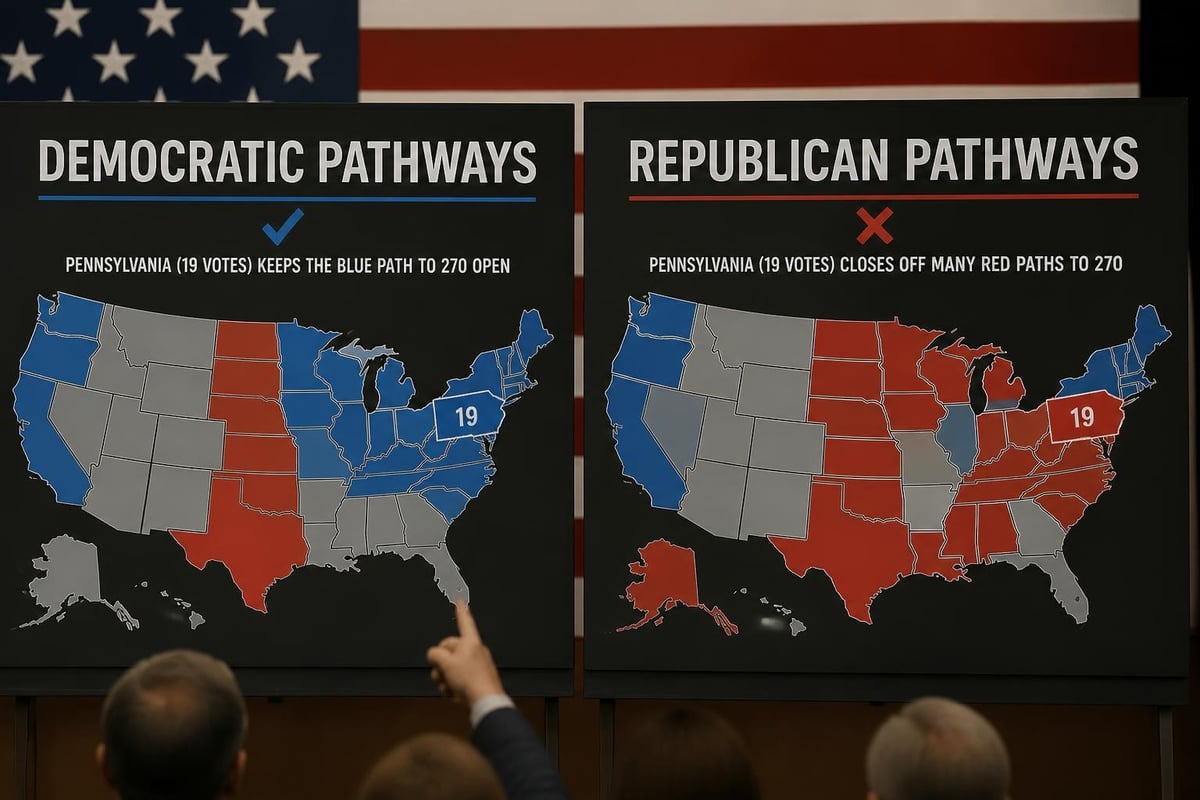
Political strategists begin every presidential map by identifying paths to 270 electoral votes. In nearly every competitive scenario, Pennsylvania appears as a critical component. A candidate who wins Pennsylvania dramatically improves their probability of reaching the magic number, while losing the state often forces them into narrow, risky alternatives.
Consider the strategic calculations campaigns must make:
- Democratic path: Holding the "Blue Wall" of Pennsylvania, Michigan, and Wisconsin plus safe Democratic states reaches 270
- Republican strategy: Flipping Pennsylvania while maintaining traditional Republican states creates multiple winning combinations
- Swing scenarios: Pennsylvania's 19 votes can compensate for losses in smaller battleground states
The state's winner-take-all allocation means capturing 50.1% of Pennsylvania's popular vote delivers all 19 electoral votes. This binary outcome intensifies the competition and explains why Pennsylvania decides elections more than states with larger populations but predetermined partisan leans.
Demographic Complexity and Political Geography
Pennsylvania's electoral influence extends beyond mere numbers to encompass extraordinary demographic diversity. The state functions as a microcosm of national political divisions, containing urban centers, suburban communities, and rural regions with distinct voting patterns.
Urban-Suburban-Rural Divide
Philadelphia and Pittsburgh anchor the state's Democratic strength, delivering overwhelming margins from diverse, densely populated urban cores. Philadelphia County alone regularly contributes 400,000+ vote advantages for Democratic candidates. The surrounding suburban counties-Montgomery, Delaware, Chester, and Bucks around Philadelphia, plus Allegheny County housing Pittsburgh-have trended increasingly Democratic since 2008.
The "T" region tells a different story. Pennsylvania's geographic center and northern tier form a "T" shape of predominantly rural, white, working-class communities that have shifted dramatically Republican. These counties, once home to moderate Democrats and swing voters, now deliver Republican margins comparable to the Deep South.
This geographic polarization creates a mathematical arms race. Democrats must maximize turnout and margins in Philadelphia and its suburbs while limiting Republican advantages in rural areas. Republicans must drive unprecedented rural turnout while remaining competitive in suburban battlegrounds.
| Region Type | Key Counties | Typical Democratic Performance | Typical Republican Performance |
|---|---|---|---|
| Urban Core | Philadelphia, Allegheny | 60-80% Democratic | 20-40% Republican |
| Suburban | Montgomery, Delaware, Chester | 55-65% Democratic (trending) | 35-45% Republican |
| Rural | Centre, Bradford, Tioga | 30-40% Democratic | 60-70% Republican |
| Industrial | Luzerne, Northampton, Erie | 48-52% (competitive) | 48-52% (competitive) |
The Changing Electorate
Pennsylvania's demographic evolution adds another layer to understanding why Pennsylvania decides elections. Educational polarization has reshaped the state's political coalitions. College-educated suburban voters, particularly women, have moved toward Democrats, while non-college-educated voters, especially in manufacturing regions, have shifted Republican.
Age demographics matter tremendously. Pennsylvania has one of the nation's oldest populations, with substantial representation of voters over 65. This cohort votes at higher rates than younger demographics, amplifying their influence. Both parties must calibrate messages for older voters concerned with Social Security and Medicare while motivating younger voters around economic opportunity.
The state's racial composition-approximately 75% white, 12% Black, 8% Hispanic, and 4% Asian as of 2026-creates distinct coalition-building challenges. Democratic success requires maintaining overwhelming support among Black voters, particularly in Philadelphia, while making inroads with white working-class voters. Republicans must maximize white rural turnout while demonstrating competitiveness among Hispanic voters and suburban moderates.
Mail Voting and Election Administration Dynamics
Pennsylvania's election administration framework profoundly impacts how results emerge and why Pennsylvania decides elections in the modern era. The state's adoption of no-excuse mail voting under Act 77 in 2019 transformed how millions of Pennsylvanians cast ballots, creating new strategic considerations for campaigns.
Pennsylvania’s mail voting laws allow any registered voter to request an absentee ballot without providing justification. This expansion significantly increased mail voting participation, with over 2.5 million mail ballots requested in recent presidential elections.
The Timing Challenge
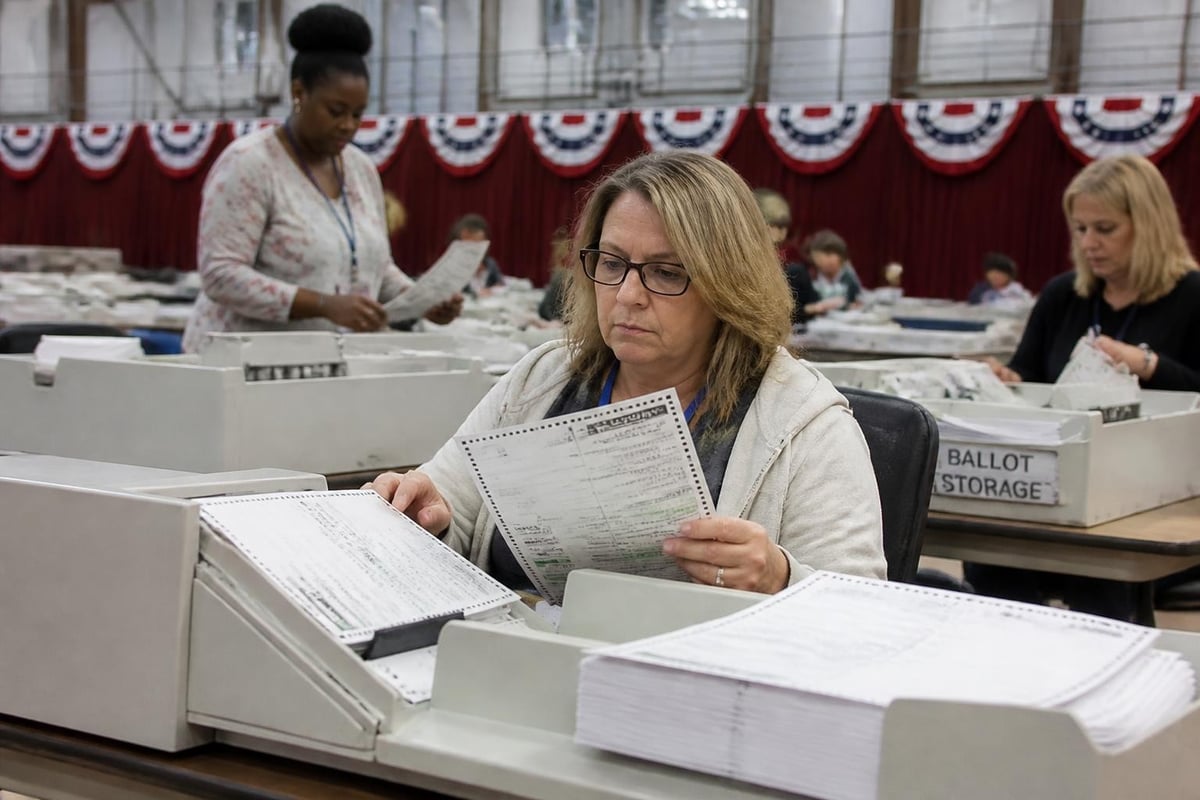
Pennsylvania law prohibits counties from processing mail ballots before Election Day morning, unlike states that allow pre-canvassing days in advance. This restriction means Pennsylvania’s counting process extends well beyond election night, often taking days to tabulate all votes fully.
The delayed count creates several critical dynamics:
- Early results skew Republican because in-person Election Day votes are counted first
- Mail ballots break heavily Democratic, creating "blue shifts" as counting progresses
- Media narratives evolve as leads change, potentially affecting public confidence
- Legal challenges intensify during the counting window when outcomes remain uncertain
This timeline transforms Pennsylvania into a multi-day drama rather than a single-night decision. The prolonged count keeps national attention focused on Pennsylvania, reinforcing why Pennsylvania decides elections in the public consciousness even after voting concludes.
Certification and Guardrails
Pennsylvania's certification process includes multiple layers of verification and validation. County boards of elections canvass results, reconcile ballots with voter rolls, and certify outcomes before transmitting data to the Secretary of the Commonwealth. This multi-step process, while thorough, creates opportunities for procedural disputes and legal challenges.
The stakes of certification cannot be overstated. Because Pennsylvania often determines Electoral College outcomes, any controversy around certification immediately becomes a national crisis. The 2020 election highlighted how fact-checking mechanisms and transparency measures help maintain public confidence even amid intense scrutiny.
Federal guidance from the Election Assistance Commission establishes best practices for canvassing and certification, but implementation remains a state responsibility. Pennsylvania's adherence to these standards directly impacts whether the state's electoral votes are accepted without controversy.
Historical Patterns and Recent Elections
Examining Pennsylvania's electoral history illuminates patterns that explain the state's contemporary significance. For much of the 20th century, Pennsylvania leaned Democratic in presidential contests, particularly during the New Deal coalition era when industrial workers and urban ethnic communities formed the party's base.
The Reagan Revolution of the 1980s made Pennsylvania competitive, with Republicans winning the state in 1980, 1984, and 1988 by appealing to suburban voters and conservative Democrats. From 1992 through 2012, Pennsylvania returned to the Democratic column, creating an impression of "Blue Wall" reliability that would prove misleading.
The 2016 Turning Point
The 2016 election shattered assumptions about Pennsylvania's partisan lean. Donald Trump's 44,000-vote victory marked the first Republican presidential win in the state since 1988, stunning pollsters and strategists who had considered Pennsylvania safe for Democrats.
Several factors converged to flip Pennsylvania:
- Depressed turnout among Black voters in Philadelphia compared to Obama-era elections
- Massive Republican margins in rural counties exceeding historical norms
- Trump's outperformance among white working-class voters in industrial regions
- Hillary Clinton's underperformance in suburban counties that would later swing Democratic
This narrow victory demonstrated why Pennsylvania decides elections-small shifts in turnout and persuasion across diverse regions can flip 19 electoral votes and potentially the entire presidency.
2020 and Beyond
The 2020 contest saw Pennsylvania return to the Democratic column by an equally narrow 80,000-vote margin. Joe Biden's victory relied on massive Philadelphia turnout, decisive suburban margins, and just enough support in industrial swing counties to offset Trump's expanded rural advantages.
The election also showcased Pennsylvania's mail voting dynamics, with Biden winning mail ballots by overwhelming margins while Trump dominated in-person voting. This split created the "red mirage" effect where Trump appeared to lead on election night before mail ballots erased his advantage.
Looking ahead to future contests, Pennsylvania's continued competitiveness seems assured. Neither party has established a structural advantage, demographic trends push in contradictory directions, and both urban and rural areas are capable of increasing their turnout ceiling.
Campaign Strategy and Resource Allocation
Why Pennsylvania decides elections becomes most visible in how presidential campaigns allocate finite resources. Every campaign faces trade-offs between spending time, money, and energy in various states. Pennsylvania consistently receives disproportionate investment relative to its population.
Advertising spending illustrates Pennsylvania's premium. In competitive presidential cycles, candidates and outside groups spend hundreds of millions of dollars on Pennsylvania television, digital, and radio advertising. This spending-per-electoral-vote ratio far exceeds investments in larger but less competitive states.
Ground Game Infrastructure
Both parties maintain year-round operations in Pennsylvania, unusual for most states that see temporary campaign offices. Field organizers, voter registration drives, and volunteer recruitment operate continuously because Pennsylvania's electoral margin is so narrow that ground game quality can determine outcomes.
- Door-to-door canvassing: Campaigns knock millions of doors across Pennsylvania's diverse geography
- Phone banking: Targeted voter contact reaches swing voters and base mobilization targets
- Voter registration: Registration drives focus on younger voters and communities with lower participation rates
- Early vote operations: Since mail voting expansion, campaigns invest heavily in ballot request and return programs
The ground game matters particularly in Pennsylvania because of county-level variations in election administration. Understanding how Pennsylvania conducts elections at the county level enables campaigns to optimize ballot curing, voter assistance, and turnout operations.
Candidate Travel and Media Attention
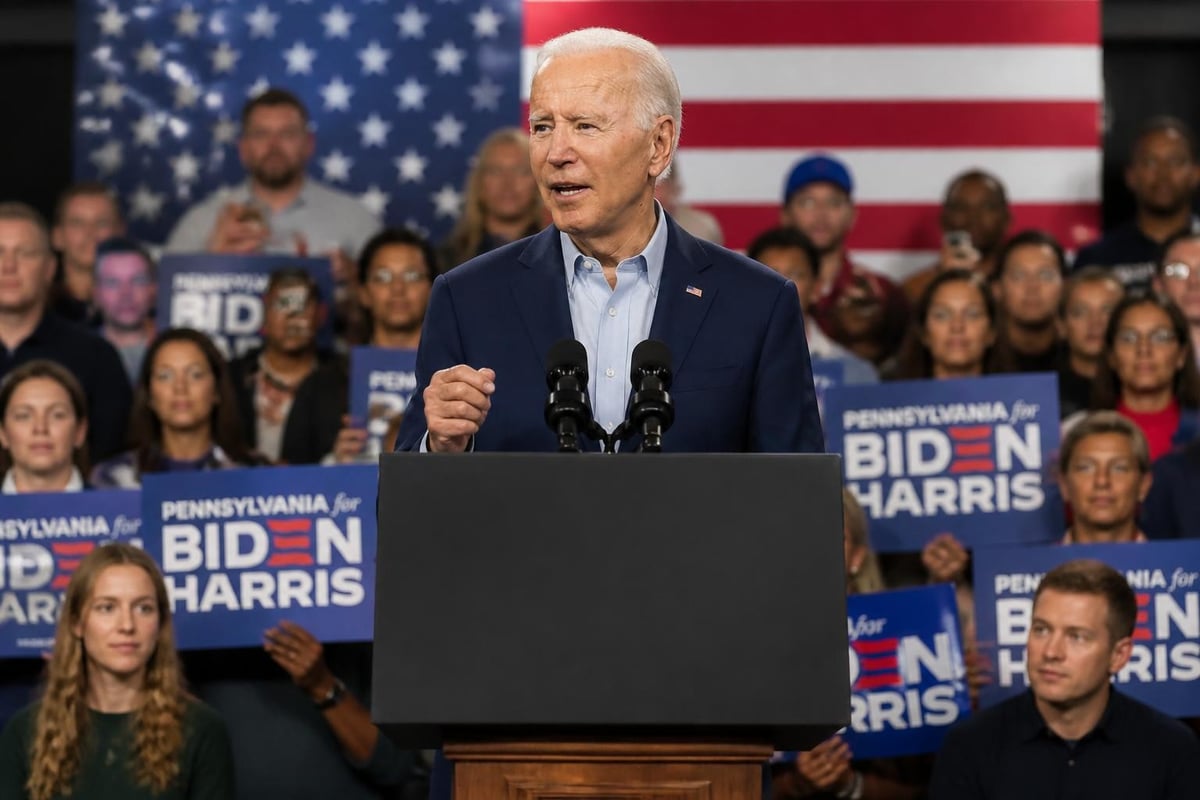
Presidential and vice-presidential candidates visit Pennsylvania more frequently than any other competitive state. During the final months of campaigns, candidates often appear in Pennsylvania multiple times per week, sometimes holding several events across different regions in a single day.
This intensive schedule reflects strategic reality: winning Pennsylvania dramatically simplifies the path to victory. Candidates would rather over-invest in Pennsylvania than risk losing its 19 electoral votes and facing a nearly impossible Electoral College map.
Media coverage amplifies Pennsylvania's importance, creating a feedback loop. National news outlets station reporters in Philadelphia, Pittsburgh, and swing counties, generating daily stories about Pennsylvania polls, voter sentiment, and campaign events. This attention reinforces public perception that Pennsylvania determines outcomes, which in turn justifies continued resource allocation.
Political Coalitions and Party Realignment
Pennsylvania's role in deciding elections reflects broader national realignment patterns. The state's shifting coalitions mirror transformations in American politics, making Pennsylvania both a cause and effect of larger trends.
The Education Divide
Educational attainment has become the strongest predictor of voting behavior in Pennsylvania. Suburban counties surrounding Philadelphia, home to highly educated professionals, have moved sharply Democratic since 2008. Meanwhile, non-college-educated voters in manufacturing and coal regions have completed their transition to Republican alignment.
This educational polarization creates distinct campaign challenges. Democrats must speak to college-educated voters' concerns about social issues, climate policy, and democratic norms while retaining credibility on economic issues with working-class voters. Republicans must energize their non-college base without alienating moderate suburban voters essential to statewide victory.
Cultural and Identity Politics
Pennsylvania's political geography reflects deeper cultural divisions within American society. Urban voters prioritize diversity, environmental protection, and social progressivism. Rural voters emphasize traditional values, Second Amendment rights, and skepticism of cultural change. Suburban voters occupy contested middle ground, pulled between competing visions.
These cultural divisions intensify electoral stakes. Both parties view Pennsylvania as a test case for national messaging. Success in Pennsylvania validates approaches to economic populism, cultural conservatism, or progressive modernity that campaigns then apply to other battleground states.
Recent elections demonstrate how national political trends manifest in Pennsylvania's diverse electorate. The state's competitiveness ensures that broader realignment processes-partisan sorting, geographic polarization, generational change-all play out in high-stakes Pennsylvania contests.
Security, Integrity, and Public Confidence
Why Pennsylvania decides elections also depends on public confidence in election integrity. Given the state's pivotal role, any perception of irregularity or manipulation immediately sparks national controversy. Pennsylvania election officials therefore face extraordinary scrutiny of their procedures and safeguards.
Election security measures protect both physical ballots and electronic systems from interference. Pennsylvania has invested in paper ballot systems, chain-of-custody protocols, and post-election audits to verify results accuracy. These technical safeguards matter less than public understanding and acceptance of their effectiveness.
Transparency serves as the ultimate legitimacy tool. Pennsylvania's election officials provide detailed information about ballot counting, processing timelines, and certification procedures. The state's fact-checking resources help counter misinformation, though partisan divisions mean some voters remain skeptical regardless of evidence.
The certification timeline established by federal law requires states to finalize results and appoint electors by specific deadlines. Pennsylvania's adherence to this timeline-despite the multi-day counting process-ensures the state's electoral votes are accepted by Congress without procedural challenges.
Looking Forward to Future Cycles
Pennsylvania's electoral significance shows no signs of diminishing through the remainder of the 2020s. Demographic trends suggest continued competitiveness, with suburban growth potentially favoring Democrats offset by rural consolidation benefiting Republicans. Neither party can take Pennsylvania for granted or write it off as unwinnable.
Several factors will shape Pennsylvania's future role:
- Generational replacement: Younger voters with different partisan attachments gradually replace older cohorts
- Migration patterns: Whether college-educated professionals continue moving to suburban Philadelphia affects Democratic performance
- Economic conditions: Manufacturing job trends in western Pennsylvania influence working-class voting behavior
- National political environment: Presidential popularity and major events shape Pennsylvania's electorate like all states
The state's position in presidential strategy seems secure. Even if other states like Georgia or Arizona become more competitive, Pennsylvania's larger electoral prize and proven swing capacity ensure it remains central to both parties' calculations.
Understanding why Pennsylvania decides elections requires appreciating the convergence of electoral math, demographic complexity, geographic diversity, and administrative frameworks that make the state uniquely consequential. For readers following presidential politics, Pennsylvania offers the clearest window into broader national trends and the strategic calculations that determine who controls the White House. Tracking developments in the Keystone State-from polling and fundraising to ground game investments and advertising strategies-provides essential insight into presidential campaign dynamics.
Pennsylvania's pivotal electoral role reflects its position at the intersection of demographic trends, Electoral College mathematics, and genuine political competition that makes every vote consequential. For readers seeking comprehensive, non-partisan coverage of how presidential elections unfold and the strategic decisions that shape outcomes, U.S. Presidential Report delivers timely analysis and factual reporting on all aspects of presidential politics, from campaign strategy to policy implications that affect governance and American democracy.