The American political landscape has undergone a seismic transformation over the past decade. As partisan polarization intensifies, a growing segment of the electorate has chosen to step outside traditional party lines. Independent voters now represent the largest voting bloc in the United States, surpassing both Democrats and Republicans in sheer numbers. Their refusal to align permanently with either major party gives them unique leverage in presidential elections, where margins of victory often come down to narrow pluralities in key swing states. Understanding why independent voters decide elections has become essential for anyone analyzing presidential politics, tracking campaign strategies, or following U.S. presidential news and policy developments.
The Demographic Explosion of Independent Voters
Independent voters have grown from a modest fraction of the electorate to a dominant force in American politics. According to analysis from the Independent Center, over half of Americans now identify as independents rather than committing to either major party. This shift represents a fundamental realignment in how citizens view their relationship with political institutions.
Generational Shifts Drive Independence
Younger voters display particularly strong independent tendencies. Millennials and Generation Z voters express deep skepticism about partisan institutions and reject the binary choice framework their parents accepted. These voters prioritize authenticity over party loyalty and demand candidates address concrete problems rather than recite ideological talking points.
Key demographic characteristics of independent voters include:
- Higher education levels compared to strong partisans
- Greater geographic mobility and exposure to diverse perspectives
- Tendency toward pragmatic rather than ideological political thinking
- Lower rates of participation in party primaries but high general election turnout
- Stronger focus on candidate character and competence over party affiliation
The generational component explains why independent voter influence continues expanding. As older, more partisan voters age out of the electorate, younger independents replace them, creating a structural shift that benefits neither party permanently.
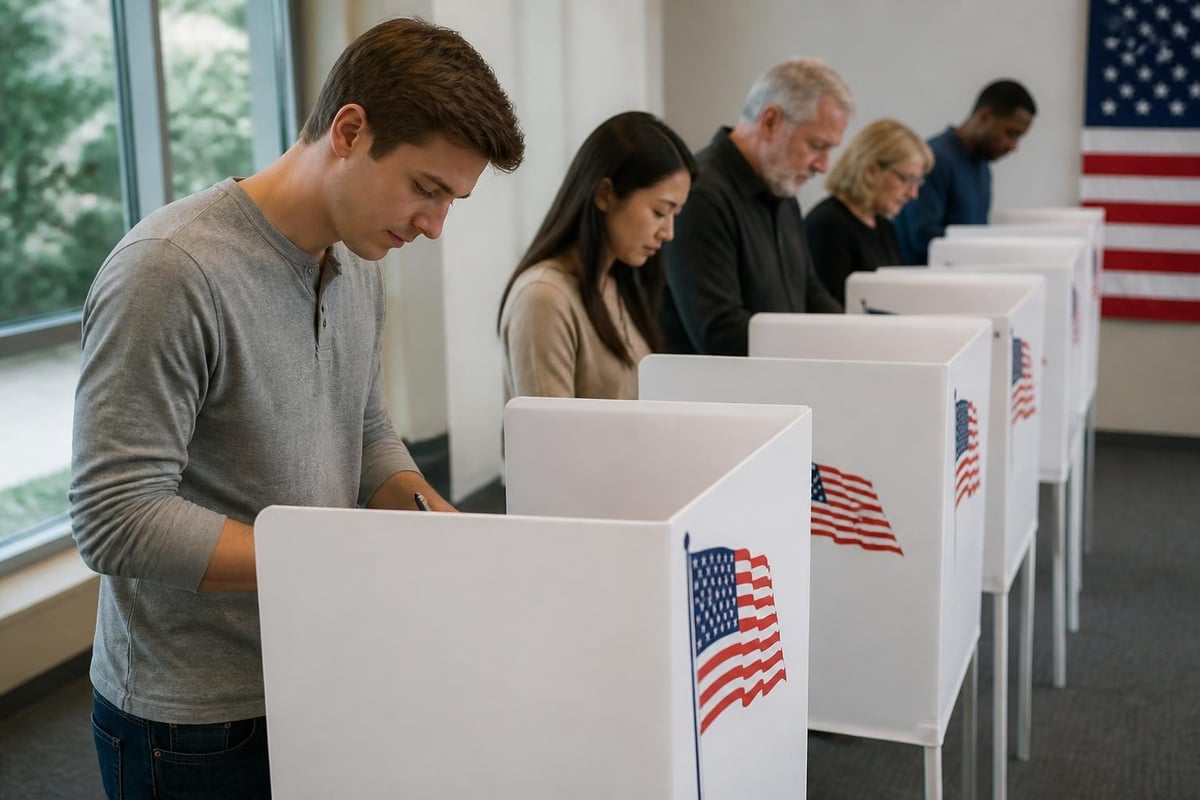
Electoral Mathematics and Swing State Dynamics
Why independent voters decide elections becomes clear when examining electoral college mathematics. Presidential contests are won not by national popular vote but through state-by-state plurality victories. Swing states-those without reliable partisan majorities-determine electoral outcomes, and independents form the decisive bloc within these battlegrounds.
The Swing State Independent Advantage
In states like Pennsylvania, Michigan, Wisconsin, Arizona, and Nevada, neither party commands a reliable majority. Registered Democrats and Republicans roughly balance each other, leaving independents with disproportionate influence. When independents break decisively for one candidate, that candidate typically carries the state.
| Swing State | Independent Voters | Margin in 2024 | Decisive Factor |
|---|---|---|---|
| Pennsylvania | 18% registered | 1.2% | Independent suburban shift |
| Michigan | 22% registered | 2.1% | Independent economic anxiety |
| Wisconsin | 20% registered | 0.9% | Independent rural-urban split |
| Arizona | 35% registered | 1.5% | Independent Latino voters |
| Nevada | 30% registered | 1.8% | Independent service workers |
These margins illustrate why campaigns invest heavily in persuading independent voters. When the gap between candidates falls below three percentage points, independent preferences become the single most important variable in predicting outcomes.
Presidential campaigns structure their entire domestic policy messaging around capturing independent support in these critical states. Candidates moderate their positions, emphasize bipartisan achievements, and carefully calibrate rhetoric to avoid alienating voters who distrust partisan extremism.
Issue Priorities That Move Independent Voters
Independent voters differ fundamentally from partisan voters in how they approach political decision-making. While strong partisans often vote based on party loyalty or cultural identity, independents examine candidates through an issue-focused lens. Understanding what matters to this bloc reveals why independent voters decide elections.
Economic Concerns Dominate Independent Thinking
Financial security consistently ranks as the top priority for independent voters. Unlike partisan voters who may accept economic hardship if their party maintains power, independents demand tangible results. Research on what issues matter most to independent voters shows they emphasize fiscal responsibility, economic competition, and inflation control.
Top issues driving independent voter decisions:
- Inflation and cost of living – Grocery prices, gas costs, and housing affordability directly influence vote choice
- Job security and wages – Employment stability and real wage growth matter more than unemployment statistics
- Healthcare costs – Out-of-pocket expenses and insurance premiums drive healthcare voting patterns
- Fiscal responsibility – Government spending, deficit concerns, and tax fairness shape economic credibility
- Education quality – Public school performance and college affordability without cultural war rhetoric
Independent voters approach healthcare policy pragmatically, seeking expanded access and lower costs rather than ideological purity about government's role. They reward candidates who propose workable solutions over those who simply criticize opposing party frameworks.
Social Tolerance Without Partisan Identity
On social issues, independents generally favor a "live-and-let-live" approach. They resist both progressive activism that seems to impose cultural changes and conservative restrictions that limit personal freedom. This balanced perspective means independents swing based on which party seems more reasonable and less extreme on social questions.
Campaign Strategy and Independent Voter Targeting
Presidential campaigns have developed sophisticated approaches to winning independent support. These strategies differ markedly from base mobilization tactics used with partisan voters. Campaigns targeting independents emphasize competence, moderation, and bipartisan cooperation rather than ideological purity.
Messaging Tactics That Resonate
Independent voters respond positively to candidates who demonstrate willingness to work across party lines. They penalize candidates perceived as rigid partisans unwilling to compromise. This creates incentives for presidential hopefuls to highlight bipartisan achievements and distance themselves from party extremes.
Successful independent voter outreach includes specific elements:
- Concrete policy proposals with implementation details rather than aspirational goals
- Bipartisan credentials including examples of working with opposition party members
- Economic credibility demonstrated through business experience or fiscal management records
- Personal authenticity that comes across as genuine rather than poll-tested
- Problem-solving focus that addresses real challenges facing middle-class families
Campaigns also recognize that independent voters consume information differently than partisans. They rely less on party-affiliated media and more on mainstream news sources, fact-checking sites, and direct candidate communications. This information diet makes independents more persuadable but also more skeptical of campaign claims.
Voting Behavior Patterns and Ticket Splitting
Independent voters exhibit distinctive behavioral patterns that amplify their electoral impact. Unlike straight-ticket partisan voters, independents frequently split their ballots, voting for candidates from different parties for different offices. This ticket-splitting behavior, documented in Pew Research Center analysis of 2024 voting patterns, demonstrates how independents evaluate candidates individually rather than applying party labels.
The Independent Swing Phenomenon
Why independent voters decide elections becomes especially clear when examining swing behavior between election cycles. The same independent voter who supported one party's presidential candidate in 2020 might switch to the opposing party in 2024 based on performance evaluation and changing circumstances.
| Voter Category | 2020-2024 Consistency | Primary Motivation | Swing Potential |
|---|---|---|---|
| Strong Democrats | 94% same party | Party loyalty | Very low |
| Strong Republicans | 92% same party | Party loyalty | Very low |
| Lean Democrats | 78% same party | Issue alignment | Moderate |
| Lean Republicans | 76% same party | Issue alignment | Moderate |
| True Independents | 45% same party | Candidate quality | Very high |
This swing potential makes independents the focus of persuasion efforts. Campaigns invest minimally in convincing strong partisans, knowing those voters rarely switch sides. Instead, resources flow toward independent-heavy media markets, especially in swing states where these voters concentrate.
The political dynamics surrounding independent voters create a moderating force in presidential politics. Candidates who veer too far toward party bases risk alienating the independents needed for victory.
The Role of Economic Performance in Independent Decisions
Economic conditions exert outsized influence on independent voter choices. While partisan voters may rationalize economic difficulties when their party holds power, independents apply consistent standards regardless of which party occupies the White House. This accountability mechanism explains why incumbent presidents face serious challenges when economic indicators deteriorate.
Pocketbook Voting and Presidential Approval
Independent voters practice straightforward pocketbook voting. When their personal financial situations improve under an administration, they reward the incumbent party. When circumstances worsen, they vote for change. This results-oriented approach means presidential economic management directly determines independent voter support.
Economic indicators that move independent voters:
- Real wage growth after accounting for inflation
- Gasoline prices as a visible daily economic measure
- Grocery costs that directly impact household budgets
- Housing affordability including both purchase prices and rents
- Job market confidence beyond raw unemployment numbers
Administrations that fail to address economic anxiety among independents pay electoral prices. The Data for Progress analysis of swing voters confirms that economic messaging resonates more powerfully with independents than cultural or foreign policy appeals.
Media Consumption and Information Processing
Independent voters process political information through different channels than strong partisans. They demonstrate greater media skepticism and actively seek multiple perspectives before forming opinions. This information-gathering approach makes independents less susceptible to partisan messaging but more responsive to factual policy comparisons.
Beyond the Echo Chamber
Unlike partisan voters who increasingly inhabit ideological media bubbles, independents maintain diverse information diets. They watch mainstream network news, read newspapers from various perspectives, and fact-check campaign claims. This broader information consumption creates both opportunities and challenges for presidential campaigns.
Campaigns must maintain message consistency across multiple platforms because independent voters cross-reference claims. Exaggerations or distortions that might work within partisan echo chambers backfire when independents verify information through alternative sources. This accountability mechanism rewards honest communication and penalizes dishonesty more severely than partisan audiences do.
Geographic Distribution and Electoral College Impact
Independent voters concentrate in specific geographic areas that align closely with electoral college battlegrounds. Suburban communities, in particular, contain high proportions of independent voters who fled urban cores but resist rural conservative politics. These suburban independents have become the quintessential swing voters in presidential contests.
Suburban Independents as Kingmakers
Metropolitan suburbs in swing states contain the highest densities of independent voters. These communities-often affluent, educated, and politically moderate-provide the margins that determine state outcomes. Presidential candidates who carry suburban independents in Pennsylvania, Michigan, and Wisconsin almost always win those states.
Suburban independent characteristics:
- College-educated professionals with moderate incomes
- Parents concerned about education quality and safety
- Homeowners focused on property values and local services
- Voters who prioritize competence over ideological alignment
- Community members engaged in local rather than national politics
Campaign field operations target these suburban communities intensively. Door-knocking, targeted advertising, and candidate appearances concentrate on neighborhoods where independent voters live and make decisions based on direct contact rather than national media narratives.
The Persuadability Factor in Modern Campaigns
Modern presidential campaigns divide the electorate into three categories: base supporters who need mobilization, opposition voters who cannot be persuaded, and persuadable independents who determine outcomes. Campaign resource allocation reflects this reality, with persuasion budgets focused almost exclusively on independent voters in competitive states.
Testing Messages and Refining Appeals
Campaigns conduct extensive testing to identify messages that resonate with independent voters. Focus groups, polling, and digital advertising experiments reveal which policy positions, biographical narratives, and attack lines move independents toward or away from candidates. This data-driven approach has transformed presidential campaigning into a science of independent voter persuasion.
| Message Type | Independent Response | Partisan Response | Strategic Value |
|---|---|---|---|
| Bipartisan cooperation | Strongly positive | Mixed/negative | High for independents |
| Party base appeals | Negative | Strongly positive | Low for independents |
| Economic competence | Strongly positive | Positive | Universal appeal |
| Cultural war issues | Strongly negative | Mixed | Risky with independents |
| Personal character | Positive | Depends on party | Important differentiator |
These response patterns show why independent voters decide elections-their persuadability combined with geographic concentration in swing states makes them the most valuable voters in presidential contests.
Future Trends in Independent Voter Influence
The trajectory of American politics suggests independent voter influence will continue growing. Partisan polarization drives more voters toward independent identification as both major parties appeal to increasingly narrow ideological bases. This creates a self-reinforcing cycle where party extremism produces more independents, who then demand moderation, which party activists resist, producing additional independent defections.
Structural Changes Favoring Independence
Several structural factors ensure independent voters will maintain or expand their electoral kingmaker role. Demographic changes favor independence, as younger voters enter the electorate with weaker partisan attachments. Information technology enables voters to research candidates independently rather than relying on party cues. Social mobility reduces geographic sorting that previously reinforced partisan identity.
Trends strengthening independent voter influence:
- Continued growth in independent identification across all age groups
- Declining trust in partisan institutions and traditional party organizations
- Rising education levels correlating with independent thinking
- Media fragmentation enabling escape from partisan information bubbles
- Geographic mobility reducing regional partisan homogeneity
These trends suggest that understanding why independent voters decide elections will become even more critical for analyzing presidential contests through 2028 and beyond.
Candidate Attributes That Win Independent Support
Independent voters evaluate presidential candidates through a distinctive lens that emphasizes personal qualities over party affiliation. Successful candidates with independents demonstrate competence, authenticity, and pragmatism rather than ideological purity. These attributes matter more to independents than to partisan voters who prioritize team loyalty.
The Competence Premium
Independents reward candidates perceived as competent managers and problem-solvers. Professional experience outside politics, executive achievement, and demonstrated ability to implement complex policies all boost independent support. Candidates who seem like effective administrators rather than ideological warriors perform better with this bloc.
Presidential candidates who build bipartisan coalitions naturally attract independent support. Analysis showing where independents and Democrats find common ground reveals that cooperation and pragmatism resonate across traditional political divides. Candidates emphasizing these themes position themselves favorably with independent voters who ultimately decide close elections.
Independent voters have emerged as the decisive factor in American presidential elections, wielding disproportionate influence through their concentration in swing states and willingness to evaluate candidates on performance rather than party loyalty. Their focus on economic results, pragmatic policy solutions, and candidate competence creates a moderating force in presidential politics that rewards bipartisan cooperation and punishes partisan extremism. For readers seeking nonpartisan analysis of how these electoral dynamics shape presidential races and governance, U.S. Presidential Report provides comprehensive coverage of elections, policy debates, and the political forces determining who leads the nation.