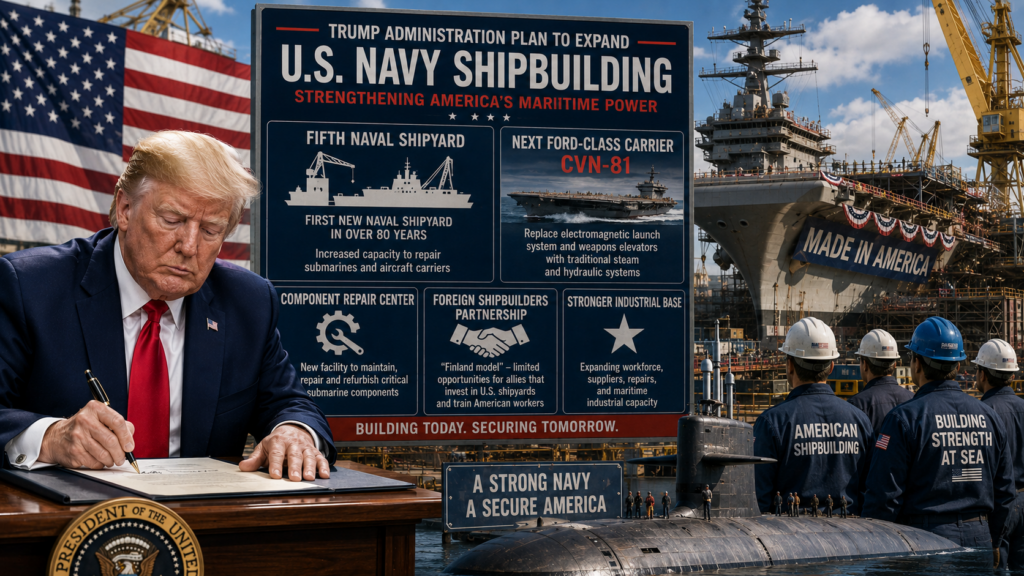
The Trump administration has announced a major plan to expand U.S. Navy shipbuilding, repair capacity, and the broader American maritime industrial base, including plans for a fifth naval shipyard and changes to the technology used on the Navy’s next Gerald R. Ford-class aircraft carrier.
According to a report by HSToday, the National Security Presidential Memorandum signed by President Donald Trump directs the Department of War to increase shipyard capacity, strengthen domestic suppliers, improve repair capabilities, and reform Navy shipbuilding processes.
What Happened
The new memorandum represents a broad effort to rebuild the United States’ maritime industrial capacity and address persistent problems affecting Navy shipbuilding programs.
The administration cited complex designs, repeated design changes, limited shipyard capacity, supplier problems, rising costs, and delays as major challenges facing the Navy.
The plan is designed to increase the nation’s ability to build and maintain naval vessels while strengthening the workforce and supply chains needed to support the fleet.
The announcement comes as the administration continues to emphasize expanded American defense and maritime manufacturing capacity. Reuters reported that the memorandum also opens limited opportunities for foreign shipbuilders that make substantial investments in U.S. shipyards and train American workers.
Key Details of the Navy Shipbuilding Plan
Fifth Naval Shipyard Planned
One of the most significant elements is the establishment of a fifth U.S. naval shipyard.
The administration says it would be the first new naval shipyard in more than 80 years. The facility is intended to increase the Navy’s capacity to repair submarines and aircraft carriers.
The memorandum also calls for a new Component Repair Center focused on maintaining, repairing and refurbishing critical components used by current submarine programs.
Changes to the Next Ford-Class Aircraft Carrier
The memorandum also directs the Department of War to replace the Advanced Electromagnetic Aircraft Launch System and Advanced Weapons Elevators with traditional steam and hydraulic systems during construction of CVN-81, the next Gerald R. Ford-class aircraft carrier.
The move represents a significant shift in the Navy’s approach to aircraft-carrier technology. Reuters reported that the change comes despite the electromagnetic launch system already being used extensively on the Ford-class carrier program, creating potential cost, scheduling and integration challenges.
Foreign Shipbuilders Could Help Increase Capacity
The plan also introduces what the administration describes as a “Finland model” for expanding American shipbuilding capacity.
Under the approach, foreign shipbuilders that make significant investments in U.S. shipyards and train American workers could temporarily build up to two ships in their parent shipyards.
The goal is to address near-term capacity shortages while future production is shifted toward revitalized U.S. facilities.
Reuters reported that companies including South Korea’s Hanwha and Italy’s Fincantieri could benefit from the new policy because of their existing investments and shipbuilding operations in the United States.
Strengthening the American Maritime Industrial Base
The administration’s strategy extends beyond military vessels.
The White House’s February 2026 Maritime Action Plan expanded the definition of the Maritime Industrial Base to include commercial and defense shipbuilding, component suppliers, repair facilities, marine transportation, ports and the workforce supporting those industries.
The latest memorandum builds on those earlier efforts by targeting shipyard infrastructure, supplier networks and workforce development.
The administration has also highlighted investments in Coast Guard and Arctic security capabilities, including additional Arctic Security Cutters and broader support for maritime infrastructure and ship repair.
This broader maritime strategy is part of a wider national-security agenda. The administration has also pursued other security initiatives, including the Colombia security package, reflecting a broader focus on strengthening U.S. defense and security capabilities.
Why Navy Shipbuilding Capacity Matters
The United States relies on a complex network of shipyards, manufacturers, suppliers and skilled workers to maintain its naval fleet.
Limited industrial capacity can create bottlenecks that affect construction schedules and the Navy’s ability to repair existing vessels.
The administration’s plan therefore focuses not only on constructing additional ships but also on improving repair infrastructure and expanding the workforce required to sustain the fleet.
The memorandum directs a review and reorganization of Naval Sea Systems Command, or NAVSEA, as part of the effort to address challenges affecting major shipbuilding programs.
The approach also fits into the administration’s broader national-security strategy, alongside efforts involving international security and economic pressure. Another example is the administration’s push for a Russia sanctions bill as part of its broader foreign-policy agenda.
Political and Strategic Implications
The expansion of U.S. Navy shipbuilding could have implications beyond the construction of individual vessels.
Increasing domestic shipyard capacity could strengthen the country’s ability to maintain its naval fleet, reduce industrial bottlenecks and create demand for American manufacturing and skilled labor.
At the same time, allowing certain foreign shipbuilders to temporarily construct vessels overseas introduces a new element into U.S. naval procurement policy.
Reuters reported that the policy has already attracted attention from major foreign shipbuilders, with Hanwha and Fincantieri seeing their shares rise following the announcement.
The administration argues that such partnerships can help close immediate capacity gaps while supporting longer-term investment in U.S. facilities.
What Happens Next
The Department of War will move forward with the planned expansion of shipyard and repair capacity while reviewing the structure of NAVSEA.
The administration will also need to implement the fifth naval shipyard initiative, establish the Component Repair Center and determine how the foreign shipbuilding provisions will operate in practice.
The changes to CVN-81 will likewise require coordination as the Navy adjusts the carrier’s planned systems.
Ultimately, the success of the U.S. Navy shipbuilding strategy will depend on whether the administration can translate its plans into expanded shipyard capacity, a larger skilled workforce and more reliable supply chains. The memorandum marks a significant attempt to rebuild America’s maritime industrial base and strengthen the country’s ability to meet future naval and national-security requirements.
The plan aims to expand U.S. shipyard capacity, improve naval repair capabilities, strengthen domestic suppliers and reform Navy shipbuilding.
Yes. The memorandum directs the establishment of a fifth naval shipyard, which would be the first new U.S. naval shipyard in more than 80 years.