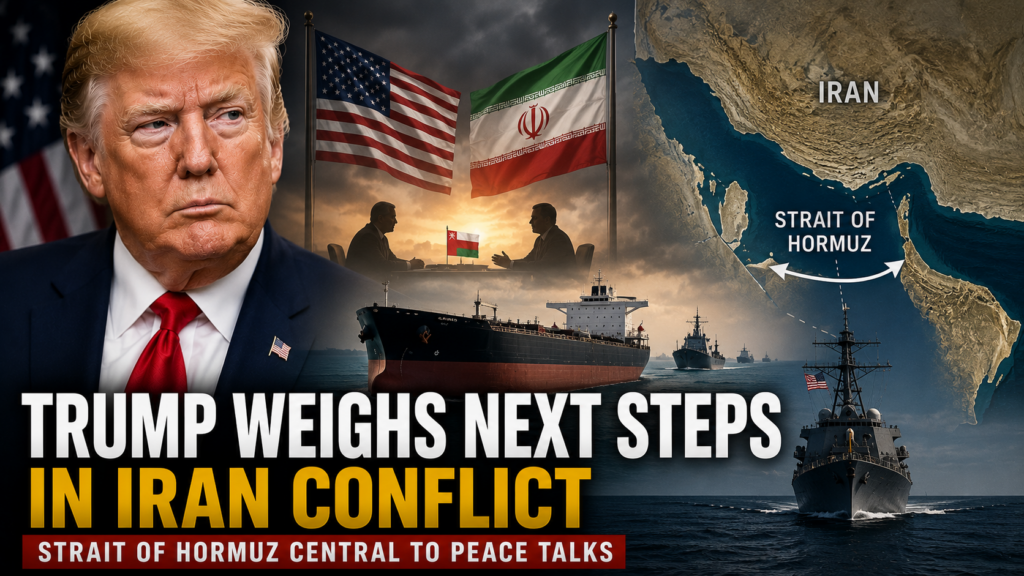
The Trump administration is assessing its next moves in the Iran conflict as a temporary pause in fighting creates an opportunity for renewed diplomacy. While U.S. and Iranian military operations have largely halted, negotiations remain fragile, with the Strait of Hormuz continuing to dominate discussions due to its critical role in global energy markets.
According to a report by CNBC, the United States and Iran have paused hostilities to give diplomatic efforts “some space,” even as both sides remain divided over key issues including maritime security, sanctions, and Iran’s nuclear program.
What Happened
The latest Trump Iran conflict developments follow nearly two weeks of U.S. military strikes against Iran after attacks on commercial shipping in the Strait of Hormuz disrupted an earlier ceasefire.
The temporary halt in military operations began on Friday, allowing diplomats to pursue indirect negotiations aimed at preventing further escalation.
President Donald Trump is also meeting with Israeli Prime Minister Benjamin Netanyahu to discuss the conflict and broader regional security. Netanyahu said the meeting will focus on protecting Israel’s security while expanding regional peace efforts.
Although media reports suggested Iran had agreed to a 10-day ceasefire, Tehran denied those claims. Iranian Foreign Ministry spokesperson Esmail Baghaei said Iran currently has no direct negotiations with the United States and is instead holding discussions with Oman regarding the future of the Strait of Hormuz.
Strait of Hormuz Remains the Key Issue
The Trump Iran conflict negotiations continue to center on the Strait of Hormuz, one of the world’s most strategically important maritime routes.
Before the conflict intensified, roughly one-fifth of the global oil supply passed through the narrow waterway. The ongoing U.S. blockade and continued closure of the strait have disrupted international shipping and energy markets.
Baghaei stated Monday that conditions in the Strait of Hormuz “have not changed and it is still closed.”
Oman has emerged as the primary mediator in negotiations. Omani officials traveled to Tehran for discussions aimed at developing a temporary framework to safely resume commercial shipping through the waterway.
Iran described those meetings as “useful discussions,” though no formal agreement has been announced.
Markets React Positively to the Pause
Financial markets responded favorably to the reduction in hostilities.
Oil prices fell more than 7% as concerns over supply disruptions eased, while U.S. stock markets rallied sharply following reports that military operations had paused.
Investors had previously feared the White House was preparing a significantly larger military campaign against Iran, raising concerns about prolonged instability in the Middle East.
The administration continues balancing military strategy with broader geopolitical priorities, while also advancing other national security initiatives, including restrictions on advanced AI model access designed to protect sensitive U.S. technologies.
Regional Tensions Continue
Despite the temporary pause between Washington and Tehran, fighting involving other regional actors continued over the weekend.
Saudi Arabia conducted strikes against Iran-backed Houthi positions in Yemen following attacks on Red Sea shipping.
Separately, Ukraine reportedly attacked an Iranian commercial vessel in the Caspian Sea, claiming it was transporting military cargo supporting Russia’s war effort. Iran condemned the strike as a hostile act.
These developments illustrate the broader regional complexity facing negotiators and demonstrate that multiple conflicts remain interconnected even as direct U.S.-Iran military activity slows.
The administration’s approach to Iran also complements other foreign policy actions involving geopolitical rivals, including U.S. sanctions affecting Hong Kong and China.
Challenges Facing Peace Negotiations
Although active fighting has paused, major diplomatic obstacles remain.
Future negotiations are expected to address several contentious issues, including:
- Iran’s nuclear program
- U.S. sanctions relief
- Iran’s support for regional proxy groups
- Long-term maritime security in the Persian Gulf
- Restoration of commercial shipping through the Strait of Hormuz
Experts note that negotiations currently rely on intermediaries because the United States and Iran are not conducting direct official talks.
Any lasting agreement will likely require extensive international coordination involving Oman and other regional stakeholders.
What Happens Next
President Trump and Prime Minister Netanyahu are expected to continue coordinating strategy as diplomatic efforts proceed.
Meanwhile, Oman’s mediation will remain central to discussions over reopening the Strait of Hormuz and restoring secure international shipping.
While the current pause has eased immediate concerns of broader war, analysts caution that the situation remains highly volatile. Any breakdown in negotiations or renewed attacks on shipping could quickly reverse recent market gains and reignite military escalation.
The coming weeks are expected to determine whether the Trump Iran conflict transitions toward sustained diplomacy or returns to armed confrontation, with global energy security and Middle East stability hanging in the balance.
The Strait of Hormuz carries roughly one-fifth of the world’s oil supply, making it critical to global energy markets and international trade.
No. Iran says it is not engaged in direct negotiations with the United States, with discussions instead taking place through intermediaries, including Oman.