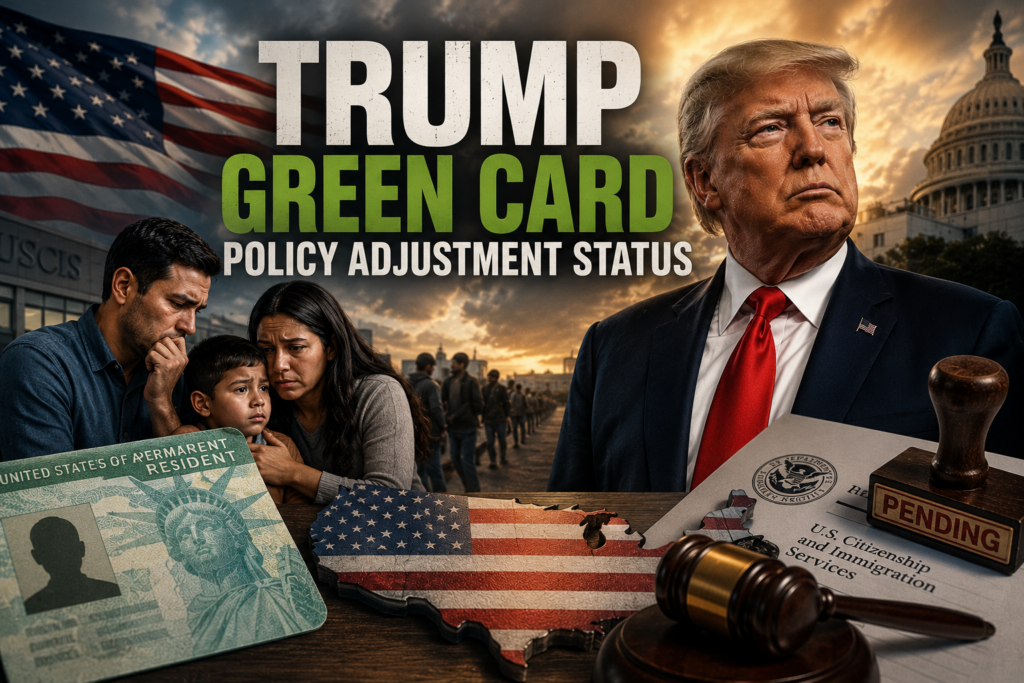
The Trump administration’s latest immigration proposal could significantly change how immigrants apply for permanent residency in the United States. A new policy memo released in May 2026 would require many green card applicants to leave the country while their applications are processed, unless they qualify under limited exceptions. The proposal has sparked concern among immigration attorneys and advocacy groups who warn it could create uncertainty for thousands of legal immigrants.
According to a report by Delaware Public Media, the administration’s guidance would restrict the use of the adjustment of status process, which allows eligible immigrants to apply for lawful permanent residency without leaving the United States.
What Happened
The proposed change stems from a memorandum issued in May 2026 as part of the Trump administration’s broader effort to overhaul immigration policies.
Under current immigration procedures, many individuals already living legally in the United States can apply for a green card through the adjustment of status process. This pathway is commonly used by students, workers, and family members of U.S. citizens.
However, the new Trump green card policy would require many future applicants to leave the country during the application process. Only those who meet the government’s definition of “extraordinary circumstances” would be allowed to remain in the United States while awaiting a decision.
As a result, many immigrants who expected to complete the process from within the country could face new travel requirements and additional uncertainty.
Understanding the Adjustment of Status Process
Adjustment of status is one of the most common methods used to obtain lawful permanent residency.
Applicants typically qualify through:
- Marriage to a U.S. citizen
- Family sponsorship
- Employment-based immigration programs
- Other lawful immigration categories
Historically, eligible applicants have been able to complete most of the process without leaving the country. Consequently, families could remain together while applications moved through federal review.
Data cited by immigration advocates indicate that approximately 820,000 green card applicants received approval through the adjustment of status process in 2024. Therefore, any major changes to the system could affect a significant number of future applicants.
Why the Proposal Is Drawing Concern
Immigration attorneys have described the memo as vague and difficult to interpret.
Critics argue that the administration has not clearly defined what qualifies as an extraordinary circumstance. Consequently, many immigrants may struggle to determine whether they are eligible for an exemption.
Furthermore, legal experts warn that the policy could complicate long-term planning for individuals who are transitioning from temporary visas to permanent residency. For many families, uncertainty regarding travel requirements and processing timelines may create financial and personal hardships.
Supporters of stricter immigration enforcement, however, argue that the proposal promotes greater compliance with existing immigration laws and strengthens oversight of the application process.
Who Would Not Be Affected?
According to immigration attorney Rick Hogan, several groups would remain unaffected by the proposed changes.
These include:
- Individuals who already hold green cards
- Applicants who have already received permanent residency approval
- Individuals applying for U.S. citizenship through the N-400 naturalization process
Because these applicants have already progressed beyond the adjustment of status stage, they would continue under existing procedures.
Potential Impact on Immigrants and Employers
The Trump green card policy could create challenges for immigrants who have established careers, businesses, and families in the United States.
For example, applicants may face additional travel expenses, legal costs, and longer waiting periods. Moreover, leaving the country during processing could create uncertainty about return dates and employment arrangements.
Advocates also warn that extended processing periods abroad may separate families and disrupt workplaces. Meanwhile, employers who rely on skilled foreign workers could encounter staffing challenges if employees must temporarily leave the country.
Readers following broader workforce policy developments may also be interested in federal employment reforms under the Trump administration and Trump administration efforts to strengthen labor and trade enforcement policies
Reactions From Immigration Advocates
Concerns About Legal Uncertainty
Civil liberties organizations have expressed concern about the proposal’s practical consequences.
Mike Brickner, executive director of the ACLU of Delaware, discussed the potential disruptions the policy could create for immigrants who are already navigating a lengthy application process.
Additionally, advocates argue that adjustment of status has long provided an efficient pathway for individuals who already live and work legally in the United States. They believe the proposed requirements could increase delays without improving the immigration system’s effectiveness.
As a result, advocacy groups continue to call for greater transparency regarding implementation and eligibility standards.
Broader Immigration Policy Context
The proposal forms part of a larger effort by the Trump administration to reshape U.S. immigration policy.
Since returning to office, the administration has prioritized reviewing immigration programs, including temporary protected status and other humanitarian protections.
Supporters argue that these reforms strengthen enforcement and encourage compliance with immigration laws. Critics, however, contend that the changes make legal immigration more difficult and less predictable.
Consequently, the debate over immigration policy remains one of the most closely watched issues in Washington.
What Happens Next
Immigration attorneys, employers, and advocacy organizations continue to analyze the memo and assess its legal implications.
Several important questions remain unanswered. For example, federal agencies have not fully explained how they will define extraordinary circumstances or how the policy will be implemented in practice.
Furthermore, legal experts continue to debate whether court challenges could emerge if the proposal moves forward.
Additional guidance from federal immigration agencies may provide greater clarity for applicants, employers, and immigration professionals in the coming months.
Conclusion
The Trump green card policy could represent one of the most significant changes to the permanent residency process in recent years. By requiring many applicants to leave the United States while their cases are reviewed, the proposal could affect families, employers, and legal immigrants across the country.
Although key details remain unclear, immigration attorneys and advocacy groups are closely monitoring the policy’s development. Ultimately, the long-term impact will depend on how federal agencies implement the rules and whether legal challenges alter the administration’s plans.
The policy could require many immigrants applying for permanent residency to leave the United States while their applications are processed.
Future green card applicants seeking adjustment of status may be impacted, while existing green card holders and citizenship applicants are generally unaffected.