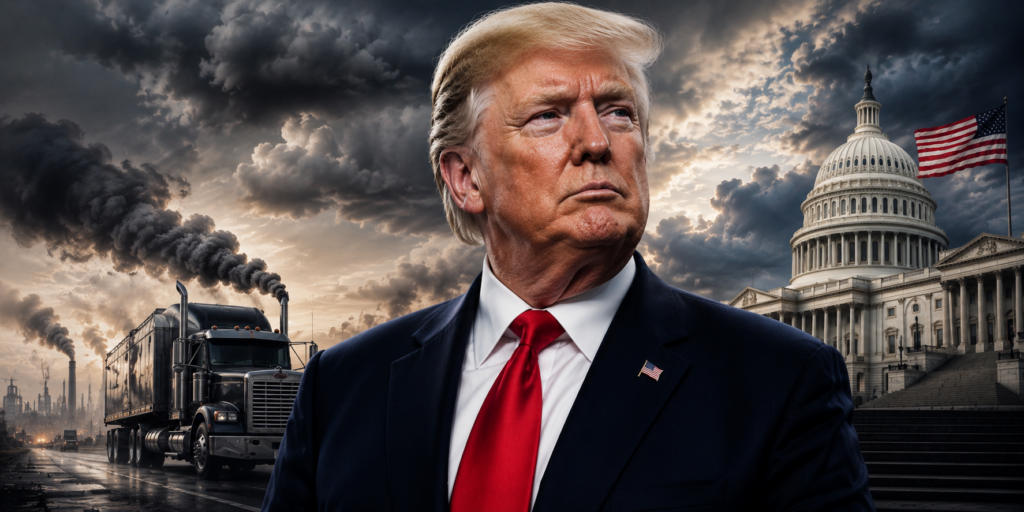
President Donald Trump’s decision to pardon a diesel mechanic convicted under the Clean Air Act has triggered a growing wave of clemency requests from others facing similar environmental crime convictions. The controversy is fueling a broader debate over federal enforcement powers, environmental regulations, and the limits of presidential pardon authority.
According to a report by Politico, multiple diesel mechanics and business owners convicted of tampering with vehicle emissions systems are now lobbying the White House for presidential pardons after Trump granted clemency to Wyoming mechanic Troy Lake.
What Happened
The debate began when Trump pardoned Troy Lake, a Wyoming diesel mechanic and business owner who pleaded guilty to conspiring to violate the Clean Air Act.
Federal prosecutors alleged that Lake disabled pollution-control monitoring systems on hundreds of commercial diesel trucks. He was sentenced to one year and one day in federal prison, a punishment that many supporters viewed as excessive for an emissions-related offense.
Following his pardon, a growing number of individuals convicted under similar circumstances have sought clemency from the Trump administration.
A Growing Movement for Pardons
Political consultant Jeff Daugherty and attorney Stewart Cables have emerged as leading advocates for convicted diesel mechanics seeking presidential pardons.
They argue that many defendants were small-business owners who believed they were helping customers address mechanical problems rather than intentionally violating environmental laws.
Several applicants claim they were unaware their actions could result in felony criminal charges under the Clean Air Act.
Why the Clean Air Act Cases Are Controversial
The dispute centers on diesel emissions modifications commonly known as “deletions” or the installation of “defeat devices.”
These modifications disable emissions-control systems that reduce pollutants released by diesel engines.
Federal regulators argue that tampering with such systems contributes significantly to air pollution and public health risks.
Critics, however, contend that many of the cases should have been handled through civil penalties rather than criminal prosecution.
Criminal Charges Versus Civil Enforcement
Environmental enforcement experts remain divided over whether criminal prosecutions were appropriate.
Some former Justice Department and EPA officials argue that criminal enforcement is necessary for repeat offenders and large-scale violations.
Others contend that civil penalties can achieve compliance without imposing lifelong consequences associated with felony convictions.
The issue has become part of a broader Republican critique of what many conservatives describe as federal government overreach.
Readers interested in other Trump administration policy battles may also review Trump’s federal workforce reform efforts and Trump’s Wisconsin roundtable discussion with farmers and small-business owners.
Key Cases Seeking Clemency
Ryan LaLone
Michigan diesel mechanic Ryan LaLone is among those seeking a pardon.
LaLone pleaded guilty to modifying emissions-control software on hundreds of trucks, including vehicles owned by government agencies. His company was assessed significant financial penalties, and he was sentenced to probation.
He argues that emissions-control systems often failed in harsh winter conditions, creating operational challenges for truck owners.
Mackenzie Spurlock
Alaska resident Mackenzie Spurlock pleaded guilty to tampering with emissions systems on several trucks and later received probation and fines.
According to his supporters, he hopes to obtain a pardon so he can reenlist in the U.S. Air Force, where felony convictions can create barriers to military service.
Other Pending Requests
Several additional mechanics and business owners are working through the pardon process, claiming their cases involved regulatory violations that should not have resulted in felony criminal records.
Advocates say they are carefully selecting cases involving defendants they believe were treated unfairly under existing enforcement policies.
Trump Administration Shifts Enforcement Approach
The Trump administration has already taken steps to alter how emissions-tampering cases are handled.
In recent months, federal prosecutors dropped certain pending criminal cases involving diesel emissions modifications. Administration officials have also moved away from criminal prosecutions tied to defeat devices, favoring civil enforcement approaches instead.
Supporters argue that environmental compliance can be achieved through financial penalties and regulatory oversight without criminal convictions.
Critics counter that weakening criminal enforcement could encourage future violations and undermine decades of environmental progress.
Political and Legal Implications
The controversy highlights growing tensions between environmental regulation and broader debates over executive power.
Trump’s Clean Air Act pardons have become a flashpoint in discussions about government “weaponization,” environmental enforcement, and criminal justice reform.
Some Republicans have proposed legislation that would erase past convictions for emissions-system tampering and dramatically reduce federal authority over vehicle emissions regulations.
Meanwhile, environmental groups warn that reducing enforcement could lead to increased air pollution and setbacks in public health protections.
What Happens Next
More pardon requests are expected to reach the White House in the coming months as advocates continue pressing their cases.
Reports have suggested that Trump may consider issuing additional clemency actions during America’s 250th anniversary celebrations, though no official decisions have been announced.
The outcome of these applications could shape future debates over environmental crimes, executive clemency, and the federal government’s role in enforcing the Clean Air Act.
Conclusion
Trump’s Clean Air Act pardons are evolving into a larger political and legal battle over environmental enforcement in the United States. As more diesel mechanics seek clemency, the administration faces increasing pressure to determine whether these convictions represent necessary environmental protections or examples of excessive federal prosecution. The decisions made in the coming months could redefine how environmental violations are prosecuted and punished for years to come.
Many mechanics convicted under the Clean Air Act argue their cases should have been handled through civil penalties rather than criminal prosecution.
Lake pleaded guilty to conspiring to disable emissions-control monitoring systems on hundreds of diesel trucks before receiving a presidential pardon.