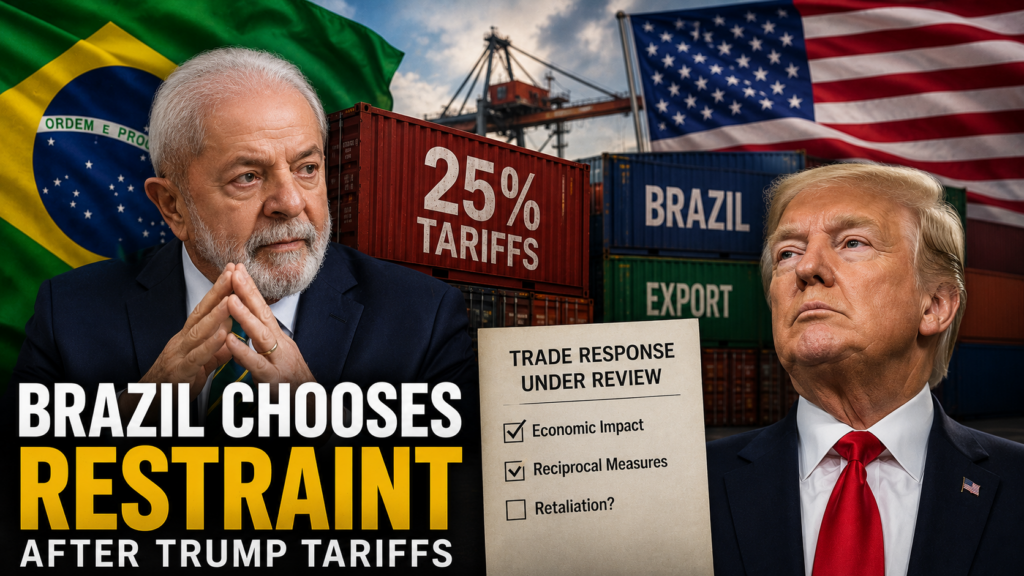
Brazil’s government says it will avoid immediate retaliation after the Trump administration imposed new tariffs on Brazilian imports, opting instead to evaluate reciprocal measures while assessing the broader economic impact. The decision marks a more cautious approach than Brazil initially signaled following the U.S. tariff announcement.
According to a report by Yahoo Finance, citing Reuters, Brazilian Finance Minister Dario Durigan said the government is prioritizing economic stability over an immediate escalation in the trade dispute with the United States.
What Happened?
The Trump administration recently imposed 25% tariffs on a wide range of Brazilian imports following a year-long investigation by the Office of the United States Trade Representative (USTR).
The USTR concluded that several Brazilian policies—including regulations affecting American technology companies—create barriers to U.S. commerce.
Rather than announcing immediate retaliatory tariffs, Finance Minister Dario Durigan said Brazil will carefully evaluate its options before taking action.
He emphasized that the government is focused on protecting fiscal stability while assessing the effects of the new tariffs on Brazilian industries.
Brazil Shifts to a More Measured Response
Durigan said Brazil is not currently discussing direct retaliation against the United States.
Instead, officials are evaluating possible reciprocal measures based on their impact on businesses, exports, and the broader economy.
His remarks represent a more restrained tone than statements issued immediately after the USTR announcement, when President Luiz Inácio Lula da Silva’s administration indicated it was preparing reciprocal tariffs.
Brazilian officials also continue to reject allegations of unfair trade practices.
The government notes that U.S. products entering Brazil face an average tariff rate of only 3.1%, while approximately 76% of American imports enter the country duty-free.
Industries Expected to Be Affected
The new U.S. tariffs take effect this week and apply to approximately 3,000 Brazilian products.
Although certain food and machinery products are exempt, many consumer goods—including apparel and footwear—remain subject to the 25% tariff.
The footwear industry is expected to be among the sectors most affected.
During the first half of 2026, the United States imported approximately 5.6 million pairs of Brazilian shoes valued at more than $82 million.
Overall, the tariffs are expected to affect roughly $7.4 billion worth of Brazilian exports, representing nearly one-fifth of the country’s shipments to the United States.
The broader trade measures follow other administration initiatives involving international commerce, including airplane import tariffs that have affected multiple trading partners.
Potential Next Steps
Although Brazil has not announced immediate countermeasures, officials say several options remain under consideration.
In addition to possible reciprocal tariffs, the government may pursue non-tariff responses and seek relief through the World Trade Organization’s dispute settlement process.
Officials said any future response will be designed to minimize economic disruption while protecting affected domestic industries.
The administration’s tariff policy continues to influence broader U.S. economic strategy alongside initiatives affecting domestic manufacturing, trade, and national policy priorities, including Trump’s Pennsylvania economy agenda.
What Happens Next?
Brazil is expected to continue consulting with industry groups before announcing any formal response to the new U.S. tariffs.
Meanwhile, businesses on both sides of the trade relationship will closely monitor whether negotiations can prevent further escalation.
For now, Brazil’s decision to avoid immediate retaliation suggests its government hopes to preserve economic stability while keeping diplomatic and trade discussions open with the United States.
The USTR said certain Brazilian policies restrict U.S. commerce, including regulations affecting American technology companies.
Not immediately. Brazilian officials say they are evaluating reciprocal measures while assessing the economic impact before making a final decision.