Border security remains one of the most hotly contested policy domains in American politics, with Republican lawmakers advancing comprehensive strategies to address what they characterize as an ongoing crisis at the southern border. As the 2026 legislative session unfolds, republican border security plans encompass physical infrastructure, advanced surveillance technologies, expanded enforcement personnel, and significant legal reforms to asylum procedures. These proposals reflect decades of evolving GOP priorities on immigration enforcement, shaped by constituent concerns, operational data, and broader national security considerations. Understanding the scope, implementation challenges, and political dynamics surrounding these plans provides essential context for anyone tracking U.S. governance and presidential policy priorities.
Core Components of Current Republican Border Security Proposals
Republican border security plans in 2026 rest on several foundational pillars that distinguish them from alternative approaches. These components reflect both traditional enforcement priorities and newer technological capabilities deployed along the 1,954-mile southern border.
Physical barrier expansion remains central to GOP proposals, with current plans calling for completion of approximately 450 additional miles of primary fencing and secondary barriers in high-traffic sectors. According to official Customs and Border Protection statistics, certain sectors continue to experience elevated encounter numbers, which Republicans cite as justification for permanent infrastructure investments. The plans specify bollard-style fencing ranging from 18 to 30 feet in height, coupled with all-weather patrol roads and lighting systems designed to facilitate rapid agent response.
Technology and Surveillance Infrastructure
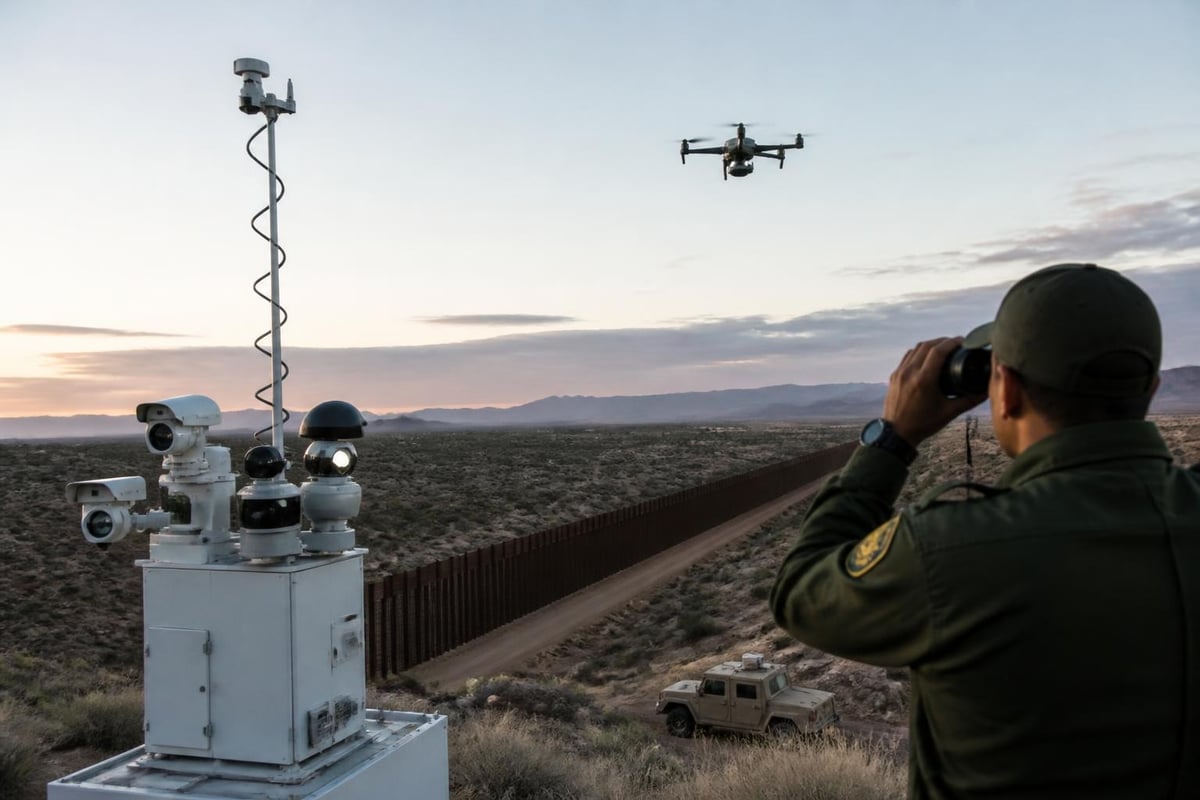
Advanced surveillance represents a growing share of republican border security plans, incorporating fixed towers, mobile units, and aerial systems. These proposals include:
- Fixed Integrated Surveillance Towers (FIST) equipped with radar and thermal imaging
- Counter-UAS (unmanned aircraft systems) technology to detect and neutralize drones
- Biometric collection systems at ports of entry and between designated crossings
- License plate readers and facial recognition capabilities at checkpoints
- Automated virtual fencing using seismic sensors and camera networks
Privacy advocates have raised concerns about the civil liberties implications of these deployments. The Electronic Frontier Foundation’s border surveillance reporting documents how these systems collect data on U.S. citizens and lawful residents in border communities, creating questions about oversight and data retention policies that remain largely unanswered in current proposals.
| Technology Type | Primary Function | Coverage Area | Privacy Concern Level |
|---|---|---|---|
| Fixed Towers | Long-range detection | 10-15 mile radius | Moderate |
| Mobile Units | Rapid deployment | 5-7 mile radius | High (movement tracking) |
| Biometric Systems | Identity verification | Point locations | Very High (data retention) |
| Aerial Systems | Wide-area surveillance | 50+ mile range | Very High (bulk collection) |
Personnel Expansion and Enforcement Priorities
Staffing increases constitute another critical dimension of republican border security plans. Current proposals call for adding 10,000 Border Patrol agents and 5,000 Customs and Border Protection officers over a three-year implementation timeline. These additions would bring total Border Patrol staffing to approximately 31,000 agents, representing the largest expansion since the post-9/11 buildup.
Recruitment challenges, however, present significant obstacles. The Government Accountability Office has documented persistent difficulties in meeting hiring targets, with high attrition rates among new agents and lengthy background investigation timelines that can extend 18 months or more. Republican plans address these concerns by proposing streamlined vetting procedures, enhanced recruitment bonuses reaching $30,000 per new hire, and improved retention incentives including student loan forgiveness for agents completing five-year service commitments.
Interior Enforcement Priorities
Beyond border operations, republican border security plans emphasize interior enforcement through expanded cooperation between federal immigration authorities and state and local law enforcement agencies. These provisions include:
- Mandatory E-Verify implementation for all employers nationwide
- Enhanced 287(g) agreements allowing state officers to perform immigration enforcement functions
- Increased Immigration and Customs Enforcement (ICE) detention capacity to 60,000 beds
- Expedited removal procedures for individuals without pending court proceedings
- Penalties for sanctuary jurisdictions that limit cooperation with federal authorities
Critics argue that these interior enforcement measures may undermine public safety by deterring immigrant communities from reporting crimes or cooperating with police investigations, regardless of their legal status. For broader context on how immigration policy intersects with domestic priorities, these enforcement questions touch fundamental debates about federalism and community policing strategies.
Asylum and Legal Pathway Reforms
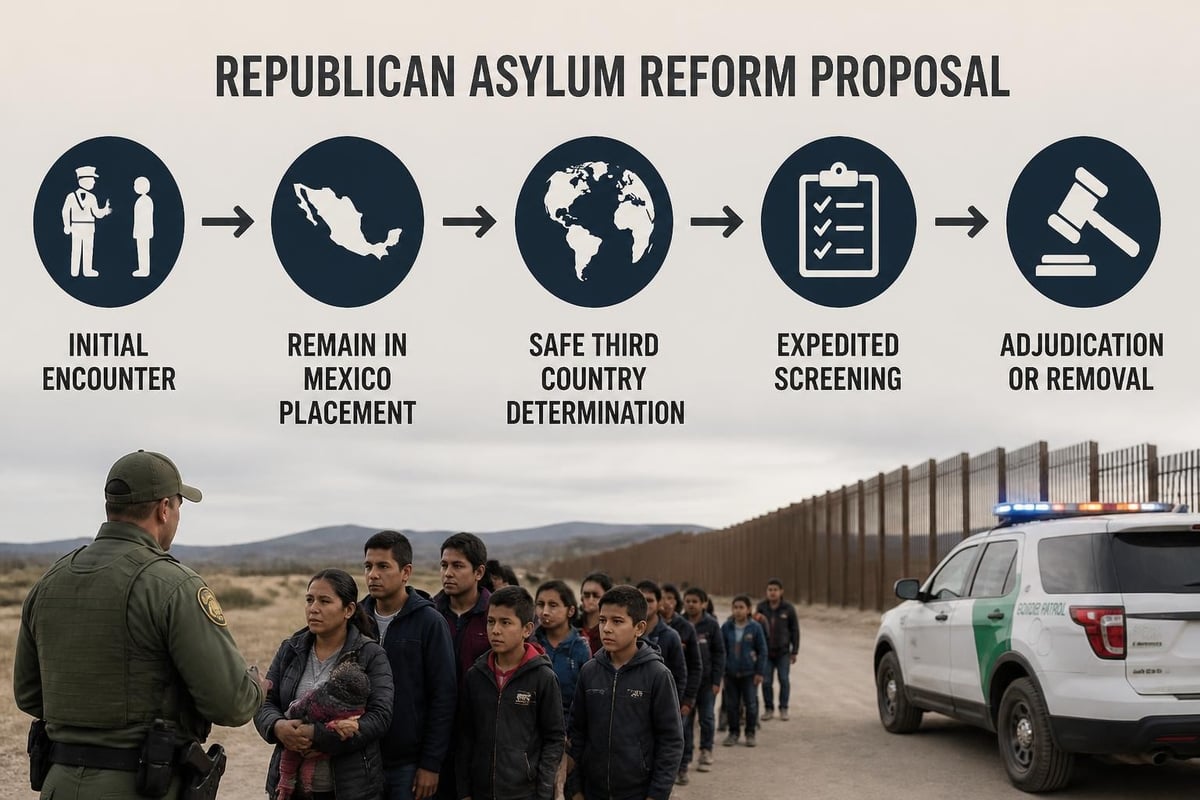
Legal reforms represent perhaps the most consequential element of republican border security plans, fundamentally restructuring how the United States processes asylum claims and humanitarian protection requests. These changes aim to reduce what GOP lawmakers characterize as abuse of asylum procedures by individuals seeking economic opportunity rather than fleeing persecution.
Remain in Mexico protocols would require asylum seekers to wait in Mexican territory while their claims undergo adjudication in U.S. immigration courts. This policy, formally known as the Migrant Protection Protocols, previously operated from 2019 to 2021 before being terminated by the subsequent administration. Republican plans would reinstate and expand these protocols, covering all nationalities rather than only certain groups.
Safe Third Country Agreements
Republican proposals also emphasize expanded safe third country agreements requiring asylum seekers to apply for protection in the first safe country they reach rather than continuing to the United States. Current plans include:
- Negotiating agreements with Mexico, Guatemala, Honduras, and El Salvador
- Conditioning foreign aid on partner countries' acceptance and processing of asylum claims
- Establishing U.S.-funded processing centers in partner nations
- Creating expedited removal procedures for individuals who bypass safe third countries
- Implementing bars on future immigration benefits for those who violate these requirements
The Brookings Institution’s analysis of immigration reform explains how these asylum restrictions formed part of bipartisan negotiations that ultimately collapsed, highlighting the political complexities surrounding any comprehensive approach. The safe third country concept particularly generates debate because many designated "safe" countries face their own security challenges and limited asylum processing infrastructure.
Public Opinion and Political Dynamics
Understanding republican border security plans requires examining the political environment shaping these proposals. Research on how Americans view border security reveals substantial partisan divides, with Republican voters rating border security as a top national priority while Democratic voters emphasize humanitarian concerns and legal immigration pathways.
This partisan gap influences how republican border security plans develop and which elements receive emphasis. GOP lawmakers face pressure from base voters to deliver visible enforcement results, while also navigating practical implementation constraints and fiscal limitations. The tension between political imperatives and operational realities shapes everything from wall construction timelines to technology procurement decisions.
Presidential Leadership and Executive Actions
Presidential priorities fundamentally shape border security implementation regardless of congressional legislation. The current administration's approach, detailed in White House border security materials, emphasizes executive actions that can proceed without legislative approval, including deployment of National Guard troops, reallocation of existing funds toward barrier construction, and policy directives governing asylum processing and prosecutorial discretion.
These executive authorities have limitations, however. Major expansions in personnel, significant new construction funding, and legal reforms to asylum statutes require congressional appropriations and legislative changes that depend on negotiation and compromise. The interplay between presidential policy initiatives and legislative realities creates an implementation landscape where republican border security plans often proceed through incremental administrative actions rather than comprehensive legislative packages.
Fiscal Considerations and Cost Analysis
Budget implications represent a critical factor in evaluating republican border security plans. Comprehensive implementation of current GOP proposals carries estimated costs ranging from $45 to $70 billion over a ten-year period, depending on infrastructure specifications, technology choices, and personnel expansion rates.
| Cost Category | 10-Year Estimate | Annual Average |
|---|---|---|
| Physical barriers | $18-25 billion | $1.8-2.5 billion |
| Technology/surveillance | $12-18 billion | $1.2-1.8 billion |
| Personnel expansion | $15-20 billion | $1.5-2.0 billion |
| Detention/processing | $8-12 billion | $0.8-1.2 billion |
| Total | $53-75 billion | $5.3-7.5 billion |
The Cato Institute’s analysis of enforcement approaches questions whether these investments generate proportional returns in terms of reduced unlawful crossings and enhanced security. Their research suggests that enforcement-only strategies historically produce diminishing returns, with each additional dollar yielding smaller marginal improvements in border security metrics. Alternative approaches emphasizing legal pathways and labor market reforms might achieve security objectives more cost-effectively, according to this perspective.
Opportunity Costs and Budget Tradeoffs
Republican border security plans compete with other fiscal priorities in constrained budget environments. The tens of billions allocated to border security represent resources unavailable for infrastructure modernization, defense capabilities, or deficit reduction. These tradeoffs become particularly acute during periods of fiscal restraint when discretionary spending faces downward pressure from deficit concerns.
GOP lawmakers typically argue that border security represents a fundamental governmental responsibility that justifies prioritization over other discretionary programs. They point to costs associated with unlawful immigration, including emergency medical care, educational services, and criminal justice expenses, as evidence that security investments generate offsetting savings. Quantifying these offsetting effects remains methodologically challenging, with different analyses reaching substantially different conclusions based on underlying assumptions and data sources.
Implementation Challenges and Operational Realities
Beyond policy design and fiscal considerations, republican border security plans face substantial implementation obstacles that may delay or prevent full realization of stated objectives. These challenges span legal, logistical, diplomatic, and environmental domains.
Land acquisition for barrier construction encounters significant hurdles, particularly in Texas where approximately 70% of the border runs through private property. Eminent domain proceedings can extend for years, with property owners challenging government valuations and contesting whether barrier construction serves legitimate public purposes. Environmental compliance adds further complexity, with projects requiring reviews under the National Environmental Policy Act and consultation regarding endangered species habitat.
Technology Integration and Interoperability
Deploying advanced surveillance systems presents technical challenges around system integration, data management, and operational coordination. Current republican border security plans envision seamlessly connecting sensors, cameras, biometric databases, and command centers into unified awareness platforms. Achieving this integration requires:
- Standardized data formats across multiple vendor systems
- Secure networks capable of transmitting high-bandwidth video feeds
- Analytics platforms processing millions of sensor alerts daily
- Training programs enabling agents to effectively use complex systems
- Maintenance infrastructure supporting technology deployed in harsh environments
Previous GAO evaluations have documented significant delays and cost overruns in border technology programs, raising questions about whether ambitious current proposals can avoid similar pitfalls. The technical complexity of deploying surveillance networks across 2,000 miles of varied terrain should not be underestimated in assessing implementation timelines.
Diplomatic Dimensions and International Cooperation
Many elements of republican border security plans depend on cooperation from Mexico and Central American nations whose participation cannot be compelled through unilateral U.S. actions. Remain in Mexico protocols require Mexican government agreement to accept and provide for asylum seekers awaiting U.S. court proceedings. Safe third country agreements need partner nations willing to accept asylum applicants and establish processing infrastructure.
These diplomatic requirements create potential vulnerabilities in republican border security plans. Partner nations face domestic political pressures of their own and may extract concessions on trade, foreign aid, or other policy areas in exchange for migration cooperation. Mexico, in particular, possesses significant leverage given its geographic position and economic integration with the United States.
Foreign Aid and Development Assistance
Republican proposals increasingly link foreign assistance to migration cooperation, conditioning development funding on partner countries' willingness to accept asylum seekers, interdict northbound migrants, and deploy their own enforcement resources. This "carrot and stick" approach aims to incentivize cooperation while penalizing nations that facilitate irregular migration.
Critics argue that reducing development assistance to Central American nations may prove counterproductive by worsening the economic and security conditions that drive emigration in the first place. The relationship between foreign aid, governance improvements, and migration flows remains complex and contested among policy analysts across the political spectrum. For those tracking how these issues intersect with broader domestic policy debates, the foreign aid dimension illustrates how border security increasingly connects to international development and diplomatic strategy.
State-Level Republican Border Security Initiatives
While federal policy dominates discussion of republican border security plans, state-level initiatives increasingly play significant roles, particularly in Texas, Arizona, and other border states with Republican governors and legislatures. These state programs include:
- State-funded barrier construction on state-owned lands
- Deployment of state National Guard units to border regions
- State criminal penalties for smuggling and illegal entry
- Increased funding for state law enforcement border operations
- Legal challenges to federal policies deemed insufficiently protective
Texas alone has allocated over $4 billion to border security initiatives since 2021, creating what amounts to a parallel state enforcement apparatus operating alongside federal Border Patrol. These state initiatives raise questions about federalism, with some legal scholars arguing that immigration enforcement remains an exclusively federal responsibility while others contend states possess inherent authority to protect their borders and citizens.
The proliferation of state-level actions reflects frustration among Republican governors with what they characterize as inadequate federal enforcement. Whether these state initiatives complement or conflict with federal operations remains debated, with coordination challenges and jurisdictional ambiguities creating operational complexities for agents in the field.
Legal Challenges and Constitutional Questions
Republican border security plans face various legal challenges that may significantly modify or block implementation of specific provisions. Civil liberties organizations, immigration advocacy groups, environmental organizations, and affected individuals have filed numerous lawsuits challenging different aspects of current and proposed border security measures.
Due process concerns surround expedited removal procedures and asylum restrictions that critics argue violate statutory and constitutional protections for individuals seeking refuge. Courts have previously blocked certain asylum restrictions on grounds that they conflict with existing immigration law mandating access to protection processes regardless of entry method.
Environmental and Property Rights Litigation
Barrier construction generates environmental litigation under statutes protecting endangered species, wetlands, and cultural resources. The borderlands contain habitat for numerous protected species including the jaguar, ocelot, and Sonoran pronghorn, whose ranges span the international boundary. Environmental plaintiffs argue that barriers fragment habitat and violate federal conservation laws.
Property rights challenges focus on eminent domain proceedings and whether barrier construction serves legitimate public purposes justifying property takings. Some landowners whose property would be bisected by barriers argue that construction would deny access to portions of their land and destroy property values without adequate compensation.
These legal challenges create uncertainty about implementation timelines for republican border security plans. Court proceedings can extend for years, potentially outlasting the political windows necessary for advancing controversial enforcement priorities. For readers interested in how these federal investigations and legal proceedings develop, border security litigation offers ongoing case studies in administrative law, constitutional constraints, and judicial review of executive actions.
Comparative Effectiveness and Security Metrics
Evaluating republican border security plans requires establishing metrics for success and examining historical evidence about which approaches most effectively achieve security objectives. GOP proposals typically emphasize enforcement metrics including apprehensions, border encounters, drug seizures, and miles of barrier constructed.
Critics argue these metrics may create perverse incentives or fail to capture actual security improvements. Higher apprehension numbers, for instance, might indicate either increased unlawful crossing attempts or improved enforcement effectiveness-the data alone cannot distinguish between these interpretations. Similarly, declining apprehensions could reflect successful deterrence or simply indicate that crossers are successfully evading detection.
Alternative Security Approaches
The Cato Institute and other analysts advocate alternative security strategies emphasizing legal pathways, labor market reforms, and risk-based targeting of serious threats rather than blanket enforcement. These approaches argue that creating adequate legal immigration channels would reduce incentives for unlawful crossing, allowing enforcement resources to focus on genuine security threats including drug trafficking, human smuggling, and potential terrorist travel.
Republican lawmakers generally reject these alternatives as insufficiently protective, arguing that enforcement must precede any expansion of legal immigration pathways to prevent rewarding unlawful behavior and creating additional pull factors. This sequencing debate-whether to pursue enforcement-first or comprehensive approaches-has deadlocked immigration reform efforts for decades.
The evidence regarding which approach most effectively enhances security remains contested, with different analysts reaching opposing conclusions from similar data depending on underlying assumptions and values. What constitutes "success" in border security depends partly on normative judgments about enforcement priorities, humanitarian obligations, and economic impacts that transcend purely empirical questions.
Republican border security plans for 2026 reflect comprehensive enforcement strategies spanning physical infrastructure, surveillance technology, personnel expansion, and legal reforms that collectively represent the most ambitious border security agenda in recent decades. Whether these proposals can navigate implementation challenges, fiscal constraints, legal obstacles, and diplomatic requirements while delivering measurable security improvements remains to be seen. For non-partisan analysis of how these border security debates intersect with broader presidential policy priorities and governance questions, U.S. Presidential Report provides comprehensive coverage of immigration policy developments, executive actions, and congressional initiatives shaping this critical policy domain.