The Supreme Court of the United States stands as the final arbiter of constitutional questions, shaping American law and policy for generations. Over the past decade, the Court has undergone a significant ideological transformation, establishing a firm conservative majority that has reshaped legal precedents across numerous areas of American life. Understanding how the supreme court conservative majority explained requires examining the political and historical forces that created this shift, the key figures involved, and the profound implications for presidential governance and American society. This transformation represents one of the most consequential developments in American jurisprudence, affecting everything from reproductive rights to environmental regulation, and it traces directly back to strategic presidential appointments and Senate confirmation battles.
The Historical Foundation of Conservative Court Appointments
The current composition of the Supreme Court reflects decades of strategic planning by conservative legal organizations and political leaders. The Federalist Society, founded in 1982, played a pivotal role in cultivating conservative legal talent and creating a pipeline of judges committed to originalist and textualist interpretations of the Constitution.
Presidential appointments have always been the primary mechanism for shaping the Court's ideological direction. Republican presidents since Ronald Reagan have prioritized judicial appointments as a central element of their governing strategy, recognizing that Supreme Court justices serve lifetime appointments and can influence policy long after a president leaves office.
The Reagan Revolution and Its Lasting Impact
President Ronald Reagan's administration marked a turning point in conservative judicial strategy. Reagan appointed three justices: Sandra Day O'Connor, Antonin Scalia, and Anthony Kennedy. While O'Connor became a moderate swing vote, Scalia emerged as the intellectual leader of conservative jurisprudence, championing originalism as a judicial philosophy.
The Reagan-era appointments established important precedents:
- Ideological vetting became more rigorous for potential nominees
- Originalism gained credibility as a mainstream judicial philosophy
- Conservative legal networks expanded their influence in the nomination process
- Long-term strategic thinking replaced short-term political considerations
President George H.W. Bush continued this approach by appointing Clarence Thomas in 1991, though his earlier appointment of David Souter proved to be a disappointment to conservatives when Souter evolved into a reliable liberal vote.
The Modern Configuration: How Six Justices Created a Supermajority
The supreme court conservative majority explained in its current form took shape through appointments made by Presidents George W. Bush and Donald Trump. Bush appointed Chief Justice John Roberts in 2005 and Justice Samuel Alito in 2006, replacing William Rehnquist and Sandra Day O'Connor, respectively. These appointments shifted the Court rightward but still left Anthony Kennedy as a potential swing vote.
The transformation accelerated dramatically during the Trump administration. Between 2017 and 2020, President Trump appointed three justices: Neil Gorsuch, Brett Kavanaugh, and Amy Coney Barrett. Each appointment came under unique circumstances that highlighted the political stakes involved.
The Controversial Path to Six Conservative Justices
The circumstances surrounding these appointments reveal the intense political maneuvering that created the current Court:
| Justice | Year | Replaced | Confirmation Vote | Key Context |
|---|---|---|---|---|
| Neil Gorsuch | 2017 | Antonin Scalia | 54-45 | Appointed after Senate blocked Merrick Garland in 2016 |
| Brett Kavanaugh | 2018 | Anthony Kennedy | 50-48 | Contentious confirmation hearings dominated media |
| Amy Coney Barrett | 2020 | Ruth Bader Ginsburg | 52-48 | Confirmed weeks before 2020 presidential election |
The appointment of these three justices fundamentally altered the Court's balance. Gorsuch's appointment was particularly controversial because Senate Republicans had refused to consider President Obama's nominee, Merrick Garland, in 2016.
Barrett's confirmation occurred just eight days before the 2020 presidential election, a stark contrast to the treatment of Garland, whose nomination came nine months before the 2016 election. This double standard sparked accusations of hypocrisy but succeeded in cementing a 6-3 conservative majority.
Understanding Judicial Philosophy: Originalism and Textualism
When the supreme court conservative majority explained is discussed in legal circles, the conversation inevitably turns to judicial philosophy. Conservative justices predominantly embrace originalism and textualism, interpretive methods that differ significantly from the living Constitution approach favored by liberal justices.
Originalism holds that the Constitution should be interpreted according to its original public meaning at the time of ratification. Justice Scalia popularized this approach, arguing it prevents judges from imposing their personal preferences under the guise of constitutional interpretation.
Textualism focuses on the plain meaning of statutory text, avoiding reliance on legislative history or perceived intent. Conservative justices argue this approach respects democratic processes by adhering to what lawmakers actually wrote rather than what they might have intended.
Practical Applications of Conservative Jurisprudence
These philosophical commitments manifest in concrete ways across different areas of law:
- Second Amendment rights: Expanded interpretation of individual gun ownership rights
- Religious liberty: Broader protections for religious exercise, including for businesses
- Federal regulatory power: Skepticism toward expansive administrative agency authority
- State sovereignty: Greater deference to state governments on various policy matters
- Separation of powers: Stricter limits on executive and legislative authority
The conservative majority has demonstrated particular interest in doctrines that limit federal power, such as the major questions doctrine, which requires clear congressional authorization for agencies to make decisions of vast economic or political significance.
Landmark Decisions Under the Conservative Majority
The practical impact of the supreme court conservative majority explained becomes clearest through its landmark decisions. Since achieving a 6-3 majority in 2020, the Court has issued transformative rulings that have reshaped American law.
Dobbs v. Jackson Women's Health Organization (2022)
The most consequential decision came in Dobbs, which overturned Roe v. Wade and Planned Parenthood v. Casey, eliminating the federal constitutional right to abortion. Justice Alito's majority opinion argued that abortion rights have no basis in the Constitution's text or historical tradition.
This decision demonstrated the conservative majority's willingness to overturn long-standing precedents when justices believe those precedents were wrongly decided. The ruling on abortion rights represented a seismic shift in American reproductive law, returning authority to state legislatures.
Second Amendment Expansion
In New York State Rifle & Pistol Association v. Bruen (2022), the Court struck down New York's concealed-carry licensing law, establishing a new standard for evaluating gun regulations. Justice Thomas's majority opinion required that firearm regulations must be consistent with the nation's historical tradition of gun regulation.
This decision expanded Second Amendment protections significantly, making it more difficult for states and localities to regulate firearms. The ruling exemplifies how conservative jurisprudence emphasizes historical analysis in constitutional interpretation.
Regulatory Authority and the Administrative State
The conservative majority has shown particular interest in limiting federal regulatory power. Key decisions include:
- West Virginia v. EPA (2022) – Limited the Environmental Protection Agency's authority to regulate carbon emissions from power plants
- Biden v. Nebraska (2023) – Struck down the Biden administration's student loan forgiveness program
- Securities and Exchange Commission v. Jarkesy (2024) – Restricted SEC's ability to impose civil penalties through administrative proceedings
These rulings reflect conservative skepticism toward the administrative state and demonstrate how the Court’s conservative term has reshaped the relationship between federal agencies and congressional authority.
The Role of Presidential Elections in Shaping the Court
The supreme court conservative majority explained cannot be separated from presidential politics. The Court's composition directly reflects which party controlled the White House when vacancies occurred, combined with Senate control during confirmation processes.
Presidential candidates increasingly campaign on Supreme Court appointments as a central issue. Republican candidates promise conservative nominees who will protect constitutional rights as originally understood, while Democratic candidates emphasize protecting precedents on abortion, voting rights, and civil liberties.
Strategic Timing and Political Calculations
The timing of retirements and deaths has enormous political consequences. Justice Kennedy's retirement in 2018 allowed President Trump to replace a swing vote with the more reliably conservative Kavanaugh. Justice Ginsburg's death in September 2020 gave Trump the opportunity to create a 6-3 supermajority.
Some legal observers note that justices increasingly time their retirements to ensure replacement by a president of the same ideological persuasion. This strategic approach to succession planning has become an accepted feature of Supreme Court dynamics.
For readers interested in how presidential transitions affect governance, understanding presidential policy debates provides essential context for Court-related decisions.
Impact on Presidential Power and Executive Authority
The conservative majority has issued mixed rulings on presidential power, sometimes expanding and sometimes constraining executive authority. This nuanced approach reflects conservative principles about separation of powers rather than partisan allegiance to Republican presidents.
Constraints on Executive Power:
- Blocked President Trump's efforts to add a citizenship question to the 2020 Census
- Ruled against Trump's initial attempt to end DACA (Deferred Action for Childhood Arrivals)
- Limited the president's ability to remove certain independent agency heads
- Struck down Biden's student loan forgiveness and vaccine mandates for large employers
Expansions of Executive Power:
- Upheld Trump's travel ban affecting several Muslim-majority countries
- Supported presidential control over certain administrative appointments
- Limited congressional subpoena power over presidential records in some contexts
These decisions demonstrate that the conservative majority's commitment to constitutional principles sometimes transcends partisan politics, though critics argue the overall trend favors Republican policy preferences.
The Dissenting Voices: Liberal Opposition and Critique
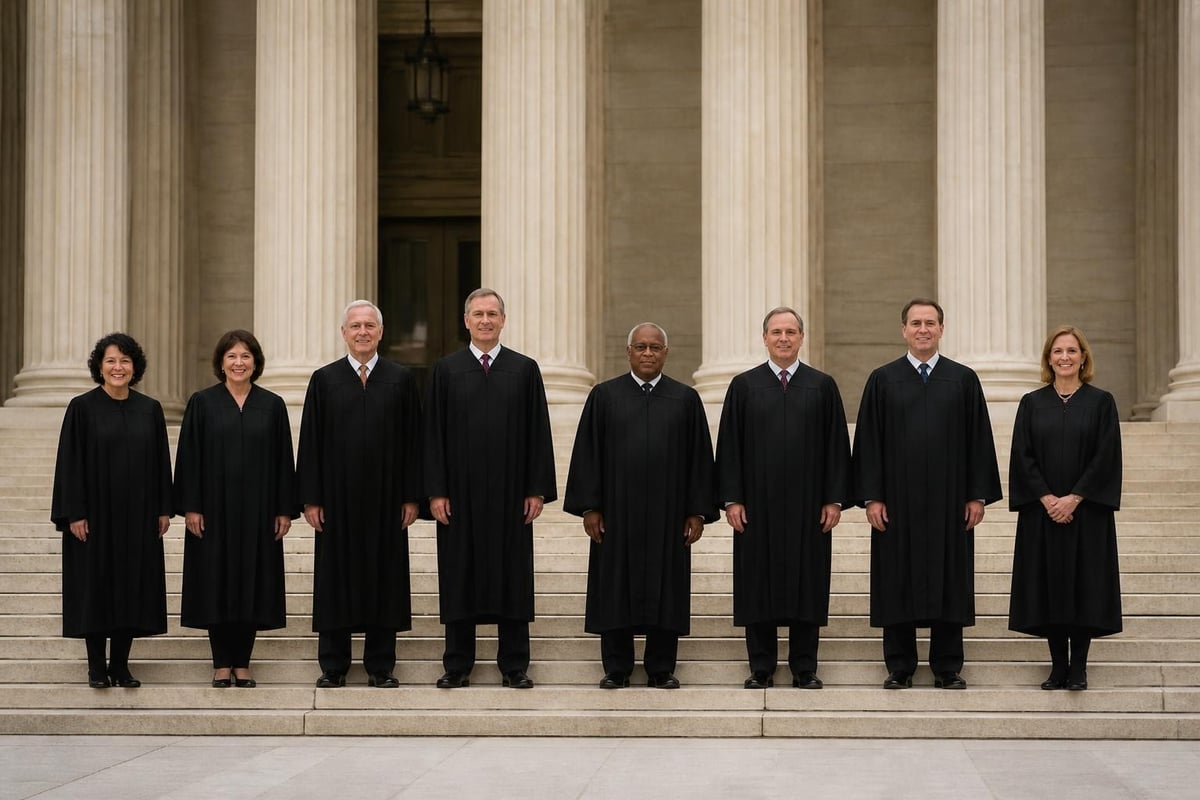
The three liberal justices-Sonia Sotomayor, Elena Kagan, and Ketanji Brown Jackson-have become increasingly vocal in dissent. Their opinions often warn that the conservative majority is dismantling important precedents and protections.
Justice Sotomayor's dissents in particular have grown sharper, accusing the majority of judicial activism disguised as originalism. In her Dobbs dissent, she argued that the majority was eliminating a constitutional right millions had relied upon for fifty years.
Arguments Against Conservative Methodology
Liberal justices and legal scholars raise several critiques:
- Selective history: Originalism allows judges to cherry-pick historical evidence supporting predetermined conclusions
- Ignoring precedent: The majority shows inconsistent respect for stare decisis (following precedent)
- Real-world consequences: Conservative decisions disproportionately harm marginalized communities
- Democratic legitimacy: Unelected judges should not overturn democratically enacted laws
The impact of the Supreme Court’s conservative super-majority extends across criminal justice, environmental protection, and civil rights, areas where liberal justices argue the majority has rolled back important protections.
Future Implications and Potential Shifts
The supreme court conservative majority explained for 2026 audiences must account for the Court's durability. All six conservative justices are relatively young by Supreme Court standards, with Justice Barrett just 54 years old. Absent unexpected retirements or deaths, this majority could persist for decades.
Areas of Potential Future Action
Legal experts anticipate the conservative majority may address several significant issues in coming terms:
| Issue Area | Potential Direction | Cases to Watch |
|---|---|---|
| Affirmative Action | Further restrictions or complete elimination | College admissions challenges |
| Voting Rights | Reduced federal oversight of state election laws | Challenges to Voting Rights Act provisions |
| LGBTQ Rights | Balancing anti-discrimination laws with religious liberty | Public accommodations cases |
| Environmental Regulation | Continued limits on EPA and agency authority | Climate change regulatory challenges |
| Election Law | Greater state control over federal elections | Independent state legislature doctrine cases |
The Court has already signaled interest in some of these areas through recent decisions and grants of certiorari. The independent state legislature theory, which could dramatically reshape election administration, remains particularly controversial.
Public Perception and Institutional Legitimacy
The Supreme Court's approval ratings have declined significantly since the conservative majority consolidated power. Polling shows Americans increasingly view the Court as a political institution rather than a neutral arbiter of law.
Several factors contribute to this perception:
- Partisan confirmation battles that emphasize ideological alignment over judicial qualifications
- Leaked draft opinions like the Dobbs decision that exposed internal Court dynamics
- Ethics controversies involving undisclosed gifts and financial relationships
- Dramatic policy shifts that appear aligned with partisan political preferences
Some legal scholars worry this erosion of public trust threatens the Court's institutional legitimacy. Unlike Congress or the presidency, the Court lacks enforcement power and depends on public acceptance of its rulings.
The Role of Lower Courts and Implementation
The supreme court conservative majority explained must also account for how lower federal courts interpret and apply Supreme Court precedents. Conservative jurisprudence now dominates many federal appellate courts, particularly the Fifth Circuit, which covers Texas, Louisiana, and Mississippi.
These lower courts serve as laboratories for conservative legal theories, often issuing decisions that reach the Supreme Court for final resolution. The interplay between circuit courts and the Supreme Court accelerates the development of conservative legal doctrine.
Implementation challenges emerge when:
- State governments resist unfavorable rulings
- Federal agencies must revise regulations following adverse decisions
- Lower courts interpret Supreme Court holdings differently
- Political actors seek to circumvent judicial limitations
The conservative majority's decisions on administrative law particularly affect presidential governance, as presidents must navigate new constraints on executive agency authority.
Comparing Historical Court Eras
The current conservative majority invites comparison to previous transformative periods in Supreme Court history. The Warren Court (1953-1969) expanded civil rights and criminal defendant protections, while the Rehnquist Court (1986-2005) began rolling back some of those precedents.
The Roberts Court with its 6-3 conservative majority represents the most significant rightward shift since before the New Deal. Unlike previous conservative Courts that moved incrementally, this supermajority has shown willingness to overturn major precedents rapidly.
Historical analysis reveals several patterns:
- Supermajorities enable transformative change more effectively than narrow majorities
- Public backlash often follows dramatic Court shifts in either direction
- Political responses including court-packing proposals emerge during controversial periods
- Long-term durability depends on public acceptance and political stability
For those tracking how presidential politics shapes governance, understanding these historical patterns provides valuable context.
Reform Proposals and Political Responses
The conservative majority's controversial decisions have prompted various reform proposals from progressives and some moderates. These proposals range from incremental ethics reforms to fundamental structural changes.
Major Reform Ideas Under Discussion
Term limits would replace lifetime appointments with fixed terms, perhaps 18 years, ensuring regular turnover and reducing the stakes of individual appointments. Supporters argue this would make the Court more democratically responsive while opponents warn it could undermine judicial independence.
Court expansion would add seats to dilute the current conservative majority. President Biden established a commission to study this option, though he ultimately declined to endorse expansion. The idea remains popular among progressive activists but faces significant political and practical obstacles.
Ethics requirements would impose binding ethical rules on justices, addressing concerns about undisclosed gifts, financial relationships, and recusal standards. This represents the most modest reform with bipartisan potential.
Jurisdiction stripping would remove the Court's authority over certain issues, though constitutional scholars debate whether Congress has this power.
None of these reforms appear likely in the near term given political divisions, but they demonstrate the intense debate surrounding the Court's role and composition.
The Intersection of Presidential Policy and Court Decisions
Presidential administrations must now navigate a Supreme Court skeptical of broad executive authority. This reality affects policy implementation across numerous domains, from immigration enforcement to environmental protection to student loan programs.
Presidents face difficult choices when the Court strikes down major initiatives. They can pursue narrower policies less vulnerable to legal challenge, seek congressional authorization for actions previously taken unilaterally, or accept constraints on their agenda.
The conservative majority's approach to presidential power creates particular challenges for Democratic administrations pursuing ambitious regulatory agendas. Biden administration officials have watched the Court dismantle signature initiatives, forcing policy pivots and more cautious approaches.
Republican presidents may face fewer obstacles on regulatory rollbacks but still encounter constraints when expanding executive power in ways that raise separation of powers concerns. The Court's commitment to structural constitutional principles transcends simple partisan preferences.
Understanding the supreme court conservative majority explained helps citizens and policymakers anticipate how constitutional interpretation will shape American governance for decades to come. The 6-3 conservative supermajority represents a fundamental shift in judicial philosophy, with far-reaching implications for presidential authority, federal regulation, individual rights, and the balance between state and federal power. For comprehensive, non-partisan coverage of how presidential decisions intersect with Supreme Court rulings and shape American governance, U.S. Presidential Report delivers the analysis you need to stay informed about the most consequential developments in American political life.